

• SHQIPËRI
  • KOSOVË
  • MAQEDONIA E VERIUT
  • MALI I ZI
  • Revista në PDF
3 October, 2026
 
  • Home
  • OP/ED

    THE GREEN BERETS LAND IN TIRANA

    Some Myths Simply Refuse to Die

    UN Monologue: Why Kosovo Cannot Respond to Serbia’s Accusations

    The War That Was Waged Before the War

    The Structural Impasse: Can Merz Offer a Leadership Anchor to Europe?

    Will Europe Finally Ditch the Poisonous Myth of Perpetual Peace?

    Resolution 522 – When the U.S. Congress Honored Skanderbeg

    The Reconfiguration of Maritime Governance: Structural Hegemonic Decline and the Arctic Pivot

    Between Political Calculation and Retreat: Croatian Communists at the End of an Era

  • Interview

    Exclusive Interview with Oleksandr Tyshchenko: A 40-Year Legacy of Chernobyl, Nuclear Risks, and Global Responsibility

    INTERVIEW: ZLATKO KRAMARIĆ – THOUGHTS ON THE OLD CONTINENT

    EXCLUSIVE / Ukrainian Ambassador to Albania, Volodymyr Shkurov: “Ukraine wants peace, but not at the expense of its freedom and independence”

    EXCLUSIVE| Ambassador Tayyar Kagan Atay: Türkiye and Albania, a Strategic Partnership Rooted in Shared Heritage and a Common Vision for the Future

    “Diplomacy, Not War”: Palestinian Ambassador to Albania Calls for Justice, Peace, and Global Action for Gaza

    Exclusive: “Even After Tito – Tito”/ Ambassador Zlatko Kramarić on Authoritarian Legacies and Democracy’s Future in the Balkans

    The Conclusion of the Diplomatic Mission / Ambassador Dancho Markovski: Strengthening Albania-North Macedonia Relations for a Shared European Future

    A Century of Diplomatic Relations Between Albania and Russia: Exclusive Interview with the Russian Ambassador to Albania, H.E. Alexey Zaytsev

    Exclusive/ The chairman of the Freedom Party, Ilir Meta: “The will of the citizens will triumph in Albania, as it did in North Macedonia”

  • Realpolitik

    Long live the UN! A prewarned decision! A  G – 2? Putin in Miami!

    Montenegrin diplomatic blunder! Small Cyprus without great hopes! 4 blocks of Enlargement challenges! Political earthquake in Germany!

    Belgrade, Zelensky and the Consulates! The European Pact takes water! Drone in Leipzig and hybrid war! Why a  ceasefire is needed in September

    The Summit of Unity! Think of peace and prepare for war! It’s only the start to the end! Just a pause between two wars!

    Peace with war diplomacy! The protest,  image and tourism! Why this silence from the EU Commission and Council? A deal or a pause?

    Just kind words  in Tivat! Where is the peace!? A deal yes, peace No!What is happening with USA and  EU?  5 elections but no solution!

    IBAR? ”Sufficiently! Much ado about nothing! Shart contrasts in Beijing! Where is the exit?!

    Neither peace nor war! Peace with bombs?! IBAR in autumn?! Not another Hormuz in Taivan! 

    IBAR – a springing board or an obstacle? Can we catch the EU Negotiation train 2027? When the dress makes the news!  EU electoral April  ends in a draw 1:1!  

  • Current Events

    Von der Leyen in Skopje: North Macedonia Belongs in Europe, Mickoski Seeks Fair EU Accession Process

    Von der Leyen in Pristina: “The Hague Verdict Must Be Respected, Nothing Can Rewrite Kosovo’s History”

    Albania’s Top Diplomat Ferit Hoxha at Berlin Process: “EU Enlargement Is a Strategic Investment in Europe’s Security”

    Von der Leyen in Tirana: EU Support, Reform Push and Protests

    New U.S. Ambassador Eric Wendt Begins Official Meetings in Tirana

    Some Myths Simply Refuse to Die

    Albanian PM Rama returns from US with message to Albanians: “No One Will Stop Us, No One Will Stop Me”

    Albanian President Begaj Welcomes New U.S. Ambassador Eric Wendt

    Albanian PM Edi Rama at UN: “The greatest danger of AI is that it perfectly obeys the wrong people”

  • Top News

    Albanian PM Rama to U.S. Democrats: “Don’t Come to Albania to Take Revenge on Trump”

    Albania’s Top Diplomat Ferit Hoxha at Berlin Process: “EU Enlargement Is a Strategic Investment in Europe’s Security”

    From Pre-Trial Measures to the Presumption of Innocence: What Changes in Albania’s Criminal Procedure Code

    Eric Wendt in Tirana: A New U.S. Mandate at a Turning Point for Albania and the Balkans

    Albanian PM Edi Rama at UN: “The greatest danger of AI is that it perfectly obeys the wrong people”

    FBI in Albania: U.S. and Albanian Law Enforcement Strengthen Cooperation

    The Council of Albanian Ambassadors expresses deep concern over the judgment of the Kosova special chambers in the Hague.

    The European Spirit: A Message to Albania’s Young Generation

    Albania’s President Begaj calls for political cooperation as new parliamentary session opens

  • YOUR VOICE
  • ARGUMENTUM MAGAZINE
  • Shqip
No Result
View All Result
Argumentum
  • Home
  • OP/ED

    THE GREEN BERETS LAND IN TIRANA

    Some Myths Simply Refuse to Die

    UN Monologue: Why Kosovo Cannot Respond to Serbia’s Accusations

    The War That Was Waged Before the War

    The Structural Impasse: Can Merz Offer a Leadership Anchor to Europe?

    Will Europe Finally Ditch the Poisonous Myth of Perpetual Peace?

    Resolution 522 – When the U.S. Congress Honored Skanderbeg

    The Reconfiguration of Maritime Governance: Structural Hegemonic Decline and the Arctic Pivot

    Between Political Calculation and Retreat: Croatian Communists at the End of an Era

  • Interview

    Exclusive Interview with Oleksandr Tyshchenko: A 40-Year Legacy of Chernobyl, Nuclear Risks, and Global Responsibility

    INTERVIEW: ZLATKO KRAMARIĆ – THOUGHTS ON THE OLD CONTINENT

    EXCLUSIVE / Ukrainian Ambassador to Albania, Volodymyr Shkurov: “Ukraine wants peace, but not at the expense of its freedom and independence”

    EXCLUSIVE| Ambassador Tayyar Kagan Atay: Türkiye and Albania, a Strategic Partnership Rooted in Shared Heritage and a Common Vision for the Future

    “Diplomacy, Not War”: Palestinian Ambassador to Albania Calls for Justice, Peace, and Global Action for Gaza

    Exclusive: “Even After Tito – Tito”/ Ambassador Zlatko Kramarić on Authoritarian Legacies and Democracy’s Future in the Balkans

    The Conclusion of the Diplomatic Mission / Ambassador Dancho Markovski: Strengthening Albania-North Macedonia Relations for a Shared European Future

    A Century of Diplomatic Relations Between Albania and Russia: Exclusive Interview with the Russian Ambassador to Albania, H.E. Alexey Zaytsev

    Exclusive/ The chairman of the Freedom Party, Ilir Meta: “The will of the citizens will triumph in Albania, as it did in North Macedonia”

  • Realpolitik

    Long live the UN! A prewarned decision! A  G – 2? Putin in Miami!

    Montenegrin diplomatic blunder! Small Cyprus without great hopes! 4 blocks of Enlargement challenges! Political earthquake in Germany!

    Belgrade, Zelensky and the Consulates! The European Pact takes water! Drone in Leipzig and hybrid war! Why a  ceasefire is needed in September

    The Summit of Unity! Think of peace and prepare for war! It’s only the start to the end! Just a pause between two wars!

    Peace with war diplomacy! The protest,  image and tourism! Why this silence from the EU Commission and Council? A deal or a pause?

    Just kind words  in Tivat! Where is the peace!? A deal yes, peace No!What is happening with USA and  EU?  5 elections but no solution!

    IBAR? ”Sufficiently! Much ado about nothing! Shart contrasts in Beijing! Where is the exit?!

    Neither peace nor war! Peace with bombs?! IBAR in autumn?! Not another Hormuz in Taivan! 

    IBAR – a springing board or an obstacle? Can we catch the EU Negotiation train 2027? When the dress makes the news!  EU electoral April  ends in a draw 1:1!  

  • Current Events

    Von der Leyen in Skopje: North Macedonia Belongs in Europe, Mickoski Seeks Fair EU Accession Process

    Von der Leyen in Pristina: “The Hague Verdict Must Be Respected, Nothing Can Rewrite Kosovo’s History”

    Albania’s Top Diplomat Ferit Hoxha at Berlin Process: “EU Enlargement Is a Strategic Investment in Europe’s Security”

    Von der Leyen in Tirana: EU Support, Reform Push and Protests

    New U.S. Ambassador Eric Wendt Begins Official Meetings in Tirana

    Some Myths Simply Refuse to Die

    Albanian PM Rama returns from US with message to Albanians: “No One Will Stop Us, No One Will Stop Me”

    Albanian President Begaj Welcomes New U.S. Ambassador Eric Wendt

    Albanian PM Edi Rama at UN: “The greatest danger of AI is that it perfectly obeys the wrong people”

  • Top News

    Albanian PM Rama to U.S. Democrats: “Don’t Come to Albania to Take Revenge on Trump”

    Albania’s Top Diplomat Ferit Hoxha at Berlin Process: “EU Enlargement Is a Strategic Investment in Europe’s Security”

    From Pre-Trial Measures to the Presumption of Innocence: What Changes in Albania’s Criminal Procedure Code

    Eric Wendt in Tirana: A New U.S. Mandate at a Turning Point for Albania and the Balkans

    Albanian PM Edi Rama at UN: “The greatest danger of AI is that it perfectly obeys the wrong people”

    FBI in Albania: U.S. and Albanian Law Enforcement Strengthen Cooperation

    The Council of Albanian Ambassadors expresses deep concern over the judgment of the Kosova special chambers in the Hague.

    The European Spirit: A Message to Albania’s Young Generation

    Albania’s President Begaj calls for political cooperation as new parliamentary session opens

  • YOUR VOICE
  • ARGUMENTUM MAGAZINE
  • Shqip
No Result
View All Result
Argumentum
No Result
View All Result
Home Balkan Overview

Serbia Heads to Early Elections as Vučić Seeks a New Political Role

3 October, 2026
in Balkan Overview, ENGLISH
A A
Share on FacebookShare on Twitter

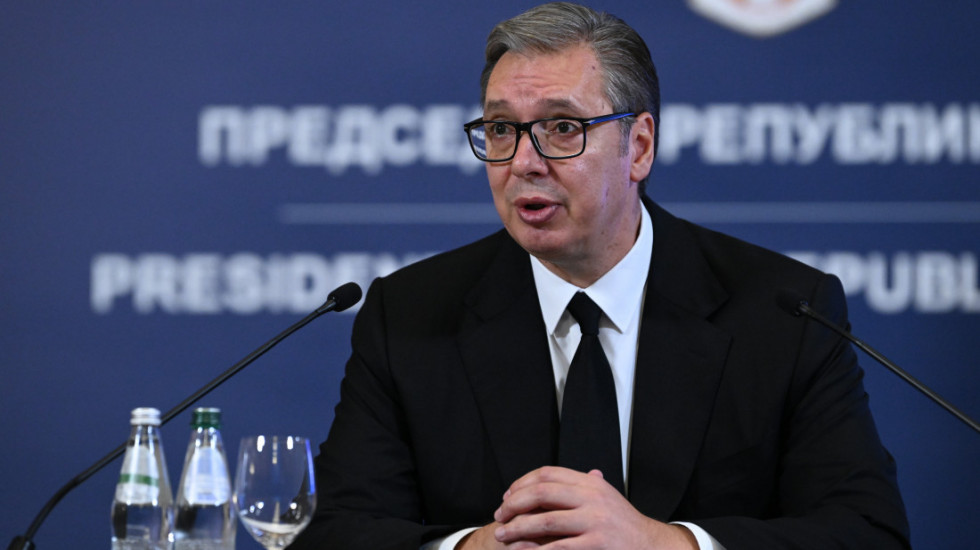
Serbia is entering an important political transition as it prepares for early parliamentary elections on 25 October 2026, following Aleksandar Vučić’s resignation as president on 27 September at the end of his second and final presidential term.

According to an analysis by the International Institute for Middle East and Balkan Studies (IFIMES), based in Ljubljana, the elections carry significance beyond the competition between political lists. They will also test how Serbia’s political system adapts to the end of Vučić’s presidency and whether his political influence will continue through a different institutional position.

Vučić has announced that he will stand for Prime Minister in the forthcoming parliamentary elections. His appointment, however, would depend on the election results and the formation of a new parliamentary majority. IFIMES argues that a possible move from the presidency to the premiership could change the formal institutional configuration without necessarily altering the country’s established political centre of gravity.

Elections at a political crossroads

The early elections come after more than a decade in which Vučić has remained the central figure in Serbian politics, first as prime minister and later as president.

IFIMES notes that Vučić has presented his record in terms of infrastructure development, economic growth, political stability, Serbia’s international standing and his ability to maintain relations with competing global powers. At the same time, the institute points to concerns raised by the European Commission regarding the rule of law, electoral reform, media pluralism, institutional independence and corruption.

The elections therefore take place against a broader debate about the future functioning of Serbia’s institutions.

One of the most important developments of Vučić’s final presidential term has been the prolonged student and civic protest movement that followed the November 2024 railway station tragedy in Novi Sad. According to IFIMES, the protests brought questions of institutional accountability, corruption, public-project management, media freedom and the functioning of state authorities to the centre of political debate.

The institute also stresses that interpretations of the protests remain politically contested. Vučić has attributed part of the unrest to outside influence and described it as a potential “colour revolution”, while opponents and sections of civil society have presented the mobilisation primarily as a demand for institutional accountability and political change.

A test for Serbia’s institutions

For IFIMES, the significance of the October election extends beyond the question of who will form the next government.

The institute identifies several interconnected questions facing Serbia: whether the change at the top of the state will produce a clearer separation between state institutions and party politics; whether the electoral process will enjoy sufficient confidence across the political and social spectrum; whether Serbia can continue its European path while maintaining relations with Russia and China; and whether the months of social mobilisation can create space for institutional dialogue between authorities, students, opposition forces and civil society.

These questions are particularly relevant as Serbia continues its EU accession process. IFIMES notes that the European Union has continued to focus on judicial reform, anti-corruption measures, media freedom and pluralism, and institutional checks and balances. The institute also points to the lack of significant progress in negotiations on Chapter 23 over more than four years.

Between Brussels, Moscow, Beijing and Washington

The elections will also take place within a complex foreign-policy environment.

During Vučić’s presidency, Serbia sought to maintain relations with several competing centres of global power. Belgrade has continued to pursue EU membership while refraining from imposing sanctions on Russia and maintaining political and economic relations with China.

IFIMES describes this approach as a form of “strategic redundancy”, whereby Serbia maintains several political, economic and diplomatic channels simultaneously. According to the analysis, this has provided Belgrade with considerable diplomatic room for manoeuvre, while also increasing expectations and pressure from its international partners.

The European Union, meanwhile, has continued to emphasise good-neighbourly relations, regional cooperation, alignment with the EU’s Common Foreign and Security Policy and reforms necessary for the accession process. Rule of law, media freedom and electoral reform remain among the issues highlighted by Brussels.

Kosovo remains central

Another major issue facing the next government will be relations with Kosovo.

IFIMES describes Kosovo as one of the most important pressure points in Serbia’s foreign and security policy. During his final presidential term, Vučić continued to balance international pressure, dialogue with Pristina and domestic political expectations.

The future political configuration in Belgrade will therefore have implications for the continuation of the Belgrade–Pristina dialogue and the implementation of commitments linked to Serbia’s European integration process. The European Union has reiterated the importance of the dialogue and the implementation of the Ohrid Agreement for regional security and Serbia’s European path.

What comes after the election?

The central issue identified by IFIMES is whether Serbia’s political transition will represent a substantive institutional change or primarily a change in the formal position occupied by its most influential political figure.

Vučić can no longer seek another presidential term under Serbia’s constitutional limit of two terms. But his announced candidacy for prime minister means that the end of his presidency does not necessarily signify the end of his political involvement.

The October election will therefore help determine the new parliamentary majority and the composition of the next government, while also providing an indication of how Serbia’s political institutions respond to the transition.

IFIMES concludes that the long-term question is whether Serbia can develop stronger and more autonomous institutions whose authority carries greater weight than that of any individual political centre. The institute stresses that the formation of a new Serbian government after the elections should take place peacefully and democratically, with full respect for the election results and constitutional institutions, regardless of who occupies the country’s highest offices.

For Serbia, the 25 October parliamentary elections thus represent not only a change in the electoral calendar, but a test of the country’s institutional capacity at the beginning of a new political phase.

/Argumentum.al

© 2026 Argumentum

Related Posts

ENGLISH

We Don’t Need To Reinvent The Wheel: Five Countries That Offer A Blueprint for European Conscription

2 October, 2026
Balkan Overview

Von der Leyen in Skopje: North Macedonia Belongs in Europe, Mickoski Seeks Fair EU Accession Process

2 October, 2026
ENGLISH

Albanian PM Rama to U.S. Democrats: “Don’t Come to Albania to Take Revenge on Trump”

2 October, 2026

Follow US

Subscribe

Receive Argumentum Magazine by Email

Last Posts

Serbia Heads to Early Elections as Vučić Seeks a New Political Role

3 October, 2026

We Don’t Need To Reinvent The Wheel: Five Countries That Offer A Blueprint for European Conscription

2 October, 2026

Von der Leyen in Skopje: North Macedonia Belongs in Europe, Mickoski Seeks Fair EU Accession Process

2 October, 2026

Albanian PM Rama to U.S. Democrats: “Don’t Come to Albania to Take Revenge on Trump”

2 October, 2026

Von der Leyen in Pristina: “The Hague Verdict Must Be Respected, Nothing Can Rewrite Kosovo’s History”

1 October, 2026
Argumentum

“Argumentum”, një proces intelektual …

Contact Us

[email protected]
[email protected]
[email protected]

Follow Us

Media Partner

Register

Receive Argumentum Magazine by Email
  • Home
  • Privacy Policy
  • About Us
  • Contact

© 2022 Argumentum. All Rights Reserved. | NUIS: L91415033Q

Welcome Back!

Login to your account below

Forgotten Password?

Retrieve your password

Please enter your username or email address to reset your password.

Log In

Add New Playlist

No Result
View All Result
  • Home
  • OP/ED
  • Interview
  • Realpolitik
  • Current Events
  • Top News
  • YOUR VOICE
  • ARGUMENTUM MAGAZINE
  • Shqip

© 2022 Argumentum. All Rights Reserved. | NUIS: L91415033Q

This website uses cookies. By continuing to use this website you are giving consent to cookies being used. Visit our Privacy and Cookie Policy.