























“He who causes another to become powerful is ruined, for that power has been brought about either by ingenuity or by force, and both of these are suspect to the one who has become powerful.” — Niccolò Machiavelli, The Prince
By Dr. Ermir I. Hajdini
Legal Analyst & University Lecturer
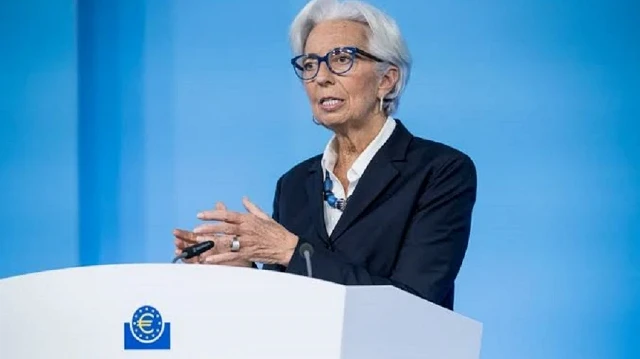
When European Central Bank President Christine Lagarde warned in a recent address at the World Economic Forum in Geneva that the historical pillars of Europe’s economic model are crumbling[^1], her diagnosis was as accurate as it was incomplete. The ECB’s official narrative frames rising protectionism, elevated energy costs, and geopolitical fragmentation as exogenous shocks—unfortunate environmental shifts hitting an innocent continental economy. Yet, a cold-eyed analysis reveals a far harsher truth: the structural erosion of European competitiveness is not an act of nature, but the predictable consequence of self-inflicted, politically driven policy decisions made in Brussels. By trading material self-interest for administrative moralism, Europe has systematically dismantled the very foundations of its industrial power.
The most acute symptom of this strategic retreat is the deliberate destruction of Europe’s industrial baseline. European manufacturers currently pay roughly double the electricity prices of their American counterparts and face a 50% premium over Chinese competitors[^2]. This is not an unavoidable market dynamic; it is the direct outcome of prioritizing ideological posturing over baseline economic calculation. By declaring the vast, geographically proximate natural resources of the Eurasian landmass “toxic,” European leadership severed its core manufacturing sectors from low-cost input fuels[^3]. Treating geographic proximity and natural resource dependencies as moral choices rather than permanent geopolitical variables has not ushered in a green industrial renaissance; it has merely forced a structural flight of energy-intensive capital to foreign jurisdictions that operate on strict material realism.
Concurrently, Brussels continues to substitute preemptive regulation for actual technological and industrial scale. The recently implemented EU AI Act is routinely praised by European technocrats as the global gold standard for digital governance and risk mitigation[^4]. In practice, however, heavy-handed regulatory frameworks act as a massive compliance tax that native European start-ups cannot absorb. By imposing dense, precautionary burdens at the foundational level, the regulatory apparatus effectively creates a defensive moat around deep-pocketed American technology incumbents[^5]. The dominant foreign platforms possess the vast legal and compliance capital required to navigate Brussels’ bureaucracy, while European innovators are stifled before reaching critical mass. Far from fostering domestic champions, European digital policy merely validates and entrenches foreign monopolies within a captive European consumer market.
This internal regulatory sclerosis is exacerbated by a severe and growing capital drain. While European leaders champion the theoretical benefits of a Capital Markets Union to retain domestic wealth[^6], executive-level understandings negotiated with Washington have actively subsidized foreign industrial bases at the expense of the Single Market. High domestic operational costs, coupled with regulatory friction, incentivize European capital, talent, and production to migrate directly into foreign industrial subsidy schemes, such as the US Inflation Reduction Act[^7]. Rather than consolidating domestic capital to fund homegrown innovation, European policy effectively facilitates the systemic transfer of continental wealth across the Atlantic.
Lagarde’s address represents a rare moment of institutional candor—a signal that the technocratic center is finally awakening to the cold material realities it long sought to ignore. Yet, a delayed awakening is not a policy strategy, and an admission of crisis does not guarantee a course correction. Unless this signal from Frankfurt translates into a ruthless dismantling of Brussels’ regulatory overreach and energy dogmatism, the ECB’s warning will mark not the start of a renaissance, but merely a precise diagnosis of a self-inflicted decline.
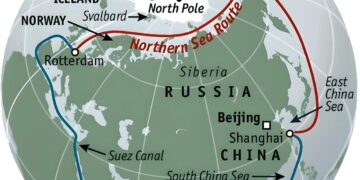
The ultimate irony of contemporary European statecraft lies in the total inversion of its own historical legacy. Europe—the birthplace of Bismarckian Realpolitik and cold material calculation—has abandoned power politics in favor of procedural governance and normative virtue signaling. Treating proximate continental resources as permanently off-limits while relying on extended, vulnerable sea lanes for foreign energy exchanges one dependency for a vastly more expensive, asymmetrical alternative. So long as Brussels mistakes regulatory overreach for geopolitical power and moral posturing for strategic autonomy, the crumbling of Europe’s economic pillars will remain a tragedy authored entirely from within.
FOOTNOTES:
[^1]: Christine Lagarde, “Finding a new path for growth in a changing world,” Address at the World Economic Forum, Geneva, 2026.
[^2]: European Central Bank, Competitiveness and Energy Price Differentials in the Euro Area, ECB Occasional Paper Series, 2025.
[^3]: European Commission, Report on the Impact of Sanctions and Energy Decoupling on EU Industrial Competitiveness, Brussels, 2025.
[^4]: Regulation (EU) 2024/1689 of the European Parliament and of the Council laying down harmonised rules on artificial intelligence (Artificial Intelligence Act), Official Journal of the European Union, 2024.
[^5]: Centre for European Policy Studies (CEPS), Regulatory Moats: How Precautionary Law Entrenches Foreign Tech Dominance, CEPS Task Force Report, 2025.
[^6]: European Commission, Capital Markets Union: Progress Report on Integration and Investment Flows, Brussels, 2025. [^7]: International Institute for Strategic Studies (IISS), Transatlantic Capital Flight and the Industrial Realities of the Inflation Reduction Act, IISS Policy Brief, 2025.
© 2026 Argumentum