






















The United States has launched a new economic offensive against Iran, expanding sanctions and warning third countries that they could face punitive measures if they continue to provide economic support to Tehran.
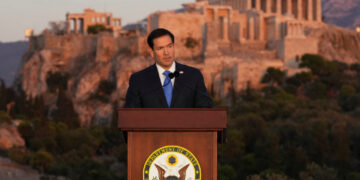
U.S. Treasury Secretary Scott Bessent announced Monday the launch of “Operation Economic Outcast,” a campaign that the Trump administration describes as one of its most powerful financial efforts against Iran. The goal is to further isolate the Iranian economy and disrupt the financial networks that allow Tehran to generate revenue and evade sanctions.
“Our goal is to cut off every economic resource that keeps this regime going,” Bessent said, warning that Washington would target revenue streams it considers illicit.
According to the U.S. Treasury Department, the new measures target around 60 entities, individuals and vessels linked to Iran. The campaign focuses particularly on digital assets, technology, gold, aviation and maritime transportation.
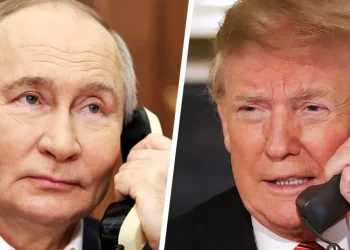
Bessent said President Donald Trump was holding calls with world leaders and would ask them to end economic activities with Iran that Washington considers unacceptable.
“We do not have infinite patience,” Bessent warned.
He said any country continuing to support Iran should be prepared for U.S. sanctions. Tehran, he argued, now faces a choice between “severe global isolation” and a path toward reintegration into the global economy.
Economic pressure instead of a new military offensive
The new campaign comes nearly six months into the U.S.-Israeli war with Iran, as negotiations aimed at ending the conflict have failed to produce a lasting agreement.
The Trump administration argues that maximum economic pressure could force Tehran to make concessions while reducing the need for a renewed large-scale military operation. Bessent has suggested that total financial isolation could make further military action less necessary.
At the center of the crisis is also the Strait of Hormuz, one of the world’s most important energy corridors. Before the war, roughly 20% of global oil shipments passed through the strait. Disruptions to shipping have affected energy markets and kept oil and gas prices elevated.
China faces growing U.S. pressure
One of the most sensitive issues is China’s economic relationship with Iran. China is the largest buyer of Iranian oil, and Washington has warned that countries continuing to do business with Tehran could face secondary sanctions.
Bessent said it would be in China’s interest to help reopen the Strait of Hormuz fully and bring energy prices down.
Beijing, however, has rejected the U.S. pressure, arguing that sanctions and unilateral measures do not help resolve disputes and only increase tensions. China has called for a return to dialogue and a political solution.
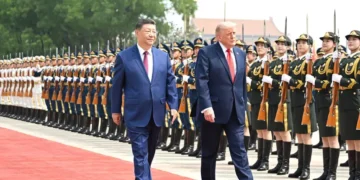
The issue is likely to gain further importance ahead of a planned meeting between Donald Trump and Chinese President Xi Jinping in Washington.
Can sanctions force Iran to give in?
The effectiveness of the new economic offensive remains uncertain.
Iran has lived under U.S. sanctions for nearly five decades and has developed alternative networks for trade and financing. Analysts warn that intensified economic pressure could further weaken the Iranian economy, but it does not necessarily guarantee political change in Tehran.
Economist Mehdi Ghodsi has argued that Iran’s government may continue to resist the pressure even as the economic and human costs of the conflict increase.
The U.S.-Iran confrontation is therefore entering a new phase: from military strikes and battlefield pressure to a struggle over Tehran’s financial lifelines. The outcome will depend not only on Washington’s ability to close Iran’s economic channels, but also on whether China, India and other countries are willing to comply with U.S. pressure.
© 2026 Argumentum