

























By Ambassador Arben Cici
Thirty-five years ago today, on 1 October 1991, the Embassy of the United States reopened in Tirana, a landmark date in bilateral relations that deserves to be remembered with due significance.
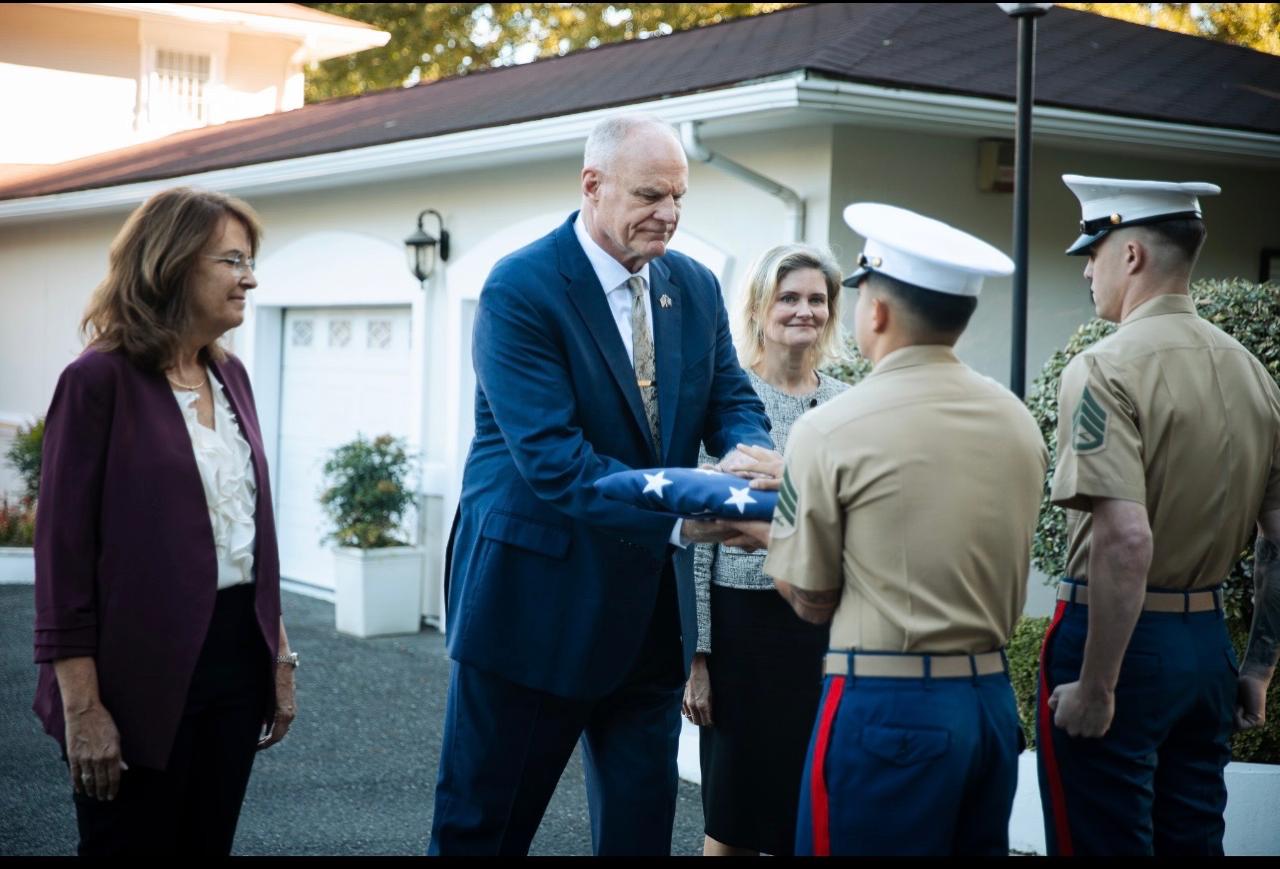
And now, after a lengthy period without an appointed ambassador, the United States is sending to Tirana a representative who does not come from diplomacy. Eric Wendt comes from a world in which the words mission, discipline, objective, commitment, and responsibility carry an entirely different meaning.
For months, Albanians had been keeping their eyes fixed on Elbasan Street. Their greatest concern was why the American ambassador was not coming, and when he would finally arrive. Everyone was eagerly awaiting the ambassador.
In the Albanian imagination, the American ambassador still resembles something of a mysterious figure who arrives with a suitcase, a fine suit, a few strong statements and, why not, a magic wand to solve the problems we have been unable to solve for decades.
Water? Fix it.
Food safety? Fix it.
Education? Fix it.
Healthcare? Fix it.
Pensions? Fix them.
The environment? Fix it.
Traffic? Fix it.
Justice? Ah, that is another story.
And above all, corruption, the gangrene that has penetrated so deeply into the relationship between citizens and the state that, for many Albanians, the word justice still sounds like a door that exists but whose key is almost impossible to find; or like a whip cracking through the air, whose sound alone reaches the foundations of the state pyramid.
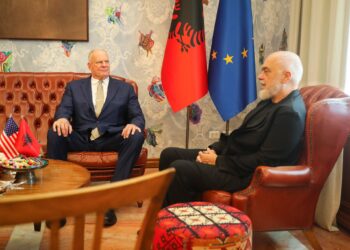
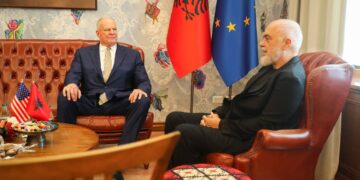
At last, the Ambassador arrived in Tirana. The eagerness and impatience of our senior officials to demonstrate loyalty to their most powerful strategic partner, together with their boundless desire to meet the American ambassador, were immediately on display. The ceremony for the presentation of his credentials was scheduled for the very day after his arrival on Albanian soil, a Saturday, even though, one assumes, the reasons why a courtesy call with the designated Albanian minister, “Diella,” could not take place in the following days had already been duly explained to him.
So, welcome to Albania, Mr. Ambassador!
Who, in fact, is Eric Wendt?
Unlike almost all of his predecessors, the new American ambassador does not come to Tirana from a conventional diplomatic career. He comes from the United States military. And not simply from the military.
Eric Wendt is a retired Lieutenant General of the United States Army. He served for more than three decades in the U.S. military and has a long career in the U.S. Special Forces, known as the Green Berets. He served as Commander of NATO Special Operations Command and held a range of command and operational positions in Afghanistan and Iraq, as well as in important U.S. and NATO special operations structures in the Middle East.
In other words, the new American ambassador has spent most of his career in the world of Special Forces.
And that is not merely a decoration; it is a school, an experience, a different way of life.
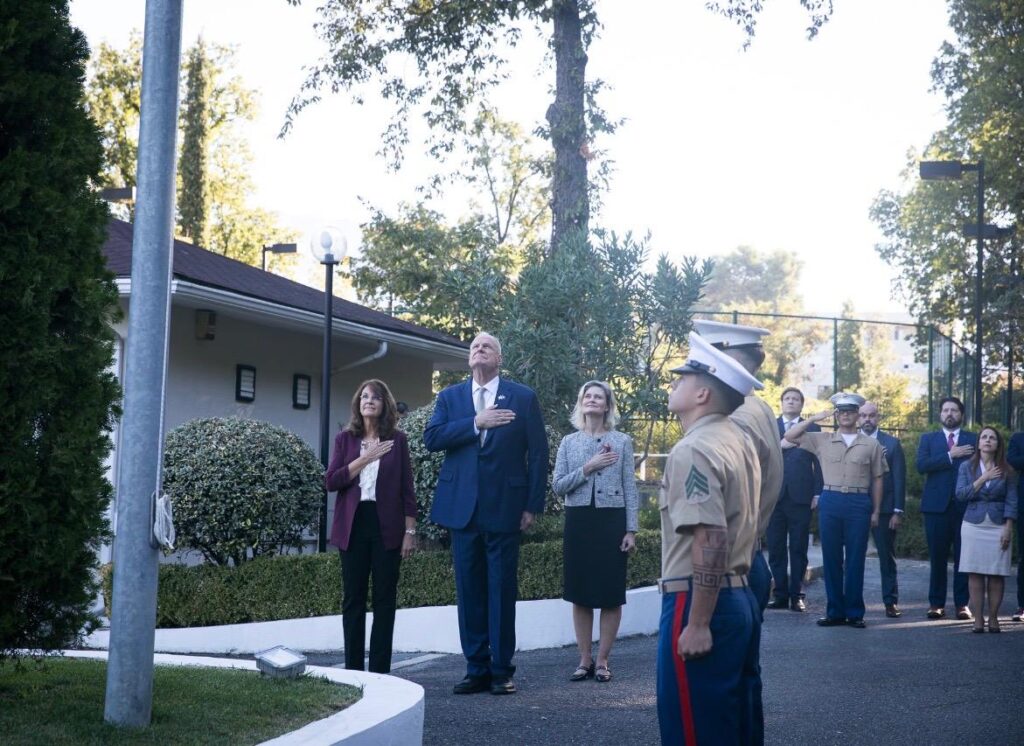
So, what exactly are the Green Berets?
The “Green Berets” are members of the United States Army Special Forces, not a generic term for all U.S. special operations forces. The green beret they wear, in the Army’s “Rifle Green” shade, color code 297, was made of wool and officially approved as part of the Special Forces uniform in December 1961.
On 11 April 1962, in a White House memorandum addressed to the United States Army, President Kennedy praised the beret, describing it as a symbol of excellence and a badge of courage, a mark of distinction in the fight for freedom.
Their missions include unconventional warfare, partner-force support, special reconnaissance, counterterrorism, assistance to security forces, and the training of partner forces. They are trained to operate in difficult environments, to work with local partners, to understand terrain, culture and local circumstances and, above all, to accomplish the mission.
They are not necessarily the people who make the most noise or demand the grandest ceremonies.
Quite the opposite.
The Green Berets are associated with discipline, adaptability, professionalism and the ability to operate in situations where things are rarely black and white.
And this is where the metaphor becomes interesting for Albania.
Because Ambassador Wendt is not arriving in a country where problems are lacking. He is arriving in a country where the problems are well known, and often acute. Almost by coincidence, he arrives at a moment when the national security of a NATO member state has become embroiled in one of the biggest scandals in its history.
But who should be concerned about the Green Berets in Tirana?
Not the ordinary citizen.
Not the person who goes to work every morning.
Not the pensioner waiting in line.
Not the student looking for an opportunity.
Not the honest and dedicated police officer.
Not the middle-class professional who, ticket in hand, is being pushed to leave this country.
Not the businessperson who pays taxes and asks for nothing more than the freedom to work.
Not the protesters who have been standing peacefully on the boulevard for four months.
If there are people who should feel the weight of the words “the fight against corruption and organized crime,” so forcefully emphasized during the Ambassador’s Senate hearing, they are those who have turned breaking the law into a way of life.
Those who believe that power is their personal property.
Those who think that one phone call can solve everything.
Those who believe a tender can be written before it is even opened.
Those who enrich themselves by administering public assets.
Those who believe that justice is meant for other people.
Those who think political connections are stronger than the law.
And those who, after years of escaping accountability, have begun to believe that nothing will ever happen to them.
Nevertheless, we should perhaps remember that:
The Green Berets are not the Albanian police, nor are they the “Sheriff of New York.” The American ambassador is not an Albanian prosecutor, and the United States is not coming to Albania to do the work of Albanian institutions.
But American foreign policy has other instruments: diplomacy in all its dimensions, institutional cooperation, security relations, information sharing, international cooperation, and support for institutions fighting corruption and crime. Through these channels, the Green Beret Wendt will seek to advance the priorities for which he has been entrusted with his mission.
And that may prove far more important than a magic wand.
Albania does not need an American superhero. It needs Albanian institutions that work.
It does not need an ambassador to replace the prosecutor, but honest prosecutors who cannot be replaced by politics.
It does not need an ambassador to replace the judge, but independent judges who judge according to the law.
It does not need the ambassador to fight corruption on behalf of Albanians, but for corruption to stop fighting, and undermining, Albanian institutions.
A man who spent most of his life in uniform, in a force trained for difficult missions, now comes to practice diplomacy.
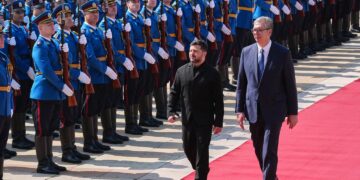
Ambassador Wendt will put on the diplomat’s suit. He will be welcomed with a red carpet. He will shake hands. He will meet high-ranking politicians dressed impeccably. He will pose for photographs. He will speak about Albanian-American friendship.
But behind the suit lies a career of more than three decades in the Special Forces, and a mind and spirit that understand the fear lurking behind a handshake, the smirk behind a smile, the rotten soul beneath an expensive suit, the truth behind a false compliment, the latest mask of megalomania, the dismissive narcissism, but above all, the humiliating hypocrisy that has, for years, infected the Albanian political pyramid like an epidemic.
But this is not the real Albania, nor is it what Ambassador Wendt would read in the diplomatic cables.
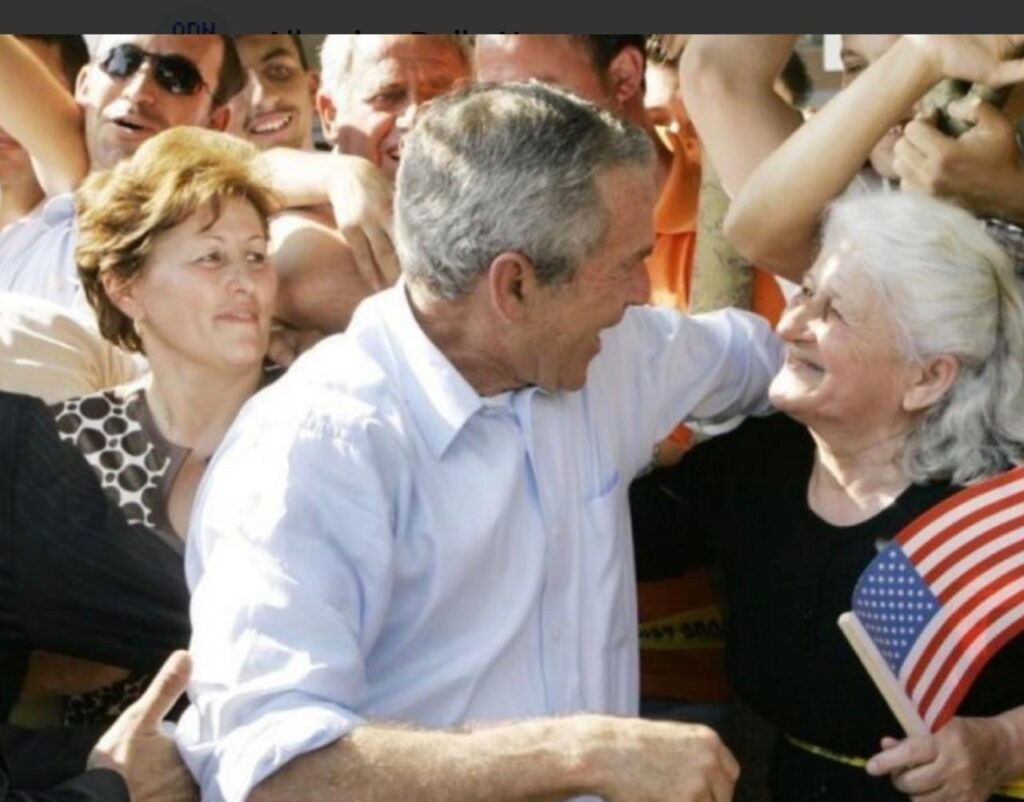
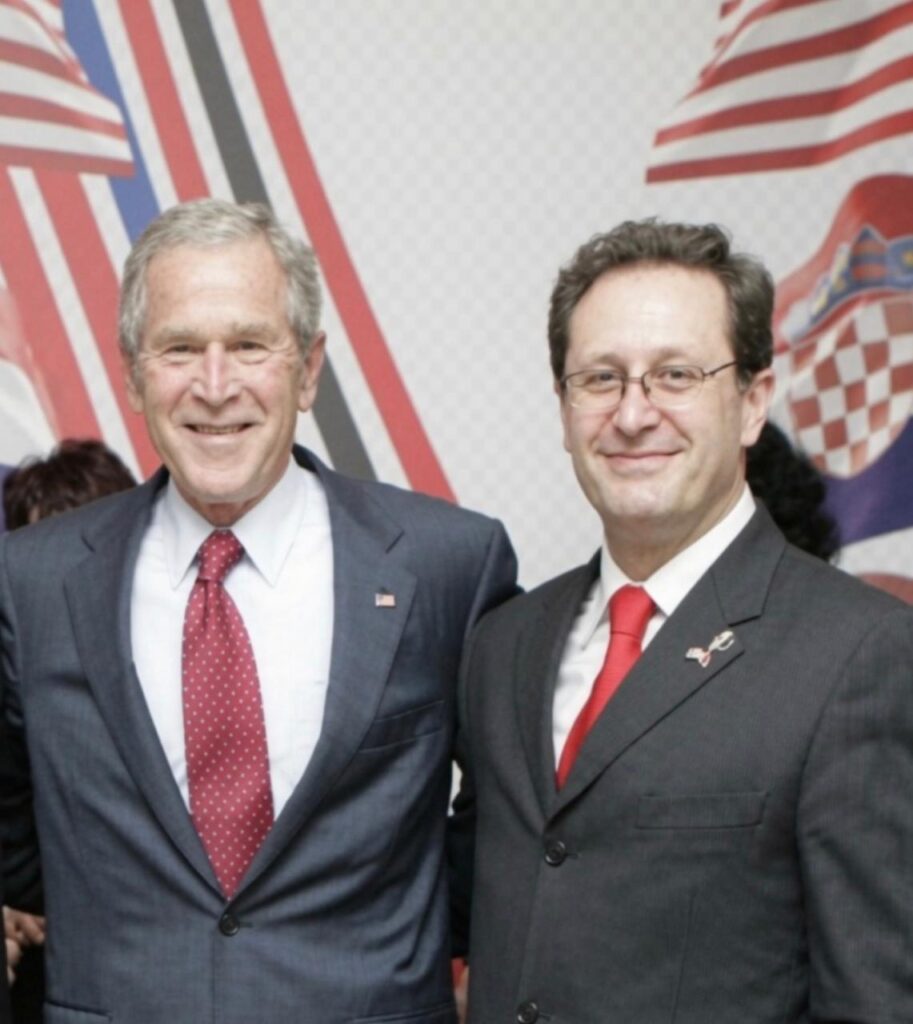
The real Albania is the people hugging President Bush during his visit in Fushë-Krujë. It is our military personnel serving on missions abroad. It is the flamingos on the streets of Tirana. It is the night-time “Taxi Driver”-s of Tirana and the neighborhoods far from the blinding glare of the fake veneer adorning the high-rise towers.
So, welcome to Albania, Ambassador Wendt!
I firmly believe that the Green Beret will remain the compass for navigating the dense, intoxicating and Machiavellian fog of Albanian politics, so that perhaps some people in this country may begin to look toward Elbasan Street with a little less complacency.
Not out of fear of the ambassador, but out of the much healthier fear that, one day, the law might truly begin to work.
And that, for a democratic society, would be the best news of all.
The Green Berets have landed in Tirana. Now it is up to Albania’s institutions to show whether they are ready for the mission.
These are the humble words of someone who genuinely loves the United States, but loves his own homeland, Albania, even more.
© 2026 Argumentum