




• SHQIPËRI
  • KOSOVË
  • MAQEDONIA E VERIUT
  • MALI I ZI
  • Revista në PDF
21 October, 2026
 
  • Home
  • OP/ED

    THE GREEN BERETS LAND IN TIRANA

    Some Myths Simply Refuse to Die

    UN Monologue: Why Kosovo Cannot Respond to Serbia’s Accusations

    The War That Was Waged Before the War

    The Structural Impasse: Can Merz Offer a Leadership Anchor to Europe?

    Will Europe Finally Ditch the Poisonous Myth of Perpetual Peace?

    Resolution 522 – When the U.S. Congress Honored Skanderbeg

    The Reconfiguration of Maritime Governance: Structural Hegemonic Decline and the Arctic Pivot

    Between Political Calculation and Retreat: Croatian Communists at the End of an Era

  • Interview

    Exclusive Interview with Oleksandr Tyshchenko: A 40-Year Legacy of Chernobyl, Nuclear Risks, and Global Responsibility

    INTERVIEW: ZLATKO KRAMARIĆ – THOUGHTS ON THE OLD CONTINENT

    EXCLUSIVE / Ukrainian Ambassador to Albania, Volodymyr Shkurov: “Ukraine wants peace, but not at the expense of its freedom and independence”

    EXCLUSIVE| Ambassador Tayyar Kagan Atay: Türkiye and Albania, a Strategic Partnership Rooted in Shared Heritage and a Common Vision for the Future

    “Diplomacy, Not War”: Palestinian Ambassador to Albania Calls for Justice, Peace, and Global Action for Gaza

    Exclusive: “Even After Tito – Tito”/ Ambassador Zlatko Kramarić on Authoritarian Legacies and Democracy’s Future in the Balkans

    The Conclusion of the Diplomatic Mission / Ambassador Dancho Markovski: Strengthening Albania-North Macedonia Relations for a Shared European Future

    A Century of Diplomatic Relations Between Albania and Russia: Exclusive Interview with the Russian Ambassador to Albania, H.E. Alexey Zaytsev

    Exclusive/ The chairman of the Freedom Party, Ilir Meta: “The will of the citizens will triumph in Albania, as it did in North Macedonia”

  • Realpolitik

    Long live the UN! A prewarned decision! A  G – 2? Putin in Miami!

    Montenegrin diplomatic blunder! Small Cyprus without great hopes! 4 blocks of Enlargement challenges! Political earthquake in Germany!

    Belgrade, Zelensky and the Consulates! The European Pact takes water! Drone in Leipzig and hybrid war! Why a  ceasefire is needed in September

    The Summit of Unity! Think of peace and prepare for war! It’s only the start to the end! Just a pause between two wars!

    Peace with war diplomacy! The protest,  image and tourism! Why this silence from the EU Commission and Council? A deal or a pause?

    Just kind words  in Tivat! Where is the peace!? A deal yes, peace No!What is happening with USA and  EU?  5 elections but no solution!

    IBAR? ”Sufficiently! Much ado about nothing! Shart contrasts in Beijing! Where is the exit?!

    Neither peace nor war! Peace with bombs?! IBAR in autumn?! Not another Hormuz in Taivan! 

    IBAR – a springing board or an obstacle? Can we catch the EU Negotiation train 2027? When the dress makes the news!  EU electoral April  ends in a draw 1:1!  

  • Current Events

    Albania Protests Enter Eighth Day as Demonstrators Demand Prime Minister Rama’s Resignation

    Albanian PM Rama Holds Up Protest Stone: “There Can Be No Negotiation with Violence”

    Albania’s Interior Minister Says Protests Have “Crossed the Red Line” as 295 People Injured in Six Days

    Ten Police Officers Injured in Attack on Police Station in Albania’s Capital

    Albanian PM Rama: Violent Protests Challenge EU Accession Goal for 2030

    Albania Police Chief Alleges Protest Violence Orchestrated by Organisers at Home and Abroad

    Albanian PM Rama Rules Out Resignation Amid Escalating Protests

    EU Gives Green Light to the Provisional Closure of Albania’s Chapter 20 Negotiations

    Balkan Business Forum in Tirana: Albania and Türkiye Seek to Expand Investment and Regional Economic Cooperation

  • Top News

    Albanian PM Rama Holds Up Protest Stone: “There Can Be No Negotiation with Violence”

    Albania’s Student Protests Enter Sixth Day as Clashes with Police Intensify; Rama Rules Out Resignation

    Albania Student Protests Spread to Multiple Cities as Clashes Escalate

    NATO to Hold Annual Nuclear Deterrence Exercise Steadfast Noon in Italy

    Albania’s Parliament Approves Territorial Reform, Reducing Municipalities from 61 to 46

    US Secretary of State Marco Rubio speaks at the Pnyx hill, where ancient Athenians held democratic assemblies, with the ancient Parthenon temple atop the Acropolis in the background, in Athens, Greece October 7, 2026.   Mark Schiefelbein/Pool via REUTERS

    Rubio in Athens: When History Becomes Political Doctrine

    Albanian PM Rama to U.S. Democrats: “Don’t Come to Albania to Take Revenge on Trump”

    Albania’s Top Diplomat Ferit Hoxha at Berlin Process: “EU Enlargement Is a Strategic Investment in Europe’s Security”

    From Pre-Trial Measures to the Presumption of Innocence: What Changes in Albania’s Criminal Procedure Code

  • YOUR VOICE
  • ARGUMENTUM MAGAZINE
  • Shqip
No Result
View All Result
Argumentum
No Result
View All Result
Home Balkan Overview

Pre-Election Neronism of the Montenegrin Prime Minister

21 October, 2026
in Balkan Overview, ENGLISH, In Focus
A A
Share on FacebookShare on Twitter

Dr. Srdja Pavlović

In July, in the distant year 64 AD, the imperial city of Rome was burning (Magnum incendium Romae). The fire raged for nine days and destroyed approximately two-thirds of the city. Despite the historical sources, including Tacitus’s accounts of the fire, this event gave rise to a powerful mythology about Emperor Nero ordering the city to be set ablaze because he desired some artistic inspiration, and that he watched the flames while plucking the strings of his lyre.

Tacitus remains an important primary source for the history of Rome, but the mythologized narrative of imperial madness has survived through the centuries and has become point of comparison for various forms of rulers’ arbitrariness, as well as a powerful form of criticism of leaders who place their will and ego above the collective interest of the state they govern.

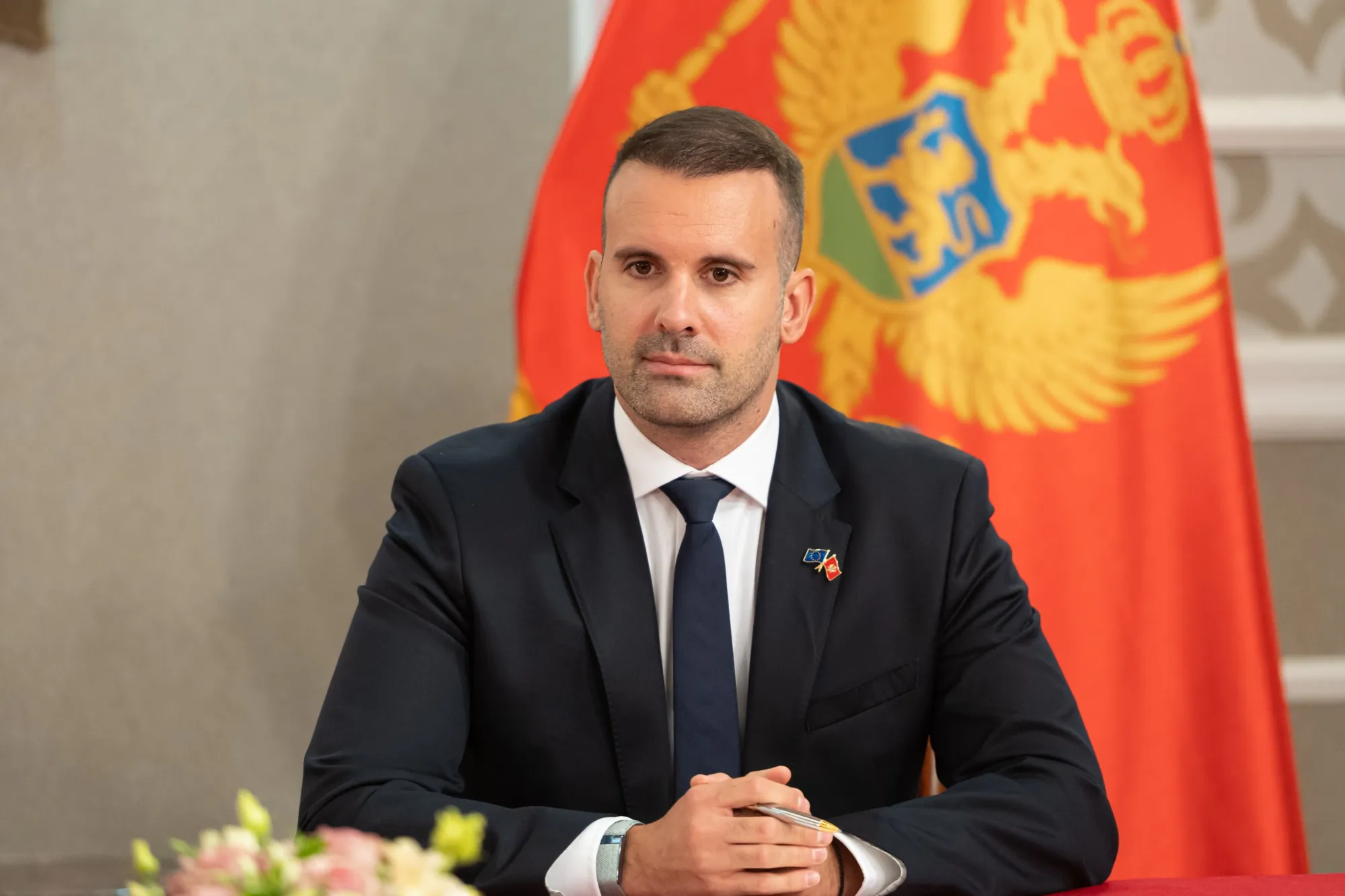
The contemporary Montenegrin situation of systemic, constitutional, social, political, and economic crisis and the manner in which decisions of vital importance to the state and its citizens are made as well as the disregard for the potentially catastrophic consequences of reform measures and the nonchalance and indolence with which Prime Minister Milojko Spajić approaches these important decisions—all invite comparison with the Roman emperor. Hence the title of this text.

I am aware that Montenegro is not, and never will be, Rome, regardless of how we see ourselves and how convinced we may be that Montenegro is small, “but that has never diminished its greatness.” Its prime minister Spajić, likewise, is not an emperor of Nero’s caliber, although it seems that he often imagines himself to possess imperial abilities and qualities.

Nevertheless, Montenegro is my Rome. I could not, in good conscience, remain silent while young political arriviste sacrifices the lives of generations yet to be born at the altar of his neoliberal obsessions and pushes the state towards the zone of debt bondage.

While serving as the Minister of Finance in 2022, Milojko Spajić, introduced his Europe Now 1 program of economic and tax reforms which resulted in a minimum wage increase and nominal wage increase but at the expense of a healthcare insurance. It eliminated the mandatory individual health insurance contribution previously deducted from employees.

After becoming Prime Minister in 2024, Spajić’s government implemented Europe Now 2 program, further raising minimum wage and pensions. This time around, it was done at the expense of the existing public pension fund. The government had slashed individual pension contributions, which created a sizable structural deficit in the state-run pension fund. To keep things afloat, the government subsidizes pensions out of the general budget which, in turn, creates an annual budget gap estimated between €650 million and €1 billion. In addition, immediate and severe price hikes and inflation quickly eroded wage increases while the foreign borrowing increased sovereign debt. Criticism of these programs came from the European Commission (EC), the International Monetary Fund (IMF) as well as from local economic analysts, but to no avail.

Premier Spajić continues his agenda by introducing the third program called Euro Model, promising tiered minimum wage hikes, labour tax reductions and pension reforms, all starting January 1, 2027. Shortly after announcing Euro Model, the government borrowed 400 million Euros from a foreign bank. Meanwhile the economic growth index shows a worrying downward trend from 6,5% in 2023 to 2,7% in 2025, while public debt had reached 65% of the GDP, all clearly signaling the limits of the Euro Model.

The aforementioned international institutions, including World Bank, pointed to inflationary pressures, risks to fiscal sustainability and public debt as well as possible workplace dissatisfaction created by the leveling of wages (uravnilovka). Premier Spajić and his government, however, remain unphased by such warnings.

This, however, is not a text about economics and finance. It is a text about the successful effort of the current executive government to fundamentally change the social and economic order in the country and to do so in accordance with the radical postulates of the neoliberal model of social and economic organization.

After the military victory in 1945 and throughout the lifetime of the SFRY, there existed an unwritten social agreement concerning the fundamental principles upon which the newly formed state should stand. That revolutionary transformation of the system, among other things, resulted in the establishment of three models that provided relative stability to the system and enabled citizens to plan their lives over the long term. These were models of public education, public healthcare system and guaranteed pension for all citizens, which the state subsidized through income tax. This provided a certain level of social stability, although these models were far from ideal. The high tax rate at the time and the numerous shortcomings of these models can and should be critically analyzed today. Nevertheless, it is an undeniable fact that citizens of the SFRY could rely on them and enjoy the benefits they offered.

In Montenegro, this has long ceased to be the case.

Public education system was significantly undermined during the rule of the unified DPS (until 1997) and was further degraded during decades of rule by the quasi-sovereigntist DPS faction under the political leadership of Milo Đukanović. This was the period when, under the baton of the self-proclaimed “most neoliberal economist in the world,” university professor Veselin Vukotić, basic mechanisms of this model of social organization were introduced, such as the privatization of state property and market deregulation. To be fair, this process lasted a long time and its effects were relatively benign. The public healthcare and public pension systems underwent certain changes but remained overall functional.

The elements that survived the vision of past domestic neoliberal gurus and their version of the “strong-but-limited state” were elevated to the level of absurdity during the last decade under the rule of a young kleptocracy and kakistocracy without any guiding ideological principle. Truth be told, we are witnessing Montenegro’s traditional developmental trajectory: from bad to worse.

Prime Minister, Milojko Spajić, is diligently building upon the foundations laid by his predecessors. His three-phase plan of economic, fiscal, and social reforms is already revealing all its ugly faces. To be precise: it shows them only to those who have the ability and courage to see them.

One face is that of basic pre-election marketing. The second is the absence of fiscal discipline. The third is the erasure of the concept of collective and social solidarity. The fourth is the uncontrolled and dangerously challenging growth of social inequalities. The fifth is the drastic weakening of public services in the areas of the state’s social, healthcare, and educational responsibilities.

Each of these faces carries the same message: the absence of long-term concern by those in power for everyone, and especially for the most vulnerable segments of the population. This is the central tenet of all three phases of the Prime Minister master reform plan.

The result will be a kind of neoliberal leveling that will divide Montenegrin society even more deeply and create an economically even more vulnerable population. History teaches us that such a population is exceptionally susceptible to political manipulation and easily falls under all sorts of malignant external influences. The Prime Minister’s plan, therefore, undermines the fundamental security structure of Montenegrin society.

The earlier observation concerning the Prime Minister’s lack of concern thereby acquires a significant security-related dimension that represents a challenge on the path toward our European integration. Those who believe that the European Union will take care of the impending socio-economic crisis in Montenegro and help overcome it should be reminded of the following fact: debt bondage is but one of the models used by and upon which neoliberal capitalism rests.

It is worth recalling that pushing a country towards bankruptcy is the best way to destroy Montenegro as a state. It is, therefore, legitimate to wonder if the Montenegrin Prime Minister is implementing someone else’s agenda, and whether he is succeeding chiefly because of the low political-level culture of a generally unenlightened population?

Although these are two very different historical periods and two different political and security contexts, I was reminded of the historical reference to a scorched earth policy od yester years: the so-called the so the so-called Nerobefehl of March 19, 1945, in Germany, by which the then Chancellor ordered the destruction of everything that could be useful to the advancing Allied armies and to the German population that had survived the war. Could Europe Now 1, 2 and Euro Model be neoliberal matches that would set Montenegro ablaze and turn its economy and its society into a scorched earth?

What is fascinating is that Prime Minister Spajić completed his revolutionary transformation of Montenegro’s socio-economic order through two tweets on the social network X! In only two messages, he erased everything that remained of the aforementioned social agreement and thereby fulfilled the most intimate dreams of his neoliberal predecessor, professor Veselin Vukotić.

Less than attentivce Montenegrins, who have always been economically depressed and have treated and justified their poverty through an epic readiness to live in Walter Benjamin’s  “absolute time,” in which the historiographical metafiction of honor, morality and dignity dominates, have perfected greed as a means of survival. Over time, this became a collective characteristic, dictating that one should remain “close” to those in power in order to avoid the ruler’s whip and to make it easier to grab everything and anything that appears to be free. That is why those who most vulnerable and those fiscally belong to the so-called middle class mostly shrug their shoulders and welcome promised wage increase.

They are not considering the possibility that price they might have to pay for this financial instant gratification (bankruptcy?) might be too costly for their children and grandchildren. The epic-inspired free Montenegrins might easily become slaves to multinational capital and laundered domestic and foreign money.

As my dear friend from Singapore put it, they will become an innocent socialist bride prostituted by pimps whom they themselves choose to govern the state. This friend concluded with a statement that what we are seeing in Montenegro is a counter-revolution carried out by tweet.

I could not think of a better closing remark for this analysis.

/Argumentum.al

© 2026 Argumentum

Related Posts

Current Events

Albania Protests Enter Eighth Day as Demonstrators Demand Prime Minister Rama’s Resignation

20 October, 2026
ENGLISH

Albania above all

19 October, 2026
Current Events

Albanian PM Rama Holds Up Protest Stone: “There Can Be No Negotiation with Violence”

19 October, 2026
Argumentum

“Argumentum”, një proces intelektual …

Contact Us

[email protected]
[email protected]
[email protected]

Follow Us

Media Partner

Register

Receive Argumentum Magazine by Email
  • Home
  • Privacy Policy
  • About Us
  • Contact

© 2022 Argumentum. All Rights Reserved. | NUIS: L91415033Q

Welcome Back!

Login to your account below

Forgotten Password?

Retrieve your password

Please enter your username or email address to reset your password.

Log In

Add New Playlist

No Result
View All Result
  • Home
  • OP/ED
  • Interview
  • Realpolitik
  • Current Events
  • Top News
  • YOUR VOICE
  • ARGUMENTUM MAGAZINE
  • Shqip

© 2022 Argumentum. All Rights Reserved. | NUIS: L91415033Q

This website uses cookies. By continuing to use this website you are giving consent to cookies being used. Visit our Privacy and Cookie Policy.