
























• SHQIPËRI
  • KOSOVË
  • MAQEDONIA E VERIUT
  • MALI I ZI
  • Revista në PDF
4 November, 2026
 
  • Home
  • OP/ED

    Zlatko Kramarić: Serbia after Vučić: the end of an era or the beginning of uncertainty?

    THE GREEN BERETS LAND IN TIRANA

    Some Myths Simply Refuse to Die

    UN Monologue: Why Kosovo Cannot Respond to Serbia’s Accusations

    The War That Was Waged Before the War

    The Structural Impasse: Can Merz Offer a Leadership Anchor to Europe?

    Will Europe Finally Ditch the Poisonous Myth of Perpetual Peace?

    Resolution 522 – When the U.S. Congress Honored Skanderbeg

    The Reconfiguration of Maritime Governance: Structural Hegemonic Decline and the Arctic Pivot

  • Interview

    Exclusive Interview with Oleksandr Tyshchenko: A 40-Year Legacy of Chernobyl, Nuclear Risks, and Global Responsibility

    INTERVIEW: ZLATKO KRAMARIĆ – THOUGHTS ON THE OLD CONTINENT

    EXCLUSIVE / Ukrainian Ambassador to Albania, Volodymyr Shkurov: “Ukraine wants peace, but not at the expense of its freedom and independence”

    EXCLUSIVE| Ambassador Tayyar Kagan Atay: Türkiye and Albania, a Strategic Partnership Rooted in Shared Heritage and a Common Vision for the Future

    “Diplomacy, Not War”: Palestinian Ambassador to Albania Calls for Justice, Peace, and Global Action for Gaza

    Exclusive: “Even After Tito – Tito”/ Ambassador Zlatko Kramarić on Authoritarian Legacies and Democracy’s Future in the Balkans

    The Conclusion of the Diplomatic Mission / Ambassador Dancho Markovski: Strengthening Albania-North Macedonia Relations for a Shared European Future

    A Century of Diplomatic Relations Between Albania and Russia: Exclusive Interview with the Russian Ambassador to Albania, H.E. Alexey Zaytsev

    Exclusive/ The chairman of the Freedom Party, Ilir Meta: “The will of the citizens will triumph in Albania, as it did in North Macedonia”

  • Realpolitik

    Due to need and not will!!From inside first, then from outside! The broken image and mirror! Peace as wishful thinking!

    Long live the UN! A prewarned decision! A  G – 2? Putin in Miami!

    Montenegrin diplomatic blunder! Small Cyprus without great hopes! 4 blocks of Enlargement challenges! Political earthquake in Germany!

    Belgrade, Zelensky and the Consulates! The European Pact takes water! Drone in Leipzig and hybrid war! Why a  ceasefire is needed in September

    The Summit of Unity! Think of peace and prepare for war! It’s only the start to the end! Just a pause between two wars!

    Peace with war diplomacy! The protest,  image and tourism! Why this silence from the EU Commission and Council? A deal or a pause?

    Just kind words  in Tivat! Where is the peace!? A deal yes, peace No!What is happening with USA and  EU?  5 elections but no solution!

    IBAR? ”Sufficiently! Much ado about nothing! Shart contrasts in Beijing! Where is the exit?!

    Neither peace nor war! Peace with bombs?! IBAR in autumn?! Not another Hormuz in Taivan! 

  • Current Events

    U.S. Invests More Than $40 Million to Strengthen Albania’s Cybersecurity

    US Midterms: What the vote means for Trump, Europe and the Global Balance of Power

    Albania Targets Completion of EU Accession Negotiations’ Technical Phase by December 2027

    Albania Cuts Municipalities from 61 to 46 Ahead of May 2027 Local Elections

    Albanian PM Rama rules out resignation amid protests, tells Kathimerini: “Governments change through elections”

    Albanian Ambassadors’ Council: Political Change in Serbia Should Open the Way to Normalization with Kosovo

    Albanian PM Edi Rama Renews Dialogue Offer Ahead of Nationwide Anti-Government Protest

    Germany’s Merz pledges support for EU accession of West Balkan states

    Albania’s Rama Blames ‘Orchestrated Violence’ for Protests, Announces Tougher Measures

  • Top News

    Albanian PM Rama: Albania Targets Completion of EU Accession Talks by 2027, but 2030 Membership Is Not Guaranteed

    Albania Cuts Municipalities from 61 to 46 Ahead of May 2027 Local Elections

    Vučić Loses the Elections, but Is Serbia Abandoning Its Policy of Destabilization?

    Kosovo PM Kurti at Berlin Process Summit: Kosovo Seeks EU Candidate Status, Calls for Collective Response to Security Threats

    Serbia ahead of the 2026 elections: Foreign influence, electoral integrity and challenges to sovereignty

    Albanian PM Rama Holds Up Protest Stone: “There Can Be No Negotiation with Violence”

    Albania’s Student Protests Enter Sixth Day as Clashes with Police Intensify; Rama Rules Out Resignation

    Albania Student Protests Spread to Multiple Cities as Clashes Escalate

    NATO to Hold Annual Nuclear Deterrence Exercise Steadfast Noon in Italy

  • YOUR VOICE
  • ARGUMENTUM MAGAZINE
  • Shqip
No Result
View All Result
Argumentum
No Result
View All Result
Home ENGLISH

How the BIA Became Involved in Gathering Electoral Support for the SNS in Kosovo and Serbia

4 November, 2026
in ENGLISH, In Focus
A A
Share on FacebookShare on Twitter

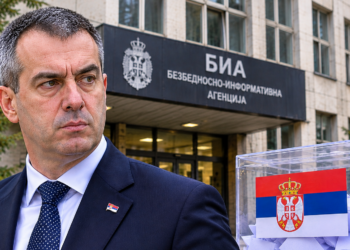
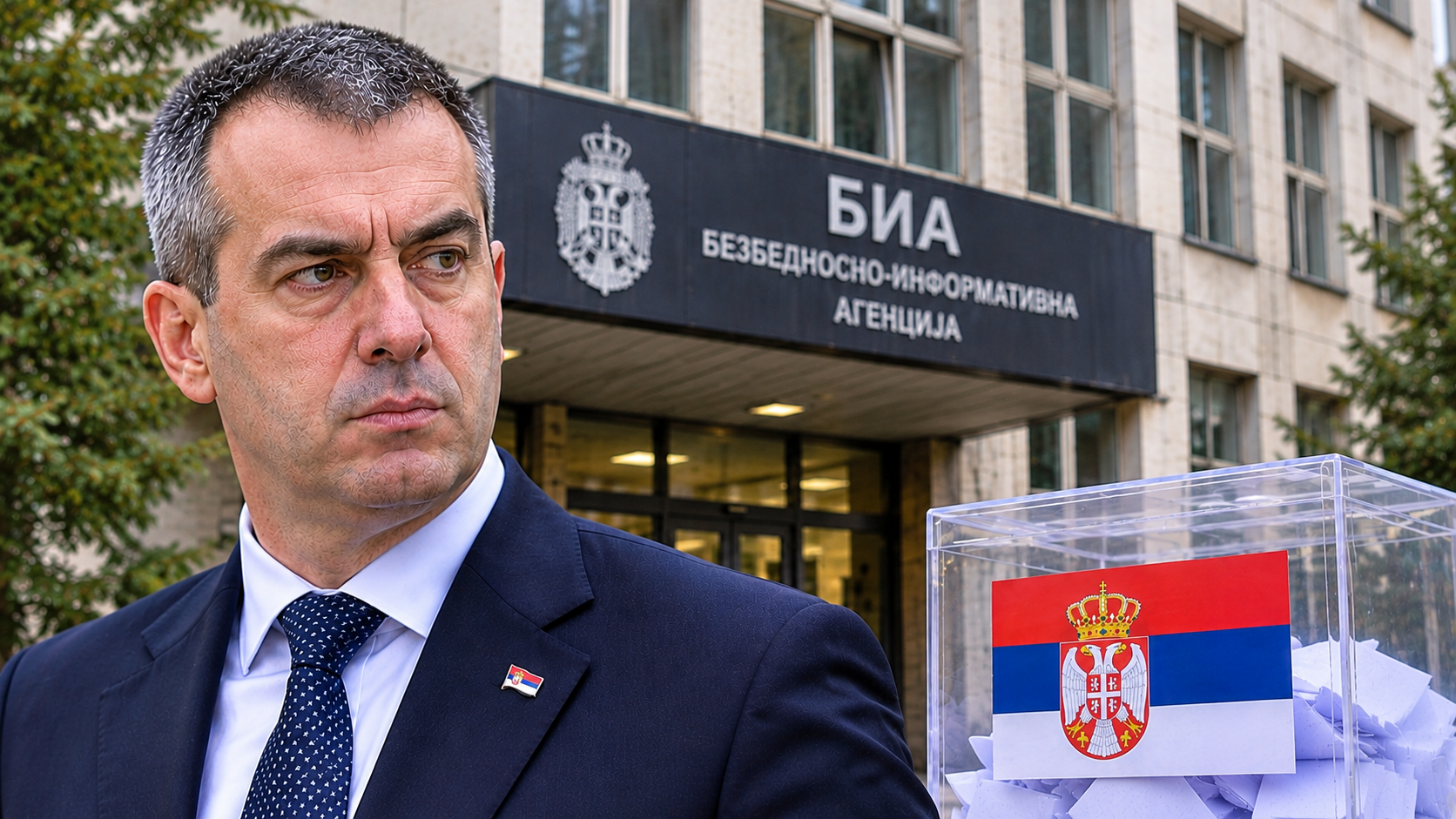
An audio recording of Fehim Sali in Kosovo and a criminal complaint against the BIA’s director, Vladimir Orlić, in Serbia highlight the reported involvement of Serbian intelligence in gathering electoral support for the SNS. Both cases raise concerns about the use of intelligence capabilities to serve party-political interests, while in Kosovo they also reveal the risk of political data and community networks being exploited as instruments of hybrid influence.
Assistant Professor Dr Gurakuç Kuçi – Professor at Universum College and External Associate at ISLH OCTOPUS

Fehim Sali’s communications with a Serbian intelligence official concerning the collection of votes among the Gorani community in Kosovo, together with the criminal complaint filed on 2 November 2026 against the director of the BIA, Vladimir Orlić, and seven other senior officials in Serbia, represent two developments linking the Serbian intelligence service to the organisation of electoral support for the Serbian Progressive Party (SNS). In the first case, Sali reported on individuals who agreed or refused to support the SNS, while in the second, senior BIA officials are accused of imposing the collection of votes for the same party as a compulsory duty on intelligence personnel.

The connection between these cases raises concerns that extend beyond conventional electoral organisation, as the involvement of intelligence structures in identifying political supporters and opponents creates opportunities for gathering information, exerting pressure and expanding networks of influence. In Kosovo, where information about citizens’ political views was being reported to a BIA official, such activities also acquire a national security dimension, involving hybrid influence exercised through electoral mechanisms.

Gathering Electoral Support for the SNS Through Links to the BIA

In an audio recording published on 4 September 2026, Fehim Sali explained to Želimir Matović, identified by Kosovo’s Special Prosecution Office as a BIA official, how signatures were being collected in support of the SNS. He referred to documents provided to him by an individual named “Nikolla” and explained that he had separately recorded the names of those who had said “NO”, turning their refusal to offer political support into information to be reported.

In electoral activities, lists are used to identify and mobilise voters, but recording those who refuse to provide support also serves as a means of mapping political attitudes within a community. When such information is passed to a foreign intelligence official, it goes beyond party organisation, as it can be used to identify influential individuals, understand social relationships and select people who may be subjected to pressure.

During the same conversation, Sali referred to the use of “dajak” (beatings) to secure electoral support, the sending of documents to Belgrade and his concern that the materials might be discovered while he was crossing the border. These details link the collection of votes to methods of coercion and the cross-border transfer of information, shifting attention away from the number of signatures towards those responsible for requesting, managing and receiving the lists.

From Kosovo’s national security perspective, the concern is not citizens’ support for a political party, but the recording of their political attitudes and the reporting of such information through communications with a foreign intelligence service. This distinction is also essential to protecting the Gorani community from political pressure and the exploitation of community relationships for political purposes.

“Moja Gora” and Organisation Through Local Contacts

Part of the organisational dimension of the case concerns the association “Udruženje Moja Gora”, registered in Serbia on 2 April 2024 under registration number 28379404. Verification of public registers, cross-referenced with information from CompanyWall, identifies Fehim Sali as its representative. The association was mentioned in reports concerning efforts to gather support for the SNS among the Gorani community during 2024.

Sali’s connection to this organisation broadens the scope of the analysis beyond his individual communications with the BIA to the contacts and structures through which electoral mobilisation may have been organised. Community networks possess knowledge of local relationships and access to individuals, making them potential intermediaries for political mobilisation. Information gathered through these networks can also serve an intelligence function when passed on to intelligence structures.

Sali’s reported activities are linked both to 2024 and to preparations for the 2026 elections, raising the possibility that the same individuals, forms and communication channels were used during both periods.

The Criminal Complaint Against Orlić and the Political Use of Intelligence

On 2 November 2026, lawyer Ivan Ninić filed a criminal complaint with the Prosecutor’s Office for Organised Crime in Belgrade against the director of the BIA, Vladimir Orlić, and seven other senior officials of the agency. According to the criminal complaint, in late May, intelligence personnel in Belgrade, Kragujevac, Smederevo and Paraćin were compelled by their superiors to collect so-called “capillary votes” for the SNS using party forms.

The collection of so-called “capillary votes” is a method of identifying potential supporters in advance and reporting their engagement within an electoral network. The significance of the complaint lies not in the use of this method by political parties, but in the allegation that intelligence personnel were required to gather support for the SNS as part of their official duties, placing the staff and hierarchical structure of a state institution at the service of electoral interests.

Before his appointment as head of the BIA in June 2024, Orlić had been a senior SNS official and President of the National Assembly of Serbia. This political connection forms part of the context of the complaint, which calls for an examination of how institutional powers and lines of authority within the intelligence service under his leadership were used.

The criminal complaint became public following Serbia’s parliamentary elections on 25 October 2026, in which, according to preliminary results, the Student List secured 52.71 per cent of the vote, compared with 39.17 per cent for the SNS-led list. In its assessment of 26 October, the OSCE Office for Democratic Institutions and Human Rights (ODIHR) identified the misuse of state resources and electoral pressure. These findings describe the broader electoral environment, while the complaint against the BIA leadership separately raises the question of intelligence involvement in party-political mobilisation.

The Sali and Orlić Cases: From Electoral Organisation to Hybrid Influence

The case of Fehim Sali in Kosovo and the criminal complaint against Vladimir Orlić in Serbia are linked by a common activity: the organised collection of electoral support for the SNS involving BIA structures. In Kosovo, Sali collected signatures, recorded the names of individuals who refused to provide support and reported this information to Serbian intelligence official Želimir Matović. In Serbia, according to Ninić’s criminal complaint, senior BIA officials had engaged agency personnel in collecting so-called “capillary votes” using SNS forms. The complaint against Orlić therefore gives Sali’s activities a broader institutional dimension, as it indicates that the practice of gathering party-political support, identified in communications between Serbian intelligence officials and individuals in Kosovo, was allegedly also being carried out within the agency’s own structures in Serbia.

From the perspective of hybrid warfare, the significance of this connection lies in the use of electoral mobilisation as a mechanism for gathering information and exerting political influence. Lists of supporters and those who refused to provide support represented not only information about the SNS’s electoral potential, but also data on political orientations, community relationships and individuals who could become targets of pressure. Intelligence involvement in this process creates opportunities for information collected for party-political purposes to be exploited for political profiling and the expansion of influence networks, combining electoral interests with the intelligence capabilities of a state institution.

For Kosovo, these activities represent a direct security concern, as the collection of political information about its citizens and its reporting to the BIA create opportunities for foreign influence over community relationships and political processes. Kosovo’s institutions must therefore establish not only who organised the collection of votes, but also the chain through which the lists were managed and transmitted, the links to Serbian intelligence structures and the potential use of this information to exert political pressure.

The strategic significance of these two cases extends beyond elections and their outcomes, as networks of contacts and the information gathered through them may retain their value even after political changes in Serbia. The intersection of electoral organisation and intelligence activities creates a mechanism of influence that can be used at different times and for other political objectives. For Kosovo, identifying and neutralising this mechanism is a matter of protecting its sovereignty and institutional resilience against hybrid interference by Serbian intelligence.

____________________________________________________

Note: Illustrative image generated using artificial intelligence (AI).

/Argumentum.al

© 2026 Argumentum

Related Posts

Current Events

U.S. Invests More Than $40 Million to Strengthen Albania’s Cybersecurity

4 November, 2026
Current Events

US Midterms: What the vote means for Trump, Europe and the Global Balance of Power

3 November, 2026
ENGLISH

Albanian PM Rama: Albania Targets Completion of EU Accession Talks by 2027, but 2030 Membership Is Not Guaranteed

3 November, 2026

Follow US

Subscribe

Receive Argumentum Magazine by Email

Last Posts

How the BIA Became Involved in Gathering Electoral Support for the SNS in Kosovo and Serbia

4 November, 2026

U.S. Invests More Than $40 Million to Strengthen Albania’s Cybersecurity

4 November, 2026

US Midterms: What the vote means for Trump, Europe and the Global Balance of Power

3 November, 2026

Albanian PM Rama: Albania Targets Completion of EU Accession Talks by 2027, but 2030 Membership Is Not Guaranteed

3 November, 2026
Iliana Iotova speaks after initial results show election victory in Bulgaria SOFIA, BULGARIA - NOVEMBER 1: Bulgarian President and presidential candidate Iliana Iotova C speaks to the press after initial results indicate her victory in the second round of Bulgaria s presidential election in Sofia, Bulgaria, on November 1, 2026. Hristo Vladev / Anadolu Sofia Bulgaria. Editorial use only. Please get in touch for any other usage. PUBLICATIONxNOTxINxTURxUSAxCANxUKxJPNxITAxFRAxAUSxESPxBELxKORxRSAxHKGxNZL Copyright: x2026xAnadoluxHristoxVladevx

Bulgaria Elects Iliana Yotova as First Female President

2 November, 2026
Argumentum

“Argumentum”, një proces intelektual …

Contact Us

[email protected]
[email protected]
[email protected]

Follow Us

Media Partner

Register

Receive Argumentum Magazine by Email
  • Home
  • Privacy Policy
  • About Us
  • Contact

© 2022 Argumentum. All Rights Reserved. | NUIS: L91415033Q

Welcome Back!

Login to your account below

Forgotten Password?

Retrieve your password

Please enter your username or email address to reset your password.

Log In

Add New Playlist

No Result
View All Result
  • Home
  • OP/ED
  • Interview
  • Realpolitik
  • Current Events
  • Top News
  • YOUR VOICE
  • ARGUMENTUM MAGAZINE
  • Shqip

© 2022 Argumentum. All Rights Reserved. | NUIS: L91415033Q

This website uses cookies. By continuing to use this website you are giving consent to cookies being used. Visit our Privacy and Cookie Policy.