




























The European Union’s 2026 Enlargement Package highlights widening differences in the pace of accession among candidate countries, with Montenegro emerging as the closest to membership, Albania advancing towards its 2027 negotiating target, and Moldova and Ukraine continuing their European integration efforts amid significant external pressures.
Presented by European Commissioner for Enlargement Marta Kos to the European Parliament’s Committee on Foreign Affairs, the annual assessment identifies four frontrunners – Montenegro, Albania, Moldova and Ukraine – for which the European Commission has introduced dedicated roadmaps to guide the next stages of accession negotiations.
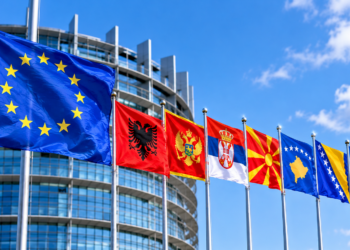
The report also underlines persistent political and institutional challenges across the Western Balkans, particularly in North Macedonia, Serbia, Kosovo and Bosnia and Herzegovina.
Montenegro: The Closest Candidate to EU Membership
Montenegro remains the leading candidate in the EU enlargement process, having opened all 33 negotiating chapters and provisionally closed 21.
According to the European Commission, Podgorica has met the closing benchmarks in all chapters, marking an important step towards completing its accession negotiations.
The Commission considers that Montenegro could conclude negotiations by the end of 2026, with an accession treaty potentially signed as early as June 2027.
The country aims to become the European Union’s 28th member state in 2028. However, membership will depend on completing the accession process and securing ratification of the treaty by all EU member states.
Albania: Advancing Negotiations with a 2027 Target
Albania has made significant progress in its accession negotiations, opening all six negotiating clusters in just over a year.
The country has met the interim benchmarks under Cluster 1, covering fundamental issues, and has provisionally closed its first four negotiating chapters.
The European Commission calls on Tirana to maintain the pace of reforms while ensuring both speed and quality in implementation.
Albania aims to conclude its accession negotiations by the end of 2027. Achieving this objective will require sustained progress in judicial reform, the rule of law, the fight against corruption and organised crime, as well as stronger political dialogue and institutional cooperation.
Moldova: Reform Momentum Despite External Pressure
Moldova continues to advance its European integration process despite significant external pressures.
The European Commission assessed all negotiating clusters as ready to be opened as early as December 2025. Four clusters – 1, 2, 3 and 6 – have since been formally opened.
Chisinau has continued implementing reforms, particularly those related to the interim benchmarks under Cluster 1.
The Commission stresses that maintaining reform momentum, with greater emphasis on implementation and enforcement, will be essential for the next stage of negotiations.
Ukraine: European Integration Amid War
Ukraine continues to pursue its European integration agenda despite Russia’s ongoing war of aggression.
The European Commission reports that all negotiating clusters have been assessed as ready to open, with four – 1, 2, 3 and 6 – formally opened.
The report acknowledges that reform momentum has accelerated recently, despite the extraordinary circumstances created by the war.
Key priorities include judicial reform, strengthening anti-corruption institutions, improving public administration and aligning national legislation with EU standards.
The Commission also recognises Ukraine’s growing contribution to European security and defence, highlighting its experience and cooperation with European partners.
North Macedonia: Constitutional Amendments Remain a Key Obstacle
North Macedonia continues to face a significant obstacle in its EU accession process: the constitutional amendments it committed to adopting.
The Commission notes that the country has yet to fulfil this commitment, which remains essential for advancing negotiations.
At the same time, the report recognises that Skopje has recently accelerated reforms under the EU Growth Plan.
Further progress will depend on addressing the constitutional issue and maintaining momentum in judicial reform, public administration and the rule of law.
Serbia: Concerns Over Democratic Standards and Reform Progress
The European Commission identifies a lack of progress in Serbia on fundamental issues, highlighting concerns over democratic governance, judicial independence and the functioning of institutions.
The report also points to increasing pressure, attacks and intimidation directed at civil society organisations, as well as growing interference in academic freedom and university autonomy.
Serbia’s alignment with the EU’s Common Foreign and Security Policy remains low, representing another significant obstacle to its European integration ambitions.
The normalisation of relations with Kosovo also remains a central element of the accession process.
Kosovo: Institutional Fragmentation Slows European Integration
Kosovo’s European integration process has been affected by prolonged institutional uncertainty.
The European Commission notes that the government operated in a caretaker capacity for most of the reporting period, although it began delivering on commitments under the EU Growth Plan.
The functioning of the executive and legislature was also affected by political fragmentation.
The report identifies concerns over political or vested-interest influence on judicial institutions, while acknowledging Kosovo’s full alignment with the EU’s Common Foreign and Security Policy, reflected in the dedicated Chapter 31 assessment for the first time.
Bosnia and Herzegovina: Reform Stagnation and Institutional Challenges
Bosnia and Herzegovina continues to face significant institutional and political obstacles on its European path.
The Commission reports no progress on fundamental issues, while political fragmentation has continued to hinder the functioning of executive and legislative institutions.
Judicial independence and impartiality remain areas requiring substantial improvement. Legislative reforms and stronger integrity mechanisms are considered necessary to rebuild public confidence in the justice system.
The country must accelerate reforms to advance its European integration process.
Georgia and Türkiye: Accession Processes Remain Stalled
Georgia’s accession process remains de facto halted, according to the European Commission, amid further deterioration in democratic standards, fundamental rights and the rule of law.
Türkiye remains an EU candidate country and an important partner, but the conditions that brought accession negotiations to a standstill remain in place.
The Commission identifies continuing concerns over democratic institutions, judicial independence and fundamental freedoms in both countries.
A European Union Moving Towards Gradual Enlargement
The 2026 Enlargement Package illustrates an increasingly differentiated European integration process.
Montenegro is approaching the final stage of negotiations, Albania is pursuing an ambitious 2027 target, while Moldova and Ukraine are advancing through newly opened negotiating clusters.
Meanwhile, North Macedonia remains constrained by constitutional commitments, Serbia and Bosnia and Herzegovina face serious challenges on fundamental reforms, and Kosovo continues to deal with institutional fragmentation.
Beyond formal accession negotiations, the European Commission is placing greater emphasis on gradual integration, allowing candidate countries to participate more closely in selected EU policies and sectors before becoming full members.
These include energy, transport, digital connectivity, economic integration and security cooperation.
The broader message from Brussels is that EU enlargement is increasingly viewed not only as a political process, but also as a strategic investment in Europe’s security, economic competitiveness and geopolitical influence.
However, the Commission reiterates that accession remains a merit-based process, with progress determined by reforms, democratic standards and the effective implementation of European rules.
____________________________________________________
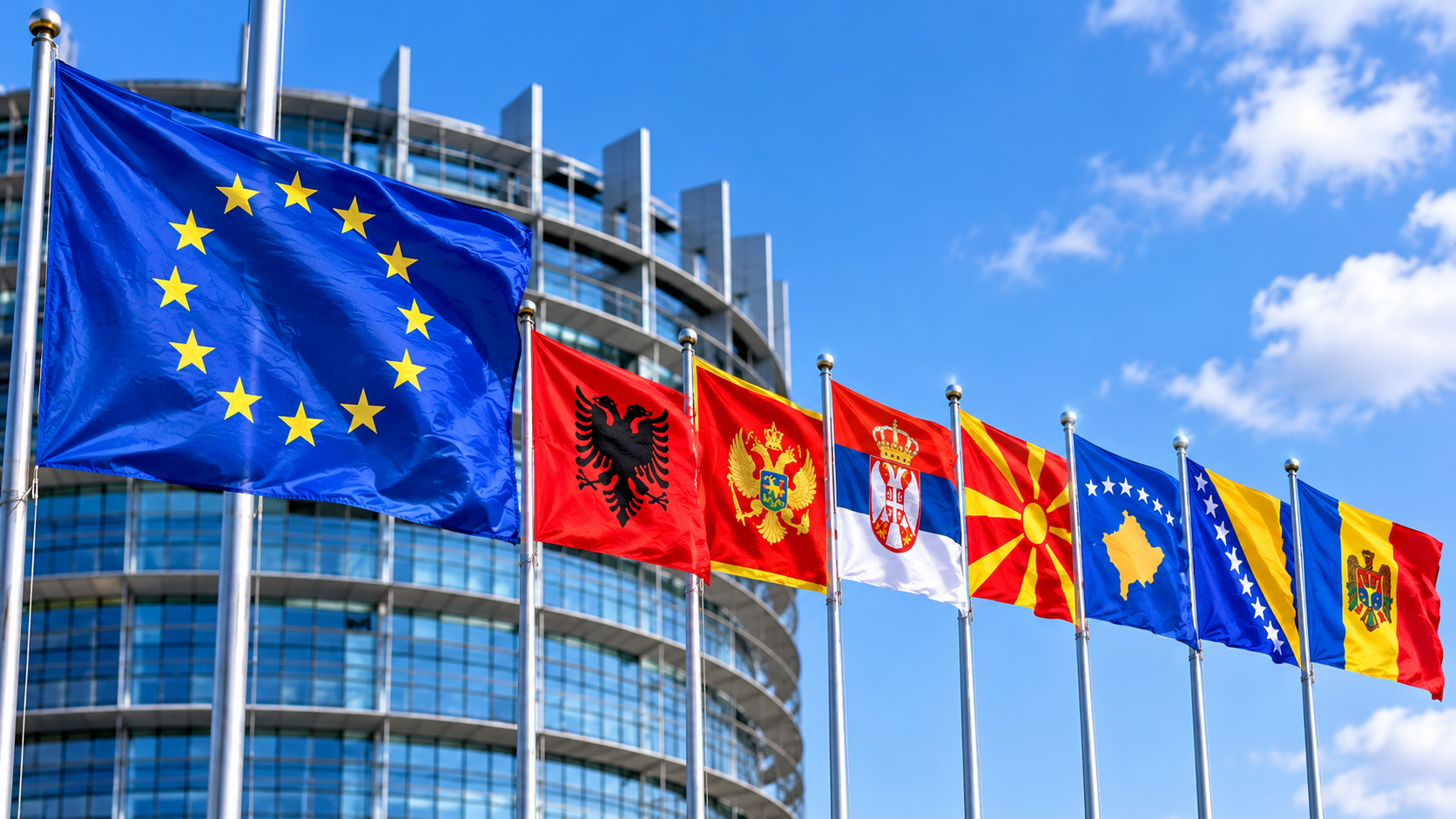
Note: Illustrative image generated using artificial intelligence (AI).
© 2026 Argumentum