












• SHQIPËRI
  • KOSOVË
  • MAQEDONIA E VERIUT
  • MALI I ZI
  • Revista në PDF
15 June, 2026
  • Home
  • OP/ED

    The visit that changed Albania’s strategic future

    Pierre Nora and the institution of memory we lack in Eastern Europe

    The Blueprint of a Diplomatic Debacle: Analyzing Germany’s Historic UNSC Loss

    Between Russia, Iran and Europe: Azerbaijan as a balancing power in the South Caucasus

    The Zero-Tariff Gate: Sovereignty as a Service in the Sino-African Corridor

    Albania vs. the Sea/ Marginal Notes on A. Leka’s Novel The Hidden Side of the Albanian Socialist Garden

    May 9 and the long shadow of a Letter: Is Europe still Schuman’s Project?

    The Arbnesh of Zadar: A living memory of Albanian identity on the Adriatic coast

    Science Diplomacy and Academic Freedom: A strategic nexus for contemporary diplomacy

  • Interview

    Exclusive Interview with Oleksandr Tyshchenko: A 40-Year Legacy of Chernobyl, Nuclear Risks, and Global Responsibility

    INTERVIEW: ZLATKO KRAMARIĆ – THOUGHTS ON THE OLD CONTINENT

    EXCLUSIVE / Ukrainian Ambassador to Albania, Volodymyr Shkurov: “Ukraine wants peace, but not at the expense of its freedom and independence”

    EXCLUSIVE| Ambassador Tayyar Kagan Atay: Türkiye and Albania, a Strategic Partnership Rooted in Shared Heritage and a Common Vision for the Future

    “Diplomacy, Not War”: Palestinian Ambassador to Albania Calls for Justice, Peace, and Global Action for Gaza

    Exclusive: “Even After Tito – Tito”/ Ambassador Zlatko Kramarić on Authoritarian Legacies and Democracy’s Future in the Balkans

    The Conclusion of the Diplomatic Mission / Ambassador Dancho Markovski: Strengthening Albania-North Macedonia Relations for a Shared European Future

    A Century of Diplomatic Relations Between Albania and Russia: Exclusive Interview with the Russian Ambassador to Albania, H.E. Alexey Zaytsev

    Exclusive/ The chairman of the Freedom Party, Ilir Meta: “The will of the citizens will triumph in Albania, as it did in North Macedonia”

  • Realpolitik

    IBAR? ”Sufficiently! Much ado about nothing! Shart contrasts in Beijing! Where is the exit?!

    Neither peace nor war! Peace with bombs?! IBAR in autumn?! Not another Hormuz in Taivan! 

    IBAR – a springing board or an obstacle? Can we catch the EU Negotiation train 2027? When the dress makes the news!  EU electoral April  ends in a draw 1:1!  

    The European Parliament building in Strasbourg, France with flags waving calmly celebrating peace of the Europe. July 12, 2020.

    EU 2027 or 2037! Even half membership failed! No exit strategy!     

    What next?

    “With diplomatic velvet“! Major question marks! In Washington yes, but  in the White House NO! A strange dinner in Brussels!

    From a great ‘apple of disaccord’ to a  point of  cooperation! A bad start! The strange absence in Davos!

    5 lessons from the American 3 January! Don’t count the chicken before they are hatched! Will NATO freeze in Greenland? Wrong diplomatic messages!

    German Chancellor Friedrich Merz, European Commission President Ursula von der Leyen, Ukraine's President Volodymyr Zelenskiy, U.S. Special Envoy Steve Witkoff and Jared Kushner, son-in-law of U.S. President Donald Trump line up for a family photo opportunity at the Chancellery in Berlin, Germany, December 15, 2025.    REUTERS/Lisi Niesner/Pool

    A Strategy that could change the world! Europe in Berlin! Why an historic compromise? Only charm diplomacy in Athens!

  • Current Events

    Council of Albanian Ambassadors Backs Civic Protests, Calls for Transparency and Protection of National Interests

    Russian Ambassador in Tirana: “Without a Strong and Sovereign Russia, the Creation of a Just World Order Is Impossible”

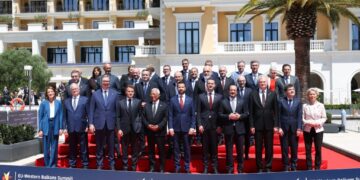
    EU-Western Balkans Summit 2026: New Impetus for the Enlargement Debate?

    “The Flamingo Revolution”: Day 10 of Protests in Albania Draws International Attention

    Rama alleges ‘hybrid war’ behind protests against Kushner-linked coastal development

    BELGRADE, SERBIA - JUNE 18. 2020: Russian and Serbian flags on display during Russian Foreign Minister Sergei Lavrov's visit to the Liberators of Belgrade Memorial. Valery Sharifulin/TASS,Image: 533095429, License: Rights-managed, Restrictions: UWAGA! Zdjęcia zawierają oryginalny opis dostawcy (ITAR-TASS). Szczególnie w związku z agresją Rosji na Ukrainę mogą zawierać przekaz niezgodny z faktami. Zweryfikuj go przed publikacją, Model Release: no, Credit line: Valery Sharifulin / TASS / Forum

    Balkan Maskirovka: Why Moscow’s “Distancing” Is Only an Operation for the Survival of Vučić’s Regime

    Serbia – China 2026: Technological partnership, geopolitical positioning and a new phase of the Chinese presence in the Western Balkans

    The Digital Protectorate: How the EU AI Act Codified Silicon Valley’s Monopoly

    The 28th MFC Annual Conference in Durrës / Sulaj: Microfinance remains a key instrument for financial inclusion

  • Top News

    Russian Ambassador in Tirana: “Without a Strong and Sovereign Russia, the Creation of a Just World Order Is Impossible”

    “The Flamingo Revolution”: Day 10 of Protests in Albania Draws International Attention

    Rama alleges ‘hybrid war’ behind protests against Kushner-linked coastal development

    No End in Sight: Trump, Netanyahu and the Expanding Middle East War

    Tirana – €20 Million EU–Banking Agreement Boosts Albanian SMEs

    “EU4Municipalities II” Project, a Strategic Investment for Strengthening Municipalities and Accelerating Albania’s Path towards the EU

    Albania, Italy deepen defence ties with naval shipbuilding deal

    U.S. Embassy: Iran-Linked Groups May Target Americans and Iranian Opposition in Albania

    The Council of Albanian Ambassadors disappointed with the voting of the draft law on the foreign service in the parliamentary committees.

  • YOUR VOICE
  • Shqip
No Result
View All Result
Argumentum
  • Home
  • OP/ED

    The visit that changed Albania’s strategic future

    Pierre Nora and the institution of memory we lack in Eastern Europe

    The Blueprint of a Diplomatic Debacle: Analyzing Germany’s Historic UNSC Loss

    Between Russia, Iran and Europe: Azerbaijan as a balancing power in the South Caucasus

    The Zero-Tariff Gate: Sovereignty as a Service in the Sino-African Corridor

    Albania vs. the Sea/ Marginal Notes on A. Leka’s Novel The Hidden Side of the Albanian Socialist Garden

    May 9 and the long shadow of a Letter: Is Europe still Schuman’s Project?

    The Arbnesh of Zadar: A living memory of Albanian identity on the Adriatic coast

    Science Diplomacy and Academic Freedom: A strategic nexus for contemporary diplomacy

  • Interview

    Exclusive Interview with Oleksandr Tyshchenko: A 40-Year Legacy of Chernobyl, Nuclear Risks, and Global Responsibility

    INTERVIEW: ZLATKO KRAMARIĆ – THOUGHTS ON THE OLD CONTINENT

    EXCLUSIVE / Ukrainian Ambassador to Albania, Volodymyr Shkurov: “Ukraine wants peace, but not at the expense of its freedom and independence”

    EXCLUSIVE| Ambassador Tayyar Kagan Atay: Türkiye and Albania, a Strategic Partnership Rooted in Shared Heritage and a Common Vision for the Future

    “Diplomacy, Not War”: Palestinian Ambassador to Albania Calls for Justice, Peace, and Global Action for Gaza

    Exclusive: “Even After Tito – Tito”/ Ambassador Zlatko Kramarić on Authoritarian Legacies and Democracy’s Future in the Balkans

    The Conclusion of the Diplomatic Mission / Ambassador Dancho Markovski: Strengthening Albania-North Macedonia Relations for a Shared European Future

    A Century of Diplomatic Relations Between Albania and Russia: Exclusive Interview with the Russian Ambassador to Albania, H.E. Alexey Zaytsev

    Exclusive/ The chairman of the Freedom Party, Ilir Meta: “The will of the citizens will triumph in Albania, as it did in North Macedonia”

  • Realpolitik

    IBAR? ”Sufficiently! Much ado about nothing! Shart contrasts in Beijing! Where is the exit?!

    Neither peace nor war! Peace with bombs?! IBAR in autumn?! Not another Hormuz in Taivan! 

    IBAR – a springing board or an obstacle? Can we catch the EU Negotiation train 2027? When the dress makes the news!  EU electoral April  ends in a draw 1:1!  

    The European Parliament building in Strasbourg, France with flags waving calmly celebrating peace of the Europe. July 12, 2020.

    EU 2027 or 2037! Even half membership failed! No exit strategy!     

    What next?

    “With diplomatic velvet“! Major question marks! In Washington yes, but  in the White House NO! A strange dinner in Brussels!

    From a great ‘apple of disaccord’ to a  point of  cooperation! A bad start! The strange absence in Davos!

    5 lessons from the American 3 January! Don’t count the chicken before they are hatched! Will NATO freeze in Greenland? Wrong diplomatic messages!

    German Chancellor Friedrich Merz, European Commission President Ursula von der Leyen, Ukraine's President Volodymyr Zelenskiy, U.S. Special Envoy Steve Witkoff and Jared Kushner, son-in-law of U.S. President Donald Trump line up for a family photo opportunity at the Chancellery in Berlin, Germany, December 15, 2025.    REUTERS/Lisi Niesner/Pool

    A Strategy that could change the world! Europe in Berlin! Why an historic compromise? Only charm diplomacy in Athens!

  • Current Events

    Council of Albanian Ambassadors Backs Civic Protests, Calls for Transparency and Protection of National Interests

    Russian Ambassador in Tirana: “Without a Strong and Sovereign Russia, the Creation of a Just World Order Is Impossible”

    EU-Western Balkans Summit 2026: New Impetus for the Enlargement Debate?

    “The Flamingo Revolution”: Day 10 of Protests in Albania Draws International Attention

    Rama alleges ‘hybrid war’ behind protests against Kushner-linked coastal development

    BELGRADE, SERBIA - JUNE 18. 2020: Russian and Serbian flags on display during Russian Foreign Minister Sergei Lavrov's visit to the Liberators of Belgrade Memorial. Valery Sharifulin/TASS,Image: 533095429, License: Rights-managed, Restrictions: UWAGA! Zdjęcia zawierają oryginalny opis dostawcy (ITAR-TASS). Szczególnie w związku z agresją Rosji na Ukrainę mogą zawierać przekaz niezgodny z faktami. Zweryfikuj go przed publikacją, Model Release: no, Credit line: Valery Sharifulin / TASS / Forum

    Balkan Maskirovka: Why Moscow’s “Distancing” Is Only an Operation for the Survival of Vučić’s Regime

    Serbia – China 2026: Technological partnership, geopolitical positioning and a new phase of the Chinese presence in the Western Balkans

    The Digital Protectorate: How the EU AI Act Codified Silicon Valley’s Monopoly

    The 28th MFC Annual Conference in Durrës / Sulaj: Microfinance remains a key instrument for financial inclusion

  • Top News

    Russian Ambassador in Tirana: “Without a Strong and Sovereign Russia, the Creation of a Just World Order Is Impossible”

    “The Flamingo Revolution”: Day 10 of Protests in Albania Draws International Attention

    Rama alleges ‘hybrid war’ behind protests against Kushner-linked coastal development

    No End in Sight: Trump, Netanyahu and the Expanding Middle East War

    Tirana – €20 Million EU–Banking Agreement Boosts Albanian SMEs

    “EU4Municipalities II” Project, a Strategic Investment for Strengthening Municipalities and Accelerating Albania’s Path towards the EU

    Albania, Italy deepen defence ties with naval shipbuilding deal

    U.S. Embassy: Iran-Linked Groups May Target Americans and Iranian Opposition in Albania

    The Council of Albanian Ambassadors disappointed with the voting of the draft law on the foreign service in the parliamentary committees.

  • YOUR VOICE
  • Shqip
No Result
View All Result
Argumentum
No Result
View All Result
Home ENGLISH

How COVID-19 is Giving a Boost to New Virology Studies, Vaccination & AI Innovations in Russia

30 April, 2020
in ENGLISH, In Focus
A A
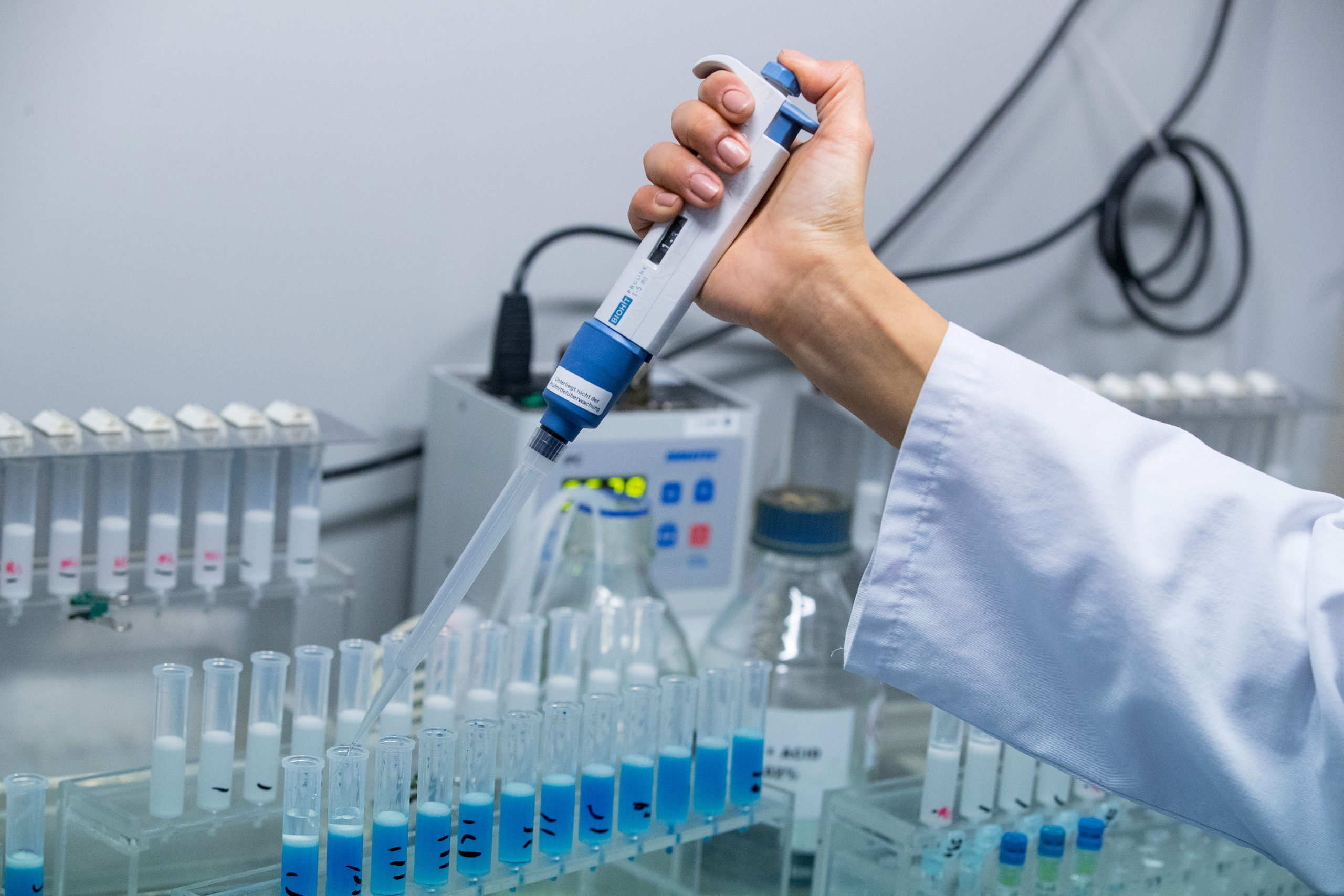
A lab worker prepares solutions for the manufacture of coronavirus diagnostic test kits at the TIB Molbiol Syntheselabor GmbH production facility in Berlin, Germany, on Thursday, March 6, 2020. TIB has reoriented its business toward coronavirus, running its machines through the night and on weekends to make the kits, which sell for about 160 ($180) apiece. Photographer: Krisztian Bocsi/Bloomberg via Getty Images

A lab worker prepares solutions for the manufacture of coronavirus diagnostic test kits at the TIB Molbiol Syntheselabor GmbH production facility in Berlin, Germany, on Thursday, March 6, 2020. TIB has reoriented its business toward coronavirus, running its machines through the night and on weekends to make the kits, which sell for about 160 ($180) apiece. Photographer: Krisztian Bocsi/Bloomberg via Getty Images

Share on FacebookShare on Twitter

The COVID-19 pandemic challenge has intensified Russia’s virology research. The Russian Academy of Sciences (RAS) is seeking to resume the study of natural reservoirs of zoonotic diseases, introduce mandatory vaccination against pneumococcus, and expand the use of artificial intelligence in epidemiology.

The Russian Academy of Sciences intends to bring back research in the field of “ecology of viruses” – a section of virology studying the links between viruses and the environment – to Russian science. RAS President Alexander Sergeyev instructed scientists from the National Research Centre for Epidemiology and Microbiology named after the honorary academician N.F. Gamaleya to prepare specific recommendations for the reinstatement of such works and the creation of a scientific centre.

Russian Scientists Advocate Total Monitoring of Zoonotic Viruses

“We must now go to the country’s highest leadership with such initiatives and prove the need to make appropriate decisions”, said the academician, speaking at an online meeting organised by the Ministry of Science and Higher Education of Russia, the Russian Academy of Sciences, and the Scientific Russia Internet portal.

“There is a huge reservoir of zoonotic diseases in nature that periodically break out into the human population. The main problem is that we start acting too late, only when the virus has already burst into the human population. This is how it happened with COVID-19”, well-known virologist Professor Sergei Alkhovsky noted.

According to him, the coronavirus is an “old friend”. This is the third time since the early 2000s that we have seen the emergence of new zoonotic pathogens: 2002 – SARS-CoV, China (774 deaths), 2012 – MERS, Saudi Arabia (857 deaths), and 2019 – COVID-19, China (over 130,000 deaths).

Extensive research has shown that the original natural reservoir of these viruses – not only these viruses but many other zoonotic diseases as well – are bats. For example, horseshoe bats are reservoirs for SARS-type viruses. The infection rate of these species of bats is 10 percent on average, but in some colonies, it reaches 60 percent. They transmit the virus with faeces.

Vespers, or simple nosed bats, serve as a reservoir for MERS-type viruses. They are found in almost all geographical regions of the world, including Russia. “That means there is no doubt that these viruses circulate in the Russian population too”, the scientist stressed.

According to him, until recently it was believed that bat-borne viruses, for the most part, cannot bind the human receptor and infect people directly. To do that, they need to alter their receptor specificity, to adapt in an intermediate host such as a camel, as was the case with MERS.

However, according to Professor Alkhovsky, the latest research shows that a huge number of variants of viruses capable of directly infecting human cells are already circulating in the bat populations. They no longer require an intermediate host.

“We are now fighting the COVID epidemic, and we will defeat it. But the natural reservoirs are not going anywhere. We don’t know what kind of next type is waiting for us in the future”, said the virologist, calling on the world scientific community to “act proactively”. The scientist believes that this work requires a deep study of natural reservoirs, including rodents, bats, birds, and arthropod carriers, and the processes which are taking place there.

“In the 1970s, the USSR developed an entire scientific field called the ‘Ecology of Viruses’. Today’s events show that we need to resume this research, but with new methods, including multiplex genetic technologies. Then we will be able to prepare in advance the diagnostic means, treatment, and even vaccination against certain groups of zoonotic diseases”, the scientist concluded.

National Peculiarities’ of Vaccination/ The Russian Federation plans to introduce mandatory vaccination against pneumococcus.

Russia is planning to sharply intensify work on creating a vaccine against pneumococcal infections. Academician Vladimir Chekhonin, vice president of the Russian Academy of Sciences and head of the Department of Medical Nano Biotechnology at the Pirogov Russian National Research Medical University, recalled that the mortality rate for pneumonia in Russia stands at 35,000 people per year, excluding the victims of the COVID-19 epidemic, who usually die of pulmonary oedema and severe pneumonia. However, the country does not currently have its own pneumococcal vaccine.

The Russian Health Ministry’s Chief External Expert in Infectious Diseases Elena Malinnikova has assured that the Ministry of Health is already addressing this problem, and soon vaccination against pneumococcus should be included in the national immunisation programme schedule.

Meanwhile, Areg Totolyan, an academician of the Russian Academy of Sciences and director of the Pasteur St. Petersburg Scientific Research Institute of Epidemiology and Microbiology of Rospotrebnadzor, spoke about the phenomenon of another vaccination that is mandatory in Russia – the BCG vaccine.

“From an immunological perspective, the facts are clear. The fundamental biological basis for BCG’s protective efficacy against viral infection is that innate immune cells acquire the ability to respond to infection with other pathogens ‘faster and stronger’. In other words, there appear signs of ‘trained immunity”.

Furthermore, according to the scientist, the increased responsiveness of innate immune cells causes “bystander” activation of T-lymphocytes that are specific to other antigens that are not associated with mycobacteria. The scientist calls it “heterogeneity of immune responses stimulation” when the cells are always on guard.

The scientist believes that further study of the BCG phenomenon is necessary, but not as a treatment (“and by no means a therapy in acute periods”), but rather as a means of non-specific prevention throughout the world, especially among physicians. According to him, scientists from Australia and the Netherlands are currently conducting such studies. The results will be known at the end of the year.

‘Why Are There No Robots in Hospitals?’

The world scientific community will reassess the possibilities of using artificial intelligence in epidemiology.

Russia’s expert on particularly dangerous infections, renowned microbiologist Viktor Maleyev, a member of the Russian Academy of Sciences and a research adviser to the Director of the Central Research Institute for Epidemiology under the consumer rights watchdog Rospotrebnadzor, has expressed an opinion that many challenges to organising the response in the field of epidemiology could be solved by means of artificial intelligence. According to him, it would be possible to identify rational targeting of groups of patients by using robotics, thus reducing direct contacts with medical personnel.

“Now everything looks outdated. The protective suits used in hospitals date back to the 1300s when the plague raged. Why haven’t they come up with brand new protective suits for medical staff? Where are the modern disinfectants? Where is the predictive modelling of vaccines?” the scientist wondered.

Moreover, he finds it irrational not to hospitalise patients with mild symptoms who, in his opinion, could be placed in empty sanatoriums and rest homes. “Today, 500 patients with mild symptoms have been fined for quarantine violations. Whom did they talk to? How many family clusters of infection do we have?” the scientist asked.

According to him, the problem of underestimating infectious diseases has always existed. “For many years it’s been announced that we’ve defeated something. The WHO is implementing a programme to eliminate many infections (tuberculosis, malaria, etc.) and states that these diseases will be eliminated by 2030. In my opinion, all this is unrealistic and unreasonable, although huge financial resources are spent on these programmes”, the academician said.

Furthermore, he added that so far, we have only conquered natural smallpox, but at the same time monkeypox has become more active. Many diseases come back after a significant time, for example, Zeke’s fever has returned after 60 years of absolute silence.

“Epidemics continue, which is not surprising because infections are natural entities. Despite scientific progress, we still know little about the properties of many infectious diseases”, the academician concluded.
Related Posts

Current Events

Council of Albanian Ambassadors Backs Civic Protests, Calls for Transparency and Protection of National Interests

12 June, 2026
Current Events

Russian Ambassador in Tirana: “Without a Strong and Sovereign Russia, the Creation of a Just World Order Is Impossible”

11 June, 2026
Balkan Overview

EU-Western Balkans Summit 2026: New Impetus for the Enlargement Debate?

10 June, 2026

Follow US

Subscribe

Receive Argumentum Magazine by Email

Last Posts

Council of Albanian Ambassadors Backs Civic Protests, Calls for Transparency and Protection of National Interests

12 June, 2026

Russian Ambassador in Tirana: “Without a Strong and Sovereign Russia, the Creation of a Just World Order Is Impossible”

11 June, 2026

EU-Western Balkans Summit 2026: New Impetus for the Enlargement Debate?

10 June, 2026

The visit that changed Albania’s strategic future

10 June, 2026

Serbia’s Lost Legal Battle and the Exploitation of Resolution 1244 for Lawfare and Terrorism

10 June, 2026
Argumentum

“Argumentum”, një proces intelektual …

Contact Us

[email protected]
[email protected]
[email protected]

Follow Us

Media Partner

Register

Receive Argumentum Magazine by Email
  • Home
  • Privacy Policy
  • About Us
  • Contact

© 2022 Argumentum. All Rights Reserved. | NUIS: L91415033Q

Welcome Back!

Login to your account below

Forgotten Password? Sign Up

Create New Account!

Fill the forms bellow to register

*By registering into our website, you agree to the Terms & Conditions and Privacy Policy.
All fields are required. Log In

Retrieve your password

Please enter your username or email address to reset your password.

Log In

Add New Playlist

No Result
View All Result
  • Home
  • OP/ED
  • Interview
  • Realpolitik
  • Current Events
  • Top News
  • YOUR VOICE
  • Shqip

© 2022 Argumentum. All Rights Reserved. | NUIS: L91415033Q

This website uses cookies. By continuing to use this website you are giving consent to cookies being used. Visit our Privacy and Cookie Policy.