













• SHQIPËRI
  • KOSOVË
  • MAQEDONIA E VERIUT
  • MALI I ZI
  • Revista në PDF
13 June, 2026
  • Home
  • OP/ED

    The visit that changed Albania’s strategic future

    Pierre Nora and the institution of memory we lack in Eastern Europe

    The Blueprint of a Diplomatic Debacle: Analyzing Germany’s Historic UNSC Loss

    Between Russia, Iran and Europe: Azerbaijan as a balancing power in the South Caucasus

    The Zero-Tariff Gate: Sovereignty as a Service in the Sino-African Corridor

    Albania vs. the Sea/ Marginal Notes on A. Leka’s Novel The Hidden Side of the Albanian Socialist Garden

    May 9 and the long shadow of a Letter: Is Europe still Schuman’s Project?

    The Arbnesh of Zadar: A living memory of Albanian identity on the Adriatic coast

    Science Diplomacy and Academic Freedom: A strategic nexus for contemporary diplomacy

  • Interview

    Exclusive Interview with Oleksandr Tyshchenko: A 40-Year Legacy of Chernobyl, Nuclear Risks, and Global Responsibility

    INTERVIEW: ZLATKO KRAMARIĆ – THOUGHTS ON THE OLD CONTINENT

    EXCLUSIVE / Ukrainian Ambassador to Albania, Volodymyr Shkurov: “Ukraine wants peace, but not at the expense of its freedom and independence”

    EXCLUSIVE| Ambassador Tayyar Kagan Atay: Türkiye and Albania, a Strategic Partnership Rooted in Shared Heritage and a Common Vision for the Future

    “Diplomacy, Not War”: Palestinian Ambassador to Albania Calls for Justice, Peace, and Global Action for Gaza

    Exclusive: “Even After Tito – Tito”/ Ambassador Zlatko Kramarić on Authoritarian Legacies and Democracy’s Future in the Balkans

    The Conclusion of the Diplomatic Mission / Ambassador Dancho Markovski: Strengthening Albania-North Macedonia Relations for a Shared European Future

    A Century of Diplomatic Relations Between Albania and Russia: Exclusive Interview with the Russian Ambassador to Albania, H.E. Alexey Zaytsev

    Exclusive/ The chairman of the Freedom Party, Ilir Meta: “The will of the citizens will triumph in Albania, as it did in North Macedonia”

  • Realpolitik

    IBAR? ”Sufficiently! Much ado about nothing! Shart contrasts in Beijing! Where is the exit?!

    Neither peace nor war! Peace with bombs?! IBAR in autumn?! Not another Hormuz in Taivan! 

    IBAR – a springing board or an obstacle? Can we catch the EU Negotiation train 2027? When the dress makes the news!  EU electoral April  ends in a draw 1:1!  

    The European Parliament building in Strasbourg, France with flags waving calmly celebrating peace of the Europe. July 12, 2020.

    EU 2027 or 2037! Even half membership failed! No exit strategy!     

    What next?

    “With diplomatic velvet“! Major question marks! In Washington yes, but  in the White House NO! A strange dinner in Brussels!

    From a great ‘apple of disaccord’ to a  point of  cooperation! A bad start! The strange absence in Davos!

    5 lessons from the American 3 January! Don’t count the chicken before they are hatched! Will NATO freeze in Greenland? Wrong diplomatic messages!

    German Chancellor Friedrich Merz, European Commission President Ursula von der Leyen, Ukraine's President Volodymyr Zelenskiy, U.S. Special Envoy Steve Witkoff and Jared Kushner, son-in-law of U.S. President Donald Trump line up for a family photo opportunity at the Chancellery in Berlin, Germany, December 15, 2025.    REUTERS/Lisi Niesner/Pool

    A Strategy that could change the world! Europe in Berlin! Why an historic compromise? Only charm diplomacy in Athens!

  • Current Events

    Council of Albanian Ambassadors Backs Civic Protests, Calls for Transparency and Protection of National Interests

    Russian Ambassador in Tirana: “Without a Strong and Sovereign Russia, the Creation of a Just World Order Is Impossible”

    EU-Western Balkans Summit 2026: New Impetus for the Enlargement Debate?

    “The Flamingo Revolution”: Day 10 of Protests in Albania Draws International Attention

    Rama alleges ‘hybrid war’ behind protests against Kushner-linked coastal development

    BELGRADE, SERBIA - JUNE 18. 2020: Russian and Serbian flags on display during Russian Foreign Minister Sergei Lavrov's visit to the Liberators of Belgrade Memorial. Valery Sharifulin/TASS,Image: 533095429, License: Rights-managed, Restrictions: UWAGA! Zdjęcia zawierają oryginalny opis dostawcy (ITAR-TASS). Szczególnie w związku z agresją Rosji na Ukrainę mogą zawierać przekaz niezgodny z faktami. Zweryfikuj go przed publikacją, Model Release: no, Credit line: Valery Sharifulin / TASS / Forum

    Balkan Maskirovka: Why Moscow’s “Distancing” Is Only an Operation for the Survival of Vučić’s Regime

    Serbia – China 2026: Technological partnership, geopolitical positioning and a new phase of the Chinese presence in the Western Balkans

    The Digital Protectorate: How the EU AI Act Codified Silicon Valley’s Monopoly

    The 28th MFC Annual Conference in Durrës / Sulaj: Microfinance remains a key instrument for financial inclusion

  • Top News

    Russian Ambassador in Tirana: “Without a Strong and Sovereign Russia, the Creation of a Just World Order Is Impossible”

    “The Flamingo Revolution”: Day 10 of Protests in Albania Draws International Attention

    Rama alleges ‘hybrid war’ behind protests against Kushner-linked coastal development

    No End in Sight: Trump, Netanyahu and the Expanding Middle East War

    Tirana – €20 Million EU–Banking Agreement Boosts Albanian SMEs

    “EU4Municipalities II” Project, a Strategic Investment for Strengthening Municipalities and Accelerating Albania’s Path towards the EU

    Albania, Italy deepen defence ties with naval shipbuilding deal

    U.S. Embassy: Iran-Linked Groups May Target Americans and Iranian Opposition in Albania

    The Council of Albanian Ambassadors disappointed with the voting of the draft law on the foreign service in the parliamentary committees.

  • YOUR VOICE
  • Shqip
No Result
View All Result
Argumentum
  • Home
  • OP/ED

    The visit that changed Albania’s strategic future

    Pierre Nora and the institution of memory we lack in Eastern Europe

    The Blueprint of a Diplomatic Debacle: Analyzing Germany’s Historic UNSC Loss

    Between Russia, Iran and Europe: Azerbaijan as a balancing power in the South Caucasus

    The Zero-Tariff Gate: Sovereignty as a Service in the Sino-African Corridor

    Albania vs. the Sea/ Marginal Notes on A. Leka’s Novel The Hidden Side of the Albanian Socialist Garden

    May 9 and the long shadow of a Letter: Is Europe still Schuman’s Project?

    The Arbnesh of Zadar: A living memory of Albanian identity on the Adriatic coast

    Science Diplomacy and Academic Freedom: A strategic nexus for contemporary diplomacy

  • Interview

    Exclusive Interview with Oleksandr Tyshchenko: A 40-Year Legacy of Chernobyl, Nuclear Risks, and Global Responsibility

    INTERVIEW: ZLATKO KRAMARIĆ – THOUGHTS ON THE OLD CONTINENT

    EXCLUSIVE / Ukrainian Ambassador to Albania, Volodymyr Shkurov: “Ukraine wants peace, but not at the expense of its freedom and independence”

    EXCLUSIVE| Ambassador Tayyar Kagan Atay: Türkiye and Albania, a Strategic Partnership Rooted in Shared Heritage and a Common Vision for the Future

    “Diplomacy, Not War”: Palestinian Ambassador to Albania Calls for Justice, Peace, and Global Action for Gaza

    Exclusive: “Even After Tito – Tito”/ Ambassador Zlatko Kramarić on Authoritarian Legacies and Democracy’s Future in the Balkans

    The Conclusion of the Diplomatic Mission / Ambassador Dancho Markovski: Strengthening Albania-North Macedonia Relations for a Shared European Future

    A Century of Diplomatic Relations Between Albania and Russia: Exclusive Interview with the Russian Ambassador to Albania, H.E. Alexey Zaytsev

    Exclusive/ The chairman of the Freedom Party, Ilir Meta: “The will of the citizens will triumph in Albania, as it did in North Macedonia”

  • Realpolitik

    IBAR? ”Sufficiently! Much ado about nothing! Shart contrasts in Beijing! Where is the exit?!

    Neither peace nor war! Peace with bombs?! IBAR in autumn?! Not another Hormuz in Taivan! 

    IBAR – a springing board or an obstacle? Can we catch the EU Negotiation train 2027? When the dress makes the news!  EU electoral April  ends in a draw 1:1!  

    The European Parliament building in Strasbourg, France with flags waving calmly celebrating peace of the Europe. July 12, 2020.

    EU 2027 or 2037! Even half membership failed! No exit strategy!     

    What next?

    “With diplomatic velvet“! Major question marks! In Washington yes, but  in the White House NO! A strange dinner in Brussels!

    From a great ‘apple of disaccord’ to a  point of  cooperation! A bad start! The strange absence in Davos!

    5 lessons from the American 3 January! Don’t count the chicken before they are hatched! Will NATO freeze in Greenland? Wrong diplomatic messages!

    German Chancellor Friedrich Merz, European Commission President Ursula von der Leyen, Ukraine's President Volodymyr Zelenskiy, U.S. Special Envoy Steve Witkoff and Jared Kushner, son-in-law of U.S. President Donald Trump line up for a family photo opportunity at the Chancellery in Berlin, Germany, December 15, 2025.    REUTERS/Lisi Niesner/Pool

    A Strategy that could change the world! Europe in Berlin! Why an historic compromise? Only charm diplomacy in Athens!

  • Current Events

    Council of Albanian Ambassadors Backs Civic Protests, Calls for Transparency and Protection of National Interests

    Russian Ambassador in Tirana: “Without a Strong and Sovereign Russia, the Creation of a Just World Order Is Impossible”

    EU-Western Balkans Summit 2026: New Impetus for the Enlargement Debate?

    “The Flamingo Revolution”: Day 10 of Protests in Albania Draws International Attention

    Rama alleges ‘hybrid war’ behind protests against Kushner-linked coastal development

    BELGRADE, SERBIA - JUNE 18. 2020: Russian and Serbian flags on display during Russian Foreign Minister Sergei Lavrov's visit to the Liberators of Belgrade Memorial. Valery Sharifulin/TASS,Image: 533095429, License: Rights-managed, Restrictions: UWAGA! Zdjęcia zawierają oryginalny opis dostawcy (ITAR-TASS). Szczególnie w związku z agresją Rosji na Ukrainę mogą zawierać przekaz niezgodny z faktami. Zweryfikuj go przed publikacją, Model Release: no, Credit line: Valery Sharifulin / TASS / Forum

    Balkan Maskirovka: Why Moscow’s “Distancing” Is Only an Operation for the Survival of Vučić’s Regime

    Serbia – China 2026: Technological partnership, geopolitical positioning and a new phase of the Chinese presence in the Western Balkans

    The Digital Protectorate: How the EU AI Act Codified Silicon Valley’s Monopoly

    The 28th MFC Annual Conference in Durrës / Sulaj: Microfinance remains a key instrument for financial inclusion

  • Top News

    Russian Ambassador in Tirana: “Without a Strong and Sovereign Russia, the Creation of a Just World Order Is Impossible”

    “The Flamingo Revolution”: Day 10 of Protests in Albania Draws International Attention

    Rama alleges ‘hybrid war’ behind protests against Kushner-linked coastal development

    No End in Sight: Trump, Netanyahu and the Expanding Middle East War

    Tirana – €20 Million EU–Banking Agreement Boosts Albanian SMEs

    “EU4Municipalities II” Project, a Strategic Investment for Strengthening Municipalities and Accelerating Albania’s Path towards the EU

    Albania, Italy deepen defence ties with naval shipbuilding deal

    U.S. Embassy: Iran-Linked Groups May Target Americans and Iranian Opposition in Albania

    The Council of Albanian Ambassadors disappointed with the voting of the draft law on the foreign service in the parliamentary committees.

  • YOUR VOICE
  • Shqip
No Result
View All Result
Argumentum
No Result
View All Result
Home ENGLISH

No, Kosovo Is Not a Precedent for Nagorno-Karabakh

1 December, 2020
in ENGLISH, English OP/ED
A A
Share on FacebookShare on Twitter

Time and time again, all sides have stated that Kosovo was a one-time thing and not a formal legal precedent. Invoking it in the case of Nagorno-Karabakh demonstrates an unwillingness to recognize this reality.

By Ayaz Rzayev
When major Western powers supported Kosovo’s independence bid, they unequivocally warned that Kosovo was sui generis—a one-time deal, a special case under international law that cannot be used under any circumstances as a precedent for other situations. However, in retrospect, it did not stop separatists from appealing to the Kosovo case whenever it seemed opportune to them. As British historian Timothy Garton Ash succinctly put it at the time: “Kosovo is unique, and there will be more Kosovos.” This was first demonstrated in South Ossetia and Abkhazia in 2008, and then in Crimea in 2014. After the Crimean referendum, Russian president Vladimir Putin argued that the Kosovo case which “our western colleagues created with their own hands in a very similar situation” was an appropriate precedent for Crimea.

’s stance on separatism is largely an issue of framing, regardless of how many times the Western officials have stated otherwise. So, they believe that they can succeed in lobbying their case in the West if only they can construct an attractive enough narrative that will appeal to the Western audience. During the Catalan Referendum of independence in 2017, for example, the Catalonian government’s strategy was to compel the European community to intervene in Spain by trying to convince them that, just like in Kosovo, there was no other viable solution except to secede in the face of the “authoritarian nature” of the Spanish government.

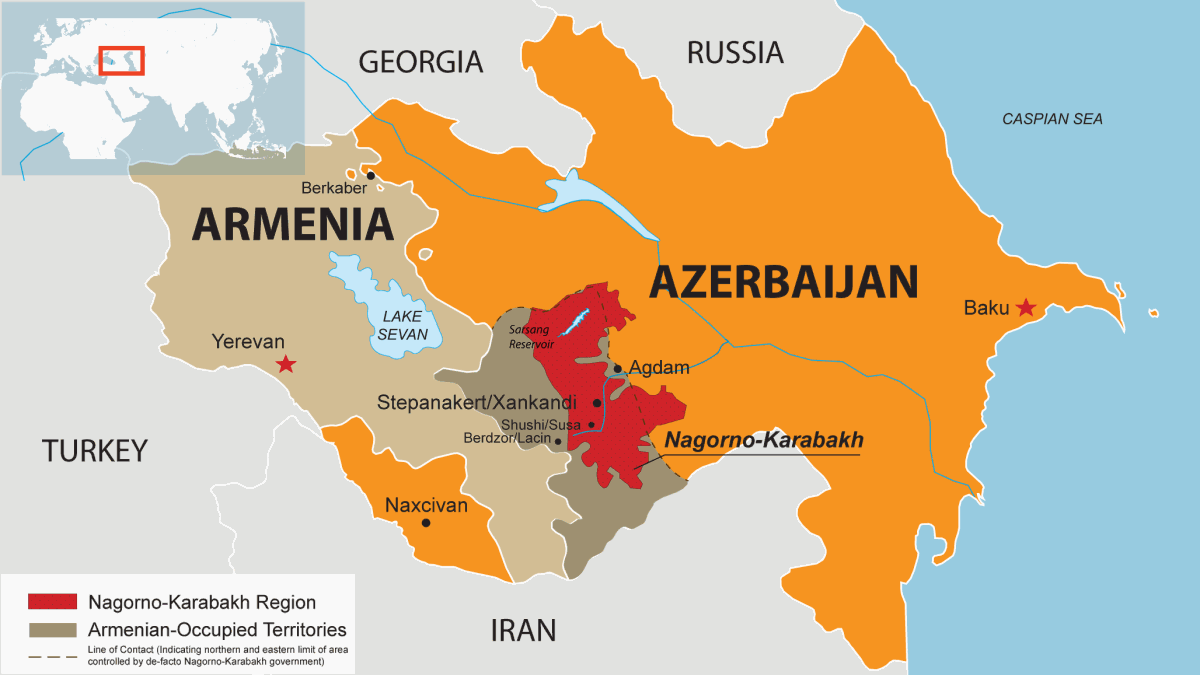
Similar tactics have been employed by the Armenian government in the case of Nagorno-Karabakh as well. The Kosovo case was warmly welcomed by the Armenian separatists in Nagorno-Karabakh, the success of which they hoped to emulate. They also supported the annexation of Crimea, arguing that it was yet “another manifestation of realization of the right of people to self-determination.” Moreover, during the UN voting in March 2014, Armenia voted down the UN General Assembly resolution supporting Ukraine’s territorial integrity and declaring the annexation of Crimea illegal. At the time, Garen Nazarian, Armenia’s ambassador to the UN, framed Armenia’s decision to vote against the resolution as promoting “decolonization and self-determination.”

The Armenian advocacy groups in the West love to argue that based on the Kosovo case, the United States should urgently recognize Nagorno-Karabakh’s independence. And this is despite the fact that at the time the U.S. State Department explicitly warned that Kosovo was not a precedent and should not be seen as a precedent for any other place out there in the world and that it “certainly isn’t a precedent for Nagorno-Karabakh.” Armenian prime minister Nikol Pashinyan himself has repeatedly argued in recent months that the international community should recognize Nagorno-Karabakh as an independent state based on the principle of remedial secession. The problem is not just that the doctrine of remedial secession—which claims that secession can be accepted as the last resort for ending oppression—is a myth, does not have a strong theoretical foundation in international law, and overall has no relevance whatsoever to the “frozen conflicts” in the post-Soviet region. It also presents a false dilemma of having to choose between a well-integrated society and external self-determination while completely ignoring a much more effective third approach to the conflict resolution—an internal self-determination, which not only allows for both intergroup cooperation and sufficient autonomy to co-exist, but also is the only viable way to ensure sustained peace in the region.

While international law incorporates the concept of self-determination, it does not entail a right to secession. It is generally accepted that the right of self-determination may not be used to disaggregate the territory of a sovereign state outside the decolonization paradigm. Except in those cases of decolonization, international law is in favor of realizing the right to self-determination through internal means, which entails a right to self-rule without complete political separation. Territorial integrity of states against secession is guaranteed under international law and for good reason. If every separatist group, often driven by dangerous forms of nationalism, pursued external self-determination, it would completely destabilize the current liberal international order.
Then there is sometimes also the dark reality of occupation hiding behind the glitzy façade of self-determination. As it was the case with Crimea, occupiers try to portray their claim as democratic and strive to link their claim to liberal values in one way or another. When Armenian nationalists launched the Miatsum (Unification) movement in 1988, the ultimate goal was to annex Nagorno-Karabakh to Armenia. However, to get around international disapproval of irredentism and win over liberals, the occupation was later rebranded as a fight for self-determination.

Moreover, separatists often seek to gather international sympathy for their cause by attempting to present a moral case for separatism. The main problem with ethnically based right to secede however is that it is very hard sometimes to separate secessionist logic from the mentality that advocates for ethnonational purity and ethnic cleansing. By denying a chance for a more pluralistic and inclusive notion of the nation to exist, the secessionist worldview can be very regressive by its nature, and as such epitomize the very ills of ethnic nationalism that the postwar liberal order has sought to do away with. Upholding the principle of territorial integrity also makes good sense, given that there are already too many failed states in the world that undermine the stability of their surrounding regions and increase the possibility of wars and human suffering.

The Armenian government also likes to argue that Nagorno-Karabakh achieved independence “through a popular democratic referendum.” In practice, such a referendum is nothing more than an opinion poll. Under international law, a unilateral declaration of independence based on a referendum is no more legitimate than a unilateral secession without a popular vote. Following Kosovo’s independence bid in 2008, Belgrade made a strategic mistake by asking the International Court of Justice (ICJ) to rule on the legality of Kosovo’s unilateral declaration of independence, rather than asking the ICJ to rule on the legality of Kosovo seceding from Serbia. If the ICJ decided that the act of secession had violated international law, major European powers would have found themselves in an extremely awkward position of having to defend an act that had been unequivocally declared illegal under international law. Alternatively, had the ICJ ruled that Kosovo’s secession had not violated international law, it would have opened the floodgates for numerous other acts of secession. In the end, Serbia’s error allowed the Court to avoid addressing the key issue of secession—whether there is a right to secede—and instead take the narrowest approach possible by stating that, in general, there is no prohibition in international law against declaration of independence as a mere statement, unless it is explicitly banned by the Security Council. In essence, a declaration of independence is a free speech issue. Like in Crimea, just because someone can say that they are independent does not make it a legally-binding reality.

However, it goes further than this. Accepting the claim to external self-determination predominantly advanced by the ethnic Armenian community of Nagorno-Karabakh, which cannot alone represent the Nagorno-Karabakh population as a whole, risks legitimizing the ethnic cleansing of the Azerbaijani population of Nagorno-Karabakh. The atrocities against Azerbaijanis are still denied by the Armenian side because it does not align with the victimization narrative that has been carefully constructed over the years to legitimize violence against Azerbaijanis as resistance. Just like the Armenians, the ethnically cleansed Azerbaijani community of Nagorno-Karabakh and, in fact, all citizens of Azerbaijan have a right of self-determination, as well, which incorporates, among other things, the right to vote on the future of their country and not to have their country torn apart.

The Armenian government also loves to argue that Azerbaijan does not recognize the legitimate grievances of the Armenian community of Nagorno-Karabakh, which is blatantly false. If it were true, then, throughout the negotiation process, Azerbaijan would not have advocated for both the Azerbaijani and Armenian communities of Nagorno-Karabakh to be the interested parties of the conflict and repeatedly declared that it is ready to offer the region the highest possible autonomy existing in the world in order to allow the Armenian community to exercise their political and cultural rights to the fullest extent. If the sole reason of insisting that what happened in Nagorno-Karabakh was occupation by an aggressor state is just a complicated plot to ignore local grievances, then Azerbaijan—even now when negotiations obviously failed and Azerbaijan is winning the war that it wanted to avoid for a long time at all cost and under no obligation to do so—would not offer the region the cultural autonomy and introducing observers and peacekeepers to the region to rebuild the trust.

The fact of the matter is that the ceasefire of 1994 left Azerbaijani territories occupied by Armenia. Despite Armenia claiming otherwise, the fact of occupation has been confirmed numerous times by various impartial international bodies. In 2015, the European Court of Human Rights reaffirmed that Armenia’s military and political support to Nagorno-Karabakh amounts to “effective control” of the region. The Court pointed out the obvious fact, still vehemently rejected by Armenia, that “it is hardly conceivable that Nagorno-Karabakh—an entity with a population of less than 150,000 ethnic Armenians—was able, without the substantial military support of Armenia, to set up a defense force in early 1992 that, against the country of Azerbaijan with approximately seven million people, not only established control of the former NKAO but also, before the end of 1993, conquered the whole or major parts of seven surrounding Azerbaijani districts.” The concept of effective control lies at the heart of the notion of occupation. It is a conditio sine qua non of belligerent occupation. /nationalinterest

 

Tags: nagorno-karabha-kosovo

Related Posts

Current Events

Council of Albanian Ambassadors Backs Civic Protests, Calls for Transparency and Protection of National Interests

12 June, 2026
Current Events

Russian Ambassador in Tirana: “Without a Strong and Sovereign Russia, the Creation of a Just World Order Is Impossible”

11 June, 2026
Balkan Overview

EU-Western Balkans Summit 2026: New Impetus for the Enlargement Debate?

10 June, 2026

Follow US

Subscribe

Receive Argumentum Magazine by Email

Last Posts

Council of Albanian Ambassadors Backs Civic Protests, Calls for Transparency and Protection of National Interests

12 June, 2026

Russian Ambassador in Tirana: “Without a Strong and Sovereign Russia, the Creation of a Just World Order Is Impossible”

11 June, 2026

EU-Western Balkans Summit 2026: New Impetus for the Enlargement Debate?

10 June, 2026

The visit that changed Albania’s strategic future

10 June, 2026

Serbia’s Lost Legal Battle and the Exploitation of Resolution 1244 for Lawfare and Terrorism

10 June, 2026
Argumentum

“Argumentum”, një proces intelektual …

Contact Us

[email protected]
[email protected]
[email protected]

Follow Us

Media Partner

Register

Receive Argumentum Magazine by Email
  • Home
  • Privacy Policy
  • About Us
  • Contact

© 2022 Argumentum. All Rights Reserved. | NUIS: L91415033Q

Welcome Back!

Login to your account below

Forgotten Password? Sign Up

Create New Account!

Fill the forms bellow to register

*By registering into our website, you agree to the Terms & Conditions and Privacy Policy.
All fields are required. Log In

Retrieve your password

Please enter your username or email address to reset your password.

Log In

Add New Playlist

No Result
View All Result
  • Home
  • OP/ED
  • Interview
  • Realpolitik
  • Current Events
  • Top News
  • YOUR VOICE
  • Shqip

© 2022 Argumentum. All Rights Reserved. | NUIS: L91415033Q

This website uses cookies. By continuing to use this website you are giving consent to cookies being used. Visit our Privacy and Cookie Policy.