










• SHQIPËRI
  • KOSOVË
  • MAQEDONIA E VERIUT
  • MALI I ZI
  • Revista në PDF
6 June, 2026
  • Home
  • OP/ED

    Pierre Nora and the institution of memory we lack in Eastern Europe

    The Blueprint of a Diplomatic Debacle: Analyzing Germany’s Historic UNSC Loss

    Cyber Attribution, Corruption, and the False-Flag Question in Albania’s 2022 Alleged Iranian Cyberattack

    Between Russia, Iran and Europe: Azerbaijan as a balancing power in the South Caucasus

    The Zero-Tariff Gate: Sovereignty as a Service in the Sino-African Corridor

    Albania vs. the Sea/ Marginal Notes on A. Leka’s Novel The Hidden Side of the Albanian Socialist Garden

    May 9 and the long shadow of a Letter: Is Europe still Schuman’s Project?

    The Arbnesh of Zadar: A living memory of Albanian identity on the Adriatic coast

    Science Diplomacy and Academic Freedom: A strategic nexus for contemporary diplomacy

  • Interview

    Exclusive Interview with Oleksandr Tyshchenko: A 40-Year Legacy of Chernobyl, Nuclear Risks, and Global Responsibility

    INTERVIEW: ZLATKO KRAMARIĆ – THOUGHTS ON THE OLD CONTINENT

    EXCLUSIVE / Ukrainian Ambassador to Albania, Volodymyr Shkurov: “Ukraine wants peace, but not at the expense of its freedom and independence”

    EXCLUSIVE| Ambassador Tayyar Kagan Atay: Türkiye and Albania, a Strategic Partnership Rooted in Shared Heritage and a Common Vision for the Future

    “Diplomacy, Not War”: Palestinian Ambassador to Albania Calls for Justice, Peace, and Global Action for Gaza

    Exclusive: “Even After Tito – Tito”/ Ambassador Zlatko Kramarić on Authoritarian Legacies and Democracy’s Future in the Balkans

    The Conclusion of the Diplomatic Mission / Ambassador Dancho Markovski: Strengthening Albania-North Macedonia Relations for a Shared European Future

    A Century of Diplomatic Relations Between Albania and Russia: Exclusive Interview with the Russian Ambassador to Albania, H.E. Alexey Zaytsev

    Exclusive/ The chairman of the Freedom Party, Ilir Meta: “The will of the citizens will triumph in Albania, as it did in North Macedonia”

  • Realpolitik

    IBAR? ”Sufficiently! Much ado about nothing! Shart contrasts in Beijing! Where is the exit?!

    Neither peace nor war! Peace with bombs?! IBAR in autumn?! Not another Hormuz in Taivan! 

    IBAR – a springing board or an obstacle? Can we catch the EU Negotiation train 2027? When the dress makes the news!  EU electoral April  ends in a draw 1:1!  

    The European Parliament building in Strasbourg, France with flags waving calmly celebrating peace of the Europe. July 12, 2020.

    EU 2027 or 2037! Even half membership failed! No exit strategy!     

    What next?

    “With diplomatic velvet“! Major question marks! In Washington yes, but  in the White House NO! A strange dinner in Brussels!

    From a great ‘apple of disaccord’ to a  point of  cooperation! A bad start! The strange absence in Davos!

    5 lessons from the American 3 January! Don’t count the chicken before they are hatched! Will NATO freeze in Greenland? Wrong diplomatic messages!

    German Chancellor Friedrich Merz, European Commission President Ursula von der Leyen, Ukraine's President Volodymyr Zelenskiy, U.S. Special Envoy Steve Witkoff and Jared Kushner, son-in-law of U.S. President Donald Trump line up for a family photo opportunity at the Chancellery in Berlin, Germany, December 15, 2025.    REUTERS/Lisi Niesner/Pool

    A Strategy that could change the world! Europe in Berlin! Why an historic compromise? Only charm diplomacy in Athens!

  • Current Events

    Rama alleges ‘hybrid war’ behind protests against Kushner-linked coastal development

    BELGRADE, SERBIA - JUNE 18. 2020: Russian and Serbian flags on display during Russian Foreign Minister Sergei Lavrov's visit to the Liberators of Belgrade Memorial. Valery Sharifulin/TASS,Image: 533095429, License: Rights-managed, Restrictions: UWAGA! Zdjęcia zawierają oryginalny opis dostawcy (ITAR-TASS). Szczególnie w związku z agresją Rosji na Ukrainę mogą zawierać przekaz niezgodny z faktami. Zweryfikuj go przed publikacją, Model Release: no, Credit line: Valery Sharifulin / TASS / Forum

    Balkan Maskirovka: Why Moscow’s “Distancing” Is Only an Operation for the Survival of Vučić’s Regime

    Serbia – China 2026: Technological partnership, geopolitical positioning and a new phase of the Chinese presence in the Western Balkans

    The Digital Protectorate: How the EU AI Act Codified Silicon Valley’s Monopoly

    The 28th MFC Annual Conference in Durrës / Sulaj: Microfinance remains a key instrument for financial inclusion

    Serbia at the Crossroads of EU Integration and Geopolitical Balancing: IFIMES Analysis

    Tirana – €20 Million EU–Banking Agreement Boosts Albanian SMEs

    The Myth of Independence: How Chinese Efficiency is Rewriting the Constitution of Modern Geopolitics!

    Europe Yesterday and Today: Why 9 May Still Matters

  • Top News

    Rama alleges ‘hybrid war’ behind protests against Kushner-linked coastal development

    No End in Sight: Trump, Netanyahu and the Expanding Middle East War

    Tirana – €20 Million EU–Banking Agreement Boosts Albanian SMEs

    “EU4Municipalities II” Project, a Strategic Investment for Strengthening Municipalities and Accelerating Albania’s Path towards the EU

    Albania, Italy deepen defence ties with naval shipbuilding deal

    U.S. Embassy: Iran-Linked Groups May Target Americans and Iranian Opposition in Albania

    The Council of Albanian Ambassadors disappointed with the voting of the draft law on the foreign service in the parliamentary committees.

    Prime Minister Edi Rama Addresses Israel’s Knesset in Historic Special Session

    Kazakhstan’s Strategic Reform Agenda: Stability, Modern Governance, and Responsible Diplomacy

  • YOUR VOICE
  • Shqip
No Result
View All Result
Argumentum
  • Home
  • OP/ED

    Pierre Nora and the institution of memory we lack in Eastern Europe

    The Blueprint of a Diplomatic Debacle: Analyzing Germany’s Historic UNSC Loss

    Cyber Attribution, Corruption, and the False-Flag Question in Albania’s 2022 Alleged Iranian Cyberattack

    Between Russia, Iran and Europe: Azerbaijan as a balancing power in the South Caucasus

    The Zero-Tariff Gate: Sovereignty as a Service in the Sino-African Corridor

    Albania vs. the Sea/ Marginal Notes on A. Leka’s Novel The Hidden Side of the Albanian Socialist Garden

    May 9 and the long shadow of a Letter: Is Europe still Schuman’s Project?

    The Arbnesh of Zadar: A living memory of Albanian identity on the Adriatic coast

    Science Diplomacy and Academic Freedom: A strategic nexus for contemporary diplomacy

  • Interview

    Exclusive Interview with Oleksandr Tyshchenko: A 40-Year Legacy of Chernobyl, Nuclear Risks, and Global Responsibility

    INTERVIEW: ZLATKO KRAMARIĆ – THOUGHTS ON THE OLD CONTINENT

    EXCLUSIVE / Ukrainian Ambassador to Albania, Volodymyr Shkurov: “Ukraine wants peace, but not at the expense of its freedom and independence”

    EXCLUSIVE| Ambassador Tayyar Kagan Atay: Türkiye and Albania, a Strategic Partnership Rooted in Shared Heritage and a Common Vision for the Future

    “Diplomacy, Not War”: Palestinian Ambassador to Albania Calls for Justice, Peace, and Global Action for Gaza

    Exclusive: “Even After Tito – Tito”/ Ambassador Zlatko Kramarić on Authoritarian Legacies and Democracy’s Future in the Balkans

    The Conclusion of the Diplomatic Mission / Ambassador Dancho Markovski: Strengthening Albania-North Macedonia Relations for a Shared European Future

    A Century of Diplomatic Relations Between Albania and Russia: Exclusive Interview with the Russian Ambassador to Albania, H.E. Alexey Zaytsev

    Exclusive/ The chairman of the Freedom Party, Ilir Meta: “The will of the citizens will triumph in Albania, as it did in North Macedonia”

  • Realpolitik

    IBAR? ”Sufficiently! Much ado about nothing! Shart contrasts in Beijing! Where is the exit?!

    Neither peace nor war! Peace with bombs?! IBAR in autumn?! Not another Hormuz in Taivan! 

    IBAR – a springing board or an obstacle? Can we catch the EU Negotiation train 2027? When the dress makes the news!  EU electoral April  ends in a draw 1:1!  

    The European Parliament building in Strasbourg, France with flags waving calmly celebrating peace of the Europe. July 12, 2020.

    EU 2027 or 2037! Even half membership failed! No exit strategy!     

    What next?

    “With diplomatic velvet“! Major question marks! In Washington yes, but  in the White House NO! A strange dinner in Brussels!

    From a great ‘apple of disaccord’ to a  point of  cooperation! A bad start! The strange absence in Davos!

    5 lessons from the American 3 January! Don’t count the chicken before they are hatched! Will NATO freeze in Greenland? Wrong diplomatic messages!

    German Chancellor Friedrich Merz, European Commission President Ursula von der Leyen, Ukraine's President Volodymyr Zelenskiy, U.S. Special Envoy Steve Witkoff and Jared Kushner, son-in-law of U.S. President Donald Trump line up for a family photo opportunity at the Chancellery in Berlin, Germany, December 15, 2025.    REUTERS/Lisi Niesner/Pool

    A Strategy that could change the world! Europe in Berlin! Why an historic compromise? Only charm diplomacy in Athens!

  • Current Events

    Rama alleges ‘hybrid war’ behind protests against Kushner-linked coastal development

    BELGRADE, SERBIA - JUNE 18. 2020: Russian and Serbian flags on display during Russian Foreign Minister Sergei Lavrov's visit to the Liberators of Belgrade Memorial. Valery Sharifulin/TASS,Image: 533095429, License: Rights-managed, Restrictions: UWAGA! Zdjęcia zawierają oryginalny opis dostawcy (ITAR-TASS). Szczególnie w związku z agresją Rosji na Ukrainę mogą zawierać przekaz niezgodny z faktami. Zweryfikuj go przed publikacją, Model Release: no, Credit line: Valery Sharifulin / TASS / Forum

    Balkan Maskirovka: Why Moscow’s “Distancing” Is Only an Operation for the Survival of Vučić’s Regime

    Serbia – China 2026: Technological partnership, geopolitical positioning and a new phase of the Chinese presence in the Western Balkans

    The Digital Protectorate: How the EU AI Act Codified Silicon Valley’s Monopoly

    The 28th MFC Annual Conference in Durrës / Sulaj: Microfinance remains a key instrument for financial inclusion

    Serbia at the Crossroads of EU Integration and Geopolitical Balancing: IFIMES Analysis

    Tirana – €20 Million EU–Banking Agreement Boosts Albanian SMEs

    The Myth of Independence: How Chinese Efficiency is Rewriting the Constitution of Modern Geopolitics!

    Europe Yesterday and Today: Why 9 May Still Matters

  • Top News

    Rama alleges ‘hybrid war’ behind protests against Kushner-linked coastal development

    No End in Sight: Trump, Netanyahu and the Expanding Middle East War

    Tirana – €20 Million EU–Banking Agreement Boosts Albanian SMEs

    “EU4Municipalities II” Project, a Strategic Investment for Strengthening Municipalities and Accelerating Albania’s Path towards the EU

    Albania, Italy deepen defence ties with naval shipbuilding deal

    U.S. Embassy: Iran-Linked Groups May Target Americans and Iranian Opposition in Albania

    The Council of Albanian Ambassadors disappointed with the voting of the draft law on the foreign service in the parliamentary committees.

    Prime Minister Edi Rama Addresses Israel’s Knesset in Historic Special Session

    Kazakhstan’s Strategic Reform Agenda: Stability, Modern Governance, and Responsible Diplomacy

  • YOUR VOICE
  • Shqip
No Result
View All Result
Argumentum
No Result
View All Result
Home Balkan Overview

State Department: WB’s insufficient progress in the fight against corruption

19 April, 2022
in Balkan Overview, ENGLISH
A A
Share on FacebookShare on Twitter

Although the efforts in the fight against corruption by Western Balkan countries led to some improvements in this field, corruption remains widespread in the region, which requires further steps to be taken.

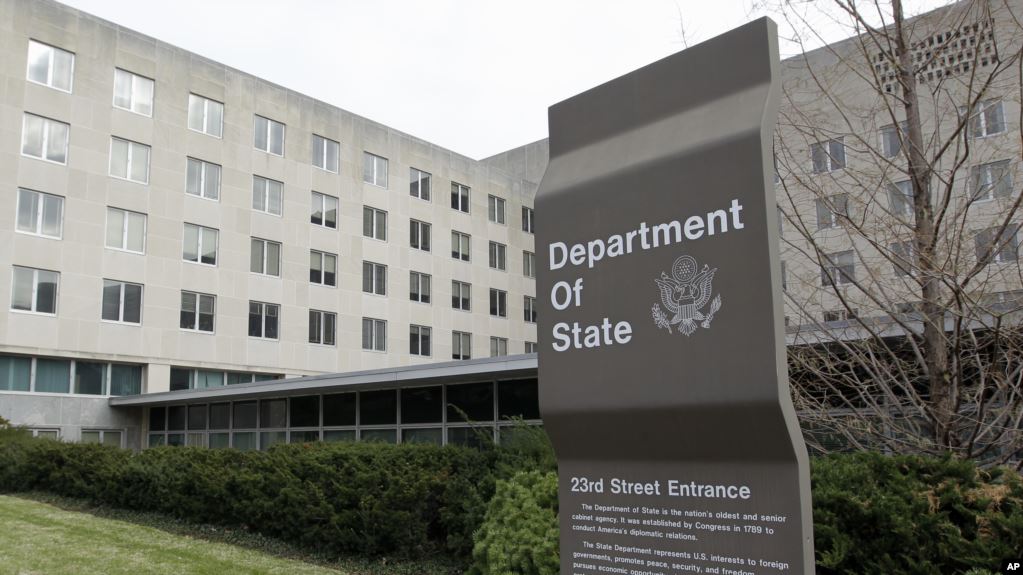
This is a conclusion from the 2021 Country Reports on Human Rights Practices published by the US State Department. These reports cover internationally recognized individual, civil, political, and worker rights, as set in the Universal Declaration on Human Rights and other international agreements, and include all countries receiving assistance and all United Nations member states.

The progress of the Western Balkans in combating corruption varies. However, there are issues common to all countries in the region. This refers to the involvement of state officials in corruption, inadequate implementation of anti-corruption legislation, impunity, high-level corruption, as well as institutions that lack the resources and capacity to fight this problem.

According to Ruslan Stefanov, Program Director of the Centre for Study of Democracy, the State Department report on Human Rights presents a very good overview of the current state and level of progress in anti-corruption in the Western Balkans, showing corruption in the region remains an issue.

“The reports for all countries note that corruption continues to be a problem, in some cases serious, which has not been yet properly addressed by the governments. In the cases of Albania, Serbia, and Montenegro, the reports also rightly point out media freedom issues and undue advantage of incumbent political forces in general and presidential elections,” says Stefanov, adding that the report confirms the findings and relevance of the SELDI Corruption Monitoring System.

Albania – Insufficient progress in prosecuting corruption

According to the State Department report, “several government agencies investigated corruption cases, but limited resources, investigative leaks, real and perceived political pressure, and a haphazard reassignment system hampered investigations.”

Thus, besides problems with the independence of the judiciary and restrictions on free expression, significant human rights issues, the report on Albania included pervasive corruption in all branches of government and municipal institutions, as well.

It was noted that “the Specialized Anticorruption Body and anti-corruption courts made significant progress during the year in investigating, prosecuting, and convicting senior officials and organized criminals.”

However, officials have frequently engaged in corrupt practices and impunity remained a problem.

An important problem according to the report represents police corruption. The Service for Internal Affairs and Complaints (SIAC) received complaints, and most of them alleged a failure to act, violation of standard operating procedures, abuse of office, arbitrary action, police bias, unfair fines, and passive corruption.

Besides SIAC, these complaints were also processed by the Office of the Ombudsman against police officers. They concluded that the police did not always enforce the law equitably – that was often influenced by personal associations, political or criminal connections, deficient infrastructure, lack of equipment, and inadequate supervision. Authorities continued to address these problems by renovating police facilities, upgrading vehicles, and publicly highlighting anticorruption measures, while the government established a system for vetting security officials.

Bosnia and Herzegovina – Absence of high-level prosecution attributed to a lack of political will

Although there are mechanisms for investigating and sanctioning corruption, political pressure often prevented their application, stated the 2021 report on BiH. Many state-level institutions, tasked with fighting corruption, had limited authority with no executive powers and remained under-resourced.

“Corruption was especially prevalent in the health and education sectors, public procurement processes, local governance, and public administration employment procedures.”

In an interview for N1, Gabriel Escobar, US Special Envoy for the Western Balkans, said that corruption represents the main problem in BiH. He noted that the real problem causing young people to leave the country is not them not wanting to live with the Croats, the Bosniaks, or the Serbs, but the fact they cannot get a job without corrupt connections.

“That is the problem, and it is not just my opinion. Reputable analyses, such as that of Transparency International, show that Bosnia and Herzegovina is the most corrupt country in the Western Balkans and almost the most corrupt country in Europe,” he stated.

There were numerous reports of government corruption during the year. The report noted officials in political and economic institutions frequently engaged in corrupt practices, but impunity remained widespread.

The courts have not processed high-level corruption cases, and in most of the finalized cases, suspended sentences were pronounced.

According to the report, the absence of high-profile prosecutions is attributed to a lack of political will. There were indications that the judiciary was under political influence and judiciary appointments were not merit-based. Besides, prosecutions also were considered generally ineffective and subject to political manipulation.

Kosovo – Legal framework in place, yet weak implementation  

According to the 2021 report on Kosovo, the legal framework on corruption in Kosovo provides criminal penalties for corruption by officials, but the law was not implemented effectively by the government.

It was noted the small proportion of corruption cases that were investigated and charged led to convictions. Corruption cases were routinely subject to repeated appeal, and the judicial system often allowed statutes of limitation to expire without trying cases.

“NGOs and international organisations alleged numerous failures by the judicial system to prosecute corruption, noting that very few cases brought against senior officials resulted in convictions.”

As in the rest of the Western Balkan region, there were reports of government corruption – officials were sometimes engaged in corrupt practices, also with impunity, due to the lack of effective judicial oversight and general weakness in the rule of law.

The report stated sentencing of high-level officials convicted of corruption was often lenient, that most convictions result in suspended sentences or fines and that only 4 or 5 per cent result in imprisonment. As NGOs explained, indictments often failed because prosecutors filed incorrect charges or made procedural errors.

Montenegro – Government corruption significant issue

According to the report on Montenegro, government corruption represents a significant human rights issue. The new government upheld old patterns and the public viewed corruption in hiring practices based on personal relationships or political affiliation as endemic in the government and elsewhere in the public sector, at both local and national levels, particularly in the areas of health care, higher education, the judiciary, customs, political parties, police, the armed forces, urban planning, the construction industry, and employment.

The State Department stated the Agency for the Prevention of Corruption (APC) was strengthened through continued capacity-building activities and technical assistance during the year. Yet, it was also stated the domestic NGOs were critical of the Agency’s lack of transparency, and periodic working group meetings with it, while the European Commission noted that problems related to APC’s independence, priorities, selective approach, and decision quality.

As in other Western Balkan countries, a serious obstacle in fighting corruption represents inadequate prosecution of high level-corruption. The report on Montenegro mentioned courts in this country tended toward milder penalties and a more lenient attitude toward high-level corruption.

“The corruption cases analysed showed that high-level public officials received more favourable treatment before the courts than other accused persons. This worked heavily in favour of public officials, who even received suspended sentences when there is no legal basis.”

Finally, the report noted police corruption and inappropriate government influence on police behaviour remained problems in Montenegro. Very worrying is the low number of prosecutions, as well as impunity of security personnel accused of human rights abuses.

North Macedonia – Progress in prosecuting high-level corruption

In North Macedonia, Parliament adopted the 2021-2025 National Strategy for Countering Corruption and Conflict of Interest, along with the implementing action plan. Furthermore, the Government adopted a 2021-2023 National Strategy for Strengthening Capacities for Financial Investigations and Confiscation of Property, as part of its plan for fighting corruption.

The 2021 report on North Macedonia stated that anticorruption law in the country provides criminal penalties for conviction of corruption by officials and that the Government generally implemented it.

Yet, there were reports of officials engaged in corruption. Especially problematic was the fact the government was the country’s largest employer since its dominant role in the economy created opportunities for corruption.

However, when it comes to investigating and prosecuting corruption, including at a high level, during previous years, North Macedonia made some progress. The report explained some of the most important cases which included high state officials – Sasho Mijalkov, former Administration for Counter-Intelligence and Security Director, Dragi Rashkovski, former advisor to the Prime Minister’s Cabinet and Government Secretary-General, as well as Katica Janeva, former Chief Special Prosecutor.

Serbia – Lack of trust among citizens ineffectiveness of fight against corruption

Although Serbia adopted new Anticorruption Law which provides criminal penalties for corruption by officials, in its 2021 report on Serbia, State Department included the research by CRTA and pointed out the citizens’ lack of trust in the effectiveness of the fight against corruption and their belief that the Government puts pressure on individuals, media, or organizations that identified cases of corruption in which members of the government were involved.

The report explained there was a widespread public perception that the Law was not being implemented consistently and systematically and that some high-level officials engaged in corrupt practices ended with impunity.

“There were numerous reported cases of indictments or convictions for corruption during the year, although rule-of-law-focused NGOs noted that convictions in high-profile cases were exceedingly rare, which they claimed led to impunity for corrupt high-ranking public officials.”

It was noted, that besides high-level corruption, local NGOs, as well as Anti-Corruption Council continued to point to a lack of governmental transparency that continued, despite the Government’s publicly stated commitment to fight corruption.

The report on Serbia included some of the most important conclusions from the Freedom House Nations in Transit 2021 Report which described the country as a “hybrid regime” rather than a democracy due to reported corruption among senior officials that had gone unaddressed in recent years, as well as from the GRECO 2020 Annual Report found that the country had not fully implemented anticorruption measures related to the recruitment and rules of conduct governing members of parliament, judges, and prosecutors./EWB
Related Posts

Current Events

Rama alleges ‘hybrid war’ behind protests against Kushner-linked coastal development

5 June, 2026
ENGLISH

Pierre Nora and the institution of memory we lack in Eastern Europe

5 June, 2026
BELGRADE, SERBIA - JUNE 18. 2020: Russian and Serbian flags on display during Russian Foreign Minister Sergei Lavrov's visit to the Liberators of Belgrade Memorial. Valery Sharifulin/TASS,Image: 533095429, License: Rights-managed, Restrictions: UWAGA! Zdjęcia zawierają oryginalny opis dostawcy (ITAR-TASS). Szczególnie w związku z agresją Rosji na Ukrainę mogą zawierać przekaz niezgodny z faktami. Zweryfikuj go przed publikacją, Model Release: no, Credit line: Valery Sharifulin / TASS / Forum
Current Events

Balkan Maskirovka: Why Moscow’s “Distancing” Is Only an Operation for the Survival of Vučić’s Regime

5 June, 2026

Follow US

Subscribe

Receive Argumentum Magazine by Email

Last Posts

Rama alleges ‘hybrid war’ behind protests against Kushner-linked coastal development

5 June, 2026

Pierre Nora and the institution of memory we lack in Eastern Europe

5 June, 2026
BELGRADE, SERBIA - JUNE 18. 2020: Russian and Serbian flags on display during Russian Foreign Minister Sergei Lavrov's visit to the Liberators of Belgrade Memorial. Valery Sharifulin/TASS,Image: 533095429, License: Rights-managed, Restrictions: UWAGA! Zdjęcia zawierają oryginalny opis dostawcy (ITAR-TASS). Szczególnie w związku z agresją Rosji na Ukrainę mogą zawierać przekaz niezgodny z faktami. Zweryfikuj go przed publikacją, Model Release: no, Credit line: Valery Sharifulin / TASS / Forum

Balkan Maskirovka: Why Moscow’s “Distancing” Is Only an Operation for the Survival of Vučić’s Regime

5 June, 2026

The Blueprint of a Diplomatic Debacle: Analyzing Germany’s Historic UNSC Loss

4 June, 2026

Serbia – China 2026: Technological partnership, geopolitical positioning and a new phase of the Chinese presence in the Western Balkans

1 June, 2026
Argumentum

“Argumentum”, një proces intelektual …

Contact Us

[email protected]
[email protected]
[email protected]

Follow Us

Media Partner

Register

Receive Argumentum Magazine by Email
  • Home
  • Privacy Policy
  • About Us
  • Contact

© 2022 Argumentum. All Rights Reserved. | NUIS: L91415033Q

Welcome Back!

Login to your account below

Forgotten Password? Sign Up

Create New Account!

Fill the forms bellow to register

*By registering into our website, you agree to the Terms & Conditions and Privacy Policy.
All fields are required. Log In

Retrieve your password

Please enter your username or email address to reset your password.

Log In

Add New Playlist

No Result
View All Result
  • Home
  • OP/ED
  • Interview
  • Realpolitik
  • Current Events
  • Top News
  • YOUR VOICE
  • Shqip

© 2022 Argumentum. All Rights Reserved. | NUIS: L91415033Q

This website uses cookies. By continuing to use this website you are giving consent to cookies being used. Visit our Privacy and Cookie Policy.