





• SHQIPËRI
  • KOSOVË
  • MAQEDONIA E VERIUT
  • MALI I ZI
  • Revista në PDF
6 June, 2026
  • Home
  • OP/ED

    Pierre Nora and the institution of memory we lack in Eastern Europe

    The Blueprint of a Diplomatic Debacle: Analyzing Germany’s Historic UNSC Loss

    Cyber Attribution, Corruption, and the False-Flag Question in Albania’s 2022 Alleged Iranian Cyberattack

    Between Russia, Iran and Europe: Azerbaijan as a balancing power in the South Caucasus

    The Zero-Tariff Gate: Sovereignty as a Service in the Sino-African Corridor

    Albania vs. the Sea/ Marginal Notes on A. Leka’s Novel The Hidden Side of the Albanian Socialist Garden

    May 9 and the long shadow of a Letter: Is Europe still Schuman’s Project?

    The Arbnesh of Zadar: A living memory of Albanian identity on the Adriatic coast

    Science Diplomacy and Academic Freedom: A strategic nexus for contemporary diplomacy

  • Interview

    Exclusive Interview with Oleksandr Tyshchenko: A 40-Year Legacy of Chernobyl, Nuclear Risks, and Global Responsibility

    INTERVIEW: ZLATKO KRAMARIĆ – THOUGHTS ON THE OLD CONTINENT

    EXCLUSIVE / Ukrainian Ambassador to Albania, Volodymyr Shkurov: “Ukraine wants peace, but not at the expense of its freedom and independence”

    EXCLUSIVE| Ambassador Tayyar Kagan Atay: Türkiye and Albania, a Strategic Partnership Rooted in Shared Heritage and a Common Vision for the Future

    “Diplomacy, Not War”: Palestinian Ambassador to Albania Calls for Justice, Peace, and Global Action for Gaza

    Exclusive: “Even After Tito – Tito”/ Ambassador Zlatko Kramarić on Authoritarian Legacies and Democracy’s Future in the Balkans

    The Conclusion of the Diplomatic Mission / Ambassador Dancho Markovski: Strengthening Albania-North Macedonia Relations for a Shared European Future

    A Century of Diplomatic Relations Between Albania and Russia: Exclusive Interview with the Russian Ambassador to Albania, H.E. Alexey Zaytsev

    Exclusive/ The chairman of the Freedom Party, Ilir Meta: “The will of the citizens will triumph in Albania, as it did in North Macedonia”

  • Realpolitik

    IBAR? ”Sufficiently! Much ado about nothing! Shart contrasts in Beijing! Where is the exit?!

    Neither peace nor war! Peace with bombs?! IBAR in autumn?! Not another Hormuz in Taivan! 

    IBAR – a springing board or an obstacle? Can we catch the EU Negotiation train 2027? When the dress makes the news!  EU electoral April  ends in a draw 1:1!  

    The European Parliament building in Strasbourg, France with flags waving calmly celebrating peace of the Europe. July 12, 2020.

    EU 2027 or 2037! Even half membership failed! No exit strategy!     

    What next?

    “With diplomatic velvet“! Major question marks! In Washington yes, but  in the White House NO! A strange dinner in Brussels!

    From a great ‘apple of disaccord’ to a  point of  cooperation! A bad start! The strange absence in Davos!

    5 lessons from the American 3 January! Don’t count the chicken before they are hatched! Will NATO freeze in Greenland? Wrong diplomatic messages!

    German Chancellor Friedrich Merz, European Commission President Ursula von der Leyen, Ukraine's President Volodymyr Zelenskiy, U.S. Special Envoy Steve Witkoff and Jared Kushner, son-in-law of U.S. President Donald Trump line up for a family photo opportunity at the Chancellery in Berlin, Germany, December 15, 2025.    REUTERS/Lisi Niesner/Pool

    A Strategy that could change the world! Europe in Berlin! Why an historic compromise? Only charm diplomacy in Athens!

  • Current Events

    Rama alleges ‘hybrid war’ behind protests against Kushner-linked coastal development

    BELGRADE, SERBIA - JUNE 18. 2020: Russian and Serbian flags on display during Russian Foreign Minister Sergei Lavrov's visit to the Liberators of Belgrade Memorial. Valery Sharifulin/TASS,Image: 533095429, License: Rights-managed, Restrictions: UWAGA! Zdjęcia zawierają oryginalny opis dostawcy (ITAR-TASS). Szczególnie w związku z agresją Rosji na Ukrainę mogą zawierać przekaz niezgodny z faktami. Zweryfikuj go przed publikacją, Model Release: no, Credit line: Valery Sharifulin / TASS / Forum

    Balkan Maskirovka: Why Moscow’s “Distancing” Is Only an Operation for the Survival of Vučić’s Regime

    Serbia – China 2026: Technological partnership, geopolitical positioning and a new phase of the Chinese presence in the Western Balkans

    The Digital Protectorate: How the EU AI Act Codified Silicon Valley’s Monopoly

    The 28th MFC Annual Conference in Durrës / Sulaj: Microfinance remains a key instrument for financial inclusion

    Serbia at the Crossroads of EU Integration and Geopolitical Balancing: IFIMES Analysis

    Tirana – €20 Million EU–Banking Agreement Boosts Albanian SMEs

    The Myth of Independence: How Chinese Efficiency is Rewriting the Constitution of Modern Geopolitics!

    Europe Yesterday and Today: Why 9 May Still Matters

  • Top News

    Rama alleges ‘hybrid war’ behind protests against Kushner-linked coastal development

    No End in Sight: Trump, Netanyahu and the Expanding Middle East War

    Tirana – €20 Million EU–Banking Agreement Boosts Albanian SMEs

    “EU4Municipalities II” Project, a Strategic Investment for Strengthening Municipalities and Accelerating Albania’s Path towards the EU

    Albania, Italy deepen defence ties with naval shipbuilding deal

    U.S. Embassy: Iran-Linked Groups May Target Americans and Iranian Opposition in Albania

    The Council of Albanian Ambassadors disappointed with the voting of the draft law on the foreign service in the parliamentary committees.

    Prime Minister Edi Rama Addresses Israel’s Knesset in Historic Special Session

    Kazakhstan’s Strategic Reform Agenda: Stability, Modern Governance, and Responsible Diplomacy

  • YOUR VOICE
  • Shqip
No Result
View All Result
Argumentum
  • Home
  • OP/ED

    Pierre Nora and the institution of memory we lack in Eastern Europe

    The Blueprint of a Diplomatic Debacle: Analyzing Germany’s Historic UNSC Loss

    Cyber Attribution, Corruption, and the False-Flag Question in Albania’s 2022 Alleged Iranian Cyberattack

    Between Russia, Iran and Europe: Azerbaijan as a balancing power in the South Caucasus

    The Zero-Tariff Gate: Sovereignty as a Service in the Sino-African Corridor

    Albania vs. the Sea/ Marginal Notes on A. Leka’s Novel The Hidden Side of the Albanian Socialist Garden

    May 9 and the long shadow of a Letter: Is Europe still Schuman’s Project?

    The Arbnesh of Zadar: A living memory of Albanian identity on the Adriatic coast

    Science Diplomacy and Academic Freedom: A strategic nexus for contemporary diplomacy

  • Interview

    Exclusive Interview with Oleksandr Tyshchenko: A 40-Year Legacy of Chernobyl, Nuclear Risks, and Global Responsibility

    INTERVIEW: ZLATKO KRAMARIĆ – THOUGHTS ON THE OLD CONTINENT

    EXCLUSIVE / Ukrainian Ambassador to Albania, Volodymyr Shkurov: “Ukraine wants peace, but not at the expense of its freedom and independence”

    EXCLUSIVE| Ambassador Tayyar Kagan Atay: Türkiye and Albania, a Strategic Partnership Rooted in Shared Heritage and a Common Vision for the Future

    “Diplomacy, Not War”: Palestinian Ambassador to Albania Calls for Justice, Peace, and Global Action for Gaza

    Exclusive: “Even After Tito – Tito”/ Ambassador Zlatko Kramarić on Authoritarian Legacies and Democracy’s Future in the Balkans

    The Conclusion of the Diplomatic Mission / Ambassador Dancho Markovski: Strengthening Albania-North Macedonia Relations for a Shared European Future

    A Century of Diplomatic Relations Between Albania and Russia: Exclusive Interview with the Russian Ambassador to Albania, H.E. Alexey Zaytsev

    Exclusive/ The chairman of the Freedom Party, Ilir Meta: “The will of the citizens will triumph in Albania, as it did in North Macedonia”

  • Realpolitik

    IBAR? ”Sufficiently! Much ado about nothing! Shart contrasts in Beijing! Where is the exit?!

    Neither peace nor war! Peace with bombs?! IBAR in autumn?! Not another Hormuz in Taivan! 

    IBAR – a springing board or an obstacle? Can we catch the EU Negotiation train 2027? When the dress makes the news!  EU electoral April  ends in a draw 1:1!  

    The European Parliament building in Strasbourg, France with flags waving calmly celebrating peace of the Europe. July 12, 2020.

    EU 2027 or 2037! Even half membership failed! No exit strategy!     

    What next?

    “With diplomatic velvet“! Major question marks! In Washington yes, but  in the White House NO! A strange dinner in Brussels!

    From a great ‘apple of disaccord’ to a  point of  cooperation! A bad start! The strange absence in Davos!

    5 lessons from the American 3 January! Don’t count the chicken before they are hatched! Will NATO freeze in Greenland? Wrong diplomatic messages!

    German Chancellor Friedrich Merz, European Commission President Ursula von der Leyen, Ukraine's President Volodymyr Zelenskiy, U.S. Special Envoy Steve Witkoff and Jared Kushner, son-in-law of U.S. President Donald Trump line up for a family photo opportunity at the Chancellery in Berlin, Germany, December 15, 2025.    REUTERS/Lisi Niesner/Pool

    A Strategy that could change the world! Europe in Berlin! Why an historic compromise? Only charm diplomacy in Athens!

  • Current Events

    Rama alleges ‘hybrid war’ behind protests against Kushner-linked coastal development

    BELGRADE, SERBIA - JUNE 18. 2020: Russian and Serbian flags on display during Russian Foreign Minister Sergei Lavrov's visit to the Liberators of Belgrade Memorial. Valery Sharifulin/TASS,Image: 533095429, License: Rights-managed, Restrictions: UWAGA! Zdjęcia zawierają oryginalny opis dostawcy (ITAR-TASS). Szczególnie w związku z agresją Rosji na Ukrainę mogą zawierać przekaz niezgodny z faktami. Zweryfikuj go przed publikacją, Model Release: no, Credit line: Valery Sharifulin / TASS / Forum

    Balkan Maskirovka: Why Moscow’s “Distancing” Is Only an Operation for the Survival of Vučić’s Regime

    Serbia – China 2026: Technological partnership, geopolitical positioning and a new phase of the Chinese presence in the Western Balkans

    The Digital Protectorate: How the EU AI Act Codified Silicon Valley’s Monopoly

    The 28th MFC Annual Conference in Durrës / Sulaj: Microfinance remains a key instrument for financial inclusion

    Serbia at the Crossroads of EU Integration and Geopolitical Balancing: IFIMES Analysis

    Tirana – €20 Million EU–Banking Agreement Boosts Albanian SMEs

    The Myth of Independence: How Chinese Efficiency is Rewriting the Constitution of Modern Geopolitics!

    Europe Yesterday and Today: Why 9 May Still Matters

  • Top News

    Rama alleges ‘hybrid war’ behind protests against Kushner-linked coastal development

    No End in Sight: Trump, Netanyahu and the Expanding Middle East War

    Tirana – €20 Million EU–Banking Agreement Boosts Albanian SMEs

    “EU4Municipalities II” Project, a Strategic Investment for Strengthening Municipalities and Accelerating Albania’s Path towards the EU

    Albania, Italy deepen defence ties with naval shipbuilding deal

    U.S. Embassy: Iran-Linked Groups May Target Americans and Iranian Opposition in Albania

    The Council of Albanian Ambassadors disappointed with the voting of the draft law on the foreign service in the parliamentary committees.

    Prime Minister Edi Rama Addresses Israel’s Knesset in Historic Special Session

    Kazakhstan’s Strategic Reform Agenda: Stability, Modern Governance, and Responsible Diplomacy

  • YOUR VOICE
  • Shqip
No Result
View All Result
Argumentum
No Result
View All Result
Home ENGLISH

A century in the making — what Prime Minister of Great Britain, Keir Starmer’s visit to Albania really means

16 May, 2025
in ENGLISH, In Focus
A A
Share on FacebookShare on Twitter

Dorian Koçi*

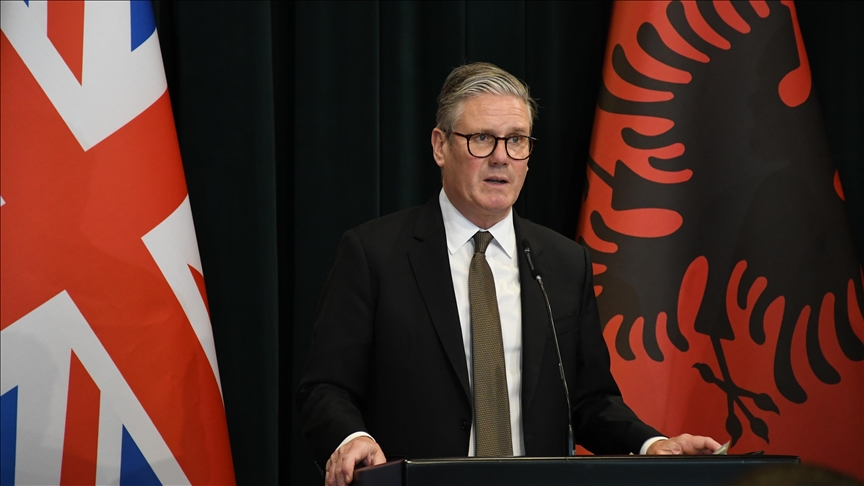
On May 15, 2025, history was written as British Prime Minister Sir Keir Starmer stepped onto Albanian soil, becoming the first UK leader ever to do so. More than a ceremonial event, the visit marked a crucial milestone in the evolution of a century-long diplomatic relationship that has weathered ideological divides, military alliances, Cold War silence, and a dynamic post-communist renewal. In many ways, Starmer’s trip is both a culmination and a beginning — a powerful signal that the United Kingdom views Albania as a serious and strategic partner in the new European landscape.

This editorial examines the deeper significance of the visit, contextualizing it within a tumultuous history and a rapidly evolving geopolitical environment. From wartime solidarity to Cold War estrangement and finally to present-day cooperation, the UK-Albania relationship offers a compelling study in diplomatic resilience and renewal.

A century of complex ties

To appreciate the weight of Starmer’s visit, we must rewind to the origins of this relationship. The United Kingdom formally recognized Albania in 1922, amidst a regional environment marked by instability and power rivalries. Britain’s foreign policy at the time was focused on preserving a balance of power in the Balkans, particularly countering Italian expansionism. During the interwar years, the UK provided diplomatic and technical assistance to Albania, helping it consolidate borders and modernize governance structures. British support played a key role in the establishment of a gendarmerie force and in resolving Albania’s border issues with its neighbors. Yet, those promising beginnings were derailed in 1939 when Fascist Italy invaded Albania, extinguishing its sovereignty and ending Britain’s efforts at fostering stability. Britain shifted from diplomacy to resistance, and as World War II engulfed Europe, Albania’s role changed. Though formal diplomatic ties were cut, necessity forged new connections.

Wartime alliance in the shadows

During World War II, despite a lack of official relations, the UK and Albania cooperated closely in the fight against fascism. British missions operated within Albanian territory, coordinating with local resistance fighters to oppose Axis forces. This alliance wasn’t just about military strategy — it was underpinned by civic engagement and ideological solidarity. The Anglo-Albanian Committee, founded in 1913 by British politician Aubrey Herbert, was reactivated under the stewardship of his widow Mary Herbert. It became a vital platform for anti-fascist advocacy and support for Albanian sovereignty.

Albania’s strategic location near the Otranto Strait made it a critical node in Mediterranean defense planning. The cooperation forged in the shadows of war left a residue of goodwill that could have blossomed into strong post-war relations. But peace brought not reconciliation, but division.

The Cold War freeze: From partners to adversaries

The post-war world quickly descended into ideological conflict, and the UK-Albania relationship became one of the early victims. In 1946, the Corfu Channel incident — where British warships struck mines in Albanian waters — led to legal wrangling and the deterioration of relations. The British viewed Albania as reckless and hostile; Albania, under Enver Hoxha’s rigid Stalinist rule, saw Britain as a capitalist aggressor.

What followed was a long diplomatic freeze. Albania, isolated by choice and ideology, became one of Europe’s most secluded regimes. Enver Hoxha’s government rejected not only the West but eventually even its socialist allies. Britain, meanwhile, considered Albania a Soviet proxy and focused its attention elsewhere in the region.

For nearly five decades, there were no formal diplomatic ties, no exchange of ambassadors, and no substantial engagement. This vacuum stood in stark contrast to the wartime cooperation that preceded it.

A new dawn: Post-Communist reconnection

The fall of communism in the early 1990s brought a profound transformation to Albania. As the country opened to the world, the UK was quick to offer support. Diplomatic relations were re-established, and Britain became a key partner in Albania’s difficult transition to democracy and market economics.

In the chaotic post-communist years, including the domestic turmoil of 1997 and the Kosovo conflict in 1999, the UK provided not just aid but political advocacy for Albania’s stabilization and regional role. The UK supported democratic institution-building, civil society development, and crucial judicial reforms. British influence helped shape a free media, transparent governance structures, and a professionalized military, laying the groundwork for Albania’s eventual NATO accession in 2009.

In the decades that followed, the UK and Albania deepened cooperation in trade, education, defense, and the rule of law. Britain became a consistent voice supporting Albania’s EU aspirations. Though Brexit changed the UK’s relationship with the EU, it didn’t diminish London’s interest in the Balkans. If anything, it reinforced the need to cultivate independent partnerships in the region.

Diplomacy beyond migration

The May 2025 visit was notable not just for its symbolism but for its substance. Prime Minister Starmer met with Albanian President Bajram Begaj and Prime Minister Edi Rama, emphasizing mutual interests and a new era of cooperation. Topics ranged from trade and security to youth engagement and judicial reform. But inevitably, the issue of migration loomed large. In recent years, the presence of illegal Albanian migrants in the UK has become a political flashpoint. Certain British politicians have used it to stoke populist sentiment, portraying Albanian nationals as a threat. These narratives, often divorced from facts, did serious harm to the relationship.

Starmer’s visit, however, seemed to mark a turning point. “The fact that I’m here is a declaration of intent,” he said, signaling a break from the megaphone diplomacy of the past. Edi Rama responded with his own directness: “The myth of the criminal Albanian has collapsed.” The two leaders presented a united front, not only in tackling illegal migration and organized crime but also in celebrating the contributions of law-abiding, integrated Albanian communities in the UK.

Rama also raised a pressing concern often overlooked in migration debates: the legal status of Albanians who arrived in the UK during the Kosovo war under false identities. Many of these individuals have lived in the UK for over two decades, contributing to society but facing legal and bureaucratic challenges due to their dual identity status. It is time for British policymakers to address this complex issue with compassion and pragmatism.

No Italian-Style deal, and that’s good diplomacy

Ahead of the visit, speculation swirled about whether the UK would seek an Italy-style migration deal with Albania to house asylum seekers. Both Starmer and Rama firmly denied such intentions. “We are married to Italy,” Rama quipped. “Everything else is just love.”

This clarity is not just refreshing — it’s essential. Albania should not be treated as a transactional partner in managing Britain’s domestic migration dilemmas. Strategic partnership means collaboration on mutual priorities, not outsourcing challenges. The rejection of a copycat deal shows maturity on both sides.

Defense: A new pillar of cooperation

One of the visit’s most tangible outcomes was the signing of a non-binding but strategically significant Declaration of Intent on defense cooperation. In the presence of Starmer and Rama, Albania’s Defense Minister Pirro Vengu and UK Ambassador Nicholas Abbott signed an agreement to deepen collaboration in military production, counter-drone technology, and joint exports. The declaration envisions a future where Albanian and British firms co-develop military vehicles, air defense systems, and training initiatives. While no legal obligations were created, the framework lays the foundation for future binding agreements and industrial cooperation. Starmer hailed the deal as part of “a new era for European security,” highlighting Albania’s growing role in NATO and the broader effort to counter hybrid threats in the region.

The road ahead: Strategic partners in a changing Europe

As the UK redefines its foreign policy in a post-Brexit, post-Covid world, and as Albania continues its journey toward full EU membership, the opportunities for collaboration are significant. From border security and judicial reform to educational exchanges and economic development, both nations stand to gain from a deeper strategic partnership. The UK’s interest in Albania is also a signal to other Western Balkan states. It illustrates that London still sees value in regional diplomacy, even outside the EU framework. For Albania, the relationship with Britain provides a counterbalance to regional rivalries and a platform to amplify its voice in European security matters.

A century of lessons and a future of possibilities

Starmer’s visit to Tirana is more than a diplomatic footnote. It is a testament to the endurance of international relationships and a reminder that even the most complicated histories can be rewritten. The UK-Albania story is one of broken ties and rebuilt bridges, of suspicion turned into cooperation. In an era where trust in international institutions is fragile and global alliances are constantly shifting, the ability to foster resilient, principle-based partnerships is invaluable. Albania and the UK have that opportunity now.

The next century of relations need not be defined by migration flashpoints or transactional deals. Instead, it can be a model of mutual respect, strategic alignment, and shared democratic values. The groundwork has been laid. What happens next is a question not just of diplomacy, but of vision.

*Dr. Dorian Koçi, former Director of National historical Museum of Albania (2017-2023) is a historian and author, with expertise in Southeast European history, International Relations, and cultural diplomacy.

/Argumentum.al
Related Posts

Current Events

Rama alleges ‘hybrid war’ behind protests against Kushner-linked coastal development

5 June, 2026
ENGLISH

Pierre Nora and the institution of memory we lack in Eastern Europe

5 June, 2026
BELGRADE, SERBIA - JUNE 18. 2020: Russian and Serbian flags on display during Russian Foreign Minister Sergei Lavrov's visit to the Liberators of Belgrade Memorial. Valery Sharifulin/TASS,Image: 533095429, License: Rights-managed, Restrictions: UWAGA! Zdjęcia zawierają oryginalny opis dostawcy (ITAR-TASS). Szczególnie w związku z agresją Rosji na Ukrainę mogą zawierać przekaz niezgodny z faktami. Zweryfikuj go przed publikacją, Model Release: no, Credit line: Valery Sharifulin / TASS / Forum
Current Events

Balkan Maskirovka: Why Moscow’s “Distancing” Is Only an Operation for the Survival of Vučić’s Regime

5 June, 2026

Follow US

Subscribe

Receive Argumentum Magazine by Email

Last Posts

Rama alleges ‘hybrid war’ behind protests against Kushner-linked coastal development

5 June, 2026

Pierre Nora and the institution of memory we lack in Eastern Europe

5 June, 2026
BELGRADE, SERBIA - JUNE 18. 2020: Russian and Serbian flags on display during Russian Foreign Minister Sergei Lavrov's visit to the Liberators of Belgrade Memorial. Valery Sharifulin/TASS,Image: 533095429, License: Rights-managed, Restrictions: UWAGA! Zdjęcia zawierają oryginalny opis dostawcy (ITAR-TASS). Szczególnie w związku z agresją Rosji na Ukrainę mogą zawierać przekaz niezgodny z faktami. Zweryfikuj go przed publikacją, Model Release: no, Credit line: Valery Sharifulin / TASS / Forum

Balkan Maskirovka: Why Moscow’s “Distancing” Is Only an Operation for the Survival of Vučić’s Regime

5 June, 2026

The Blueprint of a Diplomatic Debacle: Analyzing Germany’s Historic UNSC Loss

4 June, 2026

Serbia – China 2026: Technological partnership, geopolitical positioning and a new phase of the Chinese presence in the Western Balkans

1 June, 2026
Argumentum

“Argumentum”, një proces intelektual …

Contact Us

[email protected]
[email protected]
[email protected]

Follow Us

Media Partner

Register

Receive Argumentum Magazine by Email
  • Home
  • Privacy Policy
  • About Us
  • Contact

© 2022 Argumentum. All Rights Reserved. | NUIS: L91415033Q

Welcome Back!

Login to your account below

Forgotten Password? Sign Up

Create New Account!

Fill the forms bellow to register

*By registering into our website, you agree to the Terms & Conditions and Privacy Policy.
All fields are required. Log In

Retrieve your password

Please enter your username or email address to reset your password.

Log In

Add New Playlist

No Result
View All Result
  • Home
  • OP/ED
  • Interview
  • Realpolitik
  • Current Events
  • Top News
  • YOUR VOICE
  • Shqip

© 2022 Argumentum. All Rights Reserved. | NUIS: L91415033Q

This website uses cookies. By continuing to use this website you are giving consent to cookies being used. Visit our Privacy and Cookie Policy.