






























By Zlatko Kramarić*|ARGUMENTUM
And the recent concert by Marko Perković Thompson in Široki Brijeg, in neighboring Bosnia and Herzegovina, once again confirmed that disputes continue to exist in Croatian society about what from our traditions, our past should be remembered, and what should be forgotten. Of course, this specific event, a concert by a singer, was only an occasion to think about the phenomenon of memory by viewing it in the context of “local” vs. “universal”! It is precisely this context of “local” vs. “universal” that we pointed out in our text, which was published in the Albanian magazine Argumentum, on the occasion of the celebration of January 27 — International Holocaust Remembrance Day. In that text, we advocated the thesis that memory is not just a mere ceremony, but a normative practice that, to a large extent, shapes our current political culture.
If the topic is approached in that way, then this diplomatic reaction of the ambassador of Israel in Bosnia and Herzegovina to certain inappropriate events at a public event where totalitarian symbols were prominent should not be read as an external intervention in our local disputes, but this (decent) reaction should remind us of the universalist logic of the politics of memory, which does not recognize any “specificities of the local context”! Finally, this intervention undoubtedly confirms that it starts from international standards of public responsibility that transcend local/national contexts. Therefore, this is no longer a question of a concert, but of whether there is an awareness in Croatian society of how some symbol, some slogan fits into the normative horizon of Europe.
If the memory of the Holocaust is a fundamental European norm, then the question cannot be reduced to who reacted to a certain (inappropriate) phenomenon, but to how the limits of what is acceptable are internalized in the public space. The problem of selectivity, which is often invoked in our regional/local debates, does not arise at the level of norms, but at the level of their application, because it most often oscillates between historical context and normative clarity, where this difference between context and norm is never reconciled into a single consistent standard.
This tension is revealed particularly clearly when commemorative practices become the subject of political competition. And this is what happens regularly in Croatia, because every commemoration, both in Vukovar and in Jasenovac, turns into a polygon of (sad) political competition. Commemoration then ceases to be a space of shared memory and becomes an instrument of identity mobilization: us vs. them! In contrast, it does not occur to a serious culture of memory to relativize excesses (the highlighting of Nazi symbols, inappropriate greetings, slogans, etc.). Such a model of the culture of memory is based on a clear distinction between piety and (political) instrumentalization. All the more so, since commemorative practices are not marginal rituals, but institutions on which the boundaries of public speech and political responsibility are determined. In those societies in which these boundaries are clear and where political actors are aware that all relations in society depend, more or less, on their public actions, the political culture itself is more mature, all ideological misunderstandings are resolved more simply; and in societies in which these boundaries are unclear, the public space remains subject to constant ideological misunderstandings, exhausting conflicts over the acceptability or unacceptability of certain symbols, slogans…
For the countries of Southeast Europe — including Albania on its European path — this means that the politics of memory is an integral part of the politics of European integration. It should be said here that this is by no means about adopting “foreign” standards, but about building our own consensus on symbolic boundaries that stem from the common European experience. In this sense, all these polemics go beyond their immediate cause, because they have become a mirror of our ability to transform even those painful memories from the recent past into a common, rather than selective, standard of public responsibility.
If we understand remembrance as a norm, not a ceremony, then public debates change: they cease to be a clash of interpretations and become a process of establishing standards. Therefore, we want to believe that this is precisely the most important lesson that Southeast Europe can draw from its own disputes over the past — and the strongest stronghold of its (repressed) European spirit.
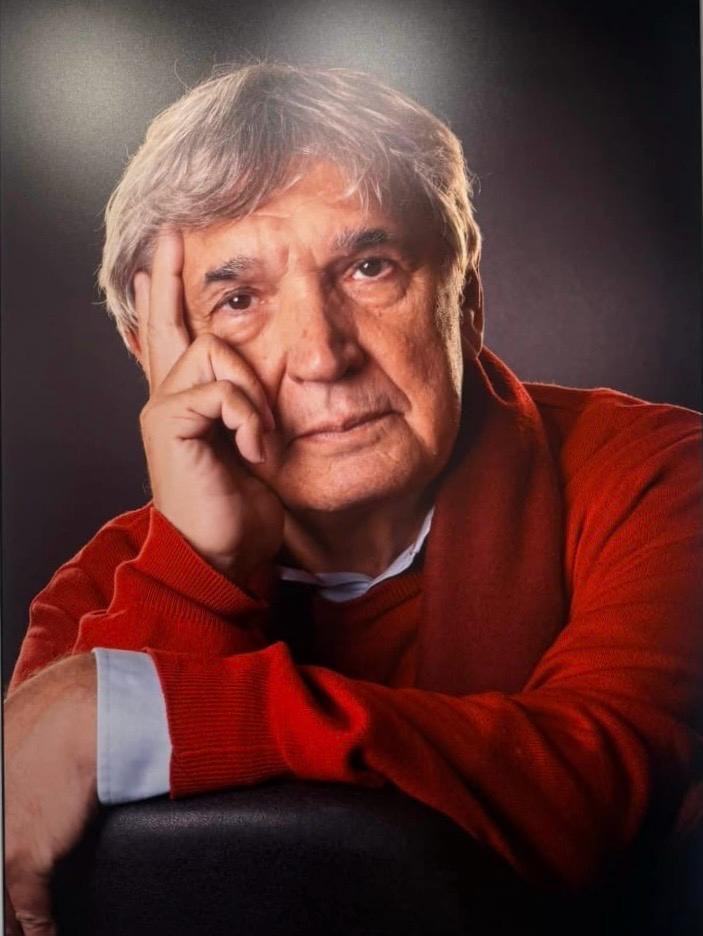
*Zlatko Kramarić is a Croatian publicist, author, and diplomat, currently serving as Ambassador to Albania.
© 2026 Argumentum