















By IFIMES*
Kosovo’s early parliamentary elections, the tenth since the introduction of the multiparty system, are set for 28 December 2025. They were called because the parliament failed to form a government after the 9 February 2025 elections, followed by a second, equally unsuccessful attempt. As a result, a new electoral cycle became unavoidable. A new president is also expected to be elected shortly after the elections. Local elections were held earlier, on 12 October 2025.
A total of 24 political entities have registered to participate: 18 political parties, three coalitions, two citizens’ initiatives and one independent candidate. The voter register lists 2,076,422 eligible voters, nearly 80,000 of whom are registered abroad. According to the population census conducted in April and May 2024, 1,586,659 people reside in Kosovo, with the gap between the number of registered voters and the actual population reflecting, among other factors, the presence of underage residents who do not yet have the right to vote.
According to a decision of the Central Election Commission (CEC), voting will be organised in 38 municipalities in Kosovo and in 36 states abroad, with the total cost of the elections estimated at 11.49 million euros.
The Assembly of Kosovo consists of 120 members, 20 of whom hold reserved seats allocated to minority communities: 10 to the Serb community, three to the Bosniak community, two to the Turkish community, four to the Roma and Egyptian (RAE) communities, and one to the Gorani community. The electoral threshold for representation in the Assembly is 5%, while 61 votes are required to secure a parliamentary majority.
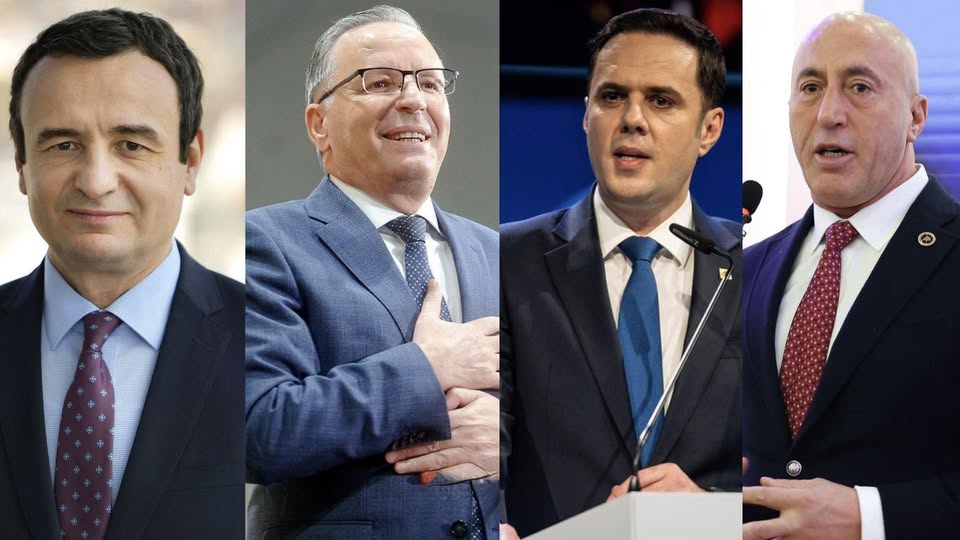
The three main political rivals are: Albin Kurti’s Self-Determination Movement (Vetëvendosje – LVV), together with its partners Alternativa, Guxo and the Albanian Christian Democratic Party (PSD); the Democratic League of Kosovo (LDK) led by Lumir Abdixhiku; and the Democratic Party of Kosovo (PDK) led by Bedri Hamza. The Serb List (SL), as the dominant political party of Kosovo Serbs with the support of Belgrade, and the Alliance for the Future of Kosovo (AAK) led by Ramush Haradinaj, have limited influence on Kosovo’s broader political dynamics.
The leading opposition parties did not register a joint pre-election coalition with the Central Election Commission, further reflecting the complex relations and rivalries within the Albanian political scene. Under the current electoral rules, the political entity that wins the most votes receives the mandate to form a government.
The role of Albin Kurti and the Self-Determination Movement (LVV)
The Self-Determination Movement (LVV) positions itself as a political option strongly oriented towards social justice, economic development, the strengthening of the rule of law and Kosovo’s sovereignty. The party combines welfare-state principles with aspirations for sustainable economic growth, while placing strong emphasis on combating corruption, advancing equality and protecting ordinary citizens and marginalised groups. At the same time, it seeks to balance national interests and the principle of self-determination with progressive socioeconomic policies. Founded in 2005, the movement marks 20 years of active participation in Kosovo’s political life in 2025.
Albin Kurti and LVV continue to enjoy strong voter support, owing to their reform agenda, anti-corruption policies and efforts to dismantle political-criminal structures. Kurti is widely perceived as a leader of firm convictions, committed to his decisions and determined to carry them through. Pre-election polling indicates that LVV is well positioned for a convincing victory, with the potential to win more than 50% of decided voters, making the forthcoming elections a second chance for Kurti.
Kurti’s key challenges in 2026 include: preserving unity within the Albanian political community, withstanding internal attacks from the opposition and segments of the judiciary, continuing efforts to dismantle political-criminal networks — including the potential presence of foreign mercenaries and attempts at destabilisation — and addressing sensitive minority issues, most notably the formation of the Association of Serb Municipalities (ASM).
LDK and PDK: potential and obstacles in the forthcoming electoral cycle
The Democratic League of Kosovo (LDK) defines itself as a centre-right party with a “pro-Rugova, Euro-Atlantic” orientation, reflecting a firm commitment to Kosovo’s European and Euro-Atlantic integration and to broader stability. The party upholds traditional family values, viewing the family as a fundamental pillar of social and welfare policy, while at the same time advocating more modern approaches in areas such as the economy, technology and infrastructure. LDK seeks to balance the preservation of tradition with efforts to bring stability, security and sustainable development to Kosovo. However, it continues to experience the effects of a long-standing identity crisis and a lack of internal party reforms.
The Democratic Party of Kosovo (PDK) promotes free-market principles, economic growth, job creation and a stronger private sector, with a focus on social protection and support for vulnerable groups. The party balances conservative and national elements, including Kosovo’s historical legacy, with liberal economic policies. PDK places particular emphasis on modernising education, fostering innovation and improving citizens’ living standards, seeking to position itself as a guarantor of stability and institution-building, while pledging, in its own words, a “better life” for Kosovo.
Organisational and leadership challenges: PDK has undergone a change in leadership, with Bedri Hamza assuming the position of party president, although in practice, key decision-making often remains “behind the scenes”. LDK, led by Lumir Abdixhiku, still lacks sufficient experience and authority to consolidate the party in a challenging political environment.
The Alliance for the Future of Kosovo (AAK), led by Ramush Haradinaj, presents itself as a centre-right option focused on economic growth, investment, and the development of infrastructure and education, with strong support from the diaspora. The party aims to advance stability and prosperity within Kosovo’s political landscape, with a clear international orientation (EU/NATO).
Due to long-standing rivalries and policy differences, the opposition parties — particularly LDK and PDK — have still not formed a joint pre-election coalition. Internal frictions and complex internal dynamics further hinder any attempt to create a meaningful synergy. Analyses suggest that a joint electoral front would have limited strategic impact; it is therefore justified for these parties to run independently in order to preserve their political identities and maximise their electoral prospects.
Despite their notable historical role, LDK and PDK have limited capacity to counter LVV’s continued growth, while their internal weaknesses and lack of credible leadership represent a major barrier to achieving results that would allow them to form a government without compromises or coalition arrangements. Although a relevant political actor, AAK plays a secondary role within Kosovo’s wider political arena, with limited influence over the dominant Albanian voter blocs.
The Serb List and the role of minority communities
The Serb List (SL) maintains a central role as the dominant political party of the Serb community in Kosovo. Its platform focuses on the collective rights of Serbs, the preservation of cultural and political identity, the survival of the Serb community in Kosovo, close cooperation with Serbia, and active resistance to what SL characterises as anti-Serb decisions of the authorities in Priština. SL operates through a mix of periodic boycotts, selective engagement with the institutions and sustained dependence on Belgrade — a combination that further illustrates its strategic alignment with Serbia’s central government.
SL expects to secure all 10 reserved seats allocated to the Serb community in the Assembly of Kosovo, while a total of three political entities from the Serb community are competing in the upcoming parliamentary elections. The establishment of the Association of Serb Municipalities (ASM) remains a key priority for Belgrade, with its final form to be determined following the recently held local elections in Kosovo. Easing tensions between Serb and Albanian political leaders will require coordinated pressure from the international community, particularly the EU and the United States.
Ensuring active participation and political representation of minority communities — including Bosniaks, Turks, the RAE community and Gorani — is imperative for ensuring a credible and inclusive political framework. Adjustments in voter numbers and the organisation of polling stations, especially in Gračanica municipality and northern Kosovo, illustrate how administrative engineering can influence political dynamics among minority groups, while underscoring the broader challenge of safeguarding a fair and transparent electoral process.
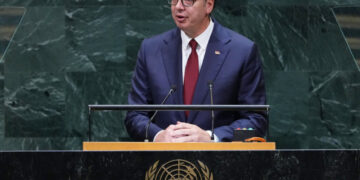
Restoring local control over the Serb-majority municipalities in northern Kosovo, together with reinforcing Serb communities south of the Ibar River, remains strategically important for the long-term stability and political future of the Serb community. These processes are actively supported by Serbian President Aleksandar Vučić, thereby helping sustain international attention and support broader regional peace and stability.
The Central Election Commission’s (CEC) initial decision to bar the Serb List from participating prompted strong criticism, with observers noting that the move risked “compromising the inclusiveness of the electoral process”. There is genuine concern that similar actions could erode public trust in the legitimacy of the elections and further marginalise the Serb minority in political life. The issue of the potential exclusion of the largest Serb party — followed by the reversal of that decision — clearly demonstrates how ethnic and minority considerations remain central to the legitimacy and inclusiveness of Kosovo’s political system.
The European Union has called for the lifting of the punitive measures imposed on Kosovo, while emphasising that developments in the period ahead will hinge on how the new government engages with the Serb community, especially in the strategically important northern region.
Predictions for 2026
Stabilisation or escalation of the political landscape: If the Self-Determination Movement (LVV) secures a new parliamentary majority, Albin Kurti will be able to continue his reform agenda and further strengthen institutions, potentially consolidating political stability in Kosovo. Otherwise, the political scene may once again become unsettled, with a risk of heightened tensions both within the Assembly and among key political actors.
Normalisation of relations with Serbia: The dialogue facilitated by the European Union and the United States remains essential for the full implementation of the Brussels Agreement and the establishment of the Association of Serb Municipalities (ASM). While economic growth, the return of the diaspora and sustained international engagement could further boost economic momentum, the scope for real progress will remain limited in the absence of political stability and a transparent judiciary.
The role of minority communities: Active participation of the Serb List and respect for the rights of Bosniaks, Turks, the RAE community and Gorani are imperative for the legitimacy and inclusiveness of Kosovo’s political system. Backing from the main Albanian parties would allow minority representatives to gain a substantial share of seats, easing the formation of a government without the need for extensive concessions to minority groups.
Security risks: Kosovo remains a geopolitically sensitive area, shaped by regional rivalries and the involvement of external actors. The ability to address internal and regional security challenges effectively will remain essential for long-term stability and sustainable development.
Pre-election forecasts
An independent public opinion poll conducted in December 2025 indicates that, among decided voters, the Self-Determination Movement (LVV) enjoys the highest level of support, at 50–53%, while the Democratic Party of Kosovo (PDK) stands at 16–19%, the Democratic League of Kosovo (LDK) at 15–17%, the AAK–NISMA coalition at 7–9%, while all other parties combined account for roughly 3%.
Undecided voters, who make up roughly one-fifth of the electorate, could play a decisive role in shaping the final result. Nevertheless, LVV remains the frontrunner, with the ultimate outcome of the elections largely dependent on voter turnout. The prolonged political crisis that began in February 2025 suggests the prospect of low turnout, estimated at below 40%. The frequent repetition of elections and a prevailing sense of stagnation further heighten the risks of voter apathy and a weakened perception of electoral legitimacy.
The registration of diaspora voters, their active participation and high mobilisation could meaningfully affect the results, particularly in the context of minority and ethnic voting.
Surveys also indicate that the Serb List will win all 10 seats reserved for the Serb community, reaffirming its role as the principal representative of minority interests in Kosovo.
Conclusion
The early parliamentary elections scheduled for 28 December 2025 represent a crucial moment for Kosovo’s political and institutional future. Entering the electoral cycle without an approved budget for 2026 has heightened international pressure to ensure the rapid establishment of a functional government. As both a test of the resilience of the political system and an opportunity for renewal, these elections offer Albin Kurti a second chance to consolidate political support and advance his broader reform agenda.
The previous government’s failure to form institutions reflects a profound institutional crisis, and the post-election Assembly is likely to be fragmented, with a complex and challenging negotiation dynamic. A victory for LVV and Albin Kurti could help stabilise Kosovo, strengthen the institutional framework and allow reforms to continue, including the adoption of the 2026 budget and renewed momentum in European integration process. However, there is also a risk that other political actors and minority communities may feel sidelined, potentially deepening polarisation and triggering further tensions. Regional and international actors are expected to remain influential in shaping both the election results and subsequent coalition-building arrangements.
The key factors for 2026 include: safeguarding political stability, establishing the Association of Serb Municipalities (ASM), normalising relations with Serbia, fostering economic recovery, and ensuring effective management of internal and regional security challenges.
Commitment to these priorities will be essential for advancing stability, effective governance and inclusiveness in Kosovo.