










By Zlatko Kramarić*|ARGUMENTUM
INTRODUCTION: THE EUROPEAN SPIRIT AS A FRAMEWORK OF CROATIAN MODERNITY
An analysis of Josip Juraj Strossmayer’s relationship to the “European spirit” requires that his activity be placed within a broader continental context: the revolution of 1848, Bach’s absolutism, the Croatian–Hungarian Compromise of 1867, the collapse of Austro-Slavism, and the deep crisis of the political identity of the South Slavic peoples after the disintegration of the Habsburg Monarchy. Croatian political thought in the 19th and early 20th centuries oscillated between Central European and Balkan orientations, between imperial Realpolitik and cultural modernisation, between federalist projects and national emancipations.
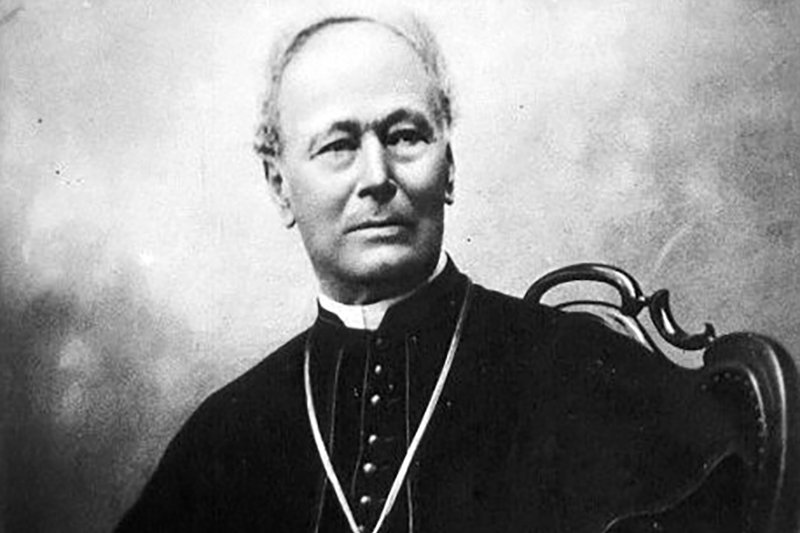
At the centre of Croatia’s political and cultural 19th century stands J. J. Strossmayer – bishop, theologian, patron, political visionary – whose work made it possible for Croatian cultural (and political) emancipation not to be conceived exclusively within a regional/Balkan context, but to include as well a European dimension. His famous motto “through enlightenment to freedom” is not merely a programmatic slogan, but a civilisational formula by which Croatia should become a more relevant cultural space within Mitteleuropa. (It should be noted here that the notion of Mitteleuropa in Croatian humanities and politico-cultural analysis appears as a multilayered concept: historical (Habsburg), cultural (modernist), political (the democratic-liberal models of Central Europe), and even identitarian (relations between the Mediterranean, the Balkans and the Central European “civilisational code”). In the Croatian context, the term was never a mere geographical label, but an intellectual instrument for defining one’s own European position.)
Strossmayer believed that cultural emancipation was the precondition for any serious political emancipation of the Croatian nation within the Habsburg Monarchy – all the more so given that Croatian statehood and legal culture were deeply rooted in Central European institutions: the Hungarian legal system, the Catholic–Latin circle, Habsburg administrative reforms (N. Budak). Strossmayer’s ideas were fundamental for the later development of Croatian modernity – but equally so for a large part of all those political delusions/wanderings that we witnessed in the unsuccessful (political) revolutions in which the Croatian nation, in one way or another, took part during the 20th century: 1914, 1941, 1945, 1971 and 1990.
To be fair, it must be said that in some of those revolutions the Croatian nation participated not only contrary to its own political will, but also without any clearer political vision, let alone any serious strategy: both the First and the Second World War found the Croatian nation politically utterly unprepared. The consequences of that unpreparedness were, in many respects, more than tragic! And we are still in the process of confronting those dark episodes of our past, episodes which represent not only political but also moral breakdowns.
His path from Austro-Slavism to the Yugoslav idea – an idea that in no way corresponds to the interpretation of Yugoslavism held by Serbian political elites, both royalist and communist – left deep traces in Croatian political and intellectual life. Not even the fall of the Berlin Wall in 1989 nor Croatia’s full membership of the EU has diminished the relevance of his idea. It continues to be the subject of many, as a rule, erroneous – more precisely, utterly decontextualised – interpretations of an idea that, to a very large extent, shaped the entire political and cultural life of the Croatian nation in the 20th century. And these, generally sterile, interpretations are still very much present today!
Some interpreters have still not managed to free themselves from the “melancholy of the collapse” of a state community; they cannot come to terms with the permanent disappearance of the Monarchy (both of them – sic!). Others, however, are unable to understand that this unique experience of fragmentation – this narcissism of “small differences”, this sense of particularity – is a fundamental element of the intellectual history of the Central European spirit, for which the frameworks of both Yugoslavias were simply too narrow. These interpreters are far more inclined to practising Balkan authoritarian and centralist models, on which both Yugoslavias were based – the first one somewhat more than the second!
Evidently, such interpreters have overlooked J. P. Taylor’s book The Habsburg Monarchy 1809–1918, in which the author described this “unfortunate” Monarchy as a unique Central European “laboratory of multi-ethnicity” in which, admittedly, political integration was difficult, but cultural diversity was extraordinarily fruitful. That very model was the key corrective to subsequent Balkan centralism in the Kingdom of Serbs, Croats and Slovenes and in Yugoslavia, which ultimately resulted in a kind of solution to the “Croatian question” – the creation of the Banovina of Croatia.
I. J. J. STROSSMAYER AND THE EUROPEAN SPIRIT
1. Austro-Slavism and Mitteleuropa as the Environment
J. J. Strossmayer belongs to that circle of Croatian intellectuals who were culturally and civilisationally fully immersed in Central Europe: educated in Pécs, Vienna and Rome, formed within the theological-philosophical matrix of Catholic Europe, he views the European spirit as a humanistic, rational and conciliar ideal. There are three key premises of Strossmayer’s Austro-Slavism:
a) The Habsburg state as the only realistic framework for the political survival of the Croats.
b) Slavic cultural emancipation within the broader framework of Central European civilisation.
c) Enlightenment (education) as the civilisational condition of political freedom.
These positions are nothing other than a specific emanation of European Enlightenment – systematically advocated in his writings by Herder, as well as by the liberal Catholic theorists of the 19th century.
Strossmayer’s principles are European because they are:
• cosmopolitan (universalist Christianity, dialogue between East and West)
• enlightened (science as the emancipation of the people)
• legal-political (the state as the guarantor of institutions, rather than the charisma of the ruler).
Here he clearly diverges from the Balkan model of “heroic politics” founded on dynastic nationalism, the charisma of the leader and the political myth. It was precisely this “political myth” that led astray many Croatian intellectuals, so that A. G. Matoš had to remind them that he simply could not understand how they could place greater trust in the testimony of a blind gusle-player than in all those numerous legal and political documents that attest to centuries of Croatian statehood.
2. “Through Enlightenment to Freedom” – A Civilisational Programme
J. J. Strossmayer believed that “a people without a high culture cannot be politically free”. Therefore he:
• founded the Yugoslav Academy of Sciences and Arts (JAZU)
• initiated the establishment of the University of Zagreb
• supported the scholarly work of F. Rački, V. Jagić, F. Marković, Š. Ljubić, J. Torbar, I. Kukuljević Sakcinski, Đ. Daničić, N. Nodilo, V. Klaić, T. Smičiklas…
• established a scholarship policy that became one of the most important modernisation instruments in Croatian 19th-century history; he was fully aware that a national cultural and scholarly programme could not be built without an elite educated in European centres. He therefore founded a number of endowments from which he directly financed the education and specialisation of the most talented Croatian young men.
• In this way he created a new intellectual matrix of Croatian modernity – rational, philological, historical, legal and theological.
This in effect meant a definitive abandonment of particularism and local provincialism, whereby the political nation was to be formed through culture. In this sense it may be said that Strossmayer – even before state programmes and in the absence of institutional infrastructure – created the first comprehensive “intellectual investment strategy” in Croatia, one that had lasting effects on the country’s cultural development.
II. THE CROATIAN PANTHEON OF MODERNITY: STARČEVIĆ, KVATERNIK, MATOŠ, SUPILO, RADIĆ
Strossmayer’s Europeanism did not operate in a vacuum – it clashed, mingled and interacted with currents of radical nationalism, liberal realism, rural populism and bourgeois modernity. It is within this field that we must place and analyse the key Croatian protagonists:
• Ante Starčević – advocate of liberal nationalism and anti-imperial individualism, admirer of French rationalism, a European republican, and an excellent connoisseur of Montesquieu…
• Eugen Kvaternik – his political concepts are rooted in the tradition of European revolutionary nationalism (Mazzini, Lelewel, Czech and Polish émigré circles), rather than in any Balkan state-building model.
• A. G. Matoš – representative of fin-de-siècle modernism, who in his writings promotes Central European elitism – aesthetics as political resistance, Europe as the horizon of modernity, and the Balkans as a politico-mental obstacle, since “if Croatia loses contact with Europe, it will sink into the Balkan whirlpool”. Matoš’s critique of the Balkan mentality and his idealisation of Central Europe became an important precondition for the later Pilar–Šufflay departure from the Balkans as a political horizon.
• Frano Supilo – the most intelligent political strategist of Croatian modernity, a European federalist whose breakdown in 1916 symbolically marks the collapse of Croatian Central European political intelligence before Balkan/Serbian dynastic structures. He anticipated almost all later Croatian political failures: the lack of international support, the dependence of small nations on the dynamics of great powers, and the proximity of autocratic models of rule in the neighbourhood. Like Strossmayer, he therefore belongs to the European corrective module of Croatian politics.
• Stjepan Radić – rural republican populism, anti-dynastic rationalism. Radić, though seemingly anti-modern, never rejected the European cultural horizon; his distance towards the “Balkans” (in the sense of a Byzantine political pattern) makes him an important protagonist of early Croatian pro-European sensibility. And it was precisely his “peasant republicanism” that was the first serious attempt to democratise Croatian society through the education and cultural emancipation of the peasantry – the creation of a “critical mass”, that is, of a “political people”.
All of them were par excellence Europeans who, however, never managed to free themselves from chronic Croatian political delusions and miscalculations, so that “bad political solutions” were a logical consequence of those very delusions and misjudgements. We must also be aware of the “political neglect” of the Croatian people – the chronic absence of a “critical mass” which, in “borderline situations” for the nation’s survival, would assume its share of responsibility and “force” the political elites to change (geo)political strategies and alliances…
III. ŠUFFLAY, PILAR AND ANTI-BALKAN MODERNISM
1. The Genesis of the Circle
The circle around Milan Šufflay, Ivo Pilar, Vinko Krišković and other Central Europe–educated intellectuals took shape:
• before the First World War, but
• as a clearly articulated political and cultural circle it operated from 1914 onwards, particularly in the post-war Kingdom of Serbs, Croats and Slovenes,
• in conflict with the Karađorđević dynasty, so that I. Pilar’s analyses are considered the first systematic attempt to identify “Balkan political structures” as the fundamental obstacle to institutional modernisation,
• with a clearly formulated idea of an anti-Balkan civilisational orientation.
Why was this circle important? Because it consisted of individuals who were the first in Croatian political thought to formulate a modern security and geopolitical analysis (Pilar) and a civilisational diagnosis of the Balkans as a destructive space (Šufflay).
IV. THE GENESIS OF CROATIAN FAILED REVOLUTIONS: BETWEEN EUROPE AND THE BALKANS
Croatia’s “revolutions” of 1914, 1941, 1945, 1971, etc., were unsuccessful due to the absence of adequate political visions and misguided (geo)political strategies – due to all kinds of wanderings between Vienna and Belgrade, Berlin and Moscow, that is, between Central European rationality and Balkan voluntarism, between statehood as institution and statehood as myth, between European federalism and Yugoslav statism.
In this sense, the intellectual and political activity of Pilar, Šufflay, Krišković and others remained unknown to today’s Croatian intellectual and political elites, because for both royalists and communists their (geo)political views were far too subversive and as such represented a permanent threat to the survival of their regimes. In such a context, political assassinations (the case of M. Šufflay), arrests and the like constitute logical reactions of non-democratic regimes.
V. CENTRAL EUROPEAN DISCOURSE AFTER 1989: MIŁOSZ, KUNDERA, HABERMAS
After the fall of the Berlin Wall, Croatian thought slowly but surely began to return to the Central European context. In his journalistic writings, I. Banac thus openly advocated Croatia’s “return” to Central Europe as a geopolitical project, opposed to the Yugoslav and Balkan framework. In Banac, Mitteleuropa has a strong normative dimension: it symbolises pluralism, the autonomy of cities, civic culture and parliamentary tradition – in contrast to the authoritarian and centralist models of the Balkans. It is therefore entirely wrong to link Croatia’s modernisation processes to socialist Croatia/Yugoslavia; those processes had already begun in the mid-19th century.
In this return the following European authors are crucial:
Czesław Miłosz
• defines Central Europe as a “spiritual space between empires”
• in his political-literary writings he emphasises the culture of remembrance and resistance to tyranny
Milan Kundera
• author of the famous essay “The Tragedy of Central Europe” (1984)
• argues that, after the Second World War, the nations of Central Europe were unjustly “kidnapped from the West” and annexed to the East, to the Soviet Union; Kundera starts from the thesis that the Czechs, Poles, Hungarians and, to some extent, Croats are historically rooted in Western Christian civilisation, but politically sank into the Soviet sphere. This concept profoundly shaped Western perceptions of Central European identity after 1989. The “new” position of these Central European states, located between East and West, would significantly determine the political (and cultural) activity of their elites, so that all these cultural traditions would, more or less, express a deep ambivalence towards Mitteleuropa: on the one hand it offers stability, on the other it generates a constant sense of marginality. Croatian authors later inherit precisely this ambivalence when they seek to define Croatia’s position in the situation “between East and West”.
György Konrád
• systematically promotes political liberalism, civic courage and European conscience; in Antipolitics and some later essays he argues that Central European identity is democratic precisely because it emerged from “the rejection of political power”; his vision of Central Europe as a “republic of intellectuals” is compatible with Croatian liberal circles around Krleža’s Forum and the post-socialist European course of the 1990s.
Jürgen Habermas
• sees Europe as a constitutional democracy and not as an empire
• the key elements: the public sphere, rational discourse, the post-national state
This discourse retrospectively clarifies Strossmayer’s project: he wanted Croatia in Central Europe and not in the Balkans – and he did not wish for any centralised Yugoslav state, but rather a cultural union of South Slavs within Mitteleuropa.
CONCLUSION
Strossmayer’s thought, combined with Croatian modernists and the post-war Central European discourse, shows that:
• Croatian political defeats → are the result of intellectual and (geo)political rifts
• Croatian political successes → are the result of European orientation, science and enlightenment
His maxim “through enlightenment to freedom” remains the fundamental formula of Croatian modernisation – and the corrective to every meandering, toasting nationalism that so profoundly irritated Miroslav Krleža. There is no doubt that his project – enlightenment leading to freedom, the creation of national institutions (academies, universities, museums, archives…), and the linking of small nations into a federal Central European whole – was the most mature Croatian European political programme of the 19th century.
And that he was right is best confirmed by the speeches of Václav Havel delivered between 1990 and 2002 (particularly The Power of the Powerless and his later presidential speeches), in which he sees Central Europe primarily as a space of “moral renewal” in which justice, transparency and responsibility are not ideological concepts but civilisational norms. Havel’s concept of an ethic of responsibility strongly continues Strossmayer’s educational humanism, especially through its emphasis on education and culture as the bearers of political reforms.
Finally, all Croatian politicians of that period (A. Starčević, E. Kvaternik…) as well as those of the early 20th century (the Radić brothers, F. Supilo, M. Šufflay, I. Pilar…) were directly or indirectly shaped within that European horizon. Misunderstandings, excessive radicalisations and retrograde political programmes in the 20th century tended to occur whenever, as a nation, we distanced ourselves from this (fragile) tradition of modern, democratic, liberal European Croatness.
References
• Banac, I. Nacionalno pitanje u Jugoslaviji. Zagreb: Durieux.
• Boban, M. Kontroverze Frana Supila. Zagreb: Školska knjiga.
• Gross, M. Sjećanja i zaboravi. Zagreb.
• Habermas, J. The Postnational Constellation. Cambridge: Polity, 1998.
• Kundera, M. “The Tragedy of Central Europe”. NYRB, 1984.
• Miłosz, Cz. The Witness of Poetry. Harvard UP, 1983.
• Pilar, I. Južnoslavensko pitanje. Vienna, 1918.
• Šufflay, M. Hrvatska u svjetlu svjetske povijesti i politike. Zagreb, 1925.
• Šidak, J. Povijest hrvatske političke misli. Zagreb.
© 2025 Argumentum