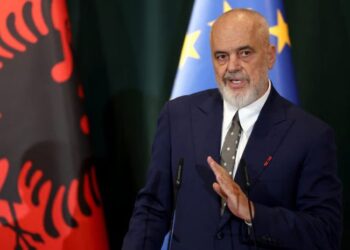


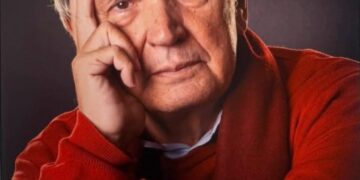

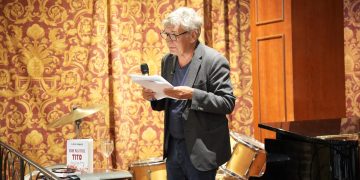


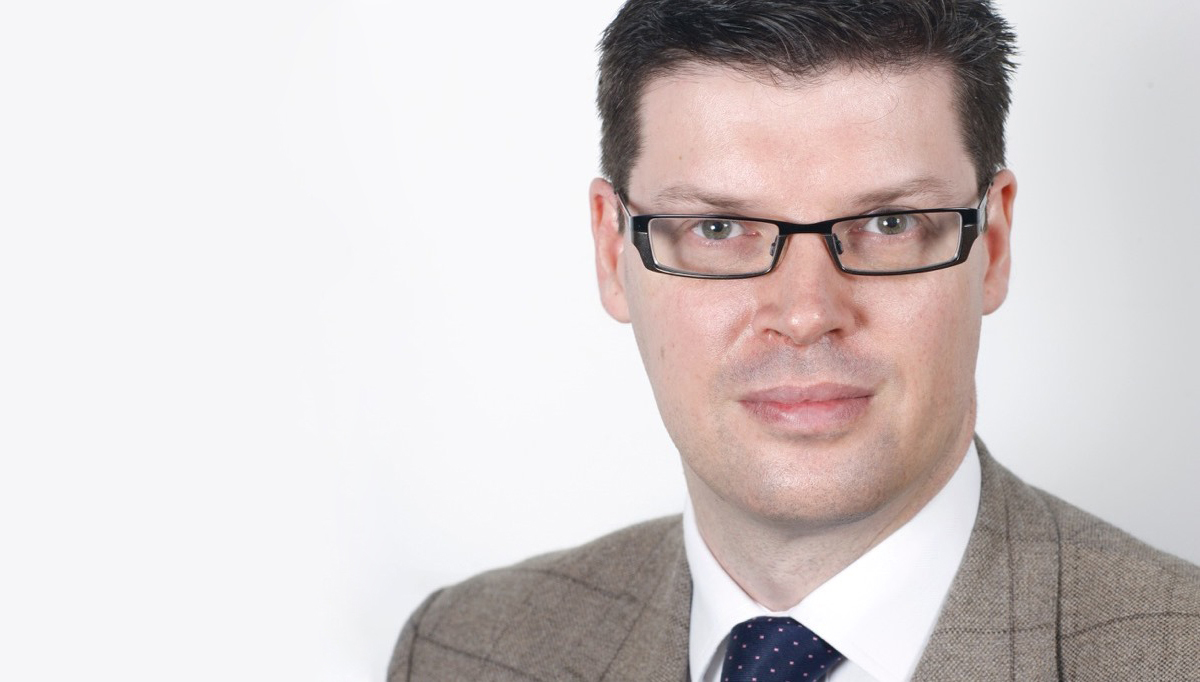
“I realise that Albania faces its own distinct set of issues when it comes to enlargement. There are indeed a range of deep-rooted problems that need to be addressed. However, I do believe that the EU accession process, while often causing pain in the short to medium term, eventually leads to results that benefit all of society,” said Professor James Ker- Lindsay
By Genc Mlloja
Senior Diplomatic Editor
The Balkans is going in the right direction, and things are moving forward, but there is obviously a lot that still needs to be done, has said James Ker- Lindsay, visiting Professor at the European Institute, London School of Economics and Political Science (LSE) and Research Associate at the Centre for International Studies, University of Oxford, who is a great supporter of the region’s European Union integration prospects.
“However, for it to be effective it also takes commitment from the EU. Sadly, this is lacking at the moment. This is what leaves the door open for other countries – such as Russia – to interfere in a negative way. The EU must really work harder to show that it is committed to the region’s integration,” said the Professor, who holds a BSc (econ) from London University and an MA and PhD in International Conflict Analysis from the University of Kent, in an exclusive interview with Albanian Daily News. He has held visiting positions at the University of Pristina, the University of Saints Cyril and Methodius, and the University of Nicosia, and his research and numerous books are focused on conflict, peace and security in the Balkans and the Eastern Mediterranean, in particular the Cyprus Problem, Greek-Turkish relations and Kosovo, EU enlargement, and secession and recognition in international politics.
Asked about the result of the recent general elections in Montenegro, Professor Lindsay thought that the country represents an extreme end of the spectrum of persistent political control by a single party or individual. “Many observers have long been extremely concerned about the way in which Djukanovic has run the country as though it is his own territory. He has come and gone from politics at will. This is not a healthy situation.”
A strong believer in the need of a final settlement to the Kosovo-Serbia dispute that will allow them to have normal neighbourly relations, the Professor said that both countries need to have a very frank national dialogue internally about what they want. “As for Russia, we have to recognise that the Kosovo issue gives Moscow leverage in Belgrade, and thus leverage in the wider Balkans. If Kosovo can be finally solved, then Russia’s ability to shape events in the region will be drastically reduced. This is yet another reason why I think that a final deal between Belgrade and Pristina is so desperately needed.”
The Professor called the Prespa Agreement a truly historic breakthrough saying that it was truly wonderful to see Athens and Skopje reach a final settlement of their 30-year dispute, especially as the eventual settlement was showed a spirit of compromise from both countries. But, according to him, with all the attention on Greece, people often forgot that Bulgaria also has long-standing tensions with North Macedonia. “It would therefore be extremely sad, if not unforgivable, if Sofia now tries to disrupt North Macedonia’s EU integration process.”
Regarding Albania’s EU accession process the Professor says the country faces its own distinct set of issues when it comes to enlargement. “However, I do believe that the EU accession process, while often causing pain in the short to medium term, eventually leads to results that benefit all of society.”
Touching upon the issue of the delimitation of maritime boundaries between Albania and Greece, Professor Lindsay was of the opinion that maritime issues are obviously extremely sensitive subject for many countries, and in this frame he referred to the recent tensions between Greece and Turkey in the Eastern Mediterranean. However, according to him, there are a number of ways to resolve these disputes. “Direct talks are obviously one option. However, there is also international arbitration or adjudication. But, ultimately, the most important ingredient for dealing with these issues is trust and goodwill.”
In a comment on the current situation worldwide the Professor thought that seriously it is a hugely worrying time as we have to deal with the pandemic, the very real effects of climate change, a crisis in politics, and people are increasingly susceptible to national populism that seeks to blame the failing of a country on foreign forces. “I see this in Britain. Brexit was caused by dishonest politicians who persuaded half the country that the problems they faced were caused by immigrants and the European Union,” said Professor James Ker-Lindsay in the following interview:
Albanian Daily News: At the outset let me thank you, Professor, for being a guest to Albanian Daily News sharing with its readers some opinions on certain key developments in this troubled world, focusing on the Western Balkans. But to start with it would be interesting if you could tell us a few words on your main specific interests in international politics and what your researches have produced during your rich career.
Professor James Ker- Lindsay: Thanks so much for the kind invitation to do the interview. My main area of specialisation lies in conflict, peace and security in South East Europe. By this I mean the Western Balkans down to the Eastern Mediterranean. Although I have done a lot of work on the Balkans, especially Kosovo and Serbia, in fact I started out looking at Cyprus, Greece and Turkey. So, my work really is focused on South East Europe as a whole. As for my other thematic areas of interest, I do a lot of work on EU enlargement and on secession and state recognition in international politics – all issues that affect SE Europe.
– As the Western Balkans is within the realm of your expertise which is, Mr. Lindsay, your assessment on the current situation in the region which naturally is the focus of the EU, but of other big world powers, too, and the perspectives for a peaceful and stable region?
– Obviously, there is a lot of concern about the region. However, I like to think that essentially it is going in the right direction. I am by nature an optimist. I know that people will point to all the things that are wrong, but I think that things are moving forward. That said, there is obviously a lot that still needs to be done. In this regard, I am a great supporter of the region’s European Union integration prospects. I really do believe that this offers the best prospects for peace and prosperity across the Balkans. In this regard, I am a great supporter of the region’s European Union integration prospects. I really do believe that this offers the best prospects for peace and prosperity across the Balkans.
However, for it to be effective it also takes commitment from the EU. Sadly, this is lacking at the moment. This is what leaves the door open for other countries – such as Russia – to interfere in a negative way. The EU must really work harder to show that it is committed to the region’s integration.
– The recent general elections in Montenegro removed from power Mr. Milo Djukanovic after a three- decade rule although he continues to be president of the country. Is this, Professor, a signal that the rule of ‘monarchs’ in WB has got a blow and secondly, which is the expected course of the foreign policy of this country whose main political actors are divided between the Euro-Atlantic aspirations and the powerful Serb and Russian influence?
– Montenegro represents an extreme end of the spectrum of persistent political control by a single party or individual. Many observers have long been extremely concerned about the way in which Djukanovic has run the country as though it is his own territory. He has come and gone from politics at will. This is not a healthy situation. In this regard, anything that makes the country more pluralistic should be welcomed. That said, in the current political environment we are also seeing a rise in popularism and nationalism. This presents a tough choice. While many observers want democratic pluralism, they also fear the rise of far-right politics in many places.
– The Belgrade-Pristina dialogue initiated by the EU in 2008 has taken a new twist with the ‘dynamic’ involvement of the US in it. Although the EU and the US have repeatedly stated that the two strands of the dialogue, supposedly the economic dialogue led by Washington and the political by Brussels, are not in contradiction one with another, the recent events in Washington have proved otherwise, leaving the EU in an uneasy place particularly after the move to Jerusalem of the embassy of Serbia and the establishment of a Kosovan embassy in Jerusalem. Which is your opinion on the perspective of a final solution to the Serbia-Kosovo conflict in the new circumstances, and secondly, do you believe that Serbia can go against the interests of Russia?
– I have long believed that Kosovo and Serbia need to reach a final settlement to their dispute that will allow them to have normal neighbourly relations. Unfortunately, the United Nations process in 2006-2008 did not lead to a mutually acceptable solution – and I have always been very critical of the events leading up to the 2008 declaration of independence, especially as this has left Kosovo in a difficult position internationally. While it is recognised by half the world, the other half rejects it. It also has no chance of joining the United Nations as things stand. This means that its ability to play a full role internationally is naturally limited. The question is how to reach a final deal. This is obviously a very difficult question that has led to a lot of division, both in Kosovo and Serbia. I have often said that both countries need to have a very frank national dialogue internally about what they want.
As for Russia, we have to recognise that the Kosovo issue gives Moscow leverage in Belgrade, and thus leverage in the wider Balkans. If Kosovo can be finally solved, then Russia’s ability to shape events in the region will be drastically reduced. This is yet another reason why I think that a final deal between Belgrade and Pristina is so desperately needed.
– ‘Renaming Macedonia: A Job Well Done’ is the title of your research on the resolution to a long dispute with Greece on the so-called Macedonia name issue. According to you, which is its impact on the two countries and the region, but particularly on North Macedonia, which now when we are talking is involved in another long-simmering historical dispute with its neighboring Bulgaria. Sofia has reportedly asked its fellow EU members to stop the opening of the first intergovernmental accession negotiations with North Macedonia expected to start officially in December.
– The Prespa Agreement was a truly historic breakthrough. It was truly wonderful to see Athens and Skopje reach a final settlement of their 30-year dispute, especially as the eventual settlement was showed a spirit of compromise from both countries. But you’re right that we now face the possibility of a new problem. With all the attention on Greece, people often forgot the Bulgaria also has long-standing tensions with North Macedonia. It would therefore be extremely sad, if not unforgivable, if Sofia now tries to disrupt North Macedonia’s EU integration process.
But this also exposes a deep-rooted problem with the EU enlargement process as a whole. The current rules on unanimity means that each individual EU member can veto accession talks with a candidate for whatever reason.
– Albania is also waiting to start such negotiations with the Union amidst tensions this time between its two major adverse political forces on electoral-related issues, an old never healing ‘wound’ in its 3-decade transition, a deadlocked judicial system, high rates of corruption and rising trend of people leaving the country among others. Do you think that EU’s sponsored reforms in different fields of life of the country, including rule of law, have not fully delivered as a large segment of the population lives in hard economic and social conditions?
– I realise that Albania faces its own distinct set of issues when it comes to enlargement. There are indeed a range of deep-rooted problems that need to be addressed. However, I do believe that the EU accession process, while often causing pain in the short to medium term, eventually leads to results that benefit all of society.
The EU has to be sure that new members can meet the demands of membership and that the rule of law is respected. And this has become an even higher priority for the EU in recent years. This is why these are the first chapters to be opened in the accession talks and are usually the last to be closed. But implementation is the most important element of all. Prospective members may pass the legislation to address specific issues. However, the EU needs to be sure that the legislation is then put into action. This is why the accession process can take so long. But, again, I do believe that it is worth it in the end. The EU can radically transform the countries that join.
– Let me touch upon the sensitive issue of the delimitation of maritime boundaries between Albania and Greece, which has recently become a priority for both countries. As there are political and civic circles, but also maritime specialists in Tirana, who are worried over eventual loss of territory and link the timing of the talks on the accord with the deterioration of relations between Greece and Turkey over eastern Mediterranean, do you think the recent Greek-Italian maritime accord may be helpful in this aspect for Albania and Greece?
– Maritime issues are obviously extremely sensitive subject for many countries. We have indeed seen the recent tensions between Greece and Turkey in the Eastern Mediterranean. This is due to a particularly complex geography in the Aegean and, especially, the Dodecanese. However, there are a number of ways to resolve these disputes. Direct talks are obviously one option. However, there is also international arbitration or adjudication. But, ultimately, the most important ingredient for dealing with these issues is trust and goodwill. Many countries have maritime disputes. However, in most cases these can be resolved amicably through talks when the two countries have an otherwise positive and cooperative relationship.
– To conclude, Professor Lindsay, the challenges of coronavirus pandemic and the perspectives of the COVID- 19 post-era have become buzzwords around the world highlighted strongly on the occasion of the 75th anniversary of the founding of the UN. In the meantime, the UN Secretary General, Antonio Guterres launched an appeal for unity and efforts by all to avoid a new cold war. Against this backdrop, according to your opinion, what has the future got in stock for the humankind?
– Always good to end on an easy question! Seriously, it is a hugely worrying time. As well as the pandemic, we are having to deal with the very real effects of climate change. On top of this, I do think we face a crisis in politics. People are increasingly susceptible to national populism that seeks to blame the failing of a country on foreign forces. I see this in Britain. Brexit was caused by dishonest politicians who persuaded half the country that the problems they faced were caused by immigrants and the European Union. At the same time, social media is now giving a platform to all sorts of very worrying conspiracy theories. Trust in politics and political institutions has disappeared. However, I do also like to think of the positive things that are taking place. There is so much technological development taking place that has the potentially to help people and make their lives better. But it does feel like we are a fork in the road. Humanity faces two paths. A negative and a positive one. I like to think that we will eventually take the positive path.