





“Czechs and Slovaks have a good sympathy for the attitude of Albania in the summer of 1968, as the Czechoslovak or “Prague Spring” was suppressed due to the military intervention of the Warsaw-Pact states. Albania – together with Romania – refused to take part in this intervention and subsequently declared its withdrawal from the Warsaw Pact,” says Slovak Doctor of Philosophy Dusan Seges
By Genc Mlloja
Senior Diplomatic Editor
The historical anniversary of the National Uprising against fascism during the Second World War, which has recently been marked in Slovakia, was an opportunity for Albanian Daily News to talk with Doctor of Philosophy at the Institute of History of the Slovak Academy of Science Dusan Seges. In the exclusive interview Dr. Seges makes a vivid overview of the history of Slovakia and Czechoslovak Republic of which Slovakia has been an integral part for 68 years in the 20th century, as well as of the uprising of 1944, which, as he said, “has still a specific role to play as the important, if not the most important event in the modern history of Slovakia.”
Dr. Seges revealed that except Slovaks and Czechs, there were other national groups taking part in the Uprising 1944: partisans from the Soviet Union, French partisans (former prisoners of war detained in Hungary and forced laborers which escaped from Germany), Bulgarians, Italians, Jews, Hungarians, individuals from Spain, Belgium etc. Furthermore, the insurgents were supported by the American and British military mission. “The scholarship on the Slovak National Uprising has documented about 33 nations taking part on the both fighting sides,” he said, adding that almost 240, 000 Romanian soldiers took an active part in the liberation of Slovakia in early 1945 and created an autonomous part of the Soviet Army, although they stood under the command of the Soviet 2nd Ukrainian front.
He didn’t hide the worry over the rise of the far-right and ultranationalist movements, and according to him, Slovakia forms no exception to this rule as the People’s Party Our Slovakia celebrates its second legislative period in the Slovak parliament. “The rhetoric of the representatives of this party is based on many “anti-s” (Anti-Brussels, anti-NATO, anti-immigrants, anti-Islam, anti-Semitic, anti-vaccination, anti-abortion etc.) with little “pro-s” instead (pro-Russian).”
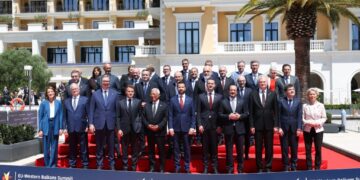
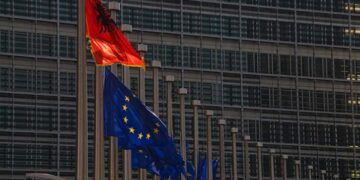
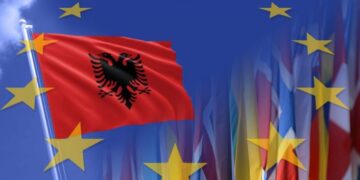
In a comment on the EU-accession process of the Western Balkan Dr. Seges revealed that Slovakia, together with other states, called on the ministers and then the European Council to make the right decision and open accession negotiations with Albania and North Macedonia in their June 2019 meetings, which did not happen. “The failure of the European Commission in October 2019 to signal the opening of accession talks with Albania and North Macedonia triggered immediate condemnation, even by the Slovak Prime Minister Peter Pellegrini, who, as he said shortly after that decision, was very disappointed and called the fiasco a wasted time and a missed opportunity to give prospect to the people of the Western Balkans for the EU to have a greater influence in the region,” the Slovak history researcher said.
Referring to the Slovak-Albanian relationship, Dr. Seges thinks it is no exaggeration to say its history is a total unknown. But Czechs and Slovaks have a good sympathy for the attitude of Albania in the summer of 1968, as the Czechoslovak or “Prague Spring” was suppressed due to the military intervention of the Warsaw-Pact states. “Albania – together with Romania – refused to take part in this intervention and subsequently declared its withdrawal from the Warsaw Pact.” He also considered positive the fact that particularly in the recent years, Slovaks discovered Albania as a holiday and tourist destination. On the other hand, the project National Convention on the EU in Albania, funded by the Official Development Assistance of the Slovak Republic (Slovak Aid), focuses on the operation and sustainability of the platform for an institutionalized public debate on European integration issues.
“By involving a wide range of experts, the project aims at contributing to further building the expertise of governmental and non-governmental organizations, intensifying their mutual dialogue, and deepening bilateral cooperation between Albania and Slovakia,” said Doctor of Philosophy at the Institute of History of the Slovak Academy of Science Dusan Seges in the following interview:
Albanian Daily News: In the first place I thank you for this opportunity to discuss with you an important historical anniversary for Slovakia – the National Uprising against fascism during the Second World War, which has recently been marked in your country, and first of all it would be of great interest for ADN’s readers to learn how this event was marked.
Dr. Dusan Seges: I suppose not much of the readers of Albanian Daily News are familiar with the history of Slovakia and Czechoslovak Republic of which Slovakia has been an integral part of for 68 years in the 20th century (1918 – 1939 and again 1945 – 1992). The political situation in East-Central Europe in the late 1930s was marked by the aggressive diplomacy of National-Socialist Germany under the leadership of its “fuhrer”, Adolf Hitler. Immediately after Austria, Czechoslovak Republic was the second target of Hitler’s annexation policy. Inner tensions in Czechoslovakia, in particular the discontent of national minorities and Slovak political subjects demanding for autonomy, which the central government was unwilling to comply, were skillfully exploited by Hitler. Czechoslovakia was destroyed by Germany in March 1939.
The independent Slovak State (1939 – 1945), a German satellite, was intended to be a “model state”, a “flagship” of the alleged generosity of Hitler towards other small nations in Europe – on condition, naturally, that these nations would yield unconditional obedience to Berlin. As a result of this policy, the Slovak government provided an active support to the German military attack on Poland in September 1939 and the Soviet Union in 1941. In addition, the Slovak government declared war on the United Kingdom and the USA. The Nazi “racial law” served as a blueprint for the so-called Jewish Codex, adopted by the Slovak Government in 1941. Tens of thousands of Slovak Jews were persecuted and deported to the German extermination camps. Understandably enough, a great part of Slovaks didn’t identify themselves neither with the German supremacy nor with the policy of the regime represented by the President of the State Jozef Tiso and its consequences. Since the end of 1943, the troops of the German Wehrmacht and their comrades in arms suffered heavy defeats on the eastern front. The resistance movement in Slovakia formed the Slovak National Council, consisting of democratic and Communist politicians. The military leadership of the resistance movement made the decision to start the uprising in August 29, 1944, shortly after the military occupation of Slovakia by German troops was announced by the Slovak Minister of Defense, General Ferdinand Catlos. The aim of the Slovak insurgents was to capture the Pass in the Carpathian Mountains, to hold the position and thus to allow the march through of the Soviet Army, which at the End of August 1944 achieved the city Krosno in Poland, about 40 km away from north-eastern Slovakia. However, the uprising aimed at liberating Slovakia by the active resistance of the Slovaks failed and was, similarly to the Warsaw Uprising taking place at the same time, suppressed by the Germans after 2 months.
-As a follow up, which is the significance of this event for the Slovak people both in political and social aspects?
-The uprising of 1944 has still a specific role to play as the important, if not the most important event in the modern history of Slovakia. The uprising, officially referred to as the Slovak National Uprising, is one of the key events in the institutional memory in Slovak Republic since its establishment in 1993, which clearly demarcates itself from the Slovak State of 1939 – 1945. August 29 is a national holiday in Slovakia. Many streets, squares, bridges etc. are named after it. The Uprising was used and abused by the Communist regime. During the period of The reappraisal of the Communism in Czechoslovakia after 1990 by historians included some corrections of the dogmatic account of the Uprising, but didn’t fundamentally challenged the significance of the Uprising in its contribution to the liberation of Slovakia from the Nazi oppression. Nevertheless, the historical tradition of resistance against the German Nazi oppression and in consequence the refusal of the political regime in Slovakia represented by Jozef Tiso in the after War period wasn’t and currently isn’t shared by everyone.
-In the meantime historians reveal in their researches that Romani people were also involved in the Slovak National Uprising. Also fighters from other countries helped Slovakia, which was working with Nazi Germany during the war, to ultimately join the ranks of the victorious anti-Nazi coalition. How is this aspect of history seen by different circles of the people in Slovakia?
-As a matter of fact, except Slovaks and Czechs, there were other national groups taking part in the Uprising 1944: partisans from the Soviet Union, French partisans (former prisoners of war detained in Hungary and forced laborers which escaped from Germany), Bulgarians, Italians, Jews, Hungarians, individuals from Spain, Belgium etc. Furthermore, the insurgents were supported by the American and British military mission – the US Office of Strategic Services (OSS) and the British Special Operations Executive (SOE). The scholarship on the Slovak National Uprising has documented about 33 nations taking part on the both fighting sides. Regarding Romanians, special emphasis should be placed on the fact that almost 240, 000 Romanian soldiers took an active part in the liberation of Slovakia in early 1945. They created an autonomous part of the Soviet Army, although they stood under the command of the Soviet 2nd Ukrainian front.
– 1945 to 2020… A current review of the event shows that the return of neo-fascism and neo-Nazism in some countries of the European Continent and elsewhere is stepping up. Given the past bitter experience how is such a trend viewed in Slovakia, particularly by the younger generation?
-The rise of the far-right and ultranationalist movements with ideological links to National Socialism and its particular “national” varieties is a common feature of almost all European countries and societies. Slovakia forms no exception to this rule. The People’s Party Our Slovakia celebrates its second legislative period in the Slovak parliament and thus represents an established force in Slovak domestic politics. Particular members of this party were repeatedly charged with Holocaust denial and faced several civil lawsuits because of their anti-Gypsy statements. Not inconsiderable in this context is the fact that according to a survey research from 2019, more than 40 percent of Slovak young people has no opinion on the Slovak National Uprising. In general it must be stated, that the popular understanding about what the Uprising was about, what results were etc. is quiet confused. The People’s Party Our Slovakia, which condemns the Slovak National Uprising as a “complot” against the “legal” President Tiso, is certainly one of the biggest beneficiaries of this confusion. The rhetoric of the representatives of this party is based on many “anti-s” (Anti-Brussels, anti-NATO, anti-immigrants, anti-Islam, anti-Semitic, anti-vaccination, anti-abortion etc.) with little “pro-s” instead (pro-Russian). The adherents of this party are, unlike those of similar far-right parties in other countries, susceptible to conspiracy theories. They are feeling lost, excluded, betrayed or disregarded by the “liberal system”, as they call it. It is no coincidence that “With Courage Against the System“ is one of the slogans of the People’s Party Our Slovakia.
-How can lessons of history serve as an example to cope with grave violations of fundamental rights and freedoms happening, unfortunately, even today in different forms in different countries including those of South-Eastern Europe?
-All these problems derive from history or, more explicitly, its interpretation. I think there is no other way to deal with this problem than seek discussions with adherents of totalitarian systems, to confront their opinions with arguments based on historical research. Their exclusion is not the right response, in particular because not few of this people are young. In other words, it is necessary to face the lies and conspiracy theories about the past with facts. Historians and social researchers can and should play a significant part in this process. It is, however, not an easy task, particularly with regard to the virtually unlimited possibilities of the social networks spreading conspiracy theories.
-In this frame, Dr. Seges, how do you see the adverse approaches of EU member countries with regard to the management of illegal immigration not only from war torn areas but even from other countries like Western Balkans, which are in the lengthy testing process of EU accession?
-Simply put the political decision-making of the EU currently consisting of 27 member states is anything but easy. Dealing with illegal immigration is certainly a complex problem which is not necessarily related to the alleged xenophobia of particular EU-member states. I believe this has much more to do with the internal policy problems ranging from the needs of the local labor markets to asylum procedures or reception procedures. Let me say a few words on the EU-accession process of the Western Balkan states you have mentioned. Slovakia, together with other states, called on the ministers and then the European Council to make the right decision and open accession negotiations with Albania and North Macedonia in their June 2019 meetings. As we know, this did not happen. The failure of the European Commission in October 2019 to signal the opening of accession talks with Albania and North Macedonia triggered immediate condemnation, even by the Slovak Prime Minister Peter Pellegrini, who, as he said shortly after that decision, was very disappointed and called the fiasco a wasted time and a missed opportunity to give prospect to the people of the Western Balkans for the EU to have a greater influence in the region.
-As a follow up let me touch upon the Albanian migration into the area of the Slovak Republic. Taking the opportunity of this conversation, can you provide some details on the history and process of Albanian migration in Slovakia lands? Do you think that they can become a bridge of bringing the two people closer promoting cultural, educational and other forms of exchanges?
-The history of Albanian community in Czechoslovakia has a fairly recent history. It started back in the 1980s, consisting of hundreds of Albanians from Yugoslavia (particularly from Kosovo, Macedonia and the southern part of Serbia). The attractiveness of Czechoslovakia for the Albanians was given by the close proximity to Western Germany and Austria, where the most part of them worked as guest workers. In Slovakia, the Albanians opened their coffee houses, ice cream parlors etc. The second migration wave of Albanians came after the break-up of Yugoslavia. This doesn’t mean that there are no current initiatives promoting the exchange between our two countries. To cite a few examples, the Slovak NGO “Globsec” is the leader of the consortium “Strengthening resilence of the Youth against Radicalisation in the Western Balkans“, including the Albanian Helsinki Committee. By raising awareness of youth against radicalization through promoting shared values and social cohesion, this project aims at strengthening the capacities for resilience of the young generation in the Western Balkans countries against radicalisation and violent extremism. Institutions from Slovakia, Czech Republic, Poland, Hungary, Bosnia and Herzegovina and Albania including “Globsec”, the based Visegrad Fund and the Albanian youth center “Perspektiva” are working on a project called “Supporting Democratization and Reconciliation Process in the Western Balkans“.
-To conclude, Mr. Seges, what can you tell us on the main milestones of the Albania-Slovakia relationship, and according to you how can the revival of historical highlights of these ties help the promotion of the links between the two countries and their people?
-I think it is no exaggeration to say that the history of the Slovak-Albanian relationships is a total unknown. It is surely due to the lack of direct interactions between our two states and nations in the past. We know very little about the diplomatic relationships between Albania and Czechoslovakia, which started already in 1922, or, e.g., the Czechoslovak-Albanian society from the 1930s promoting the history and culture of Albania. Czechs and Slovaks have a good sympathy for the attitude of Albania in the summer of 1968, as the Czechoslovak or “Prague Spring” was suppressed due to the military intervention of the Warsaw-Pact states. Albania – together with Romania – refused to take part in this intervention and subsequently declared its withdrawal from the Warsaw Pact. I regret to say that in the recent past, the perception of Albanians was mostly overshadowed by a negative stereotype due to the involvement of some Albanian individuals in criminal activities in Slovakia. This image is unfortunately still widespread. However, I consider positive the fact that particularly in the recent years, Slovaks discovered Albania as a holiday and tourist destination. Furthermore, the support for the transformation of the countries of the Western Balkans as a basic prerequisite for meeting their Euro-Atlantic ambitions remains one of the main priorities of Slovak foreign policy. The project National Convention on the EU in Albania, funded by the Official Development Assistance of the Slovak Republic (Slovak Aid), focuses on the operation and sustainability of the platform for an institutionalized public debate on European integration issues which is based on the partnership of governmental, non-governmental, business and interest institutions, as well as on strengthening Albania’s capacity for EU accession negotiations. By involving a wide range of experts, the project aims at contributing to further building the expertise of governmental and non-governmental organizations, intensifying their mutual dialogue, and deepening bilateral cooperation between Albania and Slovakia./ADN