


• SHQIPËRI
  • KOSOVË
  • MAQEDONIA E VERIUT
  • MALI I ZI
  • Revista në PDF
4 June, 2026
  • Home
  • OP/ED

    The Blueprint of a Diplomatic Debacle: Analyzing Germany’s Historic UNSC Loss

    Cyber Attribution, Corruption, and the False-Flag Question in Albania’s 2022 Alleged Iranian Cyberattack

    Between Russia, Iran and Europe: Azerbaijan as a balancing power in the South Caucasus

    The Zero-Tariff Gate: Sovereignty as a Service in the Sino-African Corridor

    Albania vs. the Sea/ Marginal Notes on A. Leka’s Novel The Hidden Side of the Albanian Socialist Garden

    May 9 and the long shadow of a Letter: Is Europe still Schuman’s Project?

    The Arbnesh of Zadar: A living memory of Albanian identity on the Adriatic coast

    Science Diplomacy and Academic Freedom: A strategic nexus for contemporary diplomacy

    Serbia and Kosovo between new regional alliances and old geopolitical patterns

  • Interview

    Exclusive Interview with Oleksandr Tyshchenko: A 40-Year Legacy of Chernobyl, Nuclear Risks, and Global Responsibility

    INTERVIEW: ZLATKO KRAMARIĆ – THOUGHTS ON THE OLD CONTINENT

    EXCLUSIVE / Ukrainian Ambassador to Albania, Volodymyr Shkurov: “Ukraine wants peace, but not at the expense of its freedom and independence”

    EXCLUSIVE| Ambassador Tayyar Kagan Atay: Türkiye and Albania, a Strategic Partnership Rooted in Shared Heritage and a Common Vision for the Future

    “Diplomacy, Not War”: Palestinian Ambassador to Albania Calls for Justice, Peace, and Global Action for Gaza

    Exclusive: “Even After Tito – Tito”/ Ambassador Zlatko Kramarić on Authoritarian Legacies and Democracy’s Future in the Balkans

    The Conclusion of the Diplomatic Mission / Ambassador Dancho Markovski: Strengthening Albania-North Macedonia Relations for a Shared European Future

    A Century of Diplomatic Relations Between Albania and Russia: Exclusive Interview with the Russian Ambassador to Albania, H.E. Alexey Zaytsev

    Exclusive/ The chairman of the Freedom Party, Ilir Meta: “The will of the citizens will triumph in Albania, as it did in North Macedonia”

  • Realpolitik

    IBAR? ”Sufficiently! Much ado about nothing! Shart contrasts in Beijing! Where is the exit?!

    Neither peace nor war! Peace with bombs?! IBAR in autumn?! Not another Hormuz in Taivan! 

    IBAR – a springing board or an obstacle? Can we catch the EU Negotiation train 2027? When the dress makes the news!  EU electoral April  ends in a draw 1:1!  

    The European Parliament building in Strasbourg, France with flags waving calmly celebrating peace of the Europe. July 12, 2020.

    EU 2027 or 2037! Even half membership failed! No exit strategy!     

    What next?

    “With diplomatic velvet“! Major question marks! In Washington yes, but  in the White House NO! A strange dinner in Brussels!

    From a great ‘apple of disaccord’ to a  point of  cooperation! A bad start! The strange absence in Davos!

    5 lessons from the American 3 January! Don’t count the chicken before they are hatched! Will NATO freeze in Greenland? Wrong diplomatic messages!

    German Chancellor Friedrich Merz, European Commission President Ursula von der Leyen, Ukraine's President Volodymyr Zelenskiy, U.S. Special Envoy Steve Witkoff and Jared Kushner, son-in-law of U.S. President Donald Trump line up for a family photo opportunity at the Chancellery in Berlin, Germany, December 15, 2025.    REUTERS/Lisi Niesner/Pool

    A Strategy that could change the world! Europe in Berlin! Why an historic compromise? Only charm diplomacy in Athens!

  • Current Events

    Serbia – China 2026: Technological partnership, geopolitical positioning and a new phase of the Chinese presence in the Western Balkans

    The Digital Protectorate: How the EU AI Act Codified Silicon Valley’s Monopoly

    The 28th MFC Annual Conference in Durrës / Sulaj: Microfinance remains a key instrument for financial inclusion

    Serbia at the Crossroads of EU Integration and Geopolitical Balancing: IFIMES Analysis

    Tirana – €20 Million EU–Banking Agreement Boosts Albanian SMEs

    The Myth of Independence: How Chinese Efficiency is Rewriting the Constitution of Modern Geopolitics!

    Europe Yesterday and Today: Why 9 May Still Matters

    “EU4Municipalities II” Project, a Strategic Investment for Strengthening Municipalities and Accelerating Albania’s Path towards the EU

    Eight Years in the Service of Identity: The Journey of the Montenegrin Community in Albania

  • Top News

    No End in Sight: Trump, Netanyahu and the Expanding Middle East War

    Tirana – €20 Million EU–Banking Agreement Boosts Albanian SMEs

    “EU4Municipalities II” Project, a Strategic Investment for Strengthening Municipalities and Accelerating Albania’s Path towards the EU

    Albania, Italy deepen defence ties with naval shipbuilding deal

    U.S. Embassy: Iran-Linked Groups May Target Americans and Iranian Opposition in Albania

    The Council of Albanian Ambassadors disappointed with the voting of the draft law on the foreign service in the parliamentary committees.

    Prime Minister Edi Rama Addresses Israel’s Knesset in Historic Special Session

    Kazakhstan’s Strategic Reform Agenda: Stability, Modern Governance, and Responsible Diplomacy

    Trump Invites Rama to Peace Board, Prime Minister: Proud of Albania

  • YOUR VOICE
  • Shqip
No Result
View All Result
Argumentum
  • Home
  • OP/ED

    The Blueprint of a Diplomatic Debacle: Analyzing Germany’s Historic UNSC Loss

    Cyber Attribution, Corruption, and the False-Flag Question in Albania’s 2022 Alleged Iranian Cyberattack

    Between Russia, Iran and Europe: Azerbaijan as a balancing power in the South Caucasus

    The Zero-Tariff Gate: Sovereignty as a Service in the Sino-African Corridor

    Albania vs. the Sea/ Marginal Notes on A. Leka’s Novel The Hidden Side of the Albanian Socialist Garden

    May 9 and the long shadow of a Letter: Is Europe still Schuman’s Project?

    The Arbnesh of Zadar: A living memory of Albanian identity on the Adriatic coast

    Science Diplomacy and Academic Freedom: A strategic nexus for contemporary diplomacy

    Serbia and Kosovo between new regional alliances and old geopolitical patterns

  • Interview

    Exclusive Interview with Oleksandr Tyshchenko: A 40-Year Legacy of Chernobyl, Nuclear Risks, and Global Responsibility

    INTERVIEW: ZLATKO KRAMARIĆ – THOUGHTS ON THE OLD CONTINENT

    EXCLUSIVE / Ukrainian Ambassador to Albania, Volodymyr Shkurov: “Ukraine wants peace, but not at the expense of its freedom and independence”

    EXCLUSIVE| Ambassador Tayyar Kagan Atay: Türkiye and Albania, a Strategic Partnership Rooted in Shared Heritage and a Common Vision for the Future

    “Diplomacy, Not War”: Palestinian Ambassador to Albania Calls for Justice, Peace, and Global Action for Gaza

    Exclusive: “Even After Tito – Tito”/ Ambassador Zlatko Kramarić on Authoritarian Legacies and Democracy’s Future in the Balkans

    The Conclusion of the Diplomatic Mission / Ambassador Dancho Markovski: Strengthening Albania-North Macedonia Relations for a Shared European Future

    A Century of Diplomatic Relations Between Albania and Russia: Exclusive Interview with the Russian Ambassador to Albania, H.E. Alexey Zaytsev

    Exclusive/ The chairman of the Freedom Party, Ilir Meta: “The will of the citizens will triumph in Albania, as it did in North Macedonia”

  • Realpolitik

    IBAR? ”Sufficiently! Much ado about nothing! Shart contrasts in Beijing! Where is the exit?!

    Neither peace nor war! Peace with bombs?! IBAR in autumn?! Not another Hormuz in Taivan! 

    IBAR – a springing board or an obstacle? Can we catch the EU Negotiation train 2027? When the dress makes the news!  EU electoral April  ends in a draw 1:1!  

    The European Parliament building in Strasbourg, France with flags waving calmly celebrating peace of the Europe. July 12, 2020.

    EU 2027 or 2037! Even half membership failed! No exit strategy!     

    What next?

    “With diplomatic velvet“! Major question marks! In Washington yes, but  in the White House NO! A strange dinner in Brussels!

    From a great ‘apple of disaccord’ to a  point of  cooperation! A bad start! The strange absence in Davos!

    5 lessons from the American 3 January! Don’t count the chicken before they are hatched! Will NATO freeze in Greenland? Wrong diplomatic messages!

    German Chancellor Friedrich Merz, European Commission President Ursula von der Leyen, Ukraine's President Volodymyr Zelenskiy, U.S. Special Envoy Steve Witkoff and Jared Kushner, son-in-law of U.S. President Donald Trump line up for a family photo opportunity at the Chancellery in Berlin, Germany, December 15, 2025.    REUTERS/Lisi Niesner/Pool

    A Strategy that could change the world! Europe in Berlin! Why an historic compromise? Only charm diplomacy in Athens!

  • Current Events

    Serbia – China 2026: Technological partnership, geopolitical positioning and a new phase of the Chinese presence in the Western Balkans

    The Digital Protectorate: How the EU AI Act Codified Silicon Valley’s Monopoly

    The 28th MFC Annual Conference in Durrës / Sulaj: Microfinance remains a key instrument for financial inclusion

    Serbia at the Crossroads of EU Integration and Geopolitical Balancing: IFIMES Analysis

    Tirana – €20 Million EU–Banking Agreement Boosts Albanian SMEs

    The Myth of Independence: How Chinese Efficiency is Rewriting the Constitution of Modern Geopolitics!

    Europe Yesterday and Today: Why 9 May Still Matters

    “EU4Municipalities II” Project, a Strategic Investment for Strengthening Municipalities and Accelerating Albania’s Path towards the EU

    Eight Years in the Service of Identity: The Journey of the Montenegrin Community in Albania

  • Top News

    No End in Sight: Trump, Netanyahu and the Expanding Middle East War

    Tirana – €20 Million EU–Banking Agreement Boosts Albanian SMEs

    “EU4Municipalities II” Project, a Strategic Investment for Strengthening Municipalities and Accelerating Albania’s Path towards the EU

    Albania, Italy deepen defence ties with naval shipbuilding deal

    U.S. Embassy: Iran-Linked Groups May Target Americans and Iranian Opposition in Albania

    The Council of Albanian Ambassadors disappointed with the voting of the draft law on the foreign service in the parliamentary committees.

    Prime Minister Edi Rama Addresses Israel’s Knesset in Historic Special Session

    Kazakhstan’s Strategic Reform Agenda: Stability, Modern Governance, and Responsible Diplomacy

    Trump Invites Rama to Peace Board, Prime Minister: Proud of Albania

  • YOUR VOICE
  • Shqip
No Result
View All Result
Argumentum
No Result
View All Result
Home ENGLISH

The Middle East and North Africa: Strategic Competition, Energy and Security. Reconfiguring the Global Balance

7 December, 2025
in ENGLISH, In Focus
A A
Share on FacebookShare on Twitter

“True power in the 21st century no longer lies solely in the strength of arms, but in the ability to connect resources, routes and people.”

“In the Middle East, reality changes faster than perceptions, and perceptions often shape reality.”

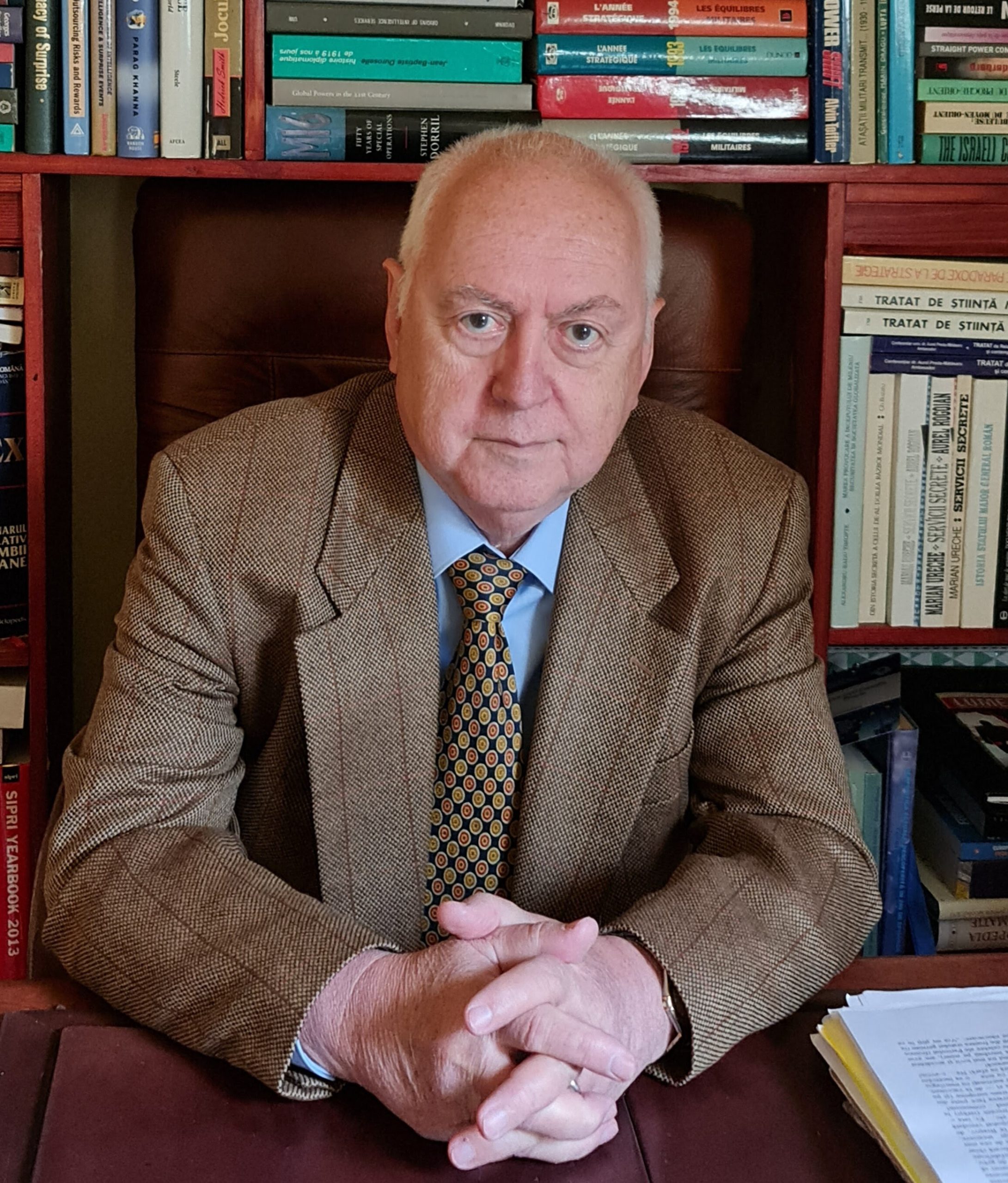
General (Rtd) Corneliu Pivariu–IFIMES

1. Introduction – MENA as a Key Space of Global Rebalancing

The Middle East and North Africa – known under the acronym MENA – represent, more than ever, a crossroads of history, religion, energy, and geopolitics.
Here, millennial civilizations, contemporary ideologies, and global economic interests collide and reshape themselves in a continuous process.

We live in an era where transformations unfold at the pace of a historical revolution, and developments in this region have repercussions that reverberate worldwide.
After more than seven decades of almost uninterrupted conflict, MENA now stands at the centre of a new strategic competition where energy, technology, and political influence intertwine within a transforming architecture of power.

The region has become the symbol of the emerging multipolar world – one without a single hegemon, but with a complex network of regional and global powers that cooperate, compete, and condition one another.

This multipolarity does not signify fragmentation, but rather a redistribution of decision-making centres and their adaptation to logic of strategic interdependence.

2. Energy and Strategic Interdependence

Energy remains the keystone of power in the Middle East. The Gulf States – Saudi Arabia, Qatar, and the United Arab Emirates – still hold a dominant share of the world’s oil and gas reserves.

However, they no longer play the passive role of resource suppliers. Over the past two decades, these countries have evolved into strategic decision centres, diversifying their economies and investments in technology, infrastructure, defence, and green energy. A new form of power is thus emerging: not the one that merely extracts the resource, but the one that transforms it, directs it, and connects it.

Green hydrogen, solar energy from the Maghreb, trans-Saharan interconnections, maritime corridors, and port infrastructures now form the circulatory system of the global economy. Energy has become not only the source but also the language of contemporary geopolitics.

As shown in my previous analyses on BRICS and “Globalisation 2.0”, the redistribution of energy and technological flows is shifting the global centre of gravity from the Atlantic to the Indo-Pacific, with MENA serving as the critical interface between the Global South and the industrialised North.

Energy corridors – from Hormuz and Bab el-Mandeb to Suez and the Eastern Mediterranean – are the arteries through which not only energy, but global stability itself, flows.

Europe, faced with its own energy vulnerability since 2022, is rediscovering MENA’s strategic role – not merely as an alternative source, but as an indispensable partner for energy transition and global security.

3. Strategic Competition among Major Powers

Nowhere is the new global contest for influence more visible than in MENA.
The United States, China, Russia, the European Union, and regional actors – India, Iran, Turkey, Saudi Arabia, Israel, Egypt, and others – simultaneously compete for space, resources, and narrative control.

The United States seeks a balance between partial disengagement and sustained influence, relying on selective partnerships and the consolidation of the Abraham Accords.

China promotes a subtle strategy: through the Belt and Road Initiative and its mediation role (e.g., between Iran and Saudi Arabia), it asserts itself as a major economic and diplomatic actor – without direct military presence.

Russia, though weakened by the war in Ukraine, maintains strategic anchors in Syria, Iran, and Algeria, cultivating asymmetric networks of influence.
The European Union remains the main trade partner, yet still lacks a coherent security strategy for the region.

Meanwhile, India discreetly expands its economic and technological footprint in the Gulf and East Africa, while BRICS+ increasingly emerges as an attractive platform for Arab states seeking to diversify their financial and energy partnerships.

Regional actors are also asserting greater autonomy:

  • Iran capitalises on the “axis of resistance” (Hezbollah, the Houthis, Shiite militias);
  • Saudi Arabia diversifies its partnerships and aspires to a global role within BRICS+;
  • Turkey adopts a flexible stance between NATO, Russia, and the Muslim world;
  • Israel, as I have shown in the study “Super Sparta”[2], strengthens its technological and intelligence superiority, but faces a serious erosion of image and growing diplomatic isolation amid the Gaza crisis.

In the logic of the new realpolitik, competition is no longer purely military but also narrative: each actor strives to define the meaning of world order, to impose its own framework of legitimacy and its own version of international normality.

4. Security and Instability – Fragile Equilibria

The Gaza crisis remains the epicentre of tensions. After a year of open conflict, the human and political toll is tragic: tens of thousands of victims, massive destruction, a paralysed peace process, and a climate of hatred fuelling new generations of radicalism. The elimination of Hamas and Hezbollah leaders has not brought stability, only a pause between two phases of the same confrontation.

The war in Gaza has become a symbol of a world increasingly unable to negotiate lasting peace – the latest agreement concluded in Egypt being a telling example.
Behind the military confrontation lies a battle for narrative control: who is the aggressor, who is the victim, and who defines the legitimacy of action? This is the purest expression of the strategic narrative – a concept that redefines the relationship between power and perception in the 21st century.

The expansion of the conflict through attacks from Yemen and the pressure on Red Sea maritime routes shows that regionalised warfare has already become a reality.
Against this backdrop, Egypt, Qatar, and Saudi Arabia attempt cautious mediation efforts, but the lack of consensus among major powers keeps peace as a more declarative as substantive objective.

Security in MENA today is a fragile mosaic in which local stability depends on global balances, and each conflict represents a link in a broader geopolitical chain.
In a deeper historical sense, we are witnessing a reactivation of post-Ottoman fragmentations, where symbolic frontiers have returned stronger than geographic ones.

5. Romania and MENA – Between Experience and Opportunity

Romania has a solid and long-standing tradition of dialogue and balance in the Middle East, dating back to the Cold War era.During the 1970s and 1980s; Romanian diplomacy was respected in Cairo, Damascus, Tehran, and Tel Aviv – as well as in Washington, Beijing, and other capitals – for its capacity to maintain open channels between antagonistic camps. After 1990, this vocation gradually faded. Foreign policy focused almost exclusively on the Euro-Atlantic vector, while regional expertise diminished.

Nevertheless, the current context provides a genuine opportunity for strategic re-engagement – even if the present diplomatic leadership seems little, if at all, concerned with seizing it.

Romania could act along three main directions:

  1. Energy and infrastructure – through the Port of Constanța and the Rail2Sea and Danube2Sea projects, which could logistically connect Eastern Europe with the Mediterranean and MENA, strengthening its position within the Three Seas Initiative.
  2. Education and cultural diplomacy – by expanding university cooperation with Arab states and creating a framework for training regional specialists, continuing the former tradition of expertise and balance.
  3. Mediation diplomacy – by reviving a foreign policy based on credibility, continuity, and active balance.

A major advantage for Romania is that it is a European state without a colonial past in the region, a trait that offers it genuine potential for credible partnership with the Global South.

As highlighted in Global Geopolitical Evolutions up to 2050, Romania has the vocation of a bridge between North and South, between Europe and the Orient, provided it assumes a pragmatic, not merely declarative, role within the global architecture.

6. Conclusions – MENA as the Laboratory of the New World Order

The Middle East and North Africa have become the testing ground of the multipolar order. Here intersect the new forms of power: economic, energetic, technological, and informational. Here, too, the parameters of European security are indirectly being shaped. The region is no longer merely an object of great power competition, but an autonomous actor capable of influencing global trends.

For Romania, the challenge is clear: not to observe these transformations from the sidelines, but to take part in them – through dialogue, expertise, and vision.

In a world where the “force of arms” is increasingly replaced by the power of connections, true influence will be measured by the ability to understand, anticipate, and connect. The future will not belong solely to the greatest powers, but also to those who can build bridges between them – and Romania has the chance to be among these, if it ceases to act merely as a docile executor of directives from Brussels or elsewhere, and instead acts with professionalism and strategic vision. 
https://www.ifimes.org/en/researches/the-middle-east-and-north-africa-strategic-competition-energy-and-security-reconfiguring-the-global-balance/5696?

Related Posts

ENGLISH

The Blueprint of a Diplomatic Debacle: Analyzing Germany’s Historic UNSC Loss

4 June, 2026
Current Events

Serbia – China 2026: Technological partnership, geopolitical positioning and a new phase of the Chinese presence in the Western Balkans

1 June, 2026
ENGLISH

IBAR? ”Sufficiently! Much ado about nothing! Shart contrasts in Beijing! Where is the exit?!

1 June, 2026

Follow US

Subscribe

Receive Argumentum Magazine by Email

Last Posts

The Blueprint of a Diplomatic Debacle: Analyzing Germany’s Historic UNSC Loss

4 June, 2026

Serbia – China 2026: Technological partnership, geopolitical positioning and a new phase of the Chinese presence in the Western Balkans

1 June, 2026

IBAR? ”Sufficiently! Much ado about nothing! Shart contrasts in Beijing! Where is the exit?!

1 June, 2026

How Alkida Lushaj is redefining democratic inclusion globally

31 May, 2026

Cyber Attribution, Corruption, and the False-Flag Question in Albania’s 2022 Alleged Iranian Cyberattack

30 May, 2026
Argumentum

“Argumentum”, një proces intelektual …

Contact Us

[email protected]
[email protected]
[email protected]

Follow Us

Media Partner

Register

Receive Argumentum Magazine by Email
  • Home
  • Privacy Policy
  • About Us
  • Contact

© 2022 Argumentum. All Rights Reserved. | NUIS: L91415033Q

Welcome Back!

Login to your account below

Forgotten Password? Sign Up

Create New Account!

Fill the forms bellow to register

*By registering into our website, you agree to the Terms & Conditions and Privacy Policy.
All fields are required. Log In

Retrieve your password

Please enter your username or email address to reset your password.

Log In

Add New Playlist

No Result
View All Result
  • Home
  • OP/ED
  • Interview
  • Realpolitik
  • Current Events
  • Top News
  • YOUR VOICE
  • Shqip

© 2022 Argumentum. All Rights Reserved. | NUIS: L91415033Q

This website uses cookies. By continuing to use this website you are giving consent to cookies being used. Visit our Privacy and Cookie Policy.