










• SHQIPËRI
  • KOSOVË
  • MAQEDONIA E VERIUT
  • MALI I ZI
  • Revista në PDF
22 November, 2026
 
  • Home
  • OP/ED

    Civic protest never dries up! Its flow may slow, but its source remains alive.

    Zlatko Kramarić: Serbia after Vučić: the end of an era or the beginning of uncertainty?

    THE GREEN BERETS LAND IN TIRANA

    Some Myths Simply Refuse to Die

    UN Monologue: Why Kosovo Cannot Respond to Serbia’s Accusations

    The War That Was Waged Before the War

    The Structural Impasse: Can Merz Offer a Leadership Anchor to Europe?

    Will Europe Finally Ditch the Poisonous Myth of Perpetual Peace?

    Resolution 522 – When the U.S. Congress Honored Skanderbeg

  • Interview

    Exclusive Interview with Oleksandr Tyshchenko: A 40-Year Legacy of Chernobyl, Nuclear Risks, and Global Responsibility

    INTERVIEW: ZLATKO KRAMARIĆ – THOUGHTS ON THE OLD CONTINENT

    EXCLUSIVE / Ukrainian Ambassador to Albania, Volodymyr Shkurov: “Ukraine wants peace, but not at the expense of its freedom and independence”

    EXCLUSIVE| Ambassador Tayyar Kagan Atay: Türkiye and Albania, a Strategic Partnership Rooted in Shared Heritage and a Common Vision for the Future

    “Diplomacy, Not War”: Palestinian Ambassador to Albania Calls for Justice, Peace, and Global Action for Gaza

    Exclusive: “Even After Tito – Tito”/ Ambassador Zlatko Kramarić on Authoritarian Legacies and Democracy’s Future in the Balkans

    The Conclusion of the Diplomatic Mission / Ambassador Dancho Markovski: Strengthening Albania-North Macedonia Relations for a Shared European Future

    A Century of Diplomatic Relations Between Albania and Russia: Exclusive Interview with the Russian Ambassador to Albania, H.E. Alexey Zaytsev

    Exclusive/ The chairman of the Freedom Party, Ilir Meta: “The will of the citizens will triumph in Albania, as it did in North Macedonia”

  • Realpolitik

    Republican catastrophe and the democratic tzunami! Progress or Regress Report? Much ado about nothing! All for Ukraine!

    Due to need and not will!!From inside first, then from outside! The broken image and mirror! Peace as wishful thinking!

    Long live the UN! A prewarned decision! A  G – 2? Putin in Miami!

    Montenegrin diplomatic blunder! Small Cyprus without great hopes! 4 blocks of Enlargement challenges! Political earthquake in Germany!

    Belgrade, Zelensky and the Consulates! The European Pact takes water! Drone in Leipzig and hybrid war! Why a  ceasefire is needed in September

    The Summit of Unity! Think of peace and prepare for war! It’s only the start to the end! Just a pause between two wars!

    Peace with war diplomacy! The protest,  image and tourism! Why this silence from the EU Commission and Council? A deal or a pause?

    Just kind words  in Tivat! Where is the peace!? A deal yes, peace No!What is happening with USA and  EU?  5 elections but no solution!

    IBAR? ”Sufficiently! Much ado about nothing! Shart contrasts in Beijing! Where is the exit?!

  • Current Events

    SERBIAN NATIONALISM ON THE EU STAGE: STABILITOCRACY AT KOSOVO’S EXPENSE!

    U.S. Ambassador Eric Wendt: Defense, Investment and Security Are Priorities of His Diplomatic Mission in Albania

    European Commission Praises Albania’s EU Progress but Flags Concerns over Democracy, Justice and Media Freedom

    U.S. Invests More Than $40 Million to Strengthen Albania’s Cybersecurity

    US Midterms: What the vote means for Trump, Europe and the Global Balance of Power

    Albania Targets Completion of EU Accession Negotiations’ Technical Phase by December 2027

    Albania Cuts Municipalities from 61 to 46 Ahead of May 2027 Local Elections

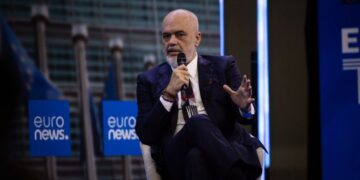
    Albanian PM Rama rules out resignation amid protests, tells Kathimerini: “Governments change through elections”

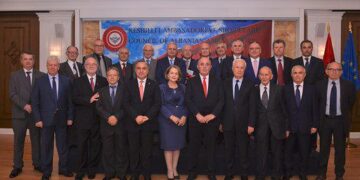
    Albanian Ambassadors’ Council: Political Change in Serbia Should Open the Way to Normalization with Kosovo

  • Top News

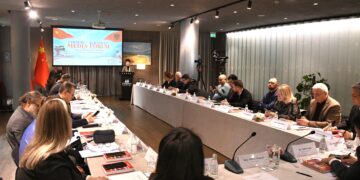
    Albania–China Media Forum Held in Tirana to Strengthen Dialogue and Explore New Avenues for Cooperation

    European Commission Praises Albania’s EU Progress but Flags Concerns over Democracy, Justice and Media Freedom

    Europe Reassesses Its Enlargement Map: Who Is Moving Closer and Who Is Falling Behind?

    Albanian PM Rama: Albania Targets Completion of EU Accession Talks by 2027, but 2030 Membership Is Not Guaranteed

    Albania Cuts Municipalities from 61 to 46 Ahead of May 2027 Local Elections

    Vučić Loses the Elections, but Is Serbia Abandoning Its Policy of Destabilization?

    Kosovo PM Kurti at Berlin Process Summit: Kosovo Seeks EU Candidate Status, Calls for Collective Response to Security Threats

    Serbia ahead of the 2026 elections: Foreign influence, electoral integrity and challenges to sovereignty

    Albanian PM Rama Holds Up Protest Stone: “There Can Be No Negotiation with Violence”

  • YOUR VOICE
  • ARGUMENTUM MAGAZINE
  • Shqip
No Result
View All Result
Argumentum
No Result
View All Result
Home ENGLISH

They Thought Rama Would Fall

20 November, 2026
in ENGLISH, In Focus
A A
Share on FacebookShare on Twitter

Prof. Assoc. Dr. Bledar Kurti

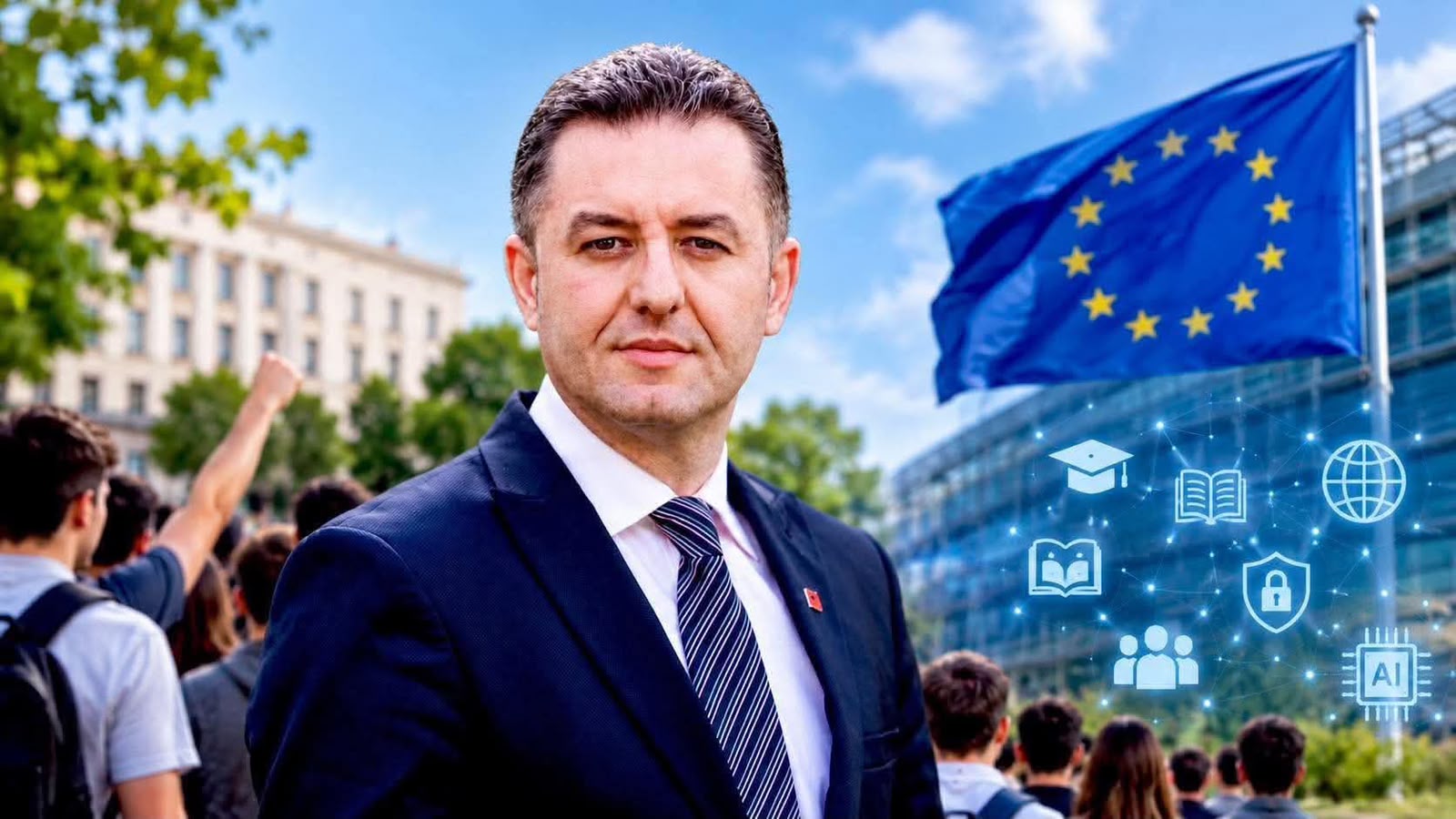
Among many things, the weeks of violent protests demonstrated what happens when the expectation of a government’s downfall becomes a test for all those rushing to inherit its place.

“Whatever does not kill me makes me stronger,” wrote Friedrich Nietzsche. In politics, crises are not merely moments of danger for those in power. Above all, they are moments of revelation. They expose character, ambition, loyalties, hidden interests and, sometimes, the profound voids concealed behind public noise.

The recent protests in Albania created precisely such an atmosphere. For many, they were not simply a political confrontation with the government, but the beginning of the end of an era. Many thought Edi Rama would fall. Some believed it, others wanted it, and quite a few began behaving as though it had already happened.

The Democratic Party believed that its moment had finally arrived. After years in opposition, the protests were seen as an opportunity to transform public discontent into an immediate transfer of power. The mobilisation was interpreted as a sign of an imminent political upheaval, while political rhetoric increasingly rested on the conviction that the government was on the verge of collapse. In that atmosphere, the boundary between political desire and realistic analysis became increasingly blurred. Yet, faced with its own expectations and impatience, the Democratic Party suffered a major disappointment, particularly when its representatives were driven away from the boulevard.

Something equally significant happened within the Socialist Party. A considerable number of its MPs and political representatives retreated into silence. They did not come forward publicly to defend the government, did not take responsibility for articulating its arguments either on social media or on television programmes, and did not present themselves as supporters of their party leader or of a political direction they would normally be expected to represent. Some displayed fear, others a lack of understanding, while perhaps some were simply waiting to see which way history would turn. Others thought selfishly about their own political futures. In moments like these, silence is not always neutrality. More often, it is a form of waiting, a way of avoiding identification with a ship believed to be sinking. Put simply: cowardice.

The protesters, meanwhile, believed they were on the verge of a historic moment. For many of them, taking to the streets represented not merely opposition to the government, but also an opportunity to become part of a major transformation. This is one of the defining characteristics of political movements: they create the feeling that history is unfolding right there, at that very moment, and that every participant can become part of it. Yet, without any concrete programme, without the desire or willingness to engage in dialogue, and relying on utopian slogans with no tangible outcomes, they achieved nothing constructive politically, while causing only destructive damage to private and public property.

In this climate, some academics, analysts and public commentators also emerged from more withdrawn positions, sensing an opportunity for a new public career. For some, the crisis appeared to be a springboard towards political prominence, a new position in the hierarchy of public opinion, or a role that the political reality had not previously offered them. Suddenly, some began to see themselves not merely as interpreters of events, but as potential actors in a new political order. Interestingly, this category includes individuals whose public resumes reveal earlier involvement in political parties or movements that ultimately failed to fulfil their ambitions. This was their moment to return in glory, not merely to politics, but to its very forefront.

Some national and local television stations and online media outlets also believed they were contributing to a historic moment. Rather than limiting themselves to reporting and analysing developments, some became caught up in the expectation of political upheaval, as though media influence itself were an instrument for changing the government. Under these circumstances, the boundary between reporting, interpretation and political activism became increasingly fragile. Some went beyond the mission of independent media, crossing into the thoroughly unprofessional territory of partisanship and the deliberate dissemination of manipulated images and fake news. The examples are numerous, ranging from AI-generated images to false reports of fatalities and young people being intubated.

In the diaspora, certain individuals began projecting themselves into a new political reality in which, following a possible change of government and national leadership, their roles would be considerably greater. Some imagined themselves as members of new decision-making structures, advisers, representatives or contributors to an Albania that did not yet exist. Meanwhile, radical political and religious elements saw this climate as an opportunity to advance their own agendas, hoping that a potential institutional vacuum would pave the way for them to gain influence through their doctrines.

While one segment of society was protesting against the government, another had already begun imagining what Albania would look like after it. Everyone, in their own way, was preparing for a new reality, but they all shared one assumption: they had regarded Rama’s downfall as an almost certain outcome.

But Rama did not fall. He didn’t stumble.

And this is precisely where the most interesting part of the story begins.

A political crisis that fails to produce the anticipated upheaval can produce something else: a profound process of self-awareness on the part of the person in power. Rama had an opportunity to see things that, under normal circumstances, might have remained hidden. He discovered who could stand firm in the face of adversity and who preferred to remain silent. He saw the human resources at his disposal, but also their limitations. He realised which public concerns had grown far more significant than they might have appeared from within government offices. He identified his open opponents, but also those who had until then remained concealed behind a façade of loyalty.

In this sense, the crisis provided him with political and human intelligence that no opinion poll, institutional report or party meeting could have delivered with the same degree of clarity. It showed him where the weaknesses lay, where discontent was concentrated, and which political relationships needed to be reassessed.

Above all, it created an opportunity for him to reinvent himself politically. A leader who goes through a crisis and survives it never emerges quite the same. He comes out more conscious of the risks, more selective in choosing the people around him, more careful in his communication and better prepared for the next battle.

This is the challenge that may lie ahead of him in the next elections. It is not simply a matter of repeating previous victories, but of building a new relationship with the electorate, addressing grievances, correcting weaknesses and demonstrating that lessons have been learned from difficult moments. Political survival is not the same as political success. Avoiding defeat is one thing; understanding why you were shaken and what you need to change is quite another.

There is also a psychological dimension to politics that is often underestimated. I want to emphasise its importance. Professional politicians, particularly those who have fought many battles, are motivated not only by power but also by the challenge itself. They have a natural inclination to seek the next confrontation, to test their strength and to prove that they can overcome obstacles others consider insurmountable. In a sense, they live for political battles. Indeed, professional politicians thrive and draw energy from new challenges and political confrontations. They live precisely for the experience of facing such challenges.

Today, having weathered this period, Rama may see the next battle not merely as an electoral obligation, but also as an opportunity to demonstrate once again his ability to survive, adapt and win.

Nevertheless, there is a lesson here for everyone else as well. The opposition must understand that wishing for a government’s downfall is not the same as possessing the ability to bring it down. MPs must understand that silence in difficult moments reveals their incompetence and fear just as clearly as public statements do. Analysts must distinguish personal ambition from intellectual responsibility. The media must understand that history is not written by declaring the winners in advance. And those waiting to inherit power should remember that a political office is not property left vacant to be divided among those who arrive first.

They thought Rama would fall. Some thought they would come to power, some that they would achieve fame, some that they would assume a new role, and others that they would finally realise their agendas.

But the crisis did not produce what they expected. Instead, it produced a more important truth: in politics, it is not enough to imagine your opponent’s downfall. You must also be prepared for the day when that opponent survives, learns and returns to the battle with a new set of experiences.

History has always shown that those who wait to celebrate someone’s downfall are, without realising it, giving that very person the time and the reason to become even stronger.

/Argumentum.al

© 2026 Argumentum

Related Posts

ENGLISH

Albania–China Media Forum Held in Tirana to Strengthen Dialogue and Explore New Avenues for Cooperation

21 November, 2026
ENGLISH

Republican catastrophe and the democratic tzunami! Progress or Regress Report? Much ado about nothing! All for Ukraine!

16 November, 2026
Current Events

SERBIAN NATIONALISM ON THE EU STAGE: STABILITOCRACY AT KOSOVO’S EXPENSE!

16 November, 2026

Follow US

Subscribe

Receive Argumentum Magazine by Email

Last Posts

Albania–China Media Forum Held in Tirana to Strengthen Dialogue and Explore New Avenues for Cooperation

21 November, 2026

They Thought Rama Would Fall

20 November, 2026

Republican catastrophe and the democratic tzunami! Progress or Regress Report? Much ado about nothing! All for Ukraine!

16 November, 2026

SERBIAN NATIONALISM ON THE EU STAGE: STABILITOCRACY AT KOSOVO’S EXPENSE!

16 November, 2026

Marginal notes for the film Lordan Zafranović’s “Occupation in 26 Pictures”[1]

8 November, 2026
Argumentum

“Argumentum”, një proces intelektual …

Contact Us

[email protected]
[email protected]
[email protected]

Follow Us

Media Partner

Register

Receive Argumentum Magazine by Email
  • Home
  • Privacy Policy
  • About Us
  • Contact

© 2022 Argumentum. All Rights Reserved. | NUIS: L91415033Q

Welcome Back!

Login to your account below

Forgotten Password?

Retrieve your password

Please enter your username or email address to reset your password.

Log In

Add New Playlist

No Result
View All Result
  • Home
  • OP/ED
  • Interview
  • Realpolitik
  • Current Events
  • Top News
  • YOUR VOICE
  • ARGUMENTUM MAGAZINE
  • Shqip

© 2022 Argumentum. All Rights Reserved. | NUIS: L91415033Q

This website uses cookies. By continuing to use this website you are giving consent to cookies being used. Visit our Privacy and Cookie Policy.