






'/%3E%3C/svg%3E)
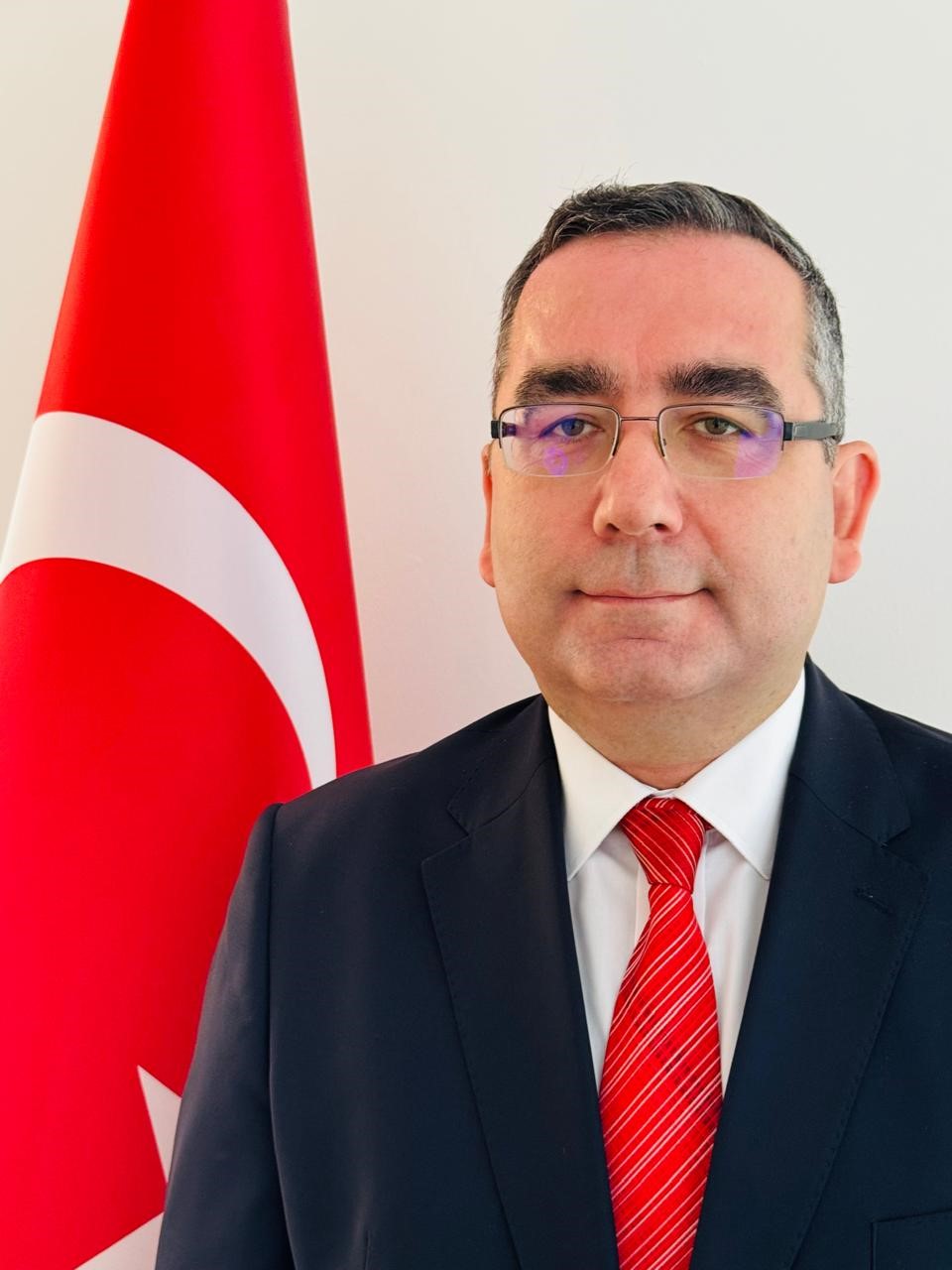
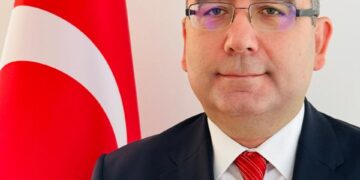
Exclusive Interview for ARGUMENTUM with H.E. Tayyar Kagan Atay, Ambassador of the Republic of Türkiye to Tirana
The Turkish Ambassador to Tirana, His Excellency Tayyar Kagan Atay, highlights the deep historical ties, growing economic cooperation, and shared commitment to regional stability and European integration that define relations between Türkiye and Albania.
In an in-depth interview with ARGUMENTUM. al, Ambassador Atay expressed pride in the long and rich history connecting the two nations, as well as in the recent advancements in their bilateral relations. He emphasized that the 102nd anniversary of diplomatic ties stands as a testament to a resilient partnership grounded in shared heritage, close human connections, and a mutual dedication to peace and stability in the region.
Ambassador Atay highlighted, “Türkiye and Albania are strong allies and close friends with a history of cooperation and mutual understanding,” underscoring the importance of sustaining this strategic partnership. He identified economic cooperation as the cornerstone of bilateral relations. Currently, Türkiye is Albania’s fourth-largest trading partner, with trade volumes surpassing 1 billion dollars in 2024 and ambitions to reach 2 billion. Turkish investments in Albania total approximately 3.5 billion dollars, spanning key sectors including infrastructure, energy, banking, and tourism. The planned opening of Ziraat Bank’s branch in Tirana in 2026 symbolizes confidence in Albania’s economic potential.
“While economic figures provide an important measure of our engagement, they do not tell the whole story,” the Ambassador remarked. “I would like to highlight several Turkish investments in Albania over the past decade that have had a tangible impact on the daily lives of Albanians. These include the construction of the Fier Friendship Memorial Hospital, a housing project by TİKA following earthquakes, the opening of the Namazgah Mosque, the restoration of Ottoman-era historical sites, as well as numerous developmental, educational, and socio-cultural projects implemented by TİKA. Such initiatives demonstrate that Turkey’s commitment to Albania extends beyond trade — encompassing social development, cultural preservation, and people-centered investments.”
On regional politics, Ambassador Atay reaffirmed Türkiye’s dedication to peace and stability in the Balkans, stating, “Albania is an important partner in the region, and we strongly support its path towards European integration.” He further emphasized Turkey’s backing of Albania and other regional countries’ efforts to join the European Union and NATO.
Highlighting collaboration within NATO and regional organizations such as the South-East European Cooperation Process (SEECP) and the Black Sea Economic Cooperation (BSEC), the Ambassador said, “Türkiye views Albania as a key partner in addressing regional challenges.”
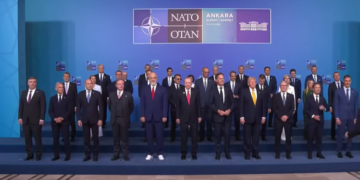
With Türkiye hosting the NATO Summit in 2026, followed by Albania hosting the summit in 2027, Ambassador Atay noted, “The close coordination and cooperation between our two countries in preparing and conducting these pivotal summits reflect another dimension of our tangible bilateral cooperation.”
Moreover, he highlighted Türkiye’s unique role as a bridge between East and West, stressing the importance of dialogue and international cooperation amid global challenges.
“Türkiye plays a vital role as a mediator and collaborator on the global stage, connecting cultures and interests from East to West and promoting dialogue as the path to peace and prosperity.”
In this context, Türkiye’s engagement in the Balkans is not only a factor of stability but also a catalyst for regional cooperation and development, strengthening relations among countries and advancing strategic projects that enhance prospects for shared growth,” Ambassador Tayyar Kagan Atay concluded.
Interview by: Marjana DODA
Editor-in-Chief
– Your Excellency, first of all, we would like to thank you for granting this exclusive interview to Argumentum. al, especially on the occasion of the 102nd anniversary of diplomatic relations between the Republic of Türkiye and the Republic of Albania. How would you describe the current state of relations between our two countries? What are the key moments that are shaping and deepening this strategic partnership?
Thank you for your time to make this interview. I hope your readers enjoy reading our pleasant conversation.
Let me begin by refreshing our memories a bit and noting that Turkish-Albanian relations go centuries beyond diplomatic relations. Our common past during the Ottoman period represents a valuable legacy for both nations. Turks and Albanians are relatives, and our strong social and cultural bonds stemming from this centuries-old togetherness make Turkish-Albanian relations special and unique.
Speaking of our shared history, Albanians undertook important duties at the state level during the Ottoman period. Many state officials of Albanian origin served as Grand Vizier, those times’ Prime Minister. It is known that approximately 35 Grand Viziers were of Albanian origin.
Let me at this stage also mention some well-known names who put their stamp on both of our nations history and literature. This element is what is also shaping today’s intimate relations with Albania. One of the greatest masters and reformers of Turkish and Albanian languages, Şemsettin Sami (or Sami Frasheri in Albanian) is the author of the first Turkish novel (Taaşşuk-ı Talat ve Fitnat), the first Turkish to Turkish dictionary (Kamus-ı Türki) and the first Turkish encyclopedia (Kamus-ul Alam). His son, Ali Sami Yen, is the founder of our Galatasaray football team, which is considered one of the most well-known sports clubs in Europe. Mehmet Akif Ersoy, a poet, writer, academic, politician as well as the author of the Turkish National Anthem is a common value of Turkish and Albanian nations.
Moreover, the district, where Albanian people settled in Istanbul since the 15th century, is known as “Arnavutköy” today. There are many traces of our common history and culture also in Albania in Tirana, Elbasan, Korça, Kruje, Berat, Shkoder, Gjirokaster, Vlore, almost in every corner of this country. It is our common responsibility to pass on these common historical legacy which have been entrusted to us by history to future generations. In this context, we are pleased to see that many restoration projects were completed by the Turkish Cooperation and Coordination Agency- known as TİKA.
In a nutshell, embracing the past always helps to prepare for the future. No other Ambassador in Tirana has an advantage like I do to enjoy and build on such a legacy. We see ourselves privileged in this sense and we try to do our best to cherish it. We are happy and proud to see that our 600-year-old friendship and kinship ties are developing day by day.
Forthcoming 102nd anniversary of our diplomatic relations is actually another testament to the ever-growing and deepening relations between Türkiye and Albania. Our two nations have cultivated a relationship that is strengthened by a shared history and heritage, people to people ties, a commitment to regional stability and an alliance under NATO. While Türkiye and Albania have always been close allies and partners, our relations today have significantly deepened in virtually all areas over the last years, ranging from political dialogue to economic cooperation and cultural exchanges. In this regard, continuous and intimate dialogue between President Erdoğan and Prime Minister Rama has been instrumental in advancing this relationship.
A significant development in our bilateral relations occurred when Albania designated Türkiye as one of its five strategic partners in 2013. This designation was further solidified during the official visit of Prime Minister Edi Rama to Türkiye in 2021, where a “Joint Political Declaration” was signed, elevating our ties to the level of an official “Strategic Partnership.” In short, our already existing strategic partnership was formalized. In concrete terms, this formalization established a High Level Cooperation Council mechanism which brings together periodically the two leaders along with their Ministers to address and review all avenues of bilateral cooperation. So far, two High Level Cooperation Council meetings were held in Ankara and Tirana in 2024. The third one will be held soon in Ankara during the prospective visit of Prime Minister Rama to Türkiye.
– Mr. Ambassador, Albania and Türkiye have often been described as strategic partners. Considering the frequent meetings between the leaders of our two countries and the close cooperation at the highest levels, what are Ankara’s expectations from the ‘Rama 4’ government in advancing this relationship?
President Erdoğan and Prime Minister Rama enjoy a close friendship, which has been a major driving force in advancing our bilateral agenda. During the course of last 12 months alone, President Erdoğan visited Albania twice within six months — first for the official visit on 10 October 2024, and later to participate in the 6th European Political Community (EPC) Summit on 16 May 2025. The strong high level political will to deepen bilateral cooperation certainly facilitates our work as diplomats. We expect to continue building on this momentum during the Fourth Rama Government, pursuing concrete goals in our relationship with Albania. In the coming months, we expect that the new Cabinet will visit Ankara to realise the High Level Cooperation Council’s 3rd meeting.
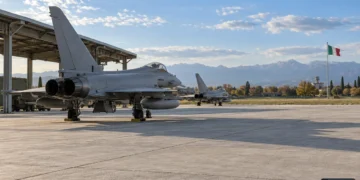
One of our common priorities is to achieve a bilateral trade volume of 2 billion USD, alongside expanding collaboration in investment, infrastructure, and other sectors. There is also potential for closer cooperation in the field of defense, where we hope to deepen our ties. Türkiye already supports the modernization efforts of the Albanian Armed Forces through equipment procurement/delivery and training programs, which can be complemented by joint production projects in the defense industry.
We also hope to see continued engagement on regional and multilateral initiatives, where Albania already plays an active and constructive role. This year, Albania successfully hosted the EPC and South East European Cooperation Process (SEECP) Summits in Tirana. In 2026, Türkiye will host the NATO Summit, followed by the NATO Summit in Albania in 2027. Close coordination and cooperation between our countries in the preparation and execution of these key summits is another avenue of concrete cooperation.
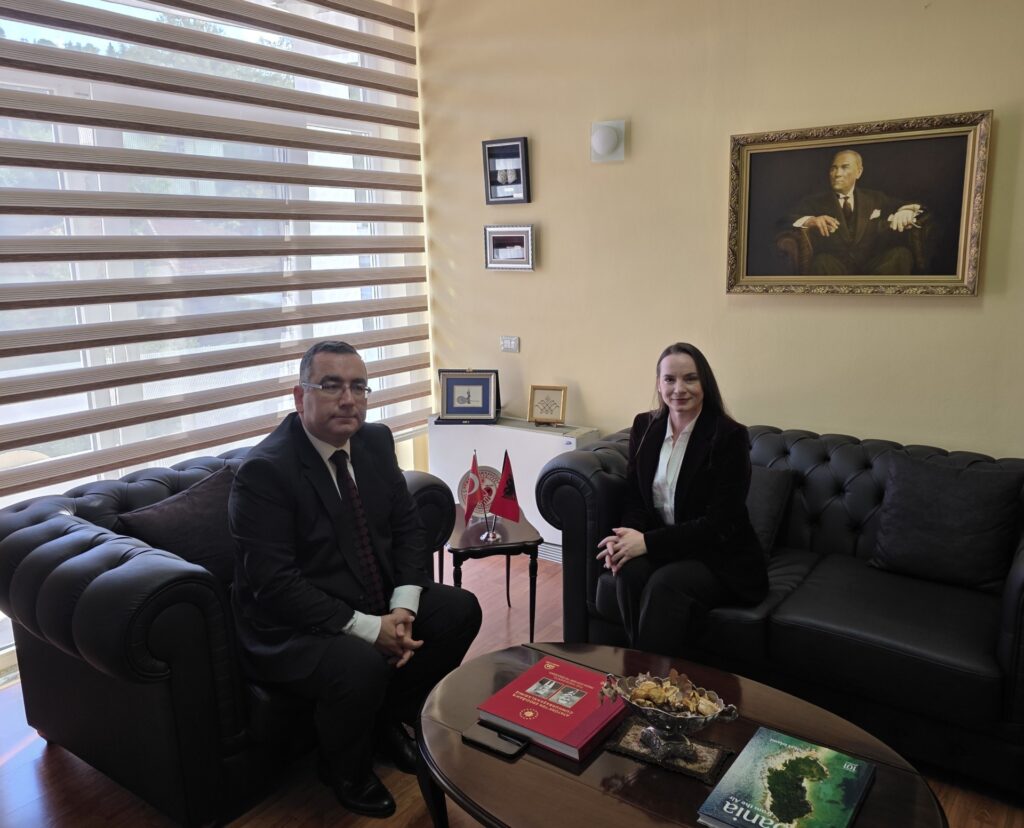
Ambassador of the Republic of Türkiye to Albania–
Marjana Doda
Editor-in-Chief, ARGUMENTUM.al
– Türkiye is one of Albania’s most important economic partners. Could you share some concrete figures on the volume of trade exchanges between the two countries? In addition, which sectors do you consider to offer the greatest potential for expanding and deepening economic and trade cooperation?
Türkiye has been the 4th largest trading partner of Albania for the first seven months of 2025, accounting for around 7,0 percent of Albania’s total trade volume. In this period, our trade volume reached approximately 550,9 million USD. 509,4 million USD of this figure was accounted for by Turkish exports and 41,5 million USD by imports. We expect this figure to increase by the end of the year. In 2024, our trade volume reached approximately 1,038 billion USD and both countries are committed to reaching the target of 2 billion USD in the near future.
Turkish export products to Albania are mainly electronics, machine parts, textile, construction material, as well as iron and steel. Key imports from Albania to Türkiye include metals and ores, non-ferrous metals, power generating machinery, and animal as well as vegetable raw materials. Considering the composition of traded goods, there is still room to diversify and incorporate higher value-added technologies.
– How do you assess the role of Turkish investments in Albania within the framework of Türkiye’s expanding economic presence in the Balkans, especially following the news about the opening of Ziraat Bank’s branch in Tirana? Beyond the banking sector, are there any plans for investments in strategic projects such as infrastructure, energy, or tourism?
The opening of Ziraat Bank’s branch in Tirana marks an important milestone in Türkiye’s economic presence in the Balkans. The branch will be fully operational as of 2026. It reflects the confidence of Turkish investors in Albania’s market and potential. Turkish investments in Albania are already significant, amounting to 3.5 billion USD, with over 800 companies operating across a wide range of sectors including banking, mining, energy, air transportation, infrastructure, health and tourism. Türkiye is one of the top five investors in Albania. In the first six months of 2025, Türkiye ranked first among all foreign investors in Albania with investments totaling 89 million Euros. Similarly, in 2024 it was also the biggest investor in the country contributing 257 million Euros.
The opening of Türkiye’s one of the biggest businessmen association MÜSİAD’s Albania Branch last year set a clear sign of confidence and will from the Turkish side to strengthen and further institutionalize our commercial ties. MÜSİAD Albania Branch, in cooperation with the Albanian Investment Development Agency (AIDA), will organize Türkiye-Albania Investment Forum on 17 October 2025 in Tirana, which will serve as a platform to bring together private sector stakeholders and allow us to comprehensively assess our economic ties going forward. Prime Minister Edi Rama and Vice President of Türkiye Cevdet Yılmaz will open the Investment Forum together.
While economic figures provide an important measure of our engagement, they are not reflecting the whole picture. This is why I would like to highlight some of Türkiye’s investments in Albania over the last decade that have had a tangible impact on Albanian people’s daily lives. These include the construction of the Fier Memorial Friendship Hospital, TİKA’s housing project following the earthquakes in Albania, the opening of the Namazgah Mosque, the restoration of Ottoman period historical structures, as well as numerous other development, educational and socio-cultural projects implemented by TİKA. Such initiatives demonstrate that Türkiye’s engagement in Albania goes beyond commerce, encompassing social development, cultural preservation of common history legacy and human centered investments.
– In the context of significant political and economic changes in the Balkans, how does Türkiye see its role in Albania and the region? What objectives does it have to strengthen stability and cooperation between Balkan countries in the medium and long term?
Our engagement in the Balkans is guided by the principles of regional ownership, inclusiveness, and respect for sovereignty, emphasizing that the countries of the region are the primary architects of their own future. In this framework, high level political dialogue, security for all, economic integration and the preservation of the region’s multi-ethnic, multi-cultural and multi-religious social structures constitute the main pillars of Türkiye’s Balkan policy.
Establishing a permanent peace and stability in the region, maintaining good neighbourly relations and ensuring regional cooperation are among our priorities. As part of the Balkan neighbourhood, Türkiye plays a constructive role in the Balkans. In our efforts, we see Albania as a natural and strong partner and commend Albania’s important contributions to preserve the fragile peace in the region.
The new security architecture following the war in Ukraine made our cooperation, as two prominent actors in the Balkans and NATO Allies, even more crucial. We appreciate Albania’s constructive support to international peace and security efforts. We are delighted to host the Albanian Armed Forces Infantry Platoon in our contingent as part of EUFOR ALTHEA Operation in Bosnia and Herzegovina.
The European and Euro-Atlantic integration of all Balkan countries, without discrimination, has been one of the main pillars of our Balkan policy. We believe that future of the region, which an EU candidate country Türkiye also belongs to, is within the European Union. We are glad that enlargement is back on the EU agenda. We congratulate Albania on the remarkable progress of accession negotiations with the EU. We hope that this positive development accelerates the overall pace of the EU enlargement process.
Türkiye and Albania are also engaged in a strong cooperation at regional and international organizations such as the United Nations, Black Sea Economic Cooperation (BSEC) and Southeast European Cooperation Process (SEECP). We are determined to maintain our solidarity with Albania to contribute to regional and global peace.
-How do you assess Türkiye’s role and presence in Kosovo and Bosnia and Herzegovina, especially in economic, cultural and military aspects? Considering the challenges and threats to regional stability, including Serbia’s influences and positions, how much does this engagement of Türkiye contribute to improving stability and cooperation in the Balkans?
Kosovo as well as Bosnia and Herzegovina remain the fragile spots in the region. As such both countries take a special place in Türkiye’s regional approach. In Bosnia and Herzegovina, secessionist tendencies constitute the most pivotal threat to peace, while in Kosovo lack of progress in the Pristina-Belgrade Dialogue Process facilitated by the EU remains as a pressing issue.
Türkiye is determined to continue its bilateral and regional engagement vis a vis these two countries. Our main aim is to support their sovereignty and territorial integrity. From a political perspective, Türkiye contributes to the state-building efforts in Kosovo from the outset and supports its integration into Euro and Euro-Atlantic organizations. We also promote the international recognition of Kosovo–Türkiye was one of the first countries to recognize Kosovo as such in 2008. We also continue to support Pristina-Belgrade Dialogue Process. Similarly, Türkiye supports the accession of Bosnia and Herzogovina’s into Euro and Euro-Atlantic structures, while positioning itself as a dialogue enabler between Bosnia and Herzegovina and its neighbors Serbia and Croatia through trilateral consultation mechanisms.
Türkiye has been making significant troop contributions in NATO KFOR and EUFOR Althea operations for a long time. Actually, Türkiye is the largest non-EU troop contributing nation in EUFOR Althea. Our re-assumption of the NATO KFOR Command as of October 2025 reflects our will to help maintain peace and stability in the Balkans.
Beyond political engagement and security contributions, Türkiye’s economic and cultural engagement in the region complements its stabilizing role in the region.
– Your Excellency, Türkiye holds a strategic position as a bridge between East and West and has played a mediating role in major conflicts such as those in Ukraine, Syria, and Azerbaijan, while also being a strong voice in support of Palestine. In an increasingly polarized world, where the interests of major powers often conflict, can Türkiye truly maintain a neutral stance and continue to play a mediating role without generating new tensions in global politics?
Türkiye indeed has a strategic bridge position between East and West, allowing it to take a mediator role in conflicts all over the world. It does not claim to be neutral in every regional conflict; rather, it approaches each conflict party, even if they are at war, without prejudice and aims to find a common ground and explore ways to end conflict at hand.
For example, in the case of Ukraine, Türkiye demonstrated its unique position by brokering the Black Sea Grain Initiative and facilitating prisoner exchanges between Russia and Ukraine.
As an advocate for peace in the South Caucasus, Türkiye welcomed the recent progress toward a lasting peace between Azerbaijan and Armenia.
The situation in Syria, by contrast, is of a different nature. Here, the challenge is the restoration of statehood, stability and social cohesion after years of conflict. Türkiye supports Syria in its efforts to strengthen institutional capacities and foster inclusive governance, while at the same time remaining vigilant against attempts to exploit the fragile conditions on the ground and threaten Türkiye’s own security.
Türkiye has been one of the most diplomatically active countries and one of the most vocal critics of Israel’s two-year assault on Gaza. It urged international action and repeatedly called for a two-state solution. President Recep Tayyip Erdoğan and Minister of Foreign Affairs Hakan Fidan have been devoting most of their time and energy to be the voice of Palestinians in every international forum. These efforts were also spent for President Trump’s recent peace plan in Gaza, meanwhile underlining that Israel must stop its attacks for ensuring the success of this plan.
Turkish mediation efforts actually extend well beyond its immediate neighborhood. Türkiye has assisted in facilitating dialogue between Somalia and Somaliland and was instrumental in the Ankara Declaration between Ethiopia and Somalia.
-Honorable Ambassador, given the challenges and opportunities our countries face in light of various global geopolitical developments, how do you assess the long-term perspective of relations between Albania and Türkiye? In your opinion, what are the main objectives that the two countries should pursue to further strengthen the strategic partnership in the coming decades?
Albania and Türkiye share a long-standing relationship built on mutual respect, historical ties and shared regional interests. Looking ahead, I see significant potential and need to deepen our Strategic Partnership, especially when considering the trajectory of international politics. The world is becoming more multipolar, regional conflicts are increasing, disinformation is spreading, and climate change is creating new challenges such as natural disasters and food security.
An important part of overcoming these challenges is working with trusted partners. Reliability is key. Discourse in diplomacy is increasingly shifting favoring terms such as “friend-shoring” instead of “off-shoring”. In this context, as two NATO Allies and EU candidates and truly brotherly countries, Albania and Türkiye have great potential to expand upon their cooperation and Strategic Partnership in the upcoming decade. We already share a common vision for a prosperous future in our region and have already put our common determination to further consolidate our Strategic Partnership in all areas.
© 2025 Argumentum