








• SHQIPËRI
  • KOSOVË
  • MAQEDONIA E VERIUT
  • MALI I ZI
  • Revista në PDF
8 July, 2026
  • Home
  • OP/ED

    Do Not Misuse the U.S. Declaration of Independence to Justify the Narrative of Insurrection in Albania

    The visit that changed Albania’s strategic future

    Pierre Nora and the institution of memory we lack in Eastern Europe

    The Blueprint of a Diplomatic Debacle: Analyzing Germany’s Historic UNSC Loss

    Between Russia, Iran and Europe: Azerbaijan as a balancing power in the South Caucasus

    The Zero-Tariff Gate: Sovereignty as a Service in the Sino-African Corridor

    Albania vs. the Sea/ Marginal Notes on A. Leka’s Novel The Hidden Side of the Albanian Socialist Garden

    May 9 and the long shadow of a Letter: Is Europe still Schuman’s Project?

    The Arbnesh of Zadar: A living memory of Albanian identity on the Adriatic coast

  • Interview

    Exclusive Interview with Oleksandr Tyshchenko: A 40-Year Legacy of Chernobyl, Nuclear Risks, and Global Responsibility

    INTERVIEW: ZLATKO KRAMARIĆ – THOUGHTS ON THE OLD CONTINENT

    EXCLUSIVE / Ukrainian Ambassador to Albania, Volodymyr Shkurov: “Ukraine wants peace, but not at the expense of its freedom and independence”

    EXCLUSIVE| Ambassador Tayyar Kagan Atay: Türkiye and Albania, a Strategic Partnership Rooted in Shared Heritage and a Common Vision for the Future

    “Diplomacy, Not War”: Palestinian Ambassador to Albania Calls for Justice, Peace, and Global Action for Gaza

    Exclusive: “Even After Tito – Tito”/ Ambassador Zlatko Kramarić on Authoritarian Legacies and Democracy’s Future in the Balkans

    The Conclusion of the Diplomatic Mission / Ambassador Dancho Markovski: Strengthening Albania-North Macedonia Relations for a Shared European Future

    A Century of Diplomatic Relations Between Albania and Russia: Exclusive Interview with the Russian Ambassador to Albania, H.E. Alexey Zaytsev

    Exclusive/ The chairman of the Freedom Party, Ilir Meta: “The will of the citizens will triumph in Albania, as it did in North Macedonia”

  • Realpolitik

    Peace with war diplomacy! The protest,  image and tourism! Why this silence from the EU Commission and Council? A deal or a pause?

    Just kind words  in Tivat! Where is the peace!? A deal yes, peace No!What is happening with USA and  EU?  5 elections but no solution!

    IBAR? ”Sufficiently! Much ado about nothing! Shart contrasts in Beijing! Where is the exit?!

    Neither peace nor war! Peace with bombs?! IBAR in autumn?! Not another Hormuz in Taivan! 

    IBAR – a springing board or an obstacle? Can we catch the EU Negotiation train 2027? When the dress makes the news!  EU electoral April  ends in a draw 1:1!  

    The European Parliament building in Strasbourg, France with flags waving calmly celebrating peace of the Europe. July 12, 2020.

    EU 2027 or 2037! Even half membership failed! No exit strategy!     

    What next?

    “With diplomatic velvet“! Major question marks! In Washington yes, but  in the White House NO! A strange dinner in Brussels!

    From a great ‘apple of disaccord’ to a  point of  cooperation! A bad start! The strange absence in Davos!

  • Current Events

    NATO Summit in Ankara: Allies Adopt Declaration Reaffirming Collective Defence and Long-Term Security Commitments

    Protection for Serbs, or Protection for Radoicic?

    The Architecture of Selective Sovereignty:Corporate Immunity, Technological Protectionism, and the Erosion of Credibility

    Montenegro’s Unfinished Transition

    The Paradox of Selective Capitalism: How Western Rule-Breaking Accelerates Its Own Systemic Demise

    A prestigious book on an emblem of Turkish state!

    The Diplomacy of Gas and Algorithms: The Nuances of Official Tirana—Is It Breaking the European Taboo with Azerbaijan?

    Council of Albanian Ambassadors Backs Civic Protests, Calls for Transparency and Protection of National Interests

    Russian Ambassador in Tirana: “Without a Strong and Sovereign Russia, the Creation of a Just World Order Is Impossible”

  • Top News

    NATO at Ankara 2026: Strategic Rebalancing Between Russia Deterrence, Turkey’s Rise, and National Interests

    Daniel Serwer: A Bad War Ending Badly May Still Be Good News

    Friedrich Merz, Keir Starmer, António Costa, Donald Trump, Emmanuel Macron, Mark Carney, Ursula von der Leyen, Giorgia Meloni and Sanae Takaichi

    G7 Leaders Gather in Évian Amid Global Uncertainty, Focus on Security, Economy and International Cooperation

    Russian Ambassador in Tirana: “Without a Strong and Sovereign Russia, the Creation of a Just World Order Is Impossible”

    “The Flamingo Revolution”: Day 10 of Protests in Albania Draws International Attention

    Rama alleges ‘hybrid war’ behind protests against Kushner-linked coastal development

    No End in Sight: Trump, Netanyahu and the Expanding Middle East War

    Tirana – €20 Million EU–Banking Agreement Boosts Albanian SMEs

    “EU4Municipalities II” Project, a Strategic Investment for Strengthening Municipalities and Accelerating Albania’s Path towards the EU

  • YOUR VOICE
  • Shqip
No Result
View All Result
Argumentum
  • Home
  • OP/ED

    Do Not Misuse the U.S. Declaration of Independence to Justify the Narrative of Insurrection in Albania

    The visit that changed Albania’s strategic future

    Pierre Nora and the institution of memory we lack in Eastern Europe

    The Blueprint of a Diplomatic Debacle: Analyzing Germany’s Historic UNSC Loss

    Between Russia, Iran and Europe: Azerbaijan as a balancing power in the South Caucasus

    The Zero-Tariff Gate: Sovereignty as a Service in the Sino-African Corridor

    Albania vs. the Sea/ Marginal Notes on A. Leka’s Novel The Hidden Side of the Albanian Socialist Garden

    May 9 and the long shadow of a Letter: Is Europe still Schuman’s Project?

    The Arbnesh of Zadar: A living memory of Albanian identity on the Adriatic coast

  • Interview

    Exclusive Interview with Oleksandr Tyshchenko: A 40-Year Legacy of Chernobyl, Nuclear Risks, and Global Responsibility

    INTERVIEW: ZLATKO KRAMARIĆ – THOUGHTS ON THE OLD CONTINENT

    EXCLUSIVE / Ukrainian Ambassador to Albania, Volodymyr Shkurov: “Ukraine wants peace, but not at the expense of its freedom and independence”

    EXCLUSIVE| Ambassador Tayyar Kagan Atay: Türkiye and Albania, a Strategic Partnership Rooted in Shared Heritage and a Common Vision for the Future

    “Diplomacy, Not War”: Palestinian Ambassador to Albania Calls for Justice, Peace, and Global Action for Gaza

    Exclusive: “Even After Tito – Tito”/ Ambassador Zlatko Kramarić on Authoritarian Legacies and Democracy’s Future in the Balkans

    The Conclusion of the Diplomatic Mission / Ambassador Dancho Markovski: Strengthening Albania-North Macedonia Relations for a Shared European Future

    A Century of Diplomatic Relations Between Albania and Russia: Exclusive Interview with the Russian Ambassador to Albania, H.E. Alexey Zaytsev

    Exclusive/ The chairman of the Freedom Party, Ilir Meta: “The will of the citizens will triumph in Albania, as it did in North Macedonia”

  • Realpolitik

    Peace with war diplomacy! The protest,  image and tourism! Why this silence from the EU Commission and Council? A deal or a pause?

    Just kind words  in Tivat! Where is the peace!? A deal yes, peace No!What is happening with USA and  EU?  5 elections but no solution!

    IBAR? ”Sufficiently! Much ado about nothing! Shart contrasts in Beijing! Where is the exit?!

    Neither peace nor war! Peace with bombs?! IBAR in autumn?! Not another Hormuz in Taivan! 

    IBAR – a springing board or an obstacle? Can we catch the EU Negotiation train 2027? When the dress makes the news!  EU electoral April  ends in a draw 1:1!  

    The European Parliament building in Strasbourg, France with flags waving calmly celebrating peace of the Europe. July 12, 2020.

    EU 2027 or 2037! Even half membership failed! No exit strategy!     

    What next?

    “With diplomatic velvet“! Major question marks! In Washington yes, but  in the White House NO! A strange dinner in Brussels!

    From a great ‘apple of disaccord’ to a  point of  cooperation! A bad start! The strange absence in Davos!

  • Current Events

    NATO Summit in Ankara: Allies Adopt Declaration Reaffirming Collective Defence and Long-Term Security Commitments

    Protection for Serbs, or Protection for Radoicic?

    The Architecture of Selective Sovereignty:Corporate Immunity, Technological Protectionism, and the Erosion of Credibility

    Montenegro’s Unfinished Transition

    The Paradox of Selective Capitalism: How Western Rule-Breaking Accelerates Its Own Systemic Demise

    A prestigious book on an emblem of Turkish state!

    The Diplomacy of Gas and Algorithms: The Nuances of Official Tirana—Is It Breaking the European Taboo with Azerbaijan?

    Council of Albanian Ambassadors Backs Civic Protests, Calls for Transparency and Protection of National Interests

    Russian Ambassador in Tirana: “Without a Strong and Sovereign Russia, the Creation of a Just World Order Is Impossible”

  • Top News

    NATO at Ankara 2026: Strategic Rebalancing Between Russia Deterrence, Turkey’s Rise, and National Interests

    Daniel Serwer: A Bad War Ending Badly May Still Be Good News

    Friedrich Merz, Keir Starmer, António Costa, Donald Trump, Emmanuel Macron, Mark Carney, Ursula von der Leyen, Giorgia Meloni and Sanae Takaichi

    G7 Leaders Gather in Évian Amid Global Uncertainty, Focus on Security, Economy and International Cooperation

    Russian Ambassador in Tirana: “Without a Strong and Sovereign Russia, the Creation of a Just World Order Is Impossible”

    “The Flamingo Revolution”: Day 10 of Protests in Albania Draws International Attention

    Rama alleges ‘hybrid war’ behind protests against Kushner-linked coastal development

    No End in Sight: Trump, Netanyahu and the Expanding Middle East War

    Tirana – €20 Million EU–Banking Agreement Boosts Albanian SMEs

    “EU4Municipalities II” Project, a Strategic Investment for Strengthening Municipalities and Accelerating Albania’s Path towards the EU

  • YOUR VOICE
  • Shqip
No Result
View All Result
Argumentum
No Result
View All Result
Home ENGLISH

May 9 and the long shadow of a Letter: Is Europe still Schuman’s Project?

8 May, 2026
in ENGLISH, English OP/ED
A A
Share on FacebookShare on Twitter

Arben Cici,

Ambassador

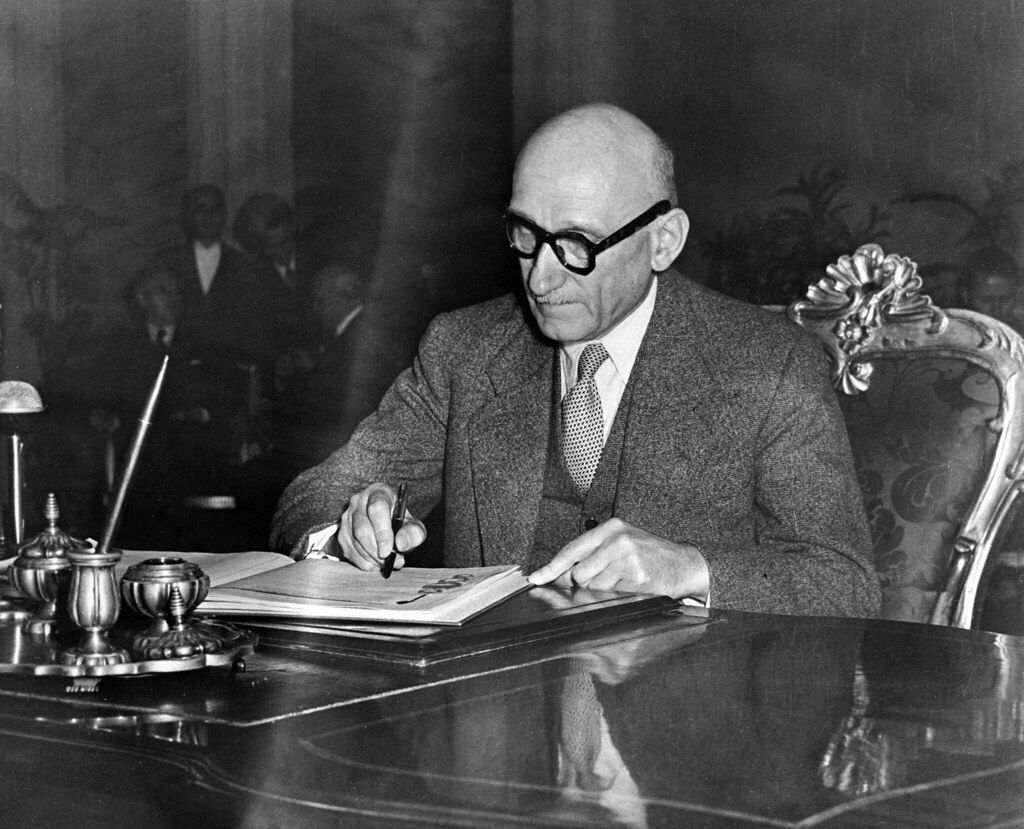
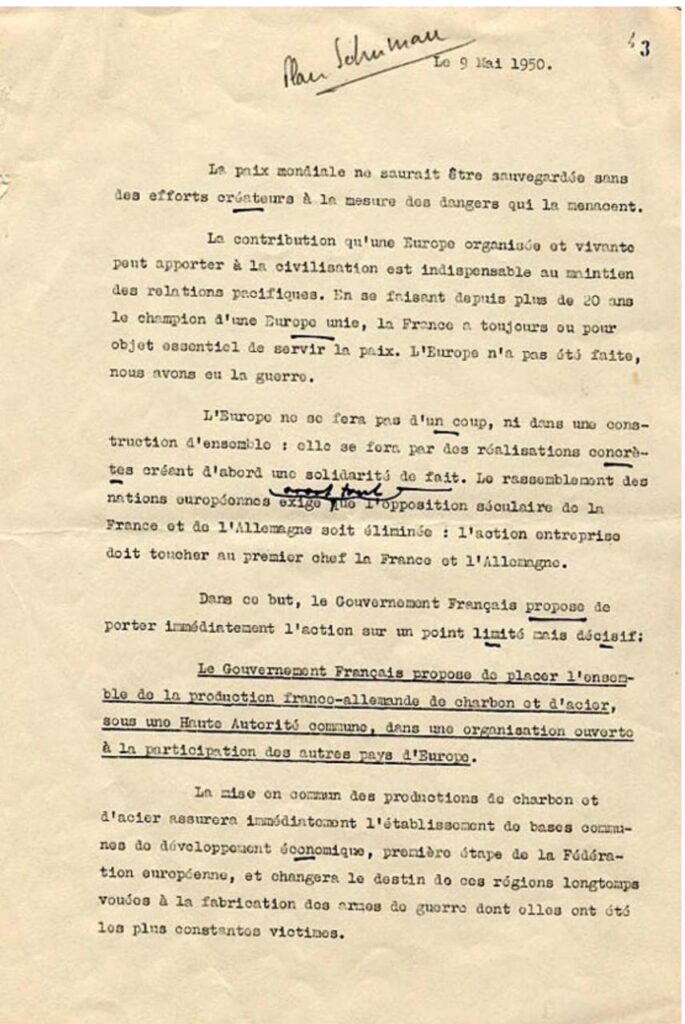
On May 9, 1950, in a modest hall in Paris, the French Foreign Minister Robert Schuman, in his characteristically calm tone, read a text that would change the course of European history. What is now known as the Schuman Declaration was not merely a technical initiative concerning coal and steel; it was an act of political vision. “Europe will not be made all at once… it will be built through concrete achievements which first create a de facto solidarity,” lay at its core, a sentence that continues to resonate today, not merely as a promise, but as a promise under strain.

From hostility to coexistence: the greatest achievement

If Schuman’s project were to be assessed by a single criterion, that criterion would undoubtedly be peace. Postwar Europe, which for decades had been bloodied and fragmented by conflicts among its powers, succeeded in building an order in which war between member states has become almost unthinkable. Since World War II, the continent has experienced the longest sustained period of stability in its modern history.

From the integration of heavy industries emerged a political and economic community now known as the European Union. The common market, free movement, as well as shared regulatory standards have become part of everyday life for European citizens. Borders, once rigid barriers, have increasingly transformed into administrative demarcations or mere lines on a map.

This transformation represents perhaps the tangible realization of Schuman’s idea of “de facto solidarity.”

Europe as a model: a success story with nuances

In recent decades, the EU has become a model of regional integration. The eastward enlargement following the fall of the Berlin Wall demonstrated that the European project was not only confined to Western Europe, but rather constituted an open invitation to stability, prosperity, and democratic consolidation across the continent.

Through common policies in areas such as trade, environmental protection, and human rights, the EU has developed what is often described as a form of “normative power” extending beyond its borders. In an increasingly fragmented international system, Europe continues to be perceived as a stronghold of multilateralism, advocating a rules-based order grounded in cooperation and shared governance.

Fractures: when solidarity is tested in a harsher world

When Schuman referred to “de facto solidarity,” he envisioned a web of interdependent interests that would render conflict not only undesirable but practically impossible. Yet this solidarity has repeatedly been tested by crises, both internal and external, in which political realities often prevail and national interests tend to overshadow collective ambitions.

The crises of the past decade have exposed structural tensions and revealed the limits of European cohesion. The 2008 global financial crisis exacerbated economic disparities among member states; the migration crisis strained political unity and tested the boundaries of solidarity; and Brexit demonstrated that integration is neither linear nor irreversible.

Relations with the United States have historically been the cornerstone of European security, while simultaneously generating enduring strategic dilemmas. On one hand, the security umbrella provided by NATO has ensured stability on the continent for decades. On the other, it has fostered a degree of dependency that constrains Europe’s strategic autonomy. Debates surrounding the EU’s “strategic autonomy” are not new, but they intensify whenever Washington pursues policies that diverge from European priorities, whether in trade, energy, or security.

American administrations have varied in tone and approach, yet the dilemma persists: is Europe an equal partner or a dependent ally? In today’s renewed transatlantic tensions, marked by the second presidency of Donald Trump, even the guarantee of collective defense appears to be under question. This compels Europe to reflect on its capacity to act, at least to some degree, independently, an issue that echoes Schuman’s vision of building strength through shared structures.

At the same time, internal challenges have proven equally significant. The sovereign debt crisis, divisions over migration policies, and the rise of populist movements across member states have demonstrated that solidarity is not a static condition, but a dynamic process requiring constant renewal.

These fractures have not destroyed the European project, but have made it more aware of its limits. In a sense, they reveal that Schuman’s vision is not a guarantee, but a daily political commitment.
The challenge of the 21st Century: Ukraine, unity, and the return of history

The invasion of Ukraine by Russia in February 2022, known as the Russian invasion of Ukraine, represents one of the greatest tests for the European project. This was not merely territorial aggression; it was a direct challenge to the European order that had emerged after World War II.

For the first time in decades, large-scale conventional warfare has returned to the continent, reviving questions that Europe had long believed were settled: security, sovereignty, and territorial integrity.

The EU’s response was, in many respects, unprecedented. Economic sanctions against Russia, military and financial support for Ukraine, and close coordination with the United States demonstrated a surprising level of unity. In this sense, the Ukrainian crisis became a moment of “de facto solidarity” in Schuman’s most concrete meaning.

Yet this unity was not without tension. Energy dependence on Russia, particularly in countries such as Germany, exposed structural vulnerabilities. Meanwhile, the economic costs of sanctions and support for Ukraine created domestic political pressures across member states.

In this context, relations with the United States acquired a new dimension. Washington emerged as the leader of the Western response, while Europe was often perceived as a follower rather than an initiator. This revived the debate over the EU’s global role: can it become an independent geopolitical actor, or will it remain closely tied to American strategy?

Paradoxically, the war has also accelerated integration in previously sensitive areas such as defense, security, and energy. The diversification of energy sources, increased military and cybersecurity spending, and discussions on a common defense policy all indicate that the crisis is acting as a catalyst for deeper integration.

In this way, the war has brought back to the forefront Schuman’s core logic: cooperation as a response to threat. This time, however, the threat comes not from within Europe, but from outside it.

Amid these developments, one fact remains unmistakably clear: Europe is no longer merely an economic project; it is increasingly a political and strategic one. The central challenge is to preserve unity without erasing diversity, to build autonomy without undermining alliances, and to remain faithful to the spirit of the Schuman Declaration in a far less predictable world.

An unfinished union

Europe today remains a project in transition, a unique entity between a federation and a union of states, and it is precisely this intermediate status that makes enlargement both a test, a driver, and a reflection of its identity. Since the founding spirit of the Schuman Declaration, enlargement has been more than a geographical extension; it has functioned as a mechanism of “de facto solidarity” through the internal transformation of aspiring countries.

In recent decades, enlargement has demonstrated that the European Union can export stability, standards, and institutions, from Central and Eastern Europe after the Cold War to the Western Balkans today. It has undoubtedly been a success story: countries once in deep political and economic transition have been integrated into a shared order of rules and values. Yet it has also been difficult, uncertain, and shaped by uneven rhythms, sometimes accelerated by geopolitical dynamics, at other times slowed by internal skepticism and the challenges faced by candidate countries.

Within the Union, dilemmas persist: how far can enlargement go without weakening internal cohesion? Can integration deepen while membership expands? Questions about absorption capacity, institutional effectiveness, and the preservation of democratic standards have become increasingly pressing. Externally, the process faces equally complex challenges: competing geopolitical influences, reform fatigue in aspiring countries, and mismatched expectations between Brussels and candidate capitals.

Yet it is precisely in this complexity that enlargement proves the resilience of the European project. At a time when war has returned to the continent and global rivalries are intensifying, the prospect of EU membership remains one of the most powerful instruments of political and societal transformation. It offers not only economic benefits, but inclusion in an order built on rules, cooperation, and peace.

In this sense, enlargement demonstrates that Europe is not a closed project, but an open-ended process, an idea that continues to expand in its deepest meaning. It keeps alive Schuman’s vision: a Europe built gradually, through concrete steps, by bringing more actors into a shared community of interests and values.

Thus, an “unfinished union” is not a weakness, but a living testament to the vision of Robert Schuman.

Schuman’s Europe today: an open promise

In the end of the day, the question is not whether Europe has fulfilled Schuman’s vision, but whether it continues to pursue it. The European project was never conceived as a destination, but as an ongoing process.

On May 9, as we recall the declaration of 1950, Europe appears neither a complete success nor a failure. It is, above all, a work in progress, an idea still striving to become fully realized.

If Schuman were to see Europe today, he would likely recognize much of what he envisioned. Yet he would also understand that the path toward a united Europe remains inherently unfinished.

/Argumentum.al

© 2026 Argumentum

Related Posts

Current Events

NATO Summit in Ankara: Allies Adopt Declaration Reaffirming Collective Defence and Long-Term Security Commitments

8 July, 2026
Balkan Overview

Protection for Serbs, or Protection for Radoicic?

6 July, 2026
ENGLISH

Do Not Misuse the U.S. Declaration of Independence to Justify the Narrative of Insurrection in Albania

5 July, 2026

Follow US

Subscribe

Receive Argumentum Magazine by Email

Last Posts

NATO Summit in Ankara: Allies Adopt Declaration Reaffirming Collective Defence and Long-Term Security Commitments

8 July, 2026

Albania will experience no development without democracy

8 July, 2026

NATO at Ankara 2026: Strategic Rebalancing Between Russia Deterrence, Turkey’s Rise, and National Interests

6 July, 2026

Protection for Serbs, or Protection for Radoicic?

6 July, 2026

Do Not Misuse the U.S. Declaration of Independence to Justify the Narrative of Insurrection in Albania

5 July, 2026
Argumentum

“Argumentum”, një proces intelektual …

Contact Us

[email protected]
[email protected]
[email protected]

Follow Us

Media Partner

Register

Receive Argumentum Magazine by Email
  • Home
  • Privacy Policy
  • About Us
  • Contact

© 2022 Argumentum. All Rights Reserved. | NUIS: L91415033Q

Welcome Back!

Login to your account below

Forgotten Password? Sign Up

Create New Account!

Fill the forms bellow to register

*By registering into our website, you agree to the Terms & Conditions and Privacy Policy.
All fields are required. Log In

Retrieve your password

Please enter your username or email address to reset your password.

Log In

Add New Playlist

No Result
View All Result
  • Home
  • OP/ED
  • Interview
  • Realpolitik
  • Current Events
  • Top News
  • YOUR VOICE
  • Shqip

© 2022 Argumentum. All Rights Reserved. | NUIS: L91415033Q

This website uses cookies. By continuing to use this website you are giving consent to cookies being used. Visit our Privacy and Cookie Policy.