




















By Zlatko Kramarić*| ARGUMENTUM
The European spirit resists any simple definition. It is not a fixed institution, nor merely a geographical entity, nor even a political project in the narrow sense. It is best understood as a dynamic constellation of ideas, tensions, and critical practices shaped across centuries — from Greek philosophy and Roman law, through Christian universalism and Enlightenment rationality, to modern democracy, science, and the culture of remembrance. The European spirit is not homogeneous; it is a polyphonic project, always open to critique, revision, and self-transformation.
Within modern thought, the contributions of Husserl, Benjamin, Derrida, and postcolonial theorists are crucial. Husserl conceived Europe as an intellectual form of life, a community grounded in the pursuit of truth and universality. For him, the European spirit is not an ethnic or cultural essence but a normative horizon that demands argumentation, rationality, and openness to the Other.
Walter Benjamin, in contrast yet not in contradiction, reads European history as the history of the defeated. Europe created spaces of freedom, but also camps, totalitarianisms, colonial domination, and structures of exclusion. Benjamin’s perspective foregrounds the reality that in Europe, progress and catastrophe are inseparably intertwined.
Building on that lineage, Derrida sees the European spirit as a continuous “deferral of identity,” a process that survives only through permanent self-critique. In his writings on the archive, memory, and “specters,” Europe becomes a space where past trauma and future possibility coexist. The idea of Europe endures only insofar as it remains transversal, non-self-sufficient, and radically open.
This emphasis on openness and critique is extended by postcolonial thinkers such as Said, Spivak, Bhabha, and Chakrabarty. They highlight that the European spirit has too often been intertwined with Eurocentrism — the belief that Europe is the source of all universals. Their aim is not to reject Europe but to democratize its meaning, insisting that European self-understanding must include plural perspectives, including those from the peripheries — Balkan, Mediterranean, Eastern European, and global.
Thus the European spirit, understood in its richest sense, remains a process rather than a completed identity: a tension between tradition and critique, between universal claims and particular histories, between a past marked by violence and projects that attempt to overcome its scars.
In the 21st century, this idea proves more relevant than ever. Confronted with the war in Ukraine, the Middle East crisis, migration, climate challenges, and technological transformation, Europe can survive only by staying faithful to its deepest intuition: that freedom and community must be built through critique, solidarity, and a willingness not to celebrate history but to reflect upon it.
1. Edmund Husserl, The Crisis of European Sciences and Transcendental Phenomenology (1936).
2. Walter Benjamin, “Theses on the Philosophy of History” (1940).
3. Jacques Derrida, The Other Heading (1991); Specters of Marx (1993).
4. Gayatri Chakravorty Spivak, Can the Subaltern Speak? (1988).
5. Homi K. Bhabha, The Location of Culture (1994).
6. Dipesh Chakrabarty, Provincializing Europe (2000).
7. Edward Said, Orientalism (1978).
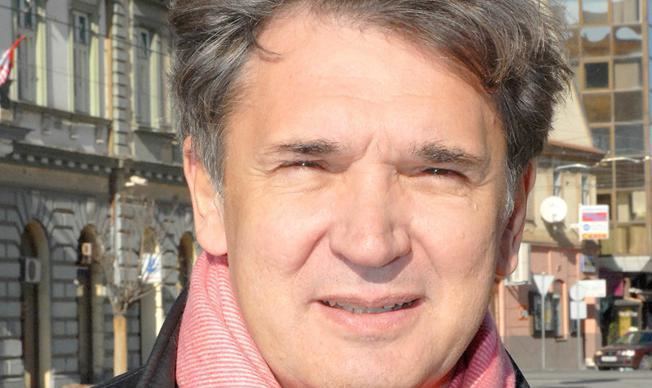
*Zlatko Kramarić is a Croatian publicist, author, and diplomat, currently serving as Ambassador to Albania. Formerly a university professor and politician, he is known for his work in literature, cultural studies, and regional history.
© 2025 Argumentum