



• SHQIPËRI
  • KOSOVË
  • MAQEDONIA E VERIUT
  • MALI I ZI
  • Revista në PDF
10 June, 2026
  • Home
  • OP/ED

    The visit that changed Albania’s strategic future

    Pierre Nora and the institution of memory we lack in Eastern Europe

    The Blueprint of a Diplomatic Debacle: Analyzing Germany’s Historic UNSC Loss

    Between Russia, Iran and Europe: Azerbaijan as a balancing power in the South Caucasus

    The Zero-Tariff Gate: Sovereignty as a Service in the Sino-African Corridor

    Albania vs. the Sea/ Marginal Notes on A. Leka’s Novel The Hidden Side of the Albanian Socialist Garden

    May 9 and the long shadow of a Letter: Is Europe still Schuman’s Project?

    The Arbnesh of Zadar: A living memory of Albanian identity on the Adriatic coast

    Science Diplomacy and Academic Freedom: A strategic nexus for contemporary diplomacy

  • Interview

    Exclusive Interview with Oleksandr Tyshchenko: A 40-Year Legacy of Chernobyl, Nuclear Risks, and Global Responsibility

    INTERVIEW: ZLATKO KRAMARIĆ – THOUGHTS ON THE OLD CONTINENT

    EXCLUSIVE / Ukrainian Ambassador to Albania, Volodymyr Shkurov: “Ukraine wants peace, but not at the expense of its freedom and independence”

    EXCLUSIVE| Ambassador Tayyar Kagan Atay: Türkiye and Albania, a Strategic Partnership Rooted in Shared Heritage and a Common Vision for the Future

    “Diplomacy, Not War”: Palestinian Ambassador to Albania Calls for Justice, Peace, and Global Action for Gaza

    Exclusive: “Even After Tito – Tito”/ Ambassador Zlatko Kramarić on Authoritarian Legacies and Democracy’s Future in the Balkans

    The Conclusion of the Diplomatic Mission / Ambassador Dancho Markovski: Strengthening Albania-North Macedonia Relations for a Shared European Future

    A Century of Diplomatic Relations Between Albania and Russia: Exclusive Interview with the Russian Ambassador to Albania, H.E. Alexey Zaytsev

    Exclusive/ The chairman of the Freedom Party, Ilir Meta: “The will of the citizens will triumph in Albania, as it did in North Macedonia”

  • Realpolitik

    IBAR? ”Sufficiently! Much ado about nothing! Shart contrasts in Beijing! Where is the exit?!

    Neither peace nor war! Peace with bombs?! IBAR in autumn?! Not another Hormuz in Taivan! 

    IBAR – a springing board or an obstacle? Can we catch the EU Negotiation train 2027? When the dress makes the news!  EU electoral April  ends in a draw 1:1!  

    The European Parliament building in Strasbourg, France with flags waving calmly celebrating peace of the Europe. July 12, 2020.

    EU 2027 or 2037! Even half membership failed! No exit strategy!     

    What next?

    “With diplomatic velvet“! Major question marks! In Washington yes, but  in the White House NO! A strange dinner in Brussels!

    From a great ‘apple of disaccord’ to a  point of  cooperation! A bad start! The strange absence in Davos!

    5 lessons from the American 3 January! Don’t count the chicken before they are hatched! Will NATO freeze in Greenland? Wrong diplomatic messages!

    German Chancellor Friedrich Merz, European Commission President Ursula von der Leyen, Ukraine's President Volodymyr Zelenskiy, U.S. Special Envoy Steve Witkoff and Jared Kushner, son-in-law of U.S. President Donald Trump line up for a family photo opportunity at the Chancellery in Berlin, Germany, December 15, 2025.    REUTERS/Lisi Niesner/Pool

    A Strategy that could change the world! Europe in Berlin! Why an historic compromise? Only charm diplomacy in Athens!

  • Current Events

    EU-Western Balkans Summit 2026: New Impetus for the Enlargement Debate?

    “The Flamingo Revolution”: Day 10 of Protests in Albania Draws International Attention

    Rama alleges ‘hybrid war’ behind protests against Kushner-linked coastal development

    BELGRADE, SERBIA - JUNE 18. 2020: Russian and Serbian flags on display during Russian Foreign Minister Sergei Lavrov's visit to the Liberators of Belgrade Memorial. Valery Sharifulin/TASS,Image: 533095429, License: Rights-managed, Restrictions: UWAGA! Zdjęcia zawierają oryginalny opis dostawcy (ITAR-TASS). Szczególnie w związku z agresją Rosji na Ukrainę mogą zawierać przekaz niezgodny z faktami. Zweryfikuj go przed publikacją, Model Release: no, Credit line: Valery Sharifulin / TASS / Forum

    Balkan Maskirovka: Why Moscow’s “Distancing” Is Only an Operation for the Survival of Vučić’s Regime

    Serbia – China 2026: Technological partnership, geopolitical positioning and a new phase of the Chinese presence in the Western Balkans

    The Digital Protectorate: How the EU AI Act Codified Silicon Valley’s Monopoly

    The 28th MFC Annual Conference in Durrës / Sulaj: Microfinance remains a key instrument for financial inclusion

    Serbia at the Crossroads of EU Integration and Geopolitical Balancing: IFIMES Analysis

    Tirana – €20 Million EU–Banking Agreement Boosts Albanian SMEs

  • Top News

    “The Flamingo Revolution”: Day 10 of Protests in Albania Draws International Attention

    Rama alleges ‘hybrid war’ behind protests against Kushner-linked coastal development

    No End in Sight: Trump, Netanyahu and the Expanding Middle East War

    Tirana – €20 Million EU–Banking Agreement Boosts Albanian SMEs

    “EU4Municipalities II” Project, a Strategic Investment for Strengthening Municipalities and Accelerating Albania’s Path towards the EU

    Albania, Italy deepen defence ties with naval shipbuilding deal

    U.S. Embassy: Iran-Linked Groups May Target Americans and Iranian Opposition in Albania

    The Council of Albanian Ambassadors disappointed with the voting of the draft law on the foreign service in the parliamentary committees.

    Prime Minister Edi Rama Addresses Israel’s Knesset in Historic Special Session

  • YOUR VOICE
  • Shqip
No Result
View All Result
Argumentum
  • Home
  • OP/ED

    The visit that changed Albania’s strategic future

    Pierre Nora and the institution of memory we lack in Eastern Europe

    The Blueprint of a Diplomatic Debacle: Analyzing Germany’s Historic UNSC Loss

    Between Russia, Iran and Europe: Azerbaijan as a balancing power in the South Caucasus

    The Zero-Tariff Gate: Sovereignty as a Service in the Sino-African Corridor

    Albania vs. the Sea/ Marginal Notes on A. Leka’s Novel The Hidden Side of the Albanian Socialist Garden

    May 9 and the long shadow of a Letter: Is Europe still Schuman’s Project?

    The Arbnesh of Zadar: A living memory of Albanian identity on the Adriatic coast

    Science Diplomacy and Academic Freedom: A strategic nexus for contemporary diplomacy

  • Interview

    Exclusive Interview with Oleksandr Tyshchenko: A 40-Year Legacy of Chernobyl, Nuclear Risks, and Global Responsibility

    INTERVIEW: ZLATKO KRAMARIĆ – THOUGHTS ON THE OLD CONTINENT

    EXCLUSIVE / Ukrainian Ambassador to Albania, Volodymyr Shkurov: “Ukraine wants peace, but not at the expense of its freedom and independence”

    EXCLUSIVE| Ambassador Tayyar Kagan Atay: Türkiye and Albania, a Strategic Partnership Rooted in Shared Heritage and a Common Vision for the Future

    “Diplomacy, Not War”: Palestinian Ambassador to Albania Calls for Justice, Peace, and Global Action for Gaza

    Exclusive: “Even After Tito – Tito”/ Ambassador Zlatko Kramarić on Authoritarian Legacies and Democracy’s Future in the Balkans

    The Conclusion of the Diplomatic Mission / Ambassador Dancho Markovski: Strengthening Albania-North Macedonia Relations for a Shared European Future

    A Century of Diplomatic Relations Between Albania and Russia: Exclusive Interview with the Russian Ambassador to Albania, H.E. Alexey Zaytsev

    Exclusive/ The chairman of the Freedom Party, Ilir Meta: “The will of the citizens will triumph in Albania, as it did in North Macedonia”

  • Realpolitik

    IBAR? ”Sufficiently! Much ado about nothing! Shart contrasts in Beijing! Where is the exit?!

    Neither peace nor war! Peace with bombs?! IBAR in autumn?! Not another Hormuz in Taivan! 

    IBAR – a springing board or an obstacle? Can we catch the EU Negotiation train 2027? When the dress makes the news!  EU electoral April  ends in a draw 1:1!  

    The European Parliament building in Strasbourg, France with flags waving calmly celebrating peace of the Europe. July 12, 2020.

    EU 2027 or 2037! Even half membership failed! No exit strategy!     

    What next?

    “With diplomatic velvet“! Major question marks! In Washington yes, but  in the White House NO! A strange dinner in Brussels!

    From a great ‘apple of disaccord’ to a  point of  cooperation! A bad start! The strange absence in Davos!

    5 lessons from the American 3 January! Don’t count the chicken before they are hatched! Will NATO freeze in Greenland? Wrong diplomatic messages!

    German Chancellor Friedrich Merz, European Commission President Ursula von der Leyen, Ukraine's President Volodymyr Zelenskiy, U.S. Special Envoy Steve Witkoff and Jared Kushner, son-in-law of U.S. President Donald Trump line up for a family photo opportunity at the Chancellery in Berlin, Germany, December 15, 2025.    REUTERS/Lisi Niesner/Pool

    A Strategy that could change the world! Europe in Berlin! Why an historic compromise? Only charm diplomacy in Athens!

  • Current Events

    EU-Western Balkans Summit 2026: New Impetus for the Enlargement Debate?

    “The Flamingo Revolution”: Day 10 of Protests in Albania Draws International Attention

    Rama alleges ‘hybrid war’ behind protests against Kushner-linked coastal development

    BELGRADE, SERBIA - JUNE 18. 2020: Russian and Serbian flags on display during Russian Foreign Minister Sergei Lavrov's visit to the Liberators of Belgrade Memorial. Valery Sharifulin/TASS,Image: 533095429, License: Rights-managed, Restrictions: UWAGA! Zdjęcia zawierają oryginalny opis dostawcy (ITAR-TASS). Szczególnie w związku z agresją Rosji na Ukrainę mogą zawierać przekaz niezgodny z faktami. Zweryfikuj go przed publikacją, Model Release: no, Credit line: Valery Sharifulin / TASS / Forum

    Balkan Maskirovka: Why Moscow’s “Distancing” Is Only an Operation for the Survival of Vučić’s Regime

    Serbia – China 2026: Technological partnership, geopolitical positioning and a new phase of the Chinese presence in the Western Balkans

    The Digital Protectorate: How the EU AI Act Codified Silicon Valley’s Monopoly

    The 28th MFC Annual Conference in Durrës / Sulaj: Microfinance remains a key instrument for financial inclusion

    Serbia at the Crossroads of EU Integration and Geopolitical Balancing: IFIMES Analysis

    Tirana – €20 Million EU–Banking Agreement Boosts Albanian SMEs

  • Top News

    “The Flamingo Revolution”: Day 10 of Protests in Albania Draws International Attention

    Rama alleges ‘hybrid war’ behind protests against Kushner-linked coastal development

    No End in Sight: Trump, Netanyahu and the Expanding Middle East War

    Tirana – €20 Million EU–Banking Agreement Boosts Albanian SMEs

    “EU4Municipalities II” Project, a Strategic Investment for Strengthening Municipalities and Accelerating Albania’s Path towards the EU

    Albania, Italy deepen defence ties with naval shipbuilding deal

    U.S. Embassy: Iran-Linked Groups May Target Americans and Iranian Opposition in Albania

    The Council of Albanian Ambassadors disappointed with the voting of the draft law on the foreign service in the parliamentary committees.

    Prime Minister Edi Rama Addresses Israel’s Knesset in Historic Special Session

  • YOUR VOICE
  • Shqip
No Result
View All Result
Argumentum
No Result
View All Result
Home Balkan Overview

EU-Western Balkans Summit 2026: New Impetus for the Enlargement Debate?

10 June, 2026
in Balkan Overview, Current Events, ENGLISH
A A
Share on FacebookShare on Twitter

By Marina Vulović , Odeta Barbullushi -*

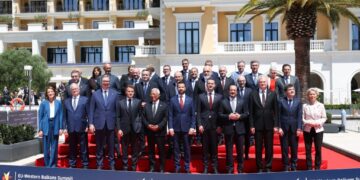
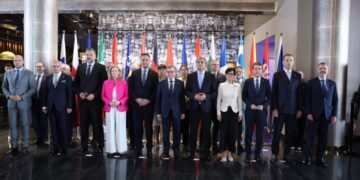
A new proposal on enlargement was tabled by the French President Emmanuel Macron and the German Chancellor Friedrich Merz at the EU-Western Balkans Summit in Tivat, Montenegro, on June 5, 2026. Its timing could not be more strategic: just a fortnight ago, a letter by German Chancellor Merz, focusing primarily on Ukraine, proposed granting the country the status of an associate member in numerous EU institutions, such as the Council and the Parliament, as well as extending to Ukraine the security guarantees of Article 42 (7) of the Treaty of the EU.

The Tivat proposal aims to address two questions: first, what to offer to the Western Balkans when they are ready for accession, but are blocked by EU member states; and second, in the best-case scenario, when Montenegro and Albania cross the finish line and join the EU, what could be offered to the rest of the region and Moldova.

Though highly political, and what looks like a product of compromise between Germany and France, the proposal also satisfies the Commission’s legitimate demands that a ‘thin’ or ‘purely economic’ integration would require that the candidate countries comply with the entirety of the requirements of the EU acquis and stick to the strict conditions tied to the Fundamentals Cluster.

The proposal follows a long line of previous proposals coming from EU member states as well as from candidates themselves aiming at simplifying and accelerating the process of EU accession amidst geopolitical uncertainties. Gradual integration – an idea originating from think-tanks – was incorporated into Council Conclusions in 2023 and was translated into the Growth Plan for the Western Balkans the same year. However, those decisions were accompanied by the commitment to internal reforms that would simplify the EU’s voting procedures in a number of areas, including enlargement policy. Such a reform never quite materialised at the political level. In the absence of internal reforms, the Merz-Macron non-paper proposes a reform of the enlargement process itself.

Continuity of the Growth Plan – with a Twist

A first reading of the new Merz-Macron non-paper on gradual integration suggests a significant new push to bring the Western Balkans and Moldova closer to the EU before full membership. Yet a closer look reveals that many of its most prominent proposals are not new at all. They repackage, or further specify, measures already foreseen under the EU’s Growth Plan.

These include deeper participation in EU programmes and policies such as Creative Europe, Digital Europe, Erasmus+, Horizon Europe, SEPA, and the “Roam Like at Home” initiative. They also include further integration into the Transport Community, the EU energy market, the Emissions Trading System, green lanes, the Digital Single Market, and EU policies on critical raw materials. Likewise, measures aimed at facilitating trade – such as Authorised Economic Operator (AEO) status, more wide-ranging sanitary and phytosanitary (SPS) agreements, Agreements on Conformity Assessment and Acceptance of Industrial Products (ACAAs) and the reduction of non-tariff barriers between the EU and Western Balkan countries and Moldova – are already part of the Growth Plan agenda.

The non-paper does contain some additions. First, it proposes concrete modalities for participation in meetings with EU institutions as an observer. For the European Commission and European Parliament, participation would be linked to the submission of a membership application, thereby also including potential candidates like Kosovo. For the European Council and the Council of the EU, however, participation would be subject to stricter conditions. For example, attendance at meetings of the Foreign Affairs Council would require the provisional closure of Chapter 31 on the Common Foreign and Security Policy (CFSP) – a threshold that currently no candidate country has reached, even though some fully align with the CFSP.

Whether these new meeting formats would generate substantial added value remains an open question. Candidate countries already have numerous opportunities to engage with EU institutions through EU-Western Balkans summits, Growth Plan Summits, Stabilisation and Association Agreement meetings, intergovernmental conferences, and other established channels. The non-paper therefore raises a legitimate question: does multiplying meeting formats necessarily translate into faster integration or political socialisation with the EU?

Second, the non-paper proposes strengthening security and defence cooperation. Yet many relevant instruments are already in place for many of these countries. Security and Defence Partnerships (SDPs) have already been concluded with Albania, North Macedonia and Moldova. These partnerships cover cooperation with PESCO, cybersecurity, and other security-related areas. Almost all countries have status agreements with Frontex (except Kosovo), while cybersecurity cooperation is also addressed in both the Security and Defence Partnerships and the Growth Plan. Some proposals, such as membership in the EU Agency for Cybersecurity (ENISA), would create added value, despite requiring adjustments to existing membership procedures and legal criteria beforehand.

Third, the non-paper proposes a number of measures beyond the Growth Plan, including participation in PESCO projects, the proposed Youth Experience Scheme, EU pooling mechanisms for joint procurement, full access to the Technical Support Instrument, and stronger use of Twinning and TAIEX instruments in specific policy areas.

Taken together, however, the non-paper offers relatively little that goes substantially and technically beyond the Growth Plan – except the proposed European Economic Area+.

The European Economic Area+ as Incentive and Risk

The main takeaway from the non-paper is its final proposition of full participation in the Single Market based on a European Economic Area+ model. The requirements for access are the adoption and implementation of the acquis regarding Clusters 1 to 5 (i.e., the entire acquis) and provisional closure of the relevant negotiating chapters, without prejudice to transitional periods and safeguards.

The implications of this could be significant. In practice, the proposal would create a new stage between the completion of accession negotiations and full EU membership. For countries that are advanced in the accession process, this could provide tangible benefits at a crucial moment. Once negotiations are concluded with the European Commission and all relevant chapters provisionally closed, a candidate country could obtain access to the Single Market even before becoming a formal member of the EU.

This matters because the period between the end of negotiations and actual accession can be lengthy, as the cases of Bulgaria and Romania illustrate. The ratification of membership treaties in all EU member states can take several years and with the changing political climate in many EU countries might become increasingly difficult over time. Under the rationale of the non-paper, a country could participate in the Single Market while the accession treaty makes its way through 27 national ratification processes and enjoy the “four freedoms” before accession – a tangible benefit for the country’s citizens and businesses.

The proposal does not as such provide a discounted version of accession negotiations, nor an accelerated alternative to the ‘business as usual’. What it offers is a number of rewards and incentives once the technical conditions for the closing of negotiation clusters are fulfilled and before the accession treaty is approved. From the perspective of candidate countries, this new process would offer concrete rewards for reform efforts and reduce the uncertainty associated with lengthy ratification procedures over which they have little control. For the EU, it would provide a mechanism to anchor successful reformers more firmly within the European economic space even before formal accession takes place.

What the proposal does not offer, however, is access to funds beyond the Growth Plan to achieve this economic convergence, namely the EU’s Cohesion and Structural Policy – something that the Western Balkan governments have been requesting for several years. Navigating the competitive pressures of the Single Market without a significant influx of funds to mitigate structural disadvantages could prove difficult, especially for smaller economies. If the EEA model is to be followed, then the Western Balkans and Moldova would also be left out of the Customs Union (though the Growth Plan foresees closer customs cooperation), the Monetary Union, and the Agriculture and Fisheries policy. It remains to be seen whether Single Market accession would also entail the implementation of full rights of labour mobility.

Finally, the proposal raises a potentially problematic point: that, with full agreement among member states, the opening of all relevant negotiation clusters should proceed wherever the Commission recommends it. This may have implications for Serbia and opening its stalled Cluster 3, which the Commission has recommended but some member states have blocked due to concerns regarding serious democratic backsliding. This should be a warning sign. If the EU rewards superficial reforms (again) with advancements in the EU accession process, regardless of actual progress, it would yet again undermine its credibility and feed further distrust in the EU’s claim that accession is a merit-based process. Ultimately, even the strongest element of the new proposal, the European Economic Area+, could thus be interpreted as a substitute or an eternal waiting room for EU membership.

What the EU needs to do now is follow through with action and clarity and deliver predictable and plausible decisions – while maintaining the prospect of full EU membership for the region. This is impossible without internal reforms. In the end, EU enlargement has always been about reform and institutional transformation, of both the candidate countries and of the Union itself. Uncoupling transformation from economic incentives and security guarantees risks leaving EU enlargement what it currently is: unfinished business.
*BiEPAG

Related Posts

ENGLISH

The visit that changed Albania’s strategic future

10 June, 2026
Balkan Overview

Serbia’s Lost Legal Battle and the Exploitation of Resolution 1244 for Lawfare and Terrorism

10 June, 2026
Current Events

“The Flamingo Revolution”: Day 10 of Protests in Albania Draws International Attention

9 June, 2026

Follow US

Subscribe

Receive Argumentum Magazine by Email

Last Posts

EU-Western Balkans Summit 2026: New Impetus for the Enlargement Debate?

10 June, 2026

The visit that changed Albania’s strategic future

10 June, 2026

Serbia’s Lost Legal Battle and the Exploitation of Resolution 1244 for Lawfare and Terrorism

10 June, 2026

“The Flamingo Revolution”: Day 10 of Protests in Albania Draws International Attention

9 June, 2026

The View from Tirana: Navigating the Intra-European Split for Digital Sovereignty

8 June, 2026
Argumentum

“Argumentum”, një proces intelektual …

Contact Us

[email protected]
[email protected]
[email protected]

Follow Us

Media Partner

Register

Receive Argumentum Magazine by Email
  • Home
  • Privacy Policy
  • About Us
  • Contact

© 2022 Argumentum. All Rights Reserved. | NUIS: L91415033Q

Welcome Back!

Login to your account below

Forgotten Password? Sign Up

Create New Account!

Fill the forms bellow to register

*By registering into our website, you agree to the Terms & Conditions and Privacy Policy.
All fields are required. Log In

Retrieve your password

Please enter your username or email address to reset your password.

Log In

Add New Playlist

No Result
View All Result
  • Home
  • OP/ED
  • Interview
  • Realpolitik
  • Current Events
  • Top News
  • YOUR VOICE
  • Shqip

© 2022 Argumentum. All Rights Reserved. | NUIS: L91415033Q

This website uses cookies. By continuing to use this website you are giving consent to cookies being used. Visit our Privacy and Cookie Policy.