


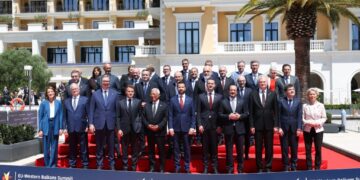
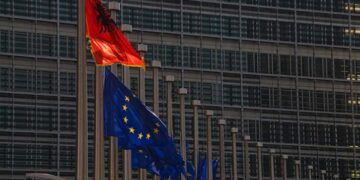




Current challenges remind us that our Europe is not a finished project, but a process. THE EUROPEAN SPIRIT IS PRIMARILY A CULTURAL PHENOMENON, WHICH ONLY LATER GOT A POLITICAL EXPRESSION…
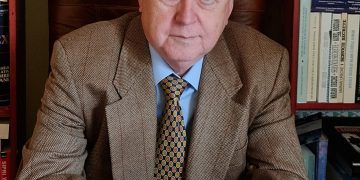
A special edition of the Albanian magazine Argumentum (a politically independent magazine published in both English and Albanian) brings a selection of fifteen essays by Prof. Dr. Sc. Zlatko Kramarić, a Croatian in the Republic of Albania, dedicated to the “European spirit” in the new, changed geopolitical relations in the world. These are texts in which the author attempts to connect the political project of European integration with its deeper, cultural, philosophical and historical assumptions. The magazine has established itself in the Albanian public space as a platform for dialogue between politics, the academic community and the wider cultural scene, so the publication of these texts should be seen as a contribution to the debate that is particularly relevant in Albania today: what does it actually mean to belong to Europe?!
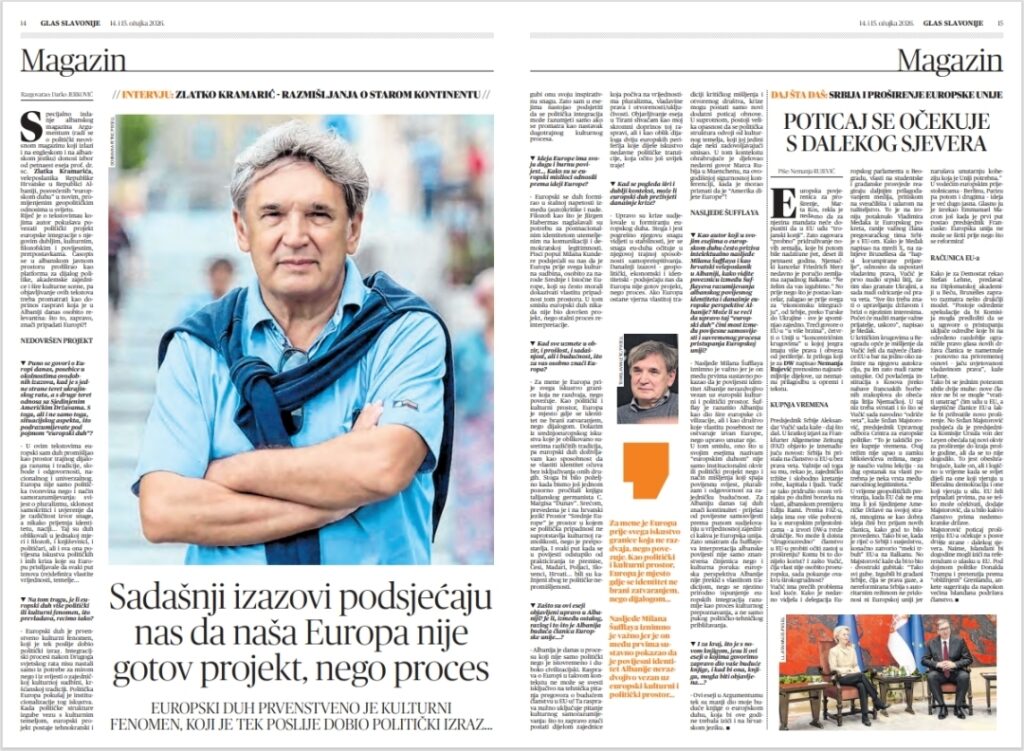
UNFINISHED PROJECT
–There is a lot of talk about Europe today, especially in the context of current challenges, when on the one hand there is the burden of the Ukrainian war, and on the other hand the burden of relations with the United States. From this, but not only this, situational aspect, what do you understand by the term “European spirit”?
Prof. Dr. Sc. Zlatko Kramarić: In these texts, I have considered the European spirit as a space for a permanent dialogue of reason and tradition, freedom and responsibility, national and universal. Europe is not only a political creation but also a way of self-understanding: it is all about pluralism, a tendency to self-criticism and the belief that diversity is a source of strength, and in no way a threat to identity, nation… This spirit was shaped in equal measure by philosophers, writers, politicians, but also by all those historical experiences of political and other crises that forced Europe to (re)define its own values, foundations every time…
–In this vein, is the European spirit more a political or a cultural phenomenon, which prevails, so to speak?
– The European spirit is primarily a cultural phenomenon, which only later gained political expression. The integration processes after the Second World War did not arise only from the need for peace, but also from the awareness of a common cultural destiny, a Christian tradition. Political Europe is an attempt to institutionalize this experience. When political structures lose their connection with the cultural foundation, the European project becomes technocratic and loses its inspiring power. That is why I have tried to remind you in my essays that political integration can only be understood if it is viewed as a continuation of a long-term cultural process.
-The idea of Europe has its own long and turbulent history… How did European thinkers relate to the idea of Europe?
– The European spirit was formed in a constant tension between (self)criticism and hope. Philosophers such as Jürgen Habermas emphasized the need for a post-national identity based on communication and democratic legitimacy. Writers like Milan Kundera reminded us that Europe is above all a cultural destiny, especially for the peoples of Central and Eastern Europe, who often had to prove their belonging to that space. In this sense, the European spirit was not a completed project, but a constant process of reinterpretation.
–When you take everything into account, both the past and the present, but also the future, what does Europe mean to you personally?
– For me, Europe is, above all, the experience of a border that does not separate, but connects. As a political and cultural space, Europe is a place where identity is not defended by closure, but by dialogue. I come from a Central European experience that was shaped by the encounters of different traditions, so the European spirit is experienced as the ability to preserve one’s own identity without excluding others. Therefore, it would be desirable if we read the book “Danube” by the Italian Germanist C. Margis once again carefully. Fortunately, it has also been translated into Croatian! The area of “Central Europe” is an area in which political affiliation does not oppose cultural diversity, but presupposes it. And every time in history, when this premise was deviated from, Czechs, Hungarians, Poles, Slovenians, Croats… were punished for this political thoughtlessness.
–Why were these essays published in Albania? Is the reason, among other things, that Albania is a future member of the European Union…?
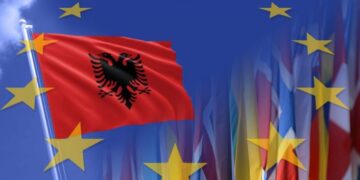
– Today, Albania is in a process that is not only political, but at the same time deeply civilizational. The discussion about Europe in such a context cannot be reduced exclusively to technical issues of negotiations on future membership in the EU! This discussion necessarily involves the question of cultural self-understanding: what it actually means to become part of a community of pluralism, rule of law and openness/inclusion. I see the publication of the essay in Tirana as my modest contribution to that discussion, but also as a form of dialogue between two European peripheries that share the experience of the recent political transition, which is clearly still ongoing!
–When we look at the broader and deeper context, can the European spirit survive today’s crises?
– Crises have been involved in the formation of the European spirit. Therefore, it is wrong to see its strength in stability, because the strength of the EU spirit is manifested in its permanent capacity for self-examination. Today’s challenges – geopolitical, economic and identity – remind us that Europe is not a finished project, but a process. If Europe remains faithful to its own tradition of critical thinking and an open society, crises can only become a new additional impetus for renewal. Otherwise, there is a great danger that the political structure will separate from the cultural foundation that alone gives it some satisfactory meaning. In this context, Marco Rubio’s recent speech in Munich, at this year’s security conference, was encouraging, when he had to admit that “America is the child of Europe”.
For me, Europe is above all the experience of a border that does not divide, but connects. As a political and cultural space, Europe is a place where identity is not defended through closure, but through dialogue… Milan Šufflay’s legacy is extremely important because he was among the first to systematically demonstrate that the historical identity of Albania is inextricably linked to the European cultural and political space…
THE LEGACY OF SHUFFLAY
–As an author who often invokes the intellectual legacy of Milan Šufflay in his essays on the European spirit, and as the Croatian ambassador to Albania, how do you see the connection between Šufflay’s understanding of Albanian historical identity and Albania’s current European perspective? Can it be said that this “European spirit” forms the bridge between historical self-awareness and the contemporary process of accession to the European Union?
– Milan Šufflay’s legacy is extremely important because he was among the first to systematically show that Albania’s historical identity is inextricably linked to the European cultural and political space. Šufflay understood Albania as part of a wider European civilization, but also as a society that does not realize its own uniqueness outside of Europe, but precisely within it. In this sense, what I call the “European spirit” in my essays is not only an institutional framework or a political project, but also a way of thinking that combines historical awareness, pluralism, and responsibility for a common future. For Albania today, this spirit means continuity – a transition from historical self-awareness to full participation in a community of values such as the European Union. That is why I believe that Šufflay’s interpretation of Albanian history is not only a scientific fact but also a cultural message: Albania’s European perspective is not a break with its own tradition, but its natural fulfillment of European integration is understood as a process of cultural recognition, and not just a mere political-technical rapprochement.
–And finally, what about the new book, are these essays we are talking about actually part of your future book, and when could it, the book, be published…?
– These essays in Argumentum are just a small part of my future book on the European spirit, which should also be published in Croatian this year.
© 2026 Argumentum