







































The policy of balance (neutrality) and the concept of a geopolitical knot are two models, where the former functioned for several years after the Cold War, but not for more than two decades, while the latter belongs more to the reality of the first two decades of the 21st century. New realities require caution regarding the pressure that balancing can generate, whereas the geopolitical knot demands caution due to the risk of suffocation. How this dynamic is unfolding in “shatterbelt” states, and particularly in the case of Azerbaijan, requires an assessment of facts beyond formal declarations, in order to understand the real limits of balancing within an increasingly escalatory environment.
By: Dr. Gurakuç Kuçi ||ARGUMENTUM
Professor at Universum College and external associate at ISLH “OCTOPUS”

Azerbaijan as a Geopolitical Knot in a “Shatterbelt” Region
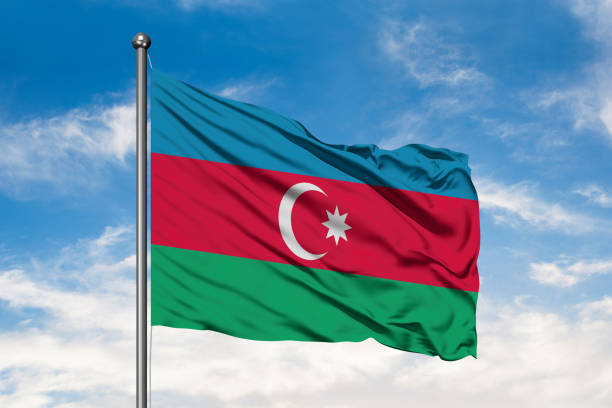
States where rivalries among great powers intersect and often either produce a matrix of cooperation or confrontation are, from a geopolitical perspective, referred to as “shatterbelts”. The South Caucasus has, in recent decades, experienced an interplay of confrontation and convergence among major actors in this area. Azerbaijan has become a direct point of intersection for these powers. This country, like the entire South Caucasus, constitutes a sphere of influence for Russia, Iran, Turkey, and Western actors, including Israel. This condition, which in principle appears as a nodal point that gives the region particular importance, simultaneously renders its security fragile and its balances uncertain. Azerbaijan, within this “shatterbelt” framework, due to its geographical position between Iran and Russia, as well as through its deepened political, economic, and security relations with the West, Israel, and Turkey, appears to have effectively leveraged its strategic position, positioning itself as an intermediary actor and at the same time as a functional node of competing interests.
Strategic Balancing and Geopolitical Pressure
From a classical geopolitical perspective, this places Azerbaijan in what Nicholas Spykman defined as the “Rimland,” the zone where continental and maritime powers collide. As such, this state does not serve merely as an energy corridor toward Europe and Israel, but also as a geopolitical node, making its strategic importance greater than its territorial or demographic size would suggest. In this sense, its function is not only transitory but also structuring, shaping the connections between different geopolitical spaces. Even Azerbaijan’s airspace may gain strategic weight if international flights begin to avoid the increasingly risky airspaces of the Middle East.
From the perspective of structural realism, such states function as key actors on the strategic peripheries of great powers, where alliances, energy corridors, and security cooperation become instruments for balancing power in the region. In this context, Azerbaijan employs corridor pragmatism as a mechanism to manage regional tensions and preserve strategic flexibility vis-à-vis competing actors. The flexibility to secure connectivity with Nakhchivan through Iran, during periods of heightened tensions with Armenia, demonstrates a form of pragmatic infrastructural diplomacy. At the same time, however, Baku also supports Western-backed initiatives for new regional corridors, which Tehran perceives as a strategic threat, placing Azerbaijan in a sensitive position between the competing logics of major powers.
In practice, this position does not remain merely theoretical. Recent developments in the region indicate that Azerbaijan is facing a form of strategic coercion, where the objective is not necessarily territorial conquest, but rather the limitation of its role as a transit node and as a security partner for Western actors and Israel. Drone attacks in Nakhchivan, attempts to sabotage the Baku–Tbilisi–Ceyhan pipeline, and pressure in the cyber domain demonstrate that its energy infrastructure and corridors have become direct targets of regional rivalry. In this sense, Azerbaijan is no longer confronting only abstract geopolitical competition, but a concrete effort to constrain its operational space.
The architecture of alliances further complicates this position. Turkey remains the closest political supporter and an immediate deterrence factor, while Israel contributes to military capabilities through technological cooperation and arms transfers. At the same time, the United States and the European Union connect Azerbaijan to energy, technological, and infrastructural projects, integrating it into broader geoeconomic and geostrategic networks. Energy diplomacy, particularly through the role of the state company SOCAR and gas supplies to Europe, increases the country’s geopolitical weight, making it an important actor in European energy security.
Meanwhile, external powers deepen this complexity. Iran views Azerbaijan through the prism of the Iran–Israel rivalry, Russia seeks to preserve its influence following the withdrawal of peacekeepers from Karabakh, while Western actors consider Azerbaijan a key energy node and strategic corridor. As a result, Azerbaijan must continuously balance deterrence, economic ties, and alliance management, while simultaneously striving not to become a direct frontline of major geopolitical rivalries, but to maintain its role as an actor that manages and channels these interactions.
The Limits of Multivectorism: From Balancing to Geopolitical Suffocation
States that pursue multivector “shatterbelt”-type policies appear to have found a clever way to navigate the geopolitical game. This strategy allows them to engage major powers while maintaining a degree of autonomy. We observed this model in Tito’s Yugoslavia during the Cold War—a broad network of political, economic, and security relations that, in periods of relative stability, provided the state with flexibility and international weight.
However, there is another side to the coin. When tensions rise and the international system becomes polarized, these multiple linkages can turn into a trap. In international relations scholarship, this is referred to as “strategic overstretch,” when a state accumulates so many alignments that it begins to lose control. Each great power seeks to expand its influence and constrain that state’s decision-making autonomy. Simply put, the more connected you are, the more exposed you become to competing pressures.
Thus, the very strategic “nodes” built to expand options can, in times of crisis, become constraints. This is what we define as “geopolitical suffocation.” For Azerbaijan, this is no longer merely a theoretical scenario. In an environment where pressure emanates from all directions—security, energy, corridors, and great-power rivalry—the risk is tangible. The core dilemma is how far a state can push multivectorism without sliding into a form of ambiguous and risky neutrality.
If Azerbaijan adopts a model in which neutrality is articulated as balancing but in practice operates as indirect alignment, then balancing is lost from the outset. The reason is straightforward: loss of credibility. A policy that declares one thing on paper but behaves differently in practice creates the perception of false neutrality. Under such conditions, all sides grow suspicious, the space for maneuver narrows, and the state becomes vulnerable to pressure from every direction.
Moreover, Cold War–style neutrality is no longer viable in today’s reality. It functioned in a period when great powers had just emerged from a major conflict and had limited appetite for renewed confrontation, tolerating “in-between” states as buffer zones for stability. Today, the situation is fundamentally different. Great powers are more willing to escalate, and intermediary states are no longer viewed as buffers, but as arenas for influence projection. In this context, neutrality does not provide protection; it potentially increases vulnerability.
For Azerbaijan, this issue becomes even more delicate due to the structure of its alliances. Unlike models operating in more permissive geopolitical environments, Azerbaijan relies on a clear security axis with Turkey and maintains deep cooperation with Israel in defense and technology. Under these conditions, any attempt to pursue an ambiguous “neutrality” would risk not only its credibility but also its relationships with key partners, transforming balancing from a security instrument into a source of risk.
Therefore, the issue is not simply one of balancing between Israel and Iran. It is about maintaining a clear strategic line without falling into a trap that initially appears as flexibility, but ultimately results in dependency, ambiguity, and geopolitical suffocation.
The Limits of Balancing in an Escalatory Order
Accordingly, the current escalation between the United States and Israel against Iran shifts Azerbaijan from a balancing actor into the space of a “silent front,” where rivalry materializes through sustained strategic pressure rather than necessarily through direct confrontation. Its position as an energy corridor, as a security partner of Israel, and as a neighbor of Iran renders the Azerbaijani node critical within this dynamic, where every escalation is reflected in various forms of strategic coercion.
In this environment, strategic consistency becomes as important as material capabilities. A policy that builds alliances in one direction while simultaneously maintaining close relations with actors that operate as extensions of opposing interests creates a contradiction that undermines credibility and increases exposure to pressure. Under conditions of escalation, such contradictions do not remain manageable; they turn into vulnerabilities that other actors exploit. For this reason, the challenge for Azerbaijan is not only to balance among great powers, but also to avoid constructing a foreign policy that itself generates internal strategic tensions.
In an order where geopolitical escalation is reinstating the logic of clear strategic lines, states that attempt to operate simultaneously in opposing directions do not achieve balance; rather, they risk becoming weak points within their own security architecture.
© 2026 Argumentum