








By Dejan Çullafiq,
Professor at Luigj Gurakuqi University, Shkodër.
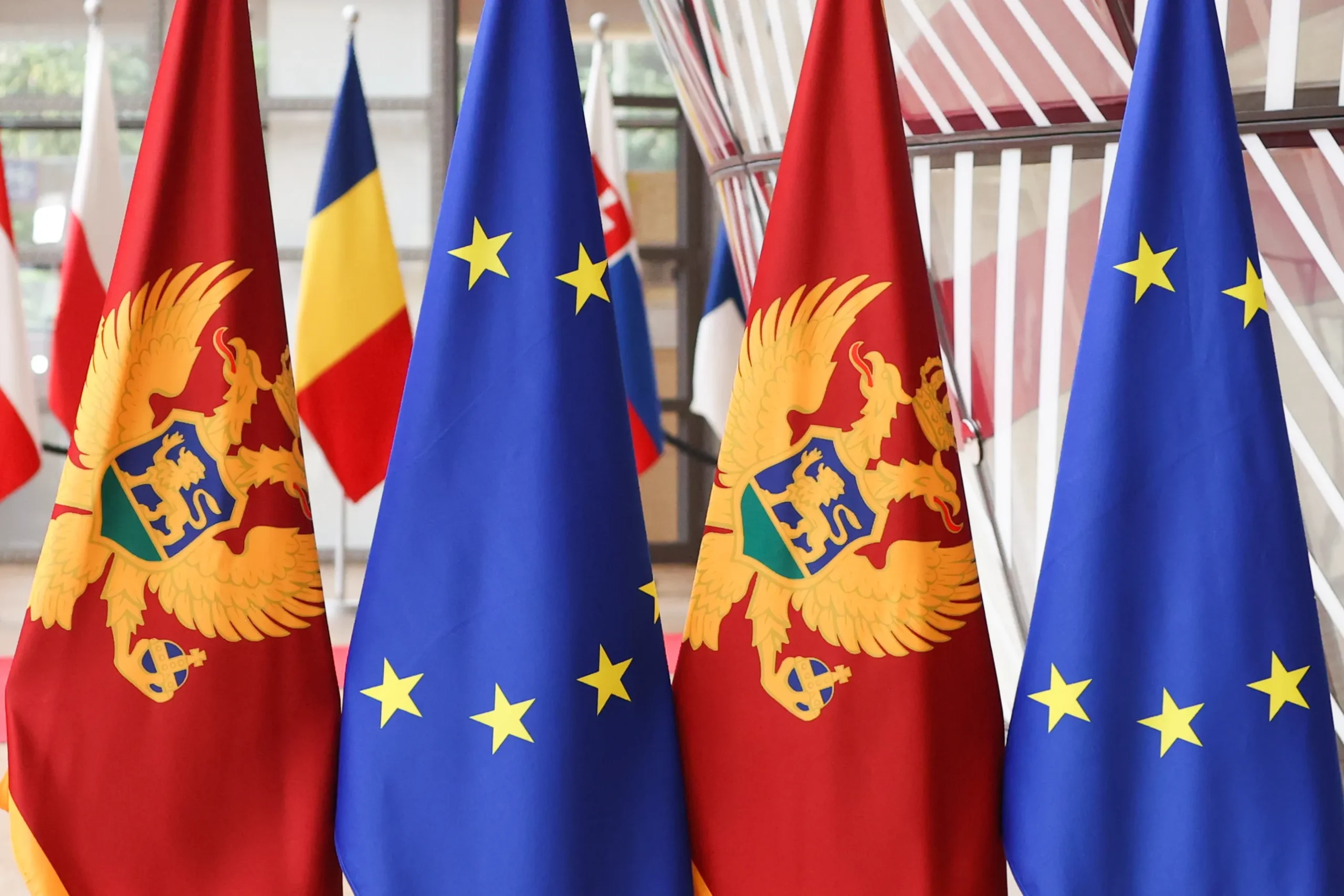
The small Balkan country, which during the period 2017–2023 faced numerous political challenges due to pronounced polarization on ethnic grounds, seemed to have lost its path towards the final objective, European Integration. After the change of three governments, two of which fell after a vote of no confidence, it seemed as if everything was lost.
However, a new political movement called “Europe Now”, which had its origins in the successful reform of the same name that brought an increase in the minimum wage from 220 euros to 450 euros, revived Montenegro’s European dream. By fulfilling strong promises during the electoral campaign and creating strong coalitions, citizens gave the keys to power to this party. Milojko Spajić was appointed Prime Minister, while the party’s co-founder, Jakov Milatović, who, with the support of all opposition parties, defeated former President Milo Đukanović in a direct contest, was appointed President of Montenegro.
After his appointment, the new leadership immediately began work to return the country’s focus to European Integration. At the 16th EU accession conference of Montenegro, held on 26 June 2024, the European Union adopted common positions on Chapters 23 and 24, confirming that Montenegro had fulfilled the interim benchmarks in the area of the rule of law, which paved the way for the closure of the remaining negotiation chapters. Many considered this decision to be a political one, citing numerous shortcomings in the formulation of the adopted laws, as well as the lack of transparency and inclusiveness in the process of drafting these laws.
The approval granted allowed Montenegro to continue with the closure of the remaining chapters. The progress has been so rapid that, at the end of 2025, Prime Minister Spajić declared that Montenegro could complete the closure of all negotiation chapters by 2026, creating the illusion that the small Balkan country was more united than ever. From 26 June 2024 to March 2026, Montenegro managed to close 11 more chapters, becoming the absolute leader in the integration race among candidate countries.
But the illusion created was shattered at the beginning of March this year.
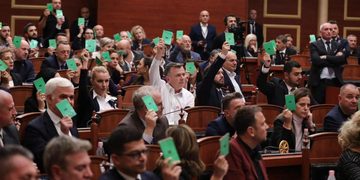
The majority coalition adopted amendments to the Law on Internal Affairs, the Law on Civil Servants and State Employees, and the Law on the Police of Montenegro. These amendments were considered by the opposition and NGOs to be unconstitutional and highly controversial, arguing that police officers could be dismissed from their posts on the basis of “security obstacles” without undergoing a disciplinary process and without the right to defense against charges, and that individuals could be employed in the police without a competition, which poses a great risk of politicizing the state police and turning Montenegro into a police state. The majority adopted these amendments, arguing that they were in line with European directives, but the European Commission, in its statements, noted that these amendments needed further elaboration before adoption, as they were not yet fully in line with the directives issued by it.
Due to the adoption of these amendments, the opposition Democratic Party of Socialists, led by Danijel Živković, decided to take extreme measures, such as removing its members from the positions of chairmen of the parliamentary committees for European Integration and for Comprehensive Reform.
On 9 March, President Milatović intervened by returning the approved amendments to the law to Parliament, but the result remained the same after a re-vote on 19 March. In an attempt to resolve the situation, Prime Minister Spajić called on the opposition to sit at the negotiating table, but the opposition parties refused, considering this call a fiasco organized by the government to create a sense of stability before the arrival of the European Commissioner for Enlargement, Ms. Marta Kos, for a visit to Montenegro.
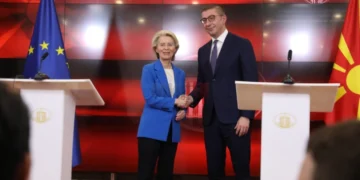
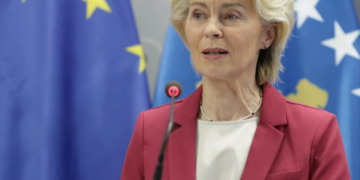
During her visit to Montenegro on 26 March, Ms. Marta Kos congratulated Montenegro on the progress made so far in the integration process. She also stressed that achieving the ultimate goal of European integration requires the involvement of all political parties, civil society, and Montenegrin citizens. In response to a question about the amendments to the Law on Internal Affairs, she reaffirmed the EU’s previous position.
The situation has completely shattered the illusion, once again highlighting the extreme political polarization that Montenegro currently faces, as well as the risk of abuse by the government through dangerous undemocratic steps disguised in the name of European Integration.
Given the tense situation in the country, it is difficult to predict how Montenegro’s progress towards the European dream will continue. However, the Slovenian and Croatian experiences on this journey clearly confirm that European Integration can only be achieved when there is a broad political consensus to take this process to the end.
© 2026 Argumentum