












































By Dorian Koçi,
Diplomat and former Director of the National Historical Museum of Albania.
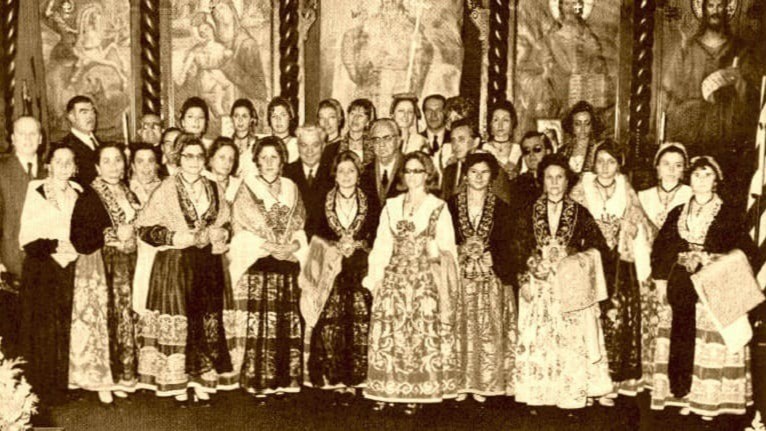
The history of Albanians is not confined solely to the political borders of Albania. It is also the history of the survival of Arbërore identity beyond those borders. One of the most remarkable testimonies of this historical continuity is the Arbnesh community of Zadar in Croatia, a population that for more than three centuries has preserved its language, traditions, and awareness of Albanian origin on the eastern shores of the Adriatic.
Arbanasi of Croatia, known locally as Arbnesh, is a settlement in the southeastern part of the Zadar peninsula, today integrated into the city of Zadar itself. The settlement was established during the eighteenth century by Albanian families who migrated from the regions surrounding Lake Shkodra, particularly from Shestan and Ljarja. The migration waves of 1721, 1726–1727, and 1733 were not ordinary demographic movements, but the consequence of a turbulent historical era marked by wars, poverty, Ottoman military conscription, religious pressures, and political bargains that often left Albanian communities vulnerable to foreign interests.
What makes the history of the Arbnesh extraordinary, however, is not merely their migration, but their remarkable ability to survive as a cultural community. Living in a predominantly Slavic environment and under multiple political and cultural influences, they succeeded in preserving the Albanian language, family traditions, names, surnames, and the collective memory of their origins. Even today in Zadar one encounters surnames such as Kamsi, Gjergji, Deshpali, Petani, Çoba, Luka, Gjini, and Nika, while local toponyms such as “Fusha e Arbneshit,” “Kisha,” “Kullat,” and “Fusha e Varreve” remain linguistic traces of a preserved Albanian heritage outside the ethnic Albanian territories.
The Albanian colonies of Dalmatia represent a unique phenomenon within the wider Albanian diaspora. Unlike many migrant communities that gradually assimilated over time, the Arbnesh maintained a dual identity: loyal citizens of the land in which they lived, while simultaneously remaining proud bearers of their Arbërore heritage. This consciousness endured even through the most difficult historical periods.
Education and the Albanian Catholic clergy played an essential role in preserving this identity. The Albanian school opened in Arbnesh in 1901 became an important center of national culture, where respected figures such as Father Shtjefën Gjeçovi, Father Pashk Bardhi, Anton Paluca, and Pal Gjergji taught. Likewise, the newspaper “Zani i Shqyptarit” published in Zadar reflected the intellectual and patriotic connections of the Arbnesh community with the Albanian National Awakening movement during the late nineteenth and early twentieth centuries.
This community also produced important personalities in culture and Balkan studies, including Aleksandër Stipčević, Josip Rela, and Shime Deshpali, individuals who contributed significantly to preserving and promoting Arbnesh heritage. Unfortunately, many of these figures remain insufficiently known in Albania itself, revealing that the history of the Albanian diaspora is still waiting to be fully explored and appreciated.
The Arbnesh of Zadar are proof that identity does not survive solely through state institutions, but through family, language, memory, and culture. They represent a living fragment of Albanian history on the Adriatic coast, a bridge between the Arbërore world and Dalmatian civilization. Nations are not preserved only through borders, but through historical memory and cultural consciousness.
© 2026 Argumentum