











• SHQIPËRI
  • KOSOVË
  • MAQEDONIA E VERIUT
  • MALI I ZI
  • Revista në PDF
19 August, 2026
  • Home
  • OP/ED

    Between Political Calculation and Retreat: Croatian Communists at the End of an Era

    The West is buying time, but to whom is it giving it?

    27 July 1941 – A Site of Memory Between War, Revolution and Europe

    The cult of Saint Veneranda / Saint Pren(d)a / Saint Premte / Saint Paraskeva among Albanians

    The Self-Inflicted Decoupling: How U.S. Immigration Policy Is Ceding the Tech Edge to China

    The Blueprint Does Not Stop at the Drina

    The Underlying Logic behind China’s Economic Success

    Do Not Misuse the U.S. Declaration of Independence to Justify the Narrative of Insurrection in Albania

    The visit that changed Albania’s strategic future

  • Interview

    Exclusive Interview with Oleksandr Tyshchenko: A 40-Year Legacy of Chernobyl, Nuclear Risks, and Global Responsibility

    INTERVIEW: ZLATKO KRAMARIĆ – THOUGHTS ON THE OLD CONTINENT

    EXCLUSIVE / Ukrainian Ambassador to Albania, Volodymyr Shkurov: “Ukraine wants peace, but not at the expense of its freedom and independence”

    EXCLUSIVE| Ambassador Tayyar Kagan Atay: Türkiye and Albania, a Strategic Partnership Rooted in Shared Heritage and a Common Vision for the Future

    “Diplomacy, Not War”: Palestinian Ambassador to Albania Calls for Justice, Peace, and Global Action for Gaza

    Exclusive: “Even After Tito – Tito”/ Ambassador Zlatko Kramarić on Authoritarian Legacies and Democracy’s Future in the Balkans

    The Conclusion of the Diplomatic Mission / Ambassador Dancho Markovski: Strengthening Albania-North Macedonia Relations for a Shared European Future

    A Century of Diplomatic Relations Between Albania and Russia: Exclusive Interview with the Russian Ambassador to Albania, H.E. Alexey Zaytsev

    Exclusive/ The chairman of the Freedom Party, Ilir Meta: “The will of the citizens will triumph in Albania, as it did in North Macedonia”

  • Realpolitik

    The Summit of Unity! Think of peace and prepare for war! It’s only the start to the end! Just a pause between two wars!

    Peace with war diplomacy! The protest,  image and tourism! Why this silence from the EU Commission and Council? A deal or a pause?

    Just kind words  in Tivat! Where is the peace!? A deal yes, peace No!What is happening with USA and  EU?  5 elections but no solution!

    IBAR? ”Sufficiently! Much ado about nothing! Shart contrasts in Beijing! Where is the exit?!

    Neither peace nor war! Peace with bombs?! IBAR in autumn?! Not another Hormuz in Taivan! 

    IBAR – a springing board or an obstacle? Can we catch the EU Negotiation train 2027? When the dress makes the news!  EU electoral April  ends in a draw 1:1!  

    The European Parliament building in Strasbourg, France with flags waving calmly celebrating peace of the Europe. July 12, 2020.

    EU 2027 or 2037! Even half membership failed! No exit strategy!     

    What next?

    “With diplomatic velvet“! Major question marks! In Washington yes, but  in the White House NO! A strange dinner in Brussels!

  • Current Events

    Democracy Cannot Be Governed by Noise

    Council of Albanian Ambassadors Raises Concern Over Serbian Plan to Alter the Ibër River

    Digitalisation in the modern era as a “Trojan horse” for hybrid warfare

    The four days that changed history

    Bury Those You Killed

    The Serbian Consulate in Shkodra: A Diplomatic Step or a Project with Political Implications?

    Chinese Embassy in Albania Marks PLA’s 99th Anniversary, Reaffirms Commitment to Peace and Bilateral Cooperation

    Croatian Foreign Minister’s Visit to Tirana/Albania and Croatia Strengthen Their Strategic Partnership as Zagreb Reaffirms Support for Albania’s European Union Membership

    Albanian Parliament Approves $302 Million U.S. Military Financing Loan, Opposition Boycotts Session

  • Top News

    Council of Albanian Ambassadors Raises Concern Over Serbian Plan to Alter the Ibër River

    Rama: Foreign Information Manipulation Has Become One of the Greatest Threats to Democracy and European Security

    The Council of Albanian Ambassadors condemns chauvinistic rhetoric by Serbian officials and calls for diplomatic action

    NATO at Ankara 2026: Strategic Rebalancing Between Russia Deterrence, Turkey’s Rise, and National Interests

    Daniel Serwer: A Bad War Ending Badly May Still Be Good News

    Friedrich Merz, Keir Starmer, António Costa, Donald Trump, Emmanuel Macron, Mark Carney, Ursula von der Leyen, Giorgia Meloni and Sanae Takaichi

    G7 Leaders Gather in Évian Amid Global Uncertainty, Focus on Security, Economy and International Cooperation

    Russian Ambassador in Tirana: “Without a Strong and Sovereign Russia, the Creation of a Just World Order Is Impossible”

    “The Flamingo Revolution”: Day 10 of Protests in Albania Draws International Attention

    Rama alleges ‘hybrid war’ behind protests against Kushner-linked coastal development

  • YOUR VOICE
  • Shqip
No Result
View All Result
Argumentum
  • Home
  • OP/ED

    Between Political Calculation and Retreat: Croatian Communists at the End of an Era

    The West is buying time, but to whom is it giving it?

    27 July 1941 – A Site of Memory Between War, Revolution and Europe

    The cult of Saint Veneranda / Saint Pren(d)a / Saint Premte / Saint Paraskeva among Albanians

    The Self-Inflicted Decoupling: How U.S. Immigration Policy Is Ceding the Tech Edge to China

    The Blueprint Does Not Stop at the Drina

    The Underlying Logic behind China’s Economic Success

    Do Not Misuse the U.S. Declaration of Independence to Justify the Narrative of Insurrection in Albania

    The visit that changed Albania’s strategic future

  • Interview

    Exclusive Interview with Oleksandr Tyshchenko: A 40-Year Legacy of Chernobyl, Nuclear Risks, and Global Responsibility

    INTERVIEW: ZLATKO KRAMARIĆ – THOUGHTS ON THE OLD CONTINENT

    EXCLUSIVE / Ukrainian Ambassador to Albania, Volodymyr Shkurov: “Ukraine wants peace, but not at the expense of its freedom and independence”

    EXCLUSIVE| Ambassador Tayyar Kagan Atay: Türkiye and Albania, a Strategic Partnership Rooted in Shared Heritage and a Common Vision for the Future

    “Diplomacy, Not War”: Palestinian Ambassador to Albania Calls for Justice, Peace, and Global Action for Gaza

    Exclusive: “Even After Tito – Tito”/ Ambassador Zlatko Kramarić on Authoritarian Legacies and Democracy’s Future in the Balkans

    The Conclusion of the Diplomatic Mission / Ambassador Dancho Markovski: Strengthening Albania-North Macedonia Relations for a Shared European Future

    A Century of Diplomatic Relations Between Albania and Russia: Exclusive Interview with the Russian Ambassador to Albania, H.E. Alexey Zaytsev

    Exclusive/ The chairman of the Freedom Party, Ilir Meta: “The will of the citizens will triumph in Albania, as it did in North Macedonia”

  • Realpolitik

    The Summit of Unity! Think of peace and prepare for war! It’s only the start to the end! Just a pause between two wars!

    Peace with war diplomacy! The protest,  image and tourism! Why this silence from the EU Commission and Council? A deal or a pause?

    Just kind words  in Tivat! Where is the peace!? A deal yes, peace No!What is happening with USA and  EU?  5 elections but no solution!

    IBAR? ”Sufficiently! Much ado about nothing! Shart contrasts in Beijing! Where is the exit?!

    Neither peace nor war! Peace with bombs?! IBAR in autumn?! Not another Hormuz in Taivan! 

    IBAR – a springing board or an obstacle? Can we catch the EU Negotiation train 2027? When the dress makes the news!  EU electoral April  ends in a draw 1:1!  

    The European Parliament building in Strasbourg, France with flags waving calmly celebrating peace of the Europe. July 12, 2020.

    EU 2027 or 2037! Even half membership failed! No exit strategy!     

    What next?

    “With diplomatic velvet“! Major question marks! In Washington yes, but  in the White House NO! A strange dinner in Brussels!

  • Current Events

    Democracy Cannot Be Governed by Noise

    Council of Albanian Ambassadors Raises Concern Over Serbian Plan to Alter the Ibër River

    Digitalisation in the modern era as a “Trojan horse” for hybrid warfare

    The four days that changed history

    Bury Those You Killed

    The Serbian Consulate in Shkodra: A Diplomatic Step or a Project with Political Implications?

    Chinese Embassy in Albania Marks PLA’s 99th Anniversary, Reaffirms Commitment to Peace and Bilateral Cooperation

    Croatian Foreign Minister’s Visit to Tirana/Albania and Croatia Strengthen Their Strategic Partnership as Zagreb Reaffirms Support for Albania’s European Union Membership

    Albanian Parliament Approves $302 Million U.S. Military Financing Loan, Opposition Boycotts Session

  • Top News

    Council of Albanian Ambassadors Raises Concern Over Serbian Plan to Alter the Ibër River

    Rama: Foreign Information Manipulation Has Become One of the Greatest Threats to Democracy and European Security

    The Council of Albanian Ambassadors condemns chauvinistic rhetoric by Serbian officials and calls for diplomatic action

    NATO at Ankara 2026: Strategic Rebalancing Between Russia Deterrence, Turkey’s Rise, and National Interests

    Daniel Serwer: A Bad War Ending Badly May Still Be Good News

    Friedrich Merz, Keir Starmer, António Costa, Donald Trump, Emmanuel Macron, Mark Carney, Ursula von der Leyen, Giorgia Meloni and Sanae Takaichi

    G7 Leaders Gather in Évian Amid Global Uncertainty, Focus on Security, Economy and International Cooperation

    Russian Ambassador in Tirana: “Without a Strong and Sovereign Russia, the Creation of a Just World Order Is Impossible”

    “The Flamingo Revolution”: Day 10 of Protests in Albania Draws International Attention

    Rama alleges ‘hybrid war’ behind protests against Kushner-linked coastal development

  • YOUR VOICE
  • Shqip
No Result
View All Result
Argumentum
No Result
View All Result
Home ENGLISH

The chessboard of global tariff exchange or the balance of interests?

30 May, 2026
in ENGLISH, In Focus
A A
Share on FacebookShare on Twitter

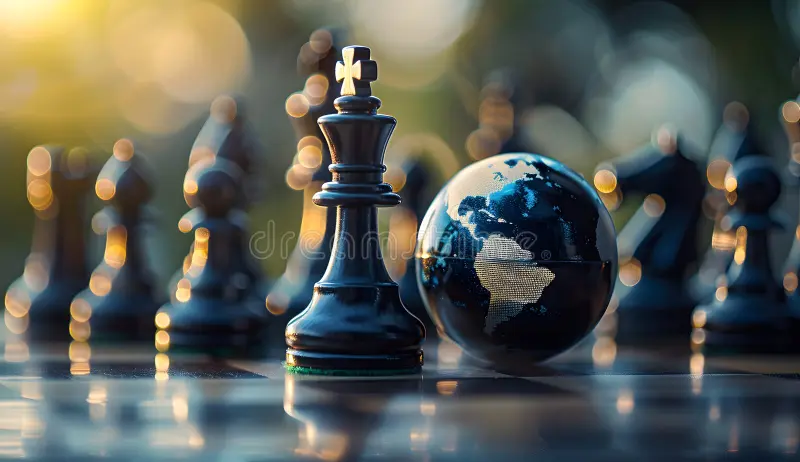
International trade relations are undergoing a dynamic transformation, increasingly taking a more protectionist direction to the detriment of the global economy and producing surprising consequences. The three largest economies in the world – the United States, the European Union and China – have implemented a range of mutual trade restrictions that are fundamentally reshaping the landscape of global trade and opening new opportunities for regions on the periphery of these relations. At the end of April 2026, a system of reciprocal tariff measures was visible, producing significant consequences for all parties, particularly the European Union, which has been caught between a rock and a hard place. At the same time, the present situation creates an unprecedented opportunity and a unique prospect for economic development in Central and Eastern European countries.

The administration of President Trump has pursued an aggressive strategy aimed at reducing the trade deficit and strengthening domestic production capabilities. In early April 2026 the average tariff rate reached 11.8%, the highest since the early 1940s. If these tariffs were to remain permanent, the effective average tariff would reach 12.2% by the end of 2026. The United States also introduced a new tiered tariff structure on metals that entered into force in April 2026. This system departs radically from the prior uniform approach and replaces it with a multilayered scheme based on metal content. Products with a high metal content are subject to a 50% tariff calculated on the full import value. Most derivative products – goods that contain significant quantities of steel, aluminium or copper but are not pure metal products – are subject to a 25% tariff. Other specialised metal-containing goods face a minimum 15% tariff. This complex tariff structure is intended to protect the U.S. metals industry from foreign competition, particularly from China and Europe.

The most radical measure by the U.S. administration in this period was the imposition of a 100% tariff on patented pharmaceutical products and their ingredients. The tariff was scheduled to take effect on 29 September 2026 for most producers, although some companies were granted a shorter transitional period of 120 days. The system included a number of exceptions and carve-outs: some medicines were fully exempt from tariffs. Pharmaceutical products originating in countries party to trade agreements – including the European Union, Japan, Korea, Switzerland and Liechtenstein- faced a reduced rate of just 15%. This differentiated approach was intended both to protect the domestic pharmaceutical industry and to preserve access to essential medicines for U.S. citizens.

The consequences of U.S. tariff policy for the global economy are significant. Yale Budget Lab estimated that, in the long run, the U.S. economy would be permanently smaller by 0.1%, equivalent to roughly $30 billion per year. The impact on U.S. consumers would also be substantial: if tariffs were made permanent, prices would rise by about 0.9 – 1.1%, and household losses would range between $1,200 and $1,500 annually. Although aggressive tariff measures may deliver short-term gains to selected sectors, in the longer term they harm all parties engaged in international trade.

The EU in the Strategic Crossfire: Industrial Protection, Trade Deficits and the Intensifying EU–China–U.S. Economic Rivalry

The European Union finds itself in an especially difficult strategic position. On the one hand it is pressured by the United States, which is threatening additional tariffs on European products; on the other hand it must contend with an influx of Chinese-made goods, which produced a record EU trade deficit of €359.8 billion in 2025. This challenge is compounded by China’s investment and technology offerings and by the active presence of Chinese capital and production facilities in many European industrial regions. At the same time, many European corporate champions have identified their Chinese R&D centres and modern factories as essential to maintaining growth momentum and global competitiveness.

The EU’s effective average tariff remained well below U.S. levels, but Chinese producers’ competitive edge was very strong, enabling them to offer lower prices across many product categories. From the perspective of the average European purchaser, this often means access to comparable-quality products at lower prices than those offered by European or U.S. competitors.

The European Commission prepared an Industrial Accelerator Act – a regulatory package valued at roughly €200 billion. The proposal introduced requirements for European content, thresholds for foreign investment screening, and stringent procedural obligations for companies of Chinese origin. The Act covered sectors including batteries, electric vehicles, photovoltaics, automobiles, steel, aluminium and cement – areas where Chinese firms have established particularly strong market positions in Europe. The measure aimed to protect European industry from Chinese dominance while preserving openness to cooperation with other international partners.

The EU also took direct trade measures. The Commission imposed anti-dumping duties on glass fibre produced by Chinese companies operating in Egypt, Bahrain and Thailand, with duties ranging from 11% to 25.4% of product value. This finding was especially significant because glass fibre is a key input for Europe’s renewable-energy industry. In March 2026 the Commission disclosed that, since the start of the Middle East conflict, the EU’s bill for imported fossil fuels had risen by €25 billion without any corresponding physical increase in energy supply – an issue of both affordability and energy security.

In response to actions by the U.S. and the EU, Beijing implemented a new set of trade regulations and strategies. On 7 April 2026 China published the Regulations on Industrial Security and Supply Chains, which came into force immediately with no transition period. These regulations activated legal instruments such as export controls and sanction-style measures, creating a unified national-security-oriented legal framework for supply-chain oversight and response. The move was designed to safeguard China’s economic interests and secure key industrial sectors.

China–EU Trade Frictions and the Rising Costs of Global Protectionism in a Fragmenting World Economy

At the end of April 2026 China’s Ministry of Commerce issued a formal position regarding the EU’s Industrial Accelerator Act. Beijing described the Commission’s proposals as “systemic discrimination” and warned that, should Brussels remain intransigent, China “would have no choice but to take retaliatory measures.” This was a forceful statement given China’s record trade surplus with the EU – $148 billion in the first quarter of 2026 – and underscores the underlying asymmetry and tensions in bilateral trade relations.

In 2025 the EU exported goods to China worth €199.6 billion while importing €559.4 billion, resulting in a trade deficit of €359.8 billion. Compared with 2024, exports fell by 6.5% and imports rose by 6.4%. By product group, the EU’s main exports to China were machinery and mechanical appliances (€45.3 billion, 22.7% of exports), electrical equipment and audiovisual parts (€29.0 billion, 14.5%) and road vehicles excluding rail (€16.4 billion, 8.2%). This pattern shows that Europe mainly exports high value‑added goods while importing a broad range of products – from electronics to apparel – contributing to a structural trade deficit.

The effects of newly imposed tariffs extended beyond the immediate parties. The global economy has suffered multiple negative consequences from escalating protectionism. Growth in Central Europe was forecast at around 2.4% in 2026, slowing modestly to 2.3% in 2027, amid weaker consumption partially offset by public investment financed by EU funds. These growth rates were markedly lower than in previous years and reflect the direct impact of the Middle East and Ukraine conflicts, trade uncertainty and volatile energy prices.

For the EU this is a period of mounting concern and strategic uncertainty. Rising import energy costs are fuelling inflationary pressures across the European economy. At the same time, threatened U.S. tariffs – particularly on pharmaceuticals and aluminium, sectors where Europe is a major producer and exporter – could undermine competitiveness and create market disruptions. This dual pressure forces the EU to navigate deftly between competing interests and threats while preserving internal cohesion and solidarity among member states.

Accordingly, the EU proposed the “One Europe, One Market” plan to complete the single market by 2027 through simplification of trade rules and acceleration of digital and artificial‑intelligence growth. The project is intended to strengthen the competitiveness of the European economy in the face of rising global protectionism. 

Who will ultimately prevail in the tariff and barrier race, which economies will defend themselves successfully in an interconnected global trading system, and who will gain or lose the most? Most likely the ultimate consumers of products and services around the world. That outcome is a predictable consequence of global tariff battles.

At the same time, the Western Balkans have found themselves in an exceptional strategic position amid the global realignment of trade. The EU enlargement process has gained unprecedented momentum. Politically, enlargement has been restored to the centre of the agenda. Europe and the world have dispensed with the illusion that security can be taken for granted. Enlargement is no longer a merely technical procedure but a strategic response that increases the likelihood of maintaining stability, boosts economic potential and provides necessary resilience in the event of conflict. Paradoxically, global uncertainty and geopolitical tensions – which had long complicated the Western Balkans’ path to the Community – have become a driving force for accession today, something that only four to five years ago would have seemed astronomically distant.
IFIMES

Related Posts

Current Events

Democracy Cannot Be Governed by Noise

19 August, 2026
ENGLISH

In Search of Lost Childhood and Land [1]

17 August, 2026
ENGLISH

The Ibar River Should Carry Water, Not Nationalist Politics

12 August, 2026

Follow US

Subscribe

Receive Argumentum Magazine by Email

Last Posts

Democracy Cannot Be Governed by Noise

19 August, 2026

In Search of Lost Childhood and Land [1]

17 August, 2026

The Ibar River Should Carry Water, Not Nationalist Politics

12 August, 2026

Between Political Calculation and Retreat: Croatian Communists at the End of an Era

10 August, 2026

The West is buying time, but to whom is it giving it?

10 August, 2026
Argumentum

“Argumentum”, një proces intelektual …

Contact Us

[email protected]
[email protected]
[email protected]

Follow Us

Media Partner

Register

Receive Argumentum Magazine by Email
  • Home
  • Privacy Policy
  • About Us
  • Contact

© 2022 Argumentum. All Rights Reserved. | NUIS: L91415033Q

Welcome Back!

Login to your account below

Forgotten Password? Sign Up

Create New Account!

Fill the forms bellow to register

*By registering into our website, you agree to the Terms & Conditions and Privacy Policy.
All fields are required. Log In

Retrieve your password

Please enter your username or email address to reset your password.

Log In

Add New Playlist

No Result
View All Result
  • Home
  • OP/ED
  • Interview
  • Realpolitik
  • Current Events
  • Top News
  • YOUR VOICE
  • Shqip

© 2022 Argumentum. All Rights Reserved. | NUIS: L91415033Q

This website uses cookies. By continuing to use this website you are giving consent to cookies being used. Visit our Privacy and Cookie Policy.