




















Based on analysis by IFIMES and General (Rtd) Corneliu Pivariu
Source: IFIMES research – Ankara 2026 NATO analysis
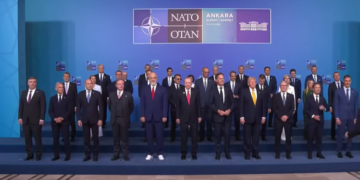
The NATO Summit in Ankara (7–8 July 2026) comes at a moment when the Alliance is increasingly defined not by stability, but by overlapping strategic pressures and evolving national priorities. According to analysis published by IFIMES and authored by General (Rtd) Corneliu Pivariu, NATO is entering a phase in which it must simultaneously manage “multiple, interconnected strategic challenges,” reflecting a profound transformation in its operational environment.
Rather than a traditional summit focused on a single dominant agenda, Ankara 2026 reflects what the analysis describes as a structural shift: NATO is no longer responding to isolated crises, but to a continuous and interlinked security landscape shaped by Russia, regional instability, and internal political dynamics within the Alliance itself.
A Changing NATO Model
One of the central arguments in the IFIMES analysis is that NATO’s previous operational model is increasingly insufficient for current realities. As Pivariu notes, the Alliance is undergoing what can be understood as a forced adaptation to a more complex global order, where threats are no longer sequential but simultaneous.
In this context, NATO’s traditional focus on collective defence remains central, particularly in relation to Russia, but it is now embedded within a broader set of responsibilities. These include instability in the Middle East, security dynamics in the Black Sea region, and the growing strategic autonomy debates within Europe.
The result, as the analysis suggests, is a transition from a relatively predictable alliance structure to a more fluid and demanding security system.
Russia and the Enduring Logic of Deterrence
Despite diversification of NATO’s agenda, deterrence of Russia remains the core strategic pillar. The IFIMES analysis underscores that the war in Ukraine continues to define much of the Alliance’s defence planning and force posture.
However, deterrence is no longer viewed in isolation. Instead, it operates within a broader strategic environment where NATO must balance multiple theatres and risks simultaneously. This increases both the complexity of decision-making and the importance of internal cohesion.
Turkey’s Expanding Strategic Role
A key dimension of the analysis is the rising geopolitical importance of Turkey within NATO. Hosting the Ankara summit itself reflects Turkey’s growing role as a central actor in Euro-Atlantic security architecture.
According to Pivariu’s analysis, Turkey’s position is strengthened by its geography, military capabilities, and involvement in multiple regional theatres, including the Black Sea and the Middle East.
The report describes Turkey as an increasingly “indispensable” NATO member, highlighting its role not only as a regional power, but also as a structural element in the Alliance’s broader security configuration.
The Black Sea: Emerging Strategic Hub
Another important element identified in the IFIMES analysis is the growing strategic relevance of the Black Sea region. Positioned between Europe and Eurasia, the area is becoming a key corridor for military logistics, energy security, and geopolitical influence.
Countries such as Romania and Turkey are increasingly central to NATO’s operational architecture in the region. The analysis highlights that the Black Sea is no longer a peripheral zone, but a core space of strategic competition and alliance projection.
National Interests and Alliance Cohesion
One of the more nuanced conclusions of the IFIMES study is the growing role of national interests within NATO decision-making. While the Alliance remains formally united, member states are increasingly shaping policy through the lens of domestic priorities and regional concerns.
This dynamic does not necessarily weaken NATO, but it does change its internal functioning. The analysis suggests that NATO is evolving into a platform where collective defence and national strategic interests must constantly be balanced.
The result is a more complex but also more politically realistic alliance structure.
Conclusion: An Alliance in Transition
The IFIMES analysis by General (Rtd) Corneliu Pivariu presents the Ankara 2026 NATO Summit as a reflection of broader systemic change rather than a standalone diplomatic event.
Its key conclusion is that NATO is entering a phase defined by simultaneous challenges: continued deterrence of Russia, the rise of regional powers such as Turkey, and the increasing influence of national interests within alliance dynamics.
As the analysis indicates, NATO’s strength now depends not only on military capability, but on its ability to manage complexity without losing cohesion.
In this sense, Ankara 2026 does not represent a rupture, but a transition—one that will shape the Alliance’s strategic identity in the years ahead.
___________________________________
© 2026 Argumentum