










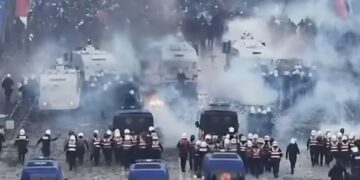
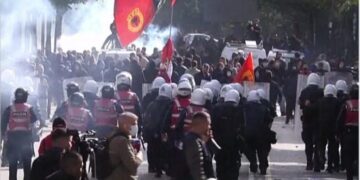

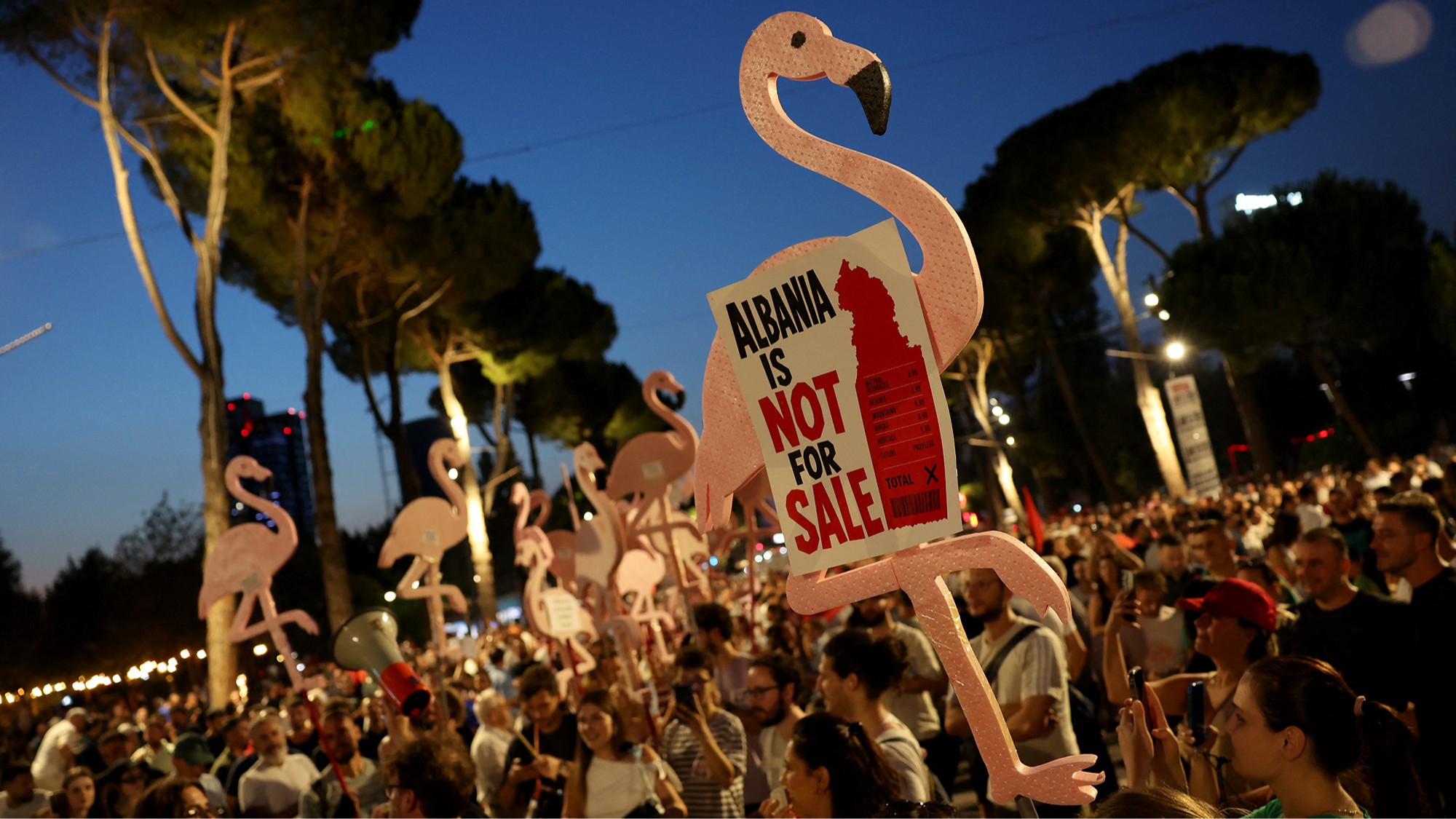
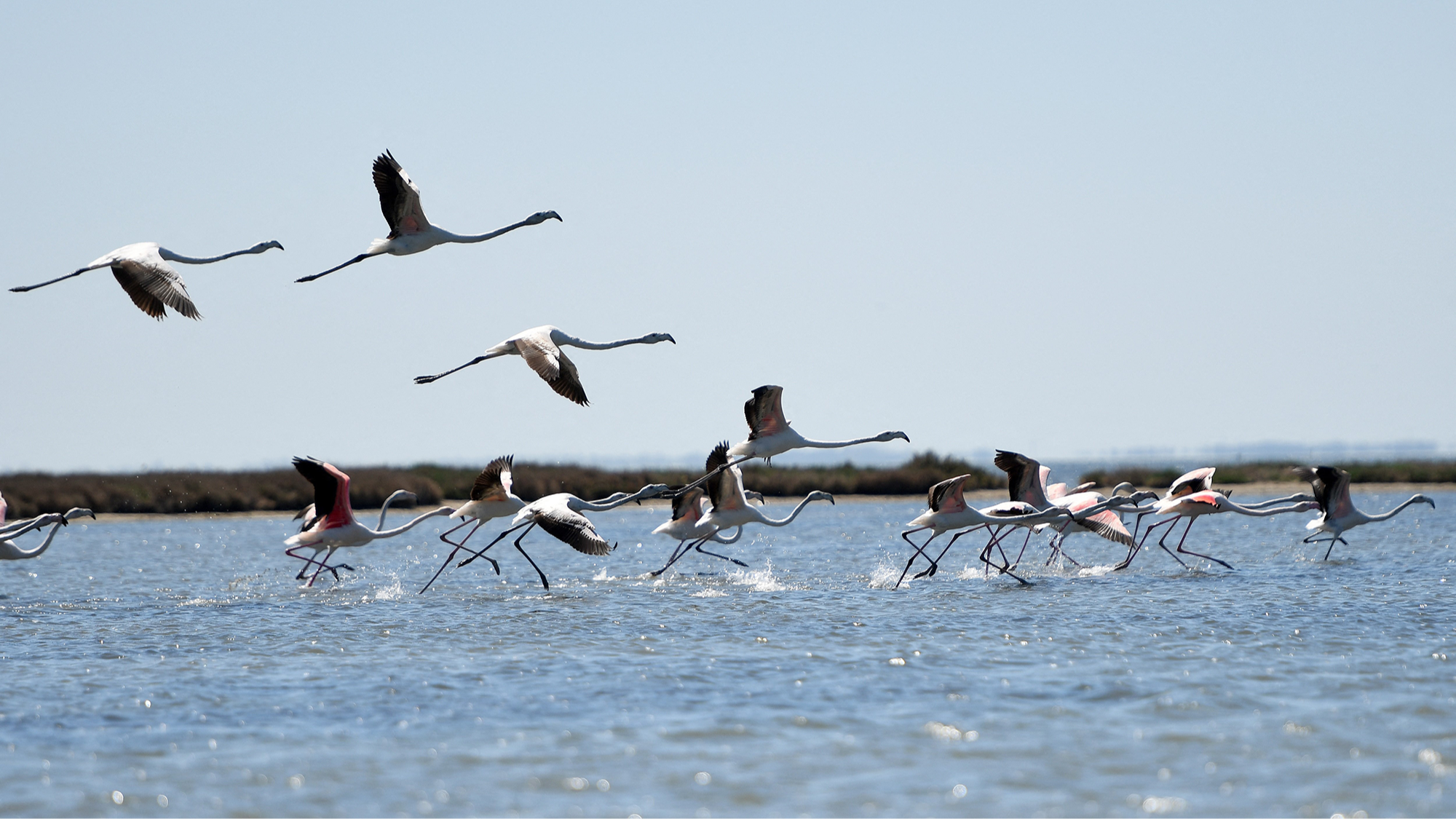
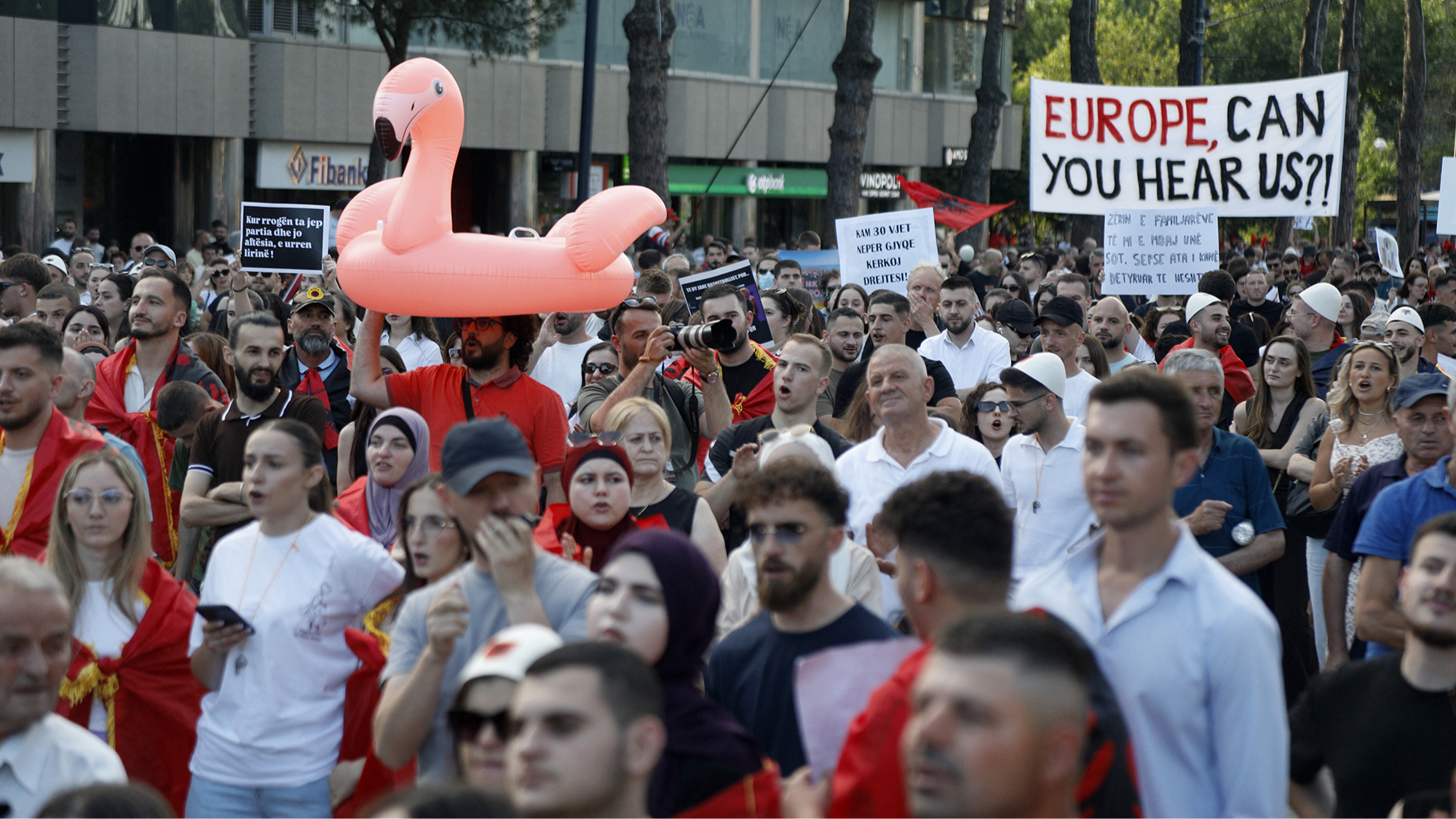
The protests that have become known as Albania’s Flamingo Revolution began in response to plans for a luxury resort in the Narta Lagoon area, associated with Ivanka Trump and Jared Kushner. The government has presented the project as an important economic opportunity. Many Albanians, however, disagree and have questioned both the project itself and the manner in which it has been advanced.
The protests, which have exceeded 37 consecutive days, are now about more than one proposed investment. They reflect wider public frustration with corruption, opacity, inequality and the concentration of power. They are also a rejection of the sense that major decisions affecting land, public resources, local communities and the environment can be taken without meaningful public involvement.
Whatever the outcome of this particular project, the underlying question will remain: what kind of foreign investment should Albania welcome, and on what terms?
Public consultation is not an optional courtesy. It is a basic requirement of democratic government, particularly where an investment may have profound consequences for the environment, livelihoods, cultural heritage or local communities. Development cannot be reduced to growth figures, construction projects or the value of incoming capital.
Development is also a human right. The 1986 UN Declaration on the Right to Development recognises that every person and all peoples are entitled to participate in, contribute to and enjoy economic, social, cultural and political development. Its central proposition is straightforward: development must be people-centred, participatory, equitable and accountable.
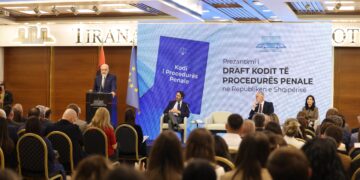
It follows, therefore, that a mandate to govern is not a mandate to allocate public assets without prior consultation or independent scrutiny. A press conference, an announcement or a completed plan presented as a fait accompli cannot substitute genuine engagement with those whose lives and communities will be affected. Where people are not consulted, or where consultation is treated as a procedural exercise or an afterthought with no real influence on the outcome, development loses its democratic character.
This is not an argument against foreign investment. Albania needs investment, opportunity and economic growth. Its people deserve to prosper economically, socially, politically and culturally. But investment must be pursued with the public, not over its head.
So crucial is public engagement that foreign investors often seek what is called a “social licence to operate”. This is not a formal authorisation granted by the state, nor does it replace legal permits or regulatory approval. Rather, it refers to the continuing trust and acceptance of affected communities for a particular project. It rests on dialogue, respect for people’s rights and a credible effort to address their legitimate concerns.
The EU’s legal and policy framework links economic activity with environmental protection, responsible business conduct, transparency and meaningful engagement with affected communities. These are not peripheral constraints on development; they are integral to the EU’s approach to development as sustainable and legitimate.
As Albania moves closer towards EU membership, some MEPs have joined the protests in Tirana. It is clear, therefore, that the credibility of that path will depend not only on economic progress but also on the strength of the rule of law and the quality of public institutions, the protection of the environment and transparency in decision-making, as well as its citizens’ ability to participate in public life.
Albania has been badly served by history. Its people deserve to be part of the European family of nations, to which they have always belonged. But that future cannot be secured through projects that deepen public mistrust or reinforce the perception that the country’s most valuable assets can be allocated without meaningful democratic consent. Development, in those circumstances, is not a shared national opportunity, but an extractive exercise: extracting land, natural beauty, public resources and, ultimately, democratic dignity.
In a country where concerns about corruption and the cost of living remain central to public debate, the divide between the powerful and the powerless is not merely economic. It is existential. It concerns whom the state serves, whose voices count and whether public goods are managed in the public interest.
Foreign investment is not the enemy. It can bring jobs, infrastructure, skills and opportunity. But it must also be transparent, environmentally responsible and grounded in genuine public participation. These are not obstacles to development. They are the conditions of sustainable development and a functioning democracy.
Perhaps the Flamingo Revolution will prove to be a catalyst for both.
*The writer is a former UN expert on the right to development. The views expressed are personal