





















• SHQIPËRI
  • KOSOVË
  • MAQEDONIA E VERIUT
  • MALI I ZI
  • Revista në PDF
30 July, 2026
  • Home
  • OP/ED

    27 July 1941 – A Site of Memory Between War, Revolution and Europe

    The cult of Saint Veneranda / Saint Pren(d)a / Saint Premte / Saint Paraskeva among Albanians

    The Self-Inflicted Decoupling: How U.S. Immigration Policy Is Ceding the Tech Edge to China

    The Blueprint Does Not Stop at the Drina

    The Underlying Logic behind China’s Economic Success

    Do Not Misuse the U.S. Declaration of Independence to Justify the Narrative of Insurrection in Albania

    The visit that changed Albania’s strategic future

    Pierre Nora and the institution of memory we lack in Eastern Europe

    The Blueprint of a Diplomatic Debacle: Analyzing Germany’s Historic UNSC Loss

  • Interview

    Exclusive Interview with Oleksandr Tyshchenko: A 40-Year Legacy of Chernobyl, Nuclear Risks, and Global Responsibility

    INTERVIEW: ZLATKO KRAMARIĆ – THOUGHTS ON THE OLD CONTINENT

    EXCLUSIVE / Ukrainian Ambassador to Albania, Volodymyr Shkurov: “Ukraine wants peace, but not at the expense of its freedom and independence”

    EXCLUSIVE| Ambassador Tayyar Kagan Atay: Türkiye and Albania, a Strategic Partnership Rooted in Shared Heritage and a Common Vision for the Future

    “Diplomacy, Not War”: Palestinian Ambassador to Albania Calls for Justice, Peace, and Global Action for Gaza

    Exclusive: “Even After Tito – Tito”/ Ambassador Zlatko Kramarić on Authoritarian Legacies and Democracy’s Future in the Balkans

    The Conclusion of the Diplomatic Mission / Ambassador Dancho Markovski: Strengthening Albania-North Macedonia Relations for a Shared European Future

    A Century of Diplomatic Relations Between Albania and Russia: Exclusive Interview with the Russian Ambassador to Albania, H.E. Alexey Zaytsev

    Exclusive/ The chairman of the Freedom Party, Ilir Meta: “The will of the citizens will triumph in Albania, as it did in North Macedonia”

  • Realpolitik

    The Summit of Unity! Think of peace and prepare for war! It’s only the start to the end! Just a pause between two wars!

    Peace with war diplomacy! The protest,  image and tourism! Why this silence from the EU Commission and Council? A deal or a pause?

    Just kind words  in Tivat! Where is the peace!? A deal yes, peace No!What is happening with USA and  EU?  5 elections but no solution!

    IBAR? ”Sufficiently! Much ado about nothing! Shart contrasts in Beijing! Where is the exit?!

    Neither peace nor war! Peace with bombs?! IBAR in autumn?! Not another Hormuz in Taivan! 

    IBAR – a springing board or an obstacle? Can we catch the EU Negotiation train 2027? When the dress makes the news!  EU electoral April  ends in a draw 1:1!  

    The European Parliament building in Strasbourg, France with flags waving calmly celebrating peace of the Europe. July 12, 2020.

    EU 2027 or 2037! Even half membership failed! No exit strategy!     

    What next?

    “With diplomatic velvet“! Major question marks! In Washington yes, but  in the White House NO! A strange dinner in Brussels!

  • Current Events

    Chinese Embassy in Albania Marks PLA’s 99th Anniversary, Reaffirms Commitment to Peace and Bilateral Cooperation

    Croatian Foreign Minister’s Visit to Tirana/Albania and Croatia Strengthen Their Strategic Partnership as Zagreb Reaffirms Support for Albania’s European Union Membership

    Albanian Parliament Approves $302 Million U.S. Military Financing Loan, Opposition Boycotts Session

    The cult of Saint Veneranda / Saint Pren(d)a / Saint Premte / Saint Paraskeva among Albanians

    Who Is Interested in War in the Balkans?

    From Calculating Executions to Justifying Ethnic Cleansing

    When Algorithm Becomes the Most Powerful Manipulator: The Case of the Protests in Tirana

    NATO Summit in Ankara: Allies Adopt Declaration Reaffirming Collective Defence and Long-Term Security Commitments

    The Diplomacy of Gas and Algorithms: The Nuances of Official Tirana—Is It Breaking the European Taboo with Azerbaijan?

  • Top News

    Rama: Foreign Information Manipulation Has Become One of the Greatest Threats to Democracy and European Security

    The Council of Albanian Ambassadors condemns chauvinistic rhetoric by Serbian officials and calls for diplomatic action

    NATO at Ankara 2026: Strategic Rebalancing Between Russia Deterrence, Turkey’s Rise, and National Interests

    Daniel Serwer: A Bad War Ending Badly May Still Be Good News

    Friedrich Merz, Keir Starmer, António Costa, Donald Trump, Emmanuel Macron, Mark Carney, Ursula von der Leyen, Giorgia Meloni and Sanae Takaichi

    G7 Leaders Gather in Évian Amid Global Uncertainty, Focus on Security, Economy and International Cooperation

    Russian Ambassador in Tirana: “Without a Strong and Sovereign Russia, the Creation of a Just World Order Is Impossible”

    “The Flamingo Revolution”: Day 10 of Protests in Albania Draws International Attention

    Rama alleges ‘hybrid war’ behind protests against Kushner-linked coastal development

    No End in Sight: Trump, Netanyahu and the Expanding Middle East War

  • YOUR VOICE
  • Shqip
No Result
View All Result
Argumentum
  • Home
  • OP/ED

    27 July 1941 – A Site of Memory Between War, Revolution and Europe

    The cult of Saint Veneranda / Saint Pren(d)a / Saint Premte / Saint Paraskeva among Albanians

    The Self-Inflicted Decoupling: How U.S. Immigration Policy Is Ceding the Tech Edge to China

    The Blueprint Does Not Stop at the Drina

    The Underlying Logic behind China’s Economic Success

    Do Not Misuse the U.S. Declaration of Independence to Justify the Narrative of Insurrection in Albania

    The visit that changed Albania’s strategic future

    Pierre Nora and the institution of memory we lack in Eastern Europe

    The Blueprint of a Diplomatic Debacle: Analyzing Germany’s Historic UNSC Loss

  • Interview

    Exclusive Interview with Oleksandr Tyshchenko: A 40-Year Legacy of Chernobyl, Nuclear Risks, and Global Responsibility

    INTERVIEW: ZLATKO KRAMARIĆ – THOUGHTS ON THE OLD CONTINENT

    EXCLUSIVE / Ukrainian Ambassador to Albania, Volodymyr Shkurov: “Ukraine wants peace, but not at the expense of its freedom and independence”

    EXCLUSIVE| Ambassador Tayyar Kagan Atay: Türkiye and Albania, a Strategic Partnership Rooted in Shared Heritage and a Common Vision for the Future

    “Diplomacy, Not War”: Palestinian Ambassador to Albania Calls for Justice, Peace, and Global Action for Gaza

    Exclusive: “Even After Tito – Tito”/ Ambassador Zlatko Kramarić on Authoritarian Legacies and Democracy’s Future in the Balkans

    The Conclusion of the Diplomatic Mission / Ambassador Dancho Markovski: Strengthening Albania-North Macedonia Relations for a Shared European Future

    A Century of Diplomatic Relations Between Albania and Russia: Exclusive Interview with the Russian Ambassador to Albania, H.E. Alexey Zaytsev

    Exclusive/ The chairman of the Freedom Party, Ilir Meta: “The will of the citizens will triumph in Albania, as it did in North Macedonia”

  • Realpolitik

    The Summit of Unity! Think of peace and prepare for war! It’s only the start to the end! Just a pause between two wars!

    Peace with war diplomacy! The protest,  image and tourism! Why this silence from the EU Commission and Council? A deal or a pause?

    Just kind words  in Tivat! Where is the peace!? A deal yes, peace No!What is happening with USA and  EU?  5 elections but no solution!

    IBAR? ”Sufficiently! Much ado about nothing! Shart contrasts in Beijing! Where is the exit?!

    Neither peace nor war! Peace with bombs?! IBAR in autumn?! Not another Hormuz in Taivan! 

    IBAR – a springing board or an obstacle? Can we catch the EU Negotiation train 2027? When the dress makes the news!  EU electoral April  ends in a draw 1:1!  

    The European Parliament building in Strasbourg, France with flags waving calmly celebrating peace of the Europe. July 12, 2020.

    EU 2027 or 2037! Even half membership failed! No exit strategy!     

    What next?

    “With diplomatic velvet“! Major question marks! In Washington yes, but  in the White House NO! A strange dinner in Brussels!

  • Current Events

    Chinese Embassy in Albania Marks PLA’s 99th Anniversary, Reaffirms Commitment to Peace and Bilateral Cooperation

    Croatian Foreign Minister’s Visit to Tirana/Albania and Croatia Strengthen Their Strategic Partnership as Zagreb Reaffirms Support for Albania’s European Union Membership

    Albanian Parliament Approves $302 Million U.S. Military Financing Loan, Opposition Boycotts Session

    The cult of Saint Veneranda / Saint Pren(d)a / Saint Premte / Saint Paraskeva among Albanians

    Who Is Interested in War in the Balkans?

    From Calculating Executions to Justifying Ethnic Cleansing

    When Algorithm Becomes the Most Powerful Manipulator: The Case of the Protests in Tirana

    NATO Summit in Ankara: Allies Adopt Declaration Reaffirming Collective Defence and Long-Term Security Commitments

    The Diplomacy of Gas and Algorithms: The Nuances of Official Tirana—Is It Breaking the European Taboo with Azerbaijan?

  • Top News

    Rama: Foreign Information Manipulation Has Become One of the Greatest Threats to Democracy and European Security

    The Council of Albanian Ambassadors condemns chauvinistic rhetoric by Serbian officials and calls for diplomatic action

    NATO at Ankara 2026: Strategic Rebalancing Between Russia Deterrence, Turkey’s Rise, and National Interests

    Daniel Serwer: A Bad War Ending Badly May Still Be Good News

    Friedrich Merz, Keir Starmer, António Costa, Donald Trump, Emmanuel Macron, Mark Carney, Ursula von der Leyen, Giorgia Meloni and Sanae Takaichi

    G7 Leaders Gather in Évian Amid Global Uncertainty, Focus on Security, Economy and International Cooperation

    Russian Ambassador in Tirana: “Without a Strong and Sovereign Russia, the Creation of a Just World Order Is Impossible”

    “The Flamingo Revolution”: Day 10 of Protests in Albania Draws International Attention

    Rama alleges ‘hybrid war’ behind protests against Kushner-linked coastal development

    No End in Sight: Trump, Netanyahu and the Expanding Middle East War

  • YOUR VOICE
  • Shqip
No Result
View All Result
Argumentum
No Result
View All Result
Home ENGLISH

The Deafening Silence on Defense Debt: Why NATO Targets Threaten Small Economies

29 July, 2026
in ENGLISH, In Focus
A A
Share on FacebookShare on Twitter

Dr. Ermir I. Hajdini

Legal Analyst & University Lecturer

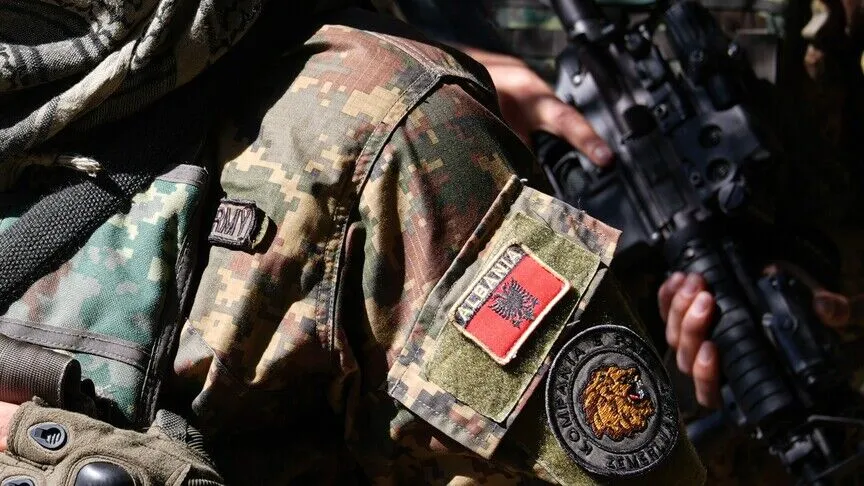
In a rapid parliamentary procedure, the Albanian Parliament recently ratified a $302 million U.S. Foreign Military Financing (FMF) loan facility to accelerate the procurement of NATO-standard military hardware.[1] While political debate surrounded the closed-door sessions and procedural timelines, both the governing majority and opposition benches endorsed the substantive core of the deal without friction.

This bipartisan alignment reflects a broader regional trend across NATO’s eastern and southern flanks: the assumption that rapid defense modernization is purely additive to national security. However, evaluating this transaction through the lens of public finance reveals a critical, unexamined policy paradox.

For major industrialized economies, escalating military spending presents a manageable fiscal dilemma. For a small, developing economy operating outside the Eurozone, taking on large, U.S. Dollar-denominated defense debt introduces structural macro-financial risks that can, over time, erode the very sovereign resilience the alliance relies upon.

1. The Fiscal-Defense Trilemma

Mainstream public discourse routinely treats defense spending as a simple moral or geopolitical commitment—symbolized by the push toward NATO’s benchmark targets (traditionally 2% of GDP, and increasingly framed toward higher 3.5% core targets).[2] However, research from leading European economic institutions demonstrates that uncoordinated defense expansion triggers a fundamental policy trilemma.

 As highlighted by scholars at the Bocconi Institute for European Polity (IEP@BU) and the Bruegel Policy Center, a nation can simultaneously maintain at most two of these three pillars without central fiscal backstops.[3][4]

When a state attempts to force rapid military spending without an established domestic defense-industrial base, the policy creates three distinct transmission channels of economic friction:

  1. The Zero-Multiplier Effect: Unlike infrastructure or education investments—which generate tax recycling, domestic employment, and secondary productivity—imported hardware acts as a 100% capital outflow.[5]
  2. Maintenance Drag (OPEX Shift): Every dollar spent on military hardware commits the state balance sheet to years of non-discretionary operational and maintenance expenditures, crowding out flexible fiscal space.
  3. Debt-Servicing Costs: Ramping up borrowing for non-yielding capital assets increases sovereign risk premiums, elevating borrowing costs across both the public and private sectors.

2. The Asymmetric Risk: Why Small Economies Suffer  The Most

What manifests as a policy friction in Western Europe becomes a systemic vulnerability in small, developing economies. Comparing the structural mechanics illustrates the divide:

Macroeconomic DimensionCore EU / NATO MemberSmall Developing Economy (e.g., Albania, Montenegro)
Debt DenominationBorrowing in home/reserve currency (Euro)Borrowing in USD, tax collection in local currency (Lek)
Monetary BackstopECB liquidity, deep Eurobond marketsSmall central bank reserve cushion, no external issuer
Industrial MultiplierPartial capture via domestic prime contractors0% domestic capture; pure import leakage
Scale Relative to Budget$302M represents <0.05% of defense outlay$302M loan equals >40% of entire annual defense budget

The Foreign Exchange (FX) Trap

Because high-tier hardware under U.S. Foreign Military Sales (FMS) is denominated in U.S. Dollars, taking on foreign credit facilities creates an unhedged currency mismatch. Tax revenues are collected locally in Lek (ALL), while debt servicing is bound to the Greenback.

When the U.S. Federal Reserve adjusts interest rates or global market volatility drives a flight to the Dollar, the local-currency cost of servicing that debt expands automatically—irrespective of domestic economic performance.[6]

The Real Strategic Threat: Demographic & Economic Erosion

In developing nations, the primary threat to long-term national security is rarely armor capacity—it is demographic decline and the brain drain of skilled professionals.

When sovereign capital is channeled into foreign defense contracts rather than health systems, higher education, tech infrastructure, and competitive public-sector wages, the state accelerates the push factors driving emigration. A country whose productive demographic base erodes cannot sustain its institutions, regardless of the sophistication of its military hardware.

3. Institutional Governance: The Role of Bipartisan Analysis

The complete absence of macroeconomic scrutiny during parliamentary debates reflects a deeper institutional oversight gap.

In post-communist and developing contexts, opposition parties frequently restrict their critiques to procedural politics (e.g., protesting secret sessions or rushed agendas) while unconditionally signing off on foreign policy commitments. This dynamic transforms critical national debt decisions into rubber-stamp exercises, bypassing the rigorous cost-benefit evaluations required for sound governance.

True alignment with Western alliances like NATO does not require passive compliance with arbitrary spending ratios. On the contrary, collective defense relies entirely on the structural solvency and domestic stability of individual member states.[7] An alliance partner compromised by foreign exchange volatility and underfunded domestic infrastructure becomes a liability, not an asset.

Conclusion

Modernizing national defense capabilities is an indispensable duty of statecraft. However, policy leaders and legal strategists must distinguish between sustainable defense integration and unhedged fiscal risk.

To ensure that strategic commitments reinforce rather than weaken national resilience, public institutions must adopt three fundamental policy safeguards:

  • Mandatory Macro-Economic Impact Studies: Subjecting major foreign-denominated defense procurements to independent central bank and finance ministry risk modeling before parliamentary ratification.
  • Currency Hedging Mechanisms: Incorporating structural FX buffers and long-term debt-stabilization clauses into international procurement contracts.
  • Dual-Use Prioritization: Structuring defense investments toward dual-use infrastructure, cyber security, and technological capacity that generate tangible spillovers for the civilian economy.

National security cannot be separated from national economic durability. Only through rigorous, unvarnished public policy analysis can a nation build a defense posture that protects both its borders and its future.

References & Footnotes

  1. Parliament of Albania. (2026). Law on the Ratification of the Financing Agreement between the Council of Ministers of the Republic of Albania and the Government of the United States of America for Foreign Military Financing ($302M Facility). Official Gazette of the Republic of Albania.
  2. NATO Public Diplomacy Division. (2025). Defense Expenditures of NATO Countries (2014–2025). NATO Press Release.
  3. Bocconi Institute for European Polity (IEP@BU). (2024). The Macroeconomic Imbalance of European Defense Procurement: Fiscal Constraints vs. Strategic Autonomy. Bocconi University Policy Paper Series, No. 12.
  4. Bruegel. (2024). How to Spend It Right: Analyzing the Multiplier Effects and Import Leakage of European Defense Budgets. Bruegel Policy Contribution, Issue 08/24.
  5. Ifo Institute for Economic Research. (2023). Guns or Growth? The Opportunity Costs of Uncoordinated Defense Spending in Small Open Economies. Munich Security & Finance Working Paper.
  6. European Central Bank (ECB). (2025). The Impact of US Dollar Appreciation on Non-Eurozone Sovereign Debt Servicing in South-Eastern Europe. ECB Economic Bulletin, Issue 3.
  7. Center for Strategic and International Studies (CSIS). (2024). Sovereign Debt and Alliance Resilience: Why Economic Stability is the Foundation of Deterrence. CSIS Strategic Report.

/Argumentum.al

© 2026 Argumentum

Related Posts

ENGLISH

Trump’s War on Far-Left Goes Global

29 July, 2026
Current Events

Chinese Embassy in Albania Marks PLA’s 99th Anniversary, Reaffirms Commitment to Peace and Bilateral Cooperation

29 July, 2026
Current Events

Albanian Parliament Approves $302 Million U.S. Military Financing Loan, Opposition Boycotts Session

27 July, 2026

Follow US

Subscribe

Receive Argumentum Magazine by Email

Last Posts

Trump’s War on Far-Left Goes Global

29 July, 2026

The Deafening Silence on Defense Debt: Why NATO Targets Threaten Small Economies

29 July, 2026

Chinese Embassy in Albania Marks PLA’s 99th Anniversary, Reaffirms Commitment to Peace and Bilateral Cooperation

29 July, 2026

Croatian Foreign Minister’s Visit to Tirana/Albania and Croatia Strengthen Their Strategic Partnership as Zagreb Reaffirms Support for Albania’s European Union Membership

27 July, 2026

Albanian Parliament Approves $302 Million U.S. Military Financing Loan, Opposition Boycotts Session

27 July, 2026
Argumentum

“Argumentum”, një proces intelektual …

Contact Us

[email protected]
[email protected]
[email protected]

Follow Us

Media Partner

Register

Receive Argumentum Magazine by Email
  • Home
  • Privacy Policy
  • About Us
  • Contact

© 2022 Argumentum. All Rights Reserved. | NUIS: L91415033Q

Welcome Back!

Login to your account below

Forgotten Password? Sign Up

Create New Account!

Fill the forms bellow to register

*By registering into our website, you agree to the Terms & Conditions and Privacy Policy.
All fields are required. Log In

Retrieve your password

Please enter your username or email address to reset your password.

Log In

Add New Playlist

No Result
View All Result
  • Home
  • OP/ED
  • Interview
  • Realpolitik
  • Current Events
  • Top News
  • YOUR VOICE
  • Shqip

© 2022 Argumentum. All Rights Reserved. | NUIS: L91415033Q

This website uses cookies. By continuing to use this website you are giving consent to cookies being used. Visit our Privacy and Cookie Policy.