




















• SHQIPËRI
  • KOSOVË
  • MAQEDONIA E VERIUT
  • MALI I ZI
  • Revista në PDF
27 August, 2026
  • Home
  • OP/ED

    The Reconfiguration of Maritime Governance: Structural Hegemonic Decline and the Arctic Pivot

    Between Political Calculation and Retreat: Croatian Communists at the End of an Era

    The West is buying time, but to whom is it giving it?

    27 July 1941 – A Site of Memory Between War, Revolution and Europe

    The cult of Saint Veneranda / Saint Pren(d)a / Saint Premte / Saint Paraskeva among Albanians

    The Self-Inflicted Decoupling: How U.S. Immigration Policy Is Ceding the Tech Edge to China

    The Blueprint Does Not Stop at the Drina

    The Underlying Logic behind China’s Economic Success

    Do Not Misuse the U.S. Declaration of Independence to Justify the Narrative of Insurrection in Albania

  • Interview

    Exclusive Interview with Oleksandr Tyshchenko: A 40-Year Legacy of Chernobyl, Nuclear Risks, and Global Responsibility

    INTERVIEW: ZLATKO KRAMARIĆ – THOUGHTS ON THE OLD CONTINENT

    EXCLUSIVE / Ukrainian Ambassador to Albania, Volodymyr Shkurov: “Ukraine wants peace, but not at the expense of its freedom and independence”

    EXCLUSIVE| Ambassador Tayyar Kagan Atay: Türkiye and Albania, a Strategic Partnership Rooted in Shared Heritage and a Common Vision for the Future

    “Diplomacy, Not War”: Palestinian Ambassador to Albania Calls for Justice, Peace, and Global Action for Gaza

    Exclusive: “Even After Tito – Tito”/ Ambassador Zlatko Kramarić on Authoritarian Legacies and Democracy’s Future in the Balkans

    The Conclusion of the Diplomatic Mission / Ambassador Dancho Markovski: Strengthening Albania-North Macedonia Relations for a Shared European Future

    A Century of Diplomatic Relations Between Albania and Russia: Exclusive Interview with the Russian Ambassador to Albania, H.E. Alexey Zaytsev

    Exclusive/ The chairman of the Freedom Party, Ilir Meta: “The will of the citizens will triumph in Albania, as it did in North Macedonia”

  • Realpolitik

    Belgrade, Zelensky and the Consulates! The European Pact takes water! Drone in Leipzig and hybrid war! Why a  ceasefire is needed in September

    The Summit of Unity! Think of peace and prepare for war! It’s only the start to the end! Just a pause between two wars!

    Peace with war diplomacy! The protest,  image and tourism! Why this silence from the EU Commission and Council? A deal or a pause?

    Just kind words  in Tivat! Where is the peace!? A deal yes, peace No!What is happening with USA and  EU?  5 elections but no solution!

    IBAR? ”Sufficiently! Much ado about nothing! Shart contrasts in Beijing! Where is the exit?!

    Neither peace nor war! Peace with bombs?! IBAR in autumn?! Not another Hormuz in Taivan! 

    IBAR – a springing board or an obstacle? Can we catch the EU Negotiation train 2027? When the dress makes the news!  EU electoral April  ends in a draw 1:1!  

    The European Parliament building in Strasbourg, France with flags waving calmly celebrating peace of the Europe. July 12, 2020.

    EU 2027 or 2037! Even half membership failed! No exit strategy!     

    What next?

  • Current Events

    Belgium Opens First-Ever Embassy in Tirana, Strengthening Bilateral Ties

    MEFA: Albania Successfully Repatriates Five Citizens, Including Women and Children, from Syria

    Hoxha: A Modern Diplomacy for a European Albania

    The Delayed Awakening: Realpolitik and the Structural Causes of European Stagnation

    Democracy Cannot Be Governed by Noise

    Council of Albanian Ambassadors Raises Concern Over Serbian Plan to Alter the Ibër River

    Digitalisation in the modern era as a “Trojan horse” for hybrid warfare

    The four days that changed history

    Bury Those You Killed

  • Top News

    Belgium Opens First-Ever Embassy in Tirana, Strengthening Bilateral Ties

    US Launches Economic Offensive Against Iran, Bessent Warns Countries to Cut Tehran’s Lifelines

    Rama, Vučić, Zelensky: Where Is Albania’s National Interest?

    Council of Albanian Ambassadors Raises Concern Over Serbian Plan to Alter the Ibër River

    Rama: Foreign Information Manipulation Has Become One of the Greatest Threats to Democracy and European Security

    The Council of Albanian Ambassadors condemns chauvinistic rhetoric by Serbian officials and calls for diplomatic action

    NATO at Ankara 2026: Strategic Rebalancing Between Russia Deterrence, Turkey’s Rise, and National Interests

    Daniel Serwer: A Bad War Ending Badly May Still Be Good News

    Friedrich Merz, Keir Starmer, António Costa, Donald Trump, Emmanuel Macron, Mark Carney, Ursula von der Leyen, Giorgia Meloni and Sanae Takaichi

    G7 Leaders Gather in Évian Amid Global Uncertainty, Focus on Security, Economy and International Cooperation

  • YOUR VOICE
  • ARGUMENTUM MAGAZINE
  • Shqip
No Result
View All Result
Argumentum
  • Home
  • OP/ED

    The Reconfiguration of Maritime Governance: Structural Hegemonic Decline and the Arctic Pivot

    Between Political Calculation and Retreat: Croatian Communists at the End of an Era

    The West is buying time, but to whom is it giving it?

    27 July 1941 – A Site of Memory Between War, Revolution and Europe

    The cult of Saint Veneranda / Saint Pren(d)a / Saint Premte / Saint Paraskeva among Albanians

    The Self-Inflicted Decoupling: How U.S. Immigration Policy Is Ceding the Tech Edge to China

    The Blueprint Does Not Stop at the Drina

    The Underlying Logic behind China’s Economic Success

    Do Not Misuse the U.S. Declaration of Independence to Justify the Narrative of Insurrection in Albania

  • Interview

    Exclusive Interview with Oleksandr Tyshchenko: A 40-Year Legacy of Chernobyl, Nuclear Risks, and Global Responsibility

    INTERVIEW: ZLATKO KRAMARIĆ – THOUGHTS ON THE OLD CONTINENT

    EXCLUSIVE / Ukrainian Ambassador to Albania, Volodymyr Shkurov: “Ukraine wants peace, but not at the expense of its freedom and independence”

    EXCLUSIVE| Ambassador Tayyar Kagan Atay: Türkiye and Albania, a Strategic Partnership Rooted in Shared Heritage and a Common Vision for the Future

    “Diplomacy, Not War”: Palestinian Ambassador to Albania Calls for Justice, Peace, and Global Action for Gaza

    Exclusive: “Even After Tito – Tito”/ Ambassador Zlatko Kramarić on Authoritarian Legacies and Democracy’s Future in the Balkans

    The Conclusion of the Diplomatic Mission / Ambassador Dancho Markovski: Strengthening Albania-North Macedonia Relations for a Shared European Future

    A Century of Diplomatic Relations Between Albania and Russia: Exclusive Interview with the Russian Ambassador to Albania, H.E. Alexey Zaytsev

    Exclusive/ The chairman of the Freedom Party, Ilir Meta: “The will of the citizens will triumph in Albania, as it did in North Macedonia”

  • Realpolitik

    Belgrade, Zelensky and the Consulates! The European Pact takes water! Drone in Leipzig and hybrid war! Why a  ceasefire is needed in September

    The Summit of Unity! Think of peace and prepare for war! It’s only the start to the end! Just a pause between two wars!

    Peace with war diplomacy! The protest,  image and tourism! Why this silence from the EU Commission and Council? A deal or a pause?

    Just kind words  in Tivat! Where is the peace!? A deal yes, peace No!What is happening with USA and  EU?  5 elections but no solution!

    IBAR? ”Sufficiently! Much ado about nothing! Shart contrasts in Beijing! Where is the exit?!

    Neither peace nor war! Peace with bombs?! IBAR in autumn?! Not another Hormuz in Taivan! 

    IBAR – a springing board or an obstacle? Can we catch the EU Negotiation train 2027? When the dress makes the news!  EU electoral April  ends in a draw 1:1!  

    The European Parliament building in Strasbourg, France with flags waving calmly celebrating peace of the Europe. July 12, 2020.

    EU 2027 or 2037! Even half membership failed! No exit strategy!     

    What next?

  • Current Events

    Belgium Opens First-Ever Embassy in Tirana, Strengthening Bilateral Ties

    MEFA: Albania Successfully Repatriates Five Citizens, Including Women and Children, from Syria

    Hoxha: A Modern Diplomacy for a European Albania

    The Delayed Awakening: Realpolitik and the Structural Causes of European Stagnation

    Democracy Cannot Be Governed by Noise

    Council of Albanian Ambassadors Raises Concern Over Serbian Plan to Alter the Ibër River

    Digitalisation in the modern era as a “Trojan horse” for hybrid warfare

    The four days that changed history

    Bury Those You Killed

  • Top News

    Belgium Opens First-Ever Embassy in Tirana, Strengthening Bilateral Ties

    US Launches Economic Offensive Against Iran, Bessent Warns Countries to Cut Tehran’s Lifelines

    Rama, Vučić, Zelensky: Where Is Albania’s National Interest?

    Council of Albanian Ambassadors Raises Concern Over Serbian Plan to Alter the Ibër River

    Rama: Foreign Information Manipulation Has Become One of the Greatest Threats to Democracy and European Security

    The Council of Albanian Ambassadors condemns chauvinistic rhetoric by Serbian officials and calls for diplomatic action

    NATO at Ankara 2026: Strategic Rebalancing Between Russia Deterrence, Turkey’s Rise, and National Interests

    Daniel Serwer: A Bad War Ending Badly May Still Be Good News

    Friedrich Merz, Keir Starmer, António Costa, Donald Trump, Emmanuel Macron, Mark Carney, Ursula von der Leyen, Giorgia Meloni and Sanae Takaichi

    G7 Leaders Gather in Évian Amid Global Uncertainty, Focus on Security, Economy and International Cooperation

  • YOUR VOICE
  • ARGUMENTUM MAGAZINE
  • Shqip
No Result
View All Result
Argumentum
No Result
View All Result
Home ENGLISH

From Ukraine to the Kurils: Moscow’s Red Line to Tokyo

27 August, 2026
in ENGLISH, Global, YOUR VOICE
A A
Share on FacebookShare on Twitter

Sometimes the most powerful diplomatic messages are delivered without a single threat—and Putin’s visit to Etorofu was one of them.

Ladislav Zemanek*

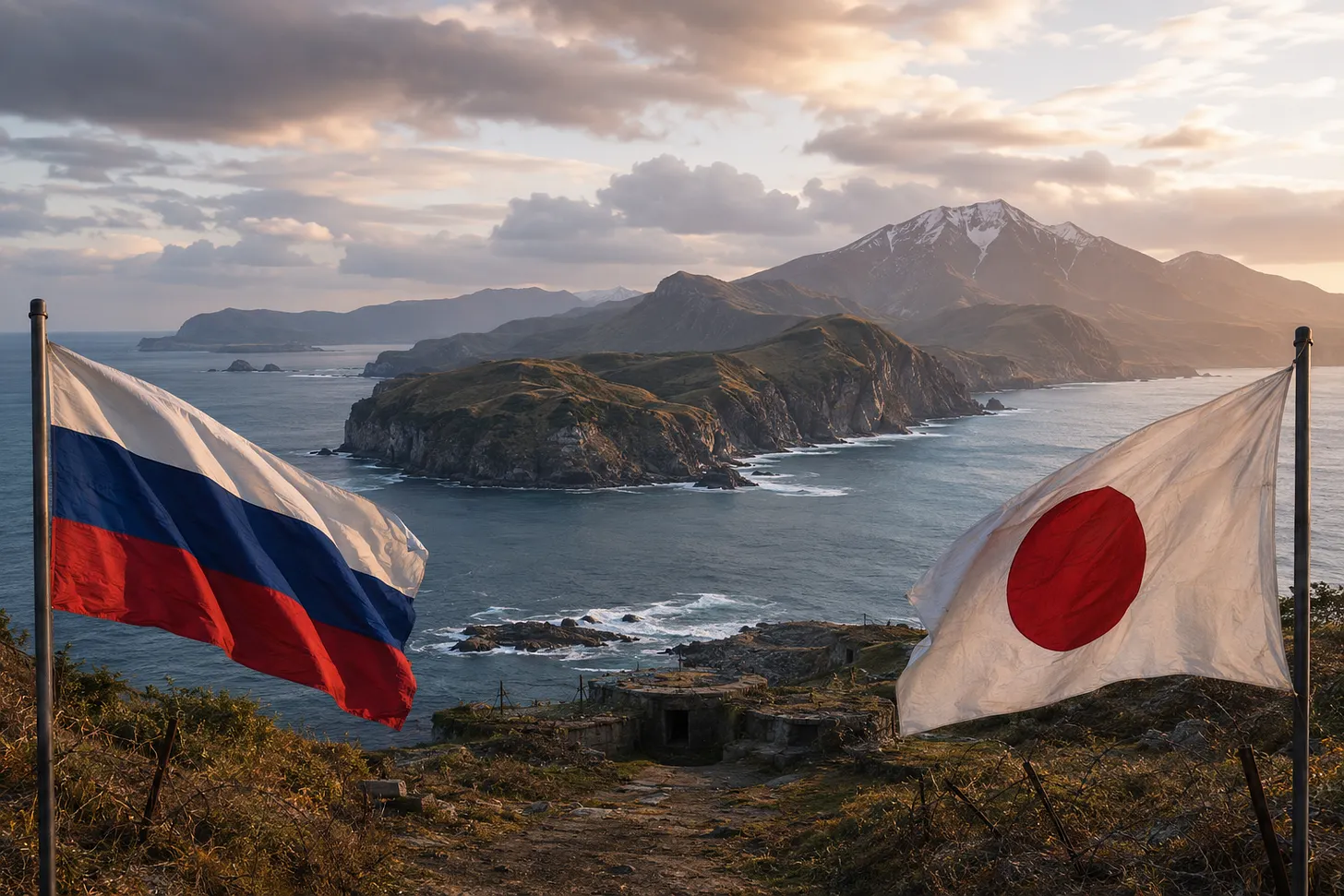
Russian President Vladimir Putin set foot on Etorofu Island on August 13 and walked its length as if he were simply visiting home. He toured a local fish plant, spoke with residents who praised the island’s clean air, friendly neighbors and quiet charm, and smiled for the cameras.

Japan’s immediate reaction was swift and sharp. The Russian ambassador was summoned to receive a formal protest, while Prime Minister Sanae Takaichi called the visit “absolutely unacceptable” and said it had hurt the feelings of the Japanese people. Moscow answered in kind by summoning Japan’s ambassador in Russia.

The diplomatic exchange was predictable. More importantly, it revealed how little room remains for compromise between the two countries right now.

Ukraine and the Kuril red line

The deterioration of relations cannot be separated from Japan’s full-throated support for Ukraine after 2022. Tokyo joined Western sanctions, revoked Russia’s most-favored-nation trade status and has increasingly discussed ways of supporting Ukraine’s military effort.

From Moscow’s perspective, this is not simply an expression of Japanese solidarity with Kiev. It is part of a broader alignment against Russia.

Putin’s visit therefore served as a direct and measured response. The message was that while Japan supports Ukraine and participates in the broader pressure campaign against Russia, Moscow has no intention of making territorial concessions to Tokyo over the Kurils.

Interestingly, Tokyo’s current confrontational stance, while symbolically forceful, has not produced a corresponding escalation of concrete measures over the territorial dispute itself. That restraint may reflect two realities. Washington has little incentive to become directly involved in a bilateral quarrel with Moscow, while Tokyo must also consider the consequences of pushing Russia, China and North Korea into even closer alignment.

More than four islands

The disputed territories have considerable practical value. They provide access to rich fishing grounds that once sustained extensive bilateral economic activity and may contain valuable mineral resources. Yet their importance extends well beyond economics.

The Kurils occupy a strategically critical position in the North Pacific. For Russia, control of the island chain provides a natural defensive buffer and helps protect access routes for its Pacific Fleet, energy infrastructure and maritime trade. For Japan, meanwhile, Russian control of the territories represents the unresolved legacy of the Second World War and an enduring challenge to its territorial claims.

The fishing issue illustrates just how complicated this relationship has been. Tokyo until relatively recently paid Russia for access to fishing grounds around the disputed islands. Whatever the legal and political arguments surrounding sovereignty, such arrangements demonstrated a degree of practical recognition of Russian administrative control and jurisdiction.

Today, those same waters remain economically important to Russian coastal communities.

That practical reality helps explain why Moscow sees the Kurils not simply as bargaining chips but as part of its national security perimeter.

A warning about militarization

Putin’s visit came against the backdrop of Japan’s military buildup and Tokyo’s increasing involvement in supporting Ukraine’s war efforts.

From Moscow’s perspective, these developments reinforce longstanding fears of strategic encirclement. Japan’s proximity to Russia’s Far East makes its military posture particularly sensitive to Russian planners. Exercises, missile deployments and discussions about providing military assistance to Ukraine are therefore viewed in Moscow as part of a broader pattern rather than isolated decisions.

The Kremlin’s response has likewise included naval drills and missile exercises in the region, moves that Tokyo has condemned as provocative.

Overall, the visit was less a new threat than a public reaffirmation of an existing position and realities on the ground.

The missed opportunity of the Abe-Putin years

During the 2010s, parallel negotiations under Vladimir Putin and Japanese Prime Minister Shinzo Abe created genuine expectations that the two countries might finally resolve their territorial dispute and conclude a formal peace treaty.

The negotiations were significant precisely because neither side approached them as a simple exercise in defending maximalist claims. Both governments understood that a compromise would require concessions and that a durable settlement could produce wider economic and strategic benefits.

The 1956 Moscow Declaration had already established the basic framework for one possible compromise: Moscow agreed in principle to transfer Habomai and Shikotan to Japan after the conclusion of a peace treaty, while leaving the larger islands of Etorofu and Kunashiri under Soviet control.

For a time, that formula appeared capable of becoming the foundation for a broader settlement. Yet the political environment has since changed dramatically.

Why the Kurils are only one thread in a complicated story

The territorial dispute is a symptom of deeper tensions that have shaped Russo-Japanese relations since the 19th century.

The 1855 Treaty of Shimoda established a border between Etorofu and Urup. The 1875 Treaty of St. Petersburg subsequently transferred the entire Kuril chain to Japan in exchange for Japanese recognition of Russian control over Sakhalin. The 1905 Treaty of Portsmouth then reshaped the regional balance following the Russo-Japanese War.

These agreements demonstrate that sovereignty over the islands has never existed outside a shifting regional balance of power.

The events of 1945 transformed that balance again. Amid the ongoing war in the Pacific in 1945, the Soviet Union acted with the blessing of the United States as far as the Kuril islands were concerned. Under the secret Project Hula — launched in 1945 — American warships and training helped the Soviets take control over the Kurils.

This history provides Russia with a strong historical argument: the islands were taken from Imperial Japan with allied consent. Japan’s postwar renunciation did not bind Moscow, and decades of Soviet and now Russian administration have simply created a fait accompli.

Tokyo, however, maintains a fundamentally different interpretation of the postwar settlement and continues to describe the southern Kurils as its “Northern Territories.”

The result is a dispute in which both sides possess deeply rooted historical narratives—and neither is prepared to abandon them easily.

Pragmatism or permanent paralysis?

The Kuril dispute is not inherently insoluble. What makes it appear so today is the wider deterioration of the relationship.

The experience of the 2010s showed that negotiations can advance when both governments regard compromise as more valuable than rhetorical victory. It also showed that progress requires political courage: neither side can expect to obtain everything it wants.

Japan’s position has hardened alongside its broader Ukraine policy. Russia, meanwhile, has become increasingly resistant to territorial negotiations with states it regards as participating in an adversarial Western coalition.

That leaves the two countries trapped in a familiar cycle. Japan demands recognition of its territorial claims. Russia responds by emphasizing its sovereignty and military presence. Each side then interprets the other’s position as evidence that compromise is impossible.

But this need not be permanent. A future settlement would require Japan to reconsider whether confrontation over Ukraine and maximalist positions on the Kurils are advancing its long-term interests. Russia, for its part, would have to recognize that a stable relationship with Japan could offer benefits that perpetual confrontation cannot.

A statement of reality

Putin’s visit to Etorofu was not, in itself, a threat. It was a statement of fact as Moscow sees it: Russia controls the islands, considers them strategically vital and has no intention of surrendering them under political pressure. Japan is equally clear that it has not abandoned its claims.

The choice facing both countries is therefore not between victory and defeat, but between permanent paralysis and pragmatic diplomacy.

The Kurils remain one of the most visible unresolved disputes in the Pacific. But they are also an opportunity. The same pragmatic approach that once brought Moscow and Tokyo to the negotiating table could do so again—if both sides decide that managing their differences is more valuable than allowing the wider geopolitical confrontation to define their entire relationship.

____________________

*Originally published by: Ladislav Zemánek on Substack.

/Argumentum.al

© 2026 Argumentum

Related Posts

Balkan Overview

Anatomy of a BIA Operation: How an Attempt Was Made to Discredit Albin Kurti through Soviet-Style “Active Measures”, Using a Third Country

27 August, 2026
Current Events

Belgium Opens First-Ever Embassy in Tirana, Strengthening Bilateral Ties

26 August, 2026
ENGLISH

Hungary’s New Government Labels Russia a “Threat” in Official UN Policy Document

26 August, 2026

Follow US

Subscribe

Receive Argumentum Magazine by Email

Last Posts

From Ukraine to the Kurils: Moscow’s Red Line to Tokyo

27 August, 2026

Anatomy of a BIA Operation: How an Attempt Was Made to Discredit Albin Kurti through Soviet-Style “Active Measures”, Using a Third Country

27 August, 2026

Belgium Opens First-Ever Embassy in Tirana, Strengthening Bilateral Ties

26 August, 2026

Hungary’s New Government Labels Russia a “Threat” in Official UN Policy Document

26 August, 2026

MEFA: Albania Successfully Repatriates Five Citizens, Including Women and Children, from Syria

26 August, 2026
Argumentum

“Argumentum”, një proces intelektual …

Contact Us

[email protected]
[email protected]
[email protected]

Follow Us

Media Partner

Register

Receive Argumentum Magazine by Email
  • Home
  • Privacy Policy
  • About Us
  • Contact

© 2022 Argumentum. All Rights Reserved. | NUIS: L91415033Q

Welcome Back!

Login to your account below

Forgotten Password?

Retrieve your password

Please enter your username or email address to reset your password.

Log In

Add New Playlist

No Result
View All Result
  • Home
  • OP/ED
  • Interview
  • Realpolitik
  • Current Events
  • Top News
  • YOUR VOICE
  • ARGUMENTUM MAGAZINE
  • Shqip

© 2022 Argumentum. All Rights Reserved. | NUIS: L91415033Q

This website uses cookies. By continuing to use this website you are giving consent to cookies being used. Visit our Privacy and Cookie Policy.