
























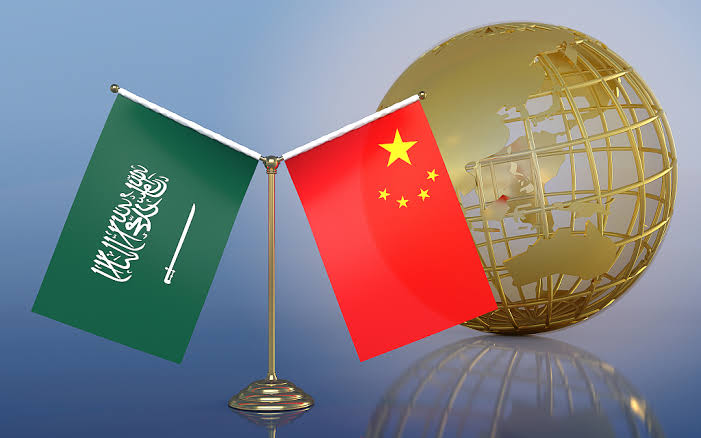
Examining Beijing’s Structural Integration into the GCC in the Aftermath of the 2026 Conflict
By Dr. Ermir I. Hajdini
Legal Analyst & University Lecturer
Focus: GCC, China, US Security Architecture, Petroyuan
- Introduction: The Realpolitik Shift Driven by the 2026 Conflict
China’s expanding footprint across the Gulf Cooperation Council (GCC) is fundamentally an arbitrage of structural limitations. The 2026 Iran war permanently altered regional perceptions by demonstrating that hosting US military infrastructure brings direct kinetic liabilities without operational veto or formal defense guarantees. Beijing is systematically exploiting what Washington lost in security predictability and financial openness, offering Gulf states an unencumbered, low-risk geoeconomic alternative.
The economic footprint of the People’s Republic of China (PRC) across the Gulf Cooperation Council (GCC) states and the broader Middle East is no longer a matter of future projection; it is an established structural reality. Historically defined by a simple ‘oil-for-manufactures’ transactional framework, Beijing’s posture in the Persian Gulf has evolved into a deep, multi-sectoral integration spanning energy, infrastructure, telecommunications, electromobility, and financial market infrastructure.
Crucially, this geopolitical realignment was vastly accelerated by the strategic fallout of the 2026 Iran war. The central thesis of this shift lies in what the United States fundamentally lost during that conflict: its claim to offer reliable, low-risk security to host nations. By initiating military escalations that predictably exposed non-combatant Gulf host states to severe Iranian missile and drone retaliation, uncoordinated US military action proved that hosting American facilities carries acute kinetic liabilities rather than absolute protection1.
Rather than directly confronting Washington’s military footprint, China is executing a calculated arbitrage. By exploiting the qualitative limits of the US security umbrella and the quantitative frictions of Western financial levers, Beijing provides GCC capitals with an unencumbered, high-scale economic partnership that enhances sovereign autonomy.
2. The Security Paradigm Breakdown: “Magnet vs. Shield”
For over half a century, the regional security architecture rested on the implicit framework of the Carter Doctrine: American military force in exchange for uninterrupted energy flows to world markets. However, the operational realities of the recent conflict dismantled this transactional trust.
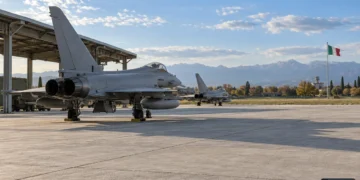
As highlighted in recent analytical assessments by Deutsche Welle and regional policy institutes, the conflict triggered an existential debate across Gulf capitals regarding whether hosting major US installations—such as Al Udeid Air Base in Qatar, the Fifth Fleet headquarters in Bahrain, or Al Dhafra Air Base in the UAE—functions as a protective shield or instead acts as a direct target magnet1,3.
| Strategic Vector | United States Security Framework | Chinese Geoeconomic Model |
| Operational Risk | High friction; host states exposed to retaliatory strikes without decision-making veto. | Zero military entanglement; strict adherence to sovereign non-interference. |
| Defense Commitments | Transactional; lacks legally binding Article 5-style mutual defense obligations. | Non-military partnership focused on industrial co-location and long-term capital depth. |
| Technology & Trade | High regulatory scrutiny, export restrictions, and CFIUS investment barriers. | Unencumbered technology deployment (5G, EVs, renewables) and joint ventures. |
| Financial Mechanics | Dollar-dominated; risk of secondary sanctions and asset freezes. | Multi-currency integration; CIPS clearing nodes and Petroyuan trade settlement. |
Three core operational dynamics broke the traditional security paradigm:
- Unilateral Operational Exposure: Gulf leadership faced immense friction after being excluded from substantive operational choices, yet taking direct hits when retaliatory strikes targeted host-nation soil, ports, and critical desalination facilities3.
- The “Magnet” Reality: Instead of deterring regional aggression, hosting foreign military staging grounds drew direct attacks from Iranian ballistic systems, transforming foreign installations into domestic liabilities.
- Absence of Binding Commitments: Despite hosting massive US military assets, GCC states lack formal mutual defense treaties. Realizing their sovereign land functioned as an exposed operational front without legally binding defense protections accelerated their pivot to non-aligned hedging.
3. China’s Geoeconomic Integration: Unencumbered Capital & Infrastructure
Beijing adeptly capitalized on Washington’s strategic misstep. While the US approaches the region through a heavily securitized, high-friction lens, China integrates directly with domestic economic development visions, such as Saudi Arabia’s Vision 2030 and the UAE’s Operation 300bn4,5.
This integration is built on tangible, localized industrial anchors:
- Industrial Anchors & Local Supply Chains: Strategic hubs like the Jazan Chinese Industrial Cluster in Saudi Arabia, the KIZAD China-UAE Industrial Capacity Cooperation Zone in Abu Dhabi, and maritime complexes around Oman’s Port of Duqm ensure Chinese capital is physically integrated into local supply chains5.
- Technology & Clean Energy: While Western firms face increasing regulatory holdouts, Chinese giants—such as Huawei in telecommunications and BYD and Envision in clean energy and electromobility—are actively building regional manufacturing, 5G, and cloud infrastructure nodes.
- Downstream Petrochemical Bindings: Major joint ventures between Saudi Aramco, SABIC, and Chinese state entities like Sinopec bind both sides into long-term refining and chemical supply chains well beyond simple crude oil trade.
4. Financial & Monetary Arbitrage: Escaping the Weaponized Dollar
The second dimension of China’s positioning addresses the quantitative limits of Western financial structures—namely, aggressive secondary sanctions, asset-freezing mechanisms, and strict regulatory friction2,4.
For Gulf sovereign wealth funds (SWFs), keeping capital entirely within dollar-denominated or Western jurisdictional frameworks represents a clear concentration risk. Beijing offers a functional financial hedge:
- Alternative Clearing Channels: The adoption of China’s Cross-Border Interbank Payment System (CIPS) alongside central bank bilateral currency swaps provides a functional settlement path outside the reach of US sanctions or SWIFT restrictions4.
- Petroyuan Infrastructure: RMB-denominated trade settlements for crude oil and industrial imports have moved from theoretical concepts to operational realities across major GCC ports2.
- Unencumbered Capital Deployment: As Western regulatory bodies like CFIUS increase scrutiny on Gulf investments in Western advanced technology and AI, China acts as a massive capital sponge, absorbing billions in Gulf SWF capital into Chinese EVs, solar, and semiconductor supply chains6.
5. Conclusion: Pragmatic Multi-Alignment
China’s expanding footprint in the Gulf does not signify a desire by GCC leaders to replace American military dominance with a Chinese equivalent. Rather, it reflects the hard lesson of recent regional conflicts: over-relying on a volatile security partner whose bases turn host territory into targets creates intolerable risk.
By leveraging what the US lost in authority and predictability during the 2026 conflict, China offers the Gulf states an unencumbered, highly scalable partnership. This allows regional leaders to construct a resilient, multipolar post-oil economy independent of military escalations in Washington.
Notes & Analytical References
1. Deutsche Welle (2026). “Economic Impact and Regional Realignments in the Wake of the Persian Gulf Escalation.” DW Global Analysis, August 2026.
2. S&P Global / Oil & Gas News (2025). “Petroyuan Settlement and Non-Dollar Clearing Networks in the GCC.” OGN Journal, Vol. 42, No. 3.
3. Middle East Council on Global Affairs (2026). “Irreversibly Shaken: Security Guarantees and Sovereignty Risks in the Post-2025 Gulf.” Policy Paper Series, No. 48.
4. Journal of Middle Eastern Geopolitics (2025). “Beyond the Security Umbrella: China’s Industrial Anchors in Saudi Arabia and the UAE.” Vol. 13, Issue 1.
5. ResearchGate Policy Studies (2026). “Situating Saudi Arabia and the GCC in China’s Belt and Road Initiative (BRI).” Monograph on Asian-Middle Eastern Integration.
6. Global Capital Review (2026). “Strategic Hedging: How GCC Sovereign Funds Are Reallocating Capital Eastward.” Wealth Management & Geopolitics Report.