


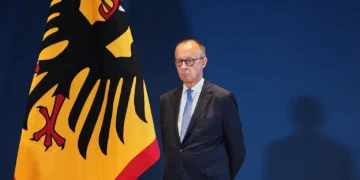










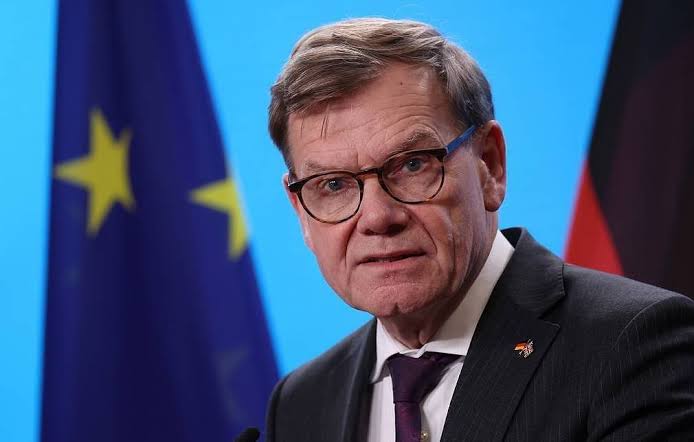
German Foreign Minister Johann Wadephul has expressed regret over Icelanders’ decision to reject renewed talks on the country’s accession to the European Union, arguing that the bloc must examine how it can become more attractive to prospective members.
“That would have been a great opportunity to grow stronger together. For the European Union, this means we must consider how we can become more attractive,” Wadephul said on Monday before departing for Tunisia, according to the German news agency dpa.
Wadephul stressed that membership of the European Union can no longer be taken for granted as an aspiration among European countries.
“It is not automatically the case that everyone aspires to join the European Union. And I think that gives us a reason to look at where we can improve, where we can work on making ourselves more attractive,” he said.
The German foreign minister added that this applies particularly to the economic prospects the EU is able to offer to countries considering membership.
Iceland’s EU bid has been frozen for years
Iceland applied for EU membership in 2009, following the collapse of its banking system during the global financial crisis.
Accession negotiations began in 2010 but were suspended three years later after a euroskeptic government came to power. The negotiations have remained frozen ever since, although Iceland has never formally withdrawn its application.
The latest decision not to move forward with the accession process represents a significant political signal for Brussels at a time when the European Union is seeking to reinforce its strategic relevance and advance its enlargement agenda.
Wadephul: EU should not lose sight of northern enlargement
Despite Iceland’s decision, Wadephul said the European Union should continue to pursue the goal of expanding toward northern Europe.
“I still believe that we should not lose sight of the goal of expanding the European Union northward. That naturally includes Iceland, but it would also include Norway,” he said.
His remarks come as the debate over the EU’s future enlargement takes on renewed strategic importance. Beyond the Western Balkans and Eastern Europe, Berlin wants to keep the possibility of closer integration with the Nordic countries that remain outside the Union on the European agenda.
© 2026 Argumentum