










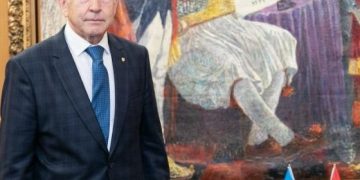


























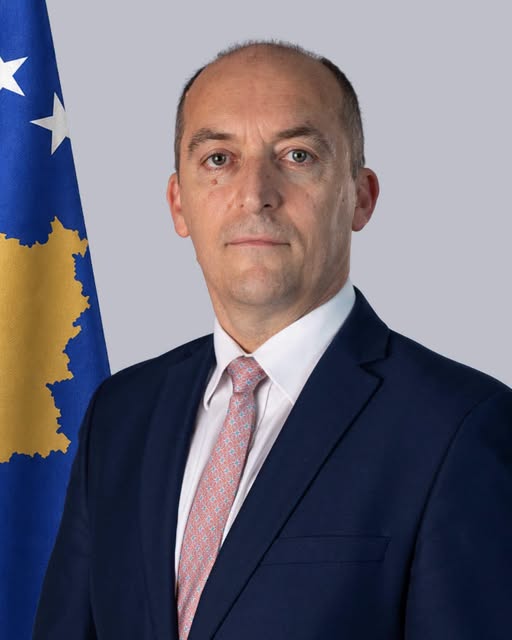
Kosovo’s ruling Vetëvendosje Movement (LVV) and the Democratic League of Kosovo (LDK) have reached an agreement on a consensus candidate for the country’s presidency, with former Constitutional Court judge and diplomat Bekim Sejdiu emerging as their joint choice.
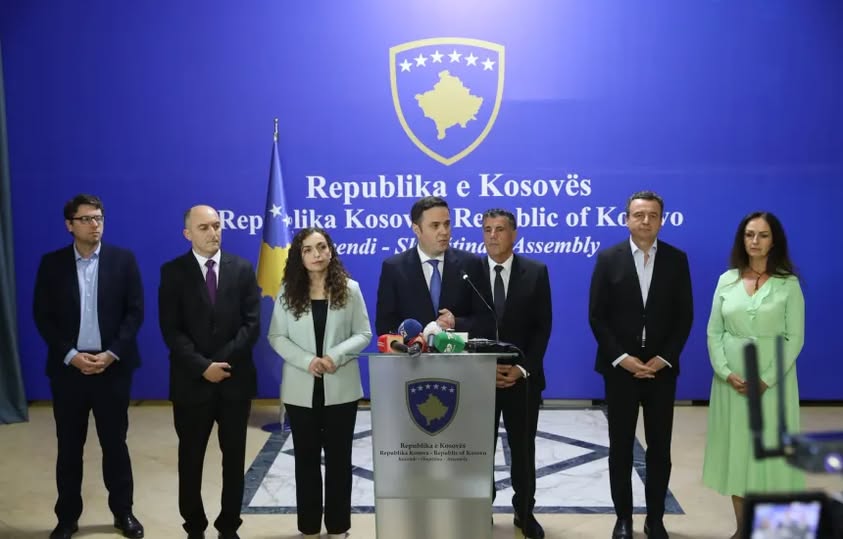
The agreement was announced by LDK leader Lumir Abdixhiku following a meeting between the two parties on Monday.
“Since July 9, we have been engaged in discussions. We were determined to find a solution that would allow us to move forward and avoid elections,” Abdixhiku said.
He described the negotiations as difficult and extensive, but said both sides had remained committed to finding a candidate who could command broader political support.
“We have had continuous discussions. We were committed to a consensus candidate. Many names were discussed, people who have contributed and who embody democratic and civic values. During our discussions, we agreed on one name: Bekim Sejdiu,” Abdixhiku said.
A legal, diplomatic and academic profile
Born in 1974, Bekim Sejdiu has held senior positions in Kosovo’s judiciary, diplomatic service and academia.
He served as a judge of the Constitutional Court of Kosovo from April 2015 until 2021, when he resigned from the position. During his tenure, he served as reporting judge in several politically significant cases.
Before joining the Constitutional Court, Sejdiu pursued a diplomatic career. He served as Kosovo’s ambassador to Türkiye from 2008 to 2012 and subsequently as Kosovo’s Consul General in New York from 2012 to 2014.
Earlier, he served as a political adviser in the office of Kosovo’s first foreign minister.
Sejdiu is also a professor at the Faculty of Law of the University of Pristina, where he has taught since 2002. His academic background includes law, international relations, democracy and human rights, and he holds a doctorate in international and diplomatic studies.
Agreement aimed at avoiding another political crisis
The agreement between LVV and LDK follows weeks of negotiations focused on finding a candidate acceptable to both sides and avoiding another political deadlock.
According to Abdixhiku, the talks began on July 9 and continued through a series of meetings before the two parties reached agreement on Sejdiu.
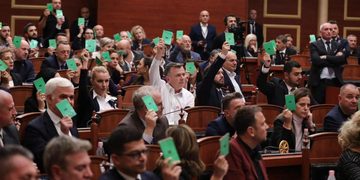
The nomination now moves to the Assembly of Kosovo, where Sejdiu will need to secure the required parliamentary majority.
A presidential candidate needs 80 votes in each of the first two rounds. If no candidate secures the required majority, a third round can be held, in which the president is elected with at least 61 votes, provided the constitutional quorum is met.
The parliamentary vote will therefore be the next major test of the agreement between LVV and LDK and of Sejdiu’s ability to secure support beyond the two parties.
The selection of a figure with experience in constitutional law, diplomacy and academia is also intended to give the presidency a profile distinct from direct party politics, at a time when Kosovo is seeking to overcome a prolonged period of political uncertainty.
© 2026 Argumentum