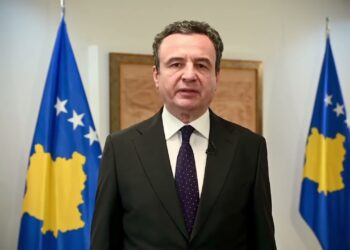











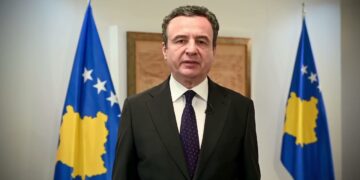






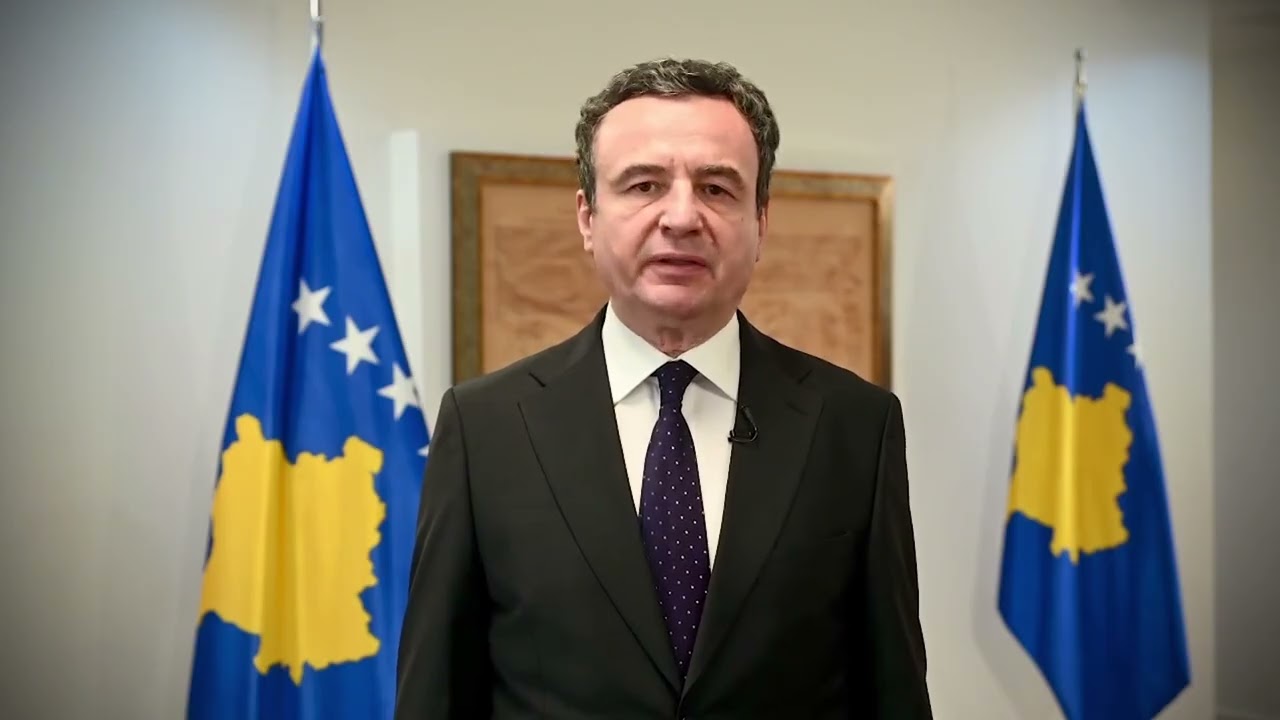
Kosovo Prime Minister Albin Kurti has described the Hague Special Chambers’ verdict against four former Kosovo Liberation Army (KLA) leaders as an “unacceptable injustice”, saying the decision should be challenged on appeal.
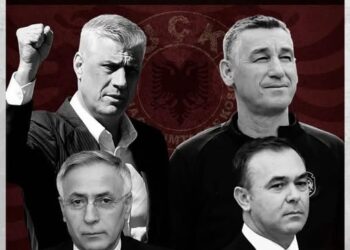
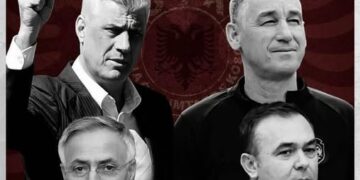
The verdict concerns former Kosovo President Hashim Thaçi, former KLA commander Kadri Veseli, Rexhep Selimi and Jakup Krasniqi, who were convicted and sentenced by the Kosovo Specialist Chambers in The Hague.
“The conviction and such a severe sentence for four former leaders of the Kosovo Liberation Army … is an unacceptable injustice,” Kurti said in a statement on Wednesday.
He said the ruling should be “changed and corrected at the appellate level as soon as possible”, adding that Kosovo’s government would continue to provide institutional support to the four men during the appeal proceedings.
Kurti also argued that the ruling should not be interpreted as a judgment on the KLA’s war as a whole.
“It was clear that this process was not a trial of the legitimacy or purity of the KLA’s war,” he said, arguing that the convictions concerned specific allegations of war crimes.
The Kosovo prime minister also criticized what he described as an imbalance in the pursuit of justice, arguing that the Specialist Chambers had focused on one side of the 1998-99 Kosovo war.
“When only members of one ethnic group are in the dock, while the state apparatus that committed massacres, expulsions and genocidal crimes remains outside the jurisdiction, the appearance of one-sided justice is inevitably created,” Kurti said.
He said Kosovo would continue to support Thaçi, Veseli, Selimi and Krasniqi throughout the appeal process.
“The government will continue, with all the means at its disposal, to support the defendants in the appeal process, where we expect this injustice to be fully corrected,” Kurti said.
The Kosovo Specialist Chambers were established to prosecute alleged crimes committed by members of the KLA during and after the Kosovo war. The proceedings against the former KLA leaders have been closely followed in Kosovo, where the KLA remains a central part of the country’s modern political and historical narrative.
Kurti said the Hague ruling should distinguish between individual criminal allegations and the broader historical context of the KLA.
“Today, specific allegations and actions were judged; the reason why the KLA was formed was not, and cannot be, condemned,” he said.
© 2026 Argumentum