




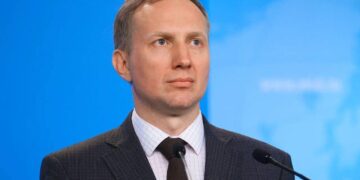




Dr. Jorgji Kote on three developments that tested Albania’s diplomacy toward Kosovo and Serbia
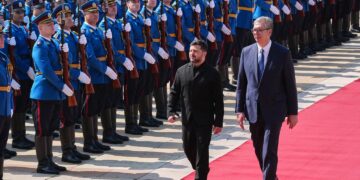
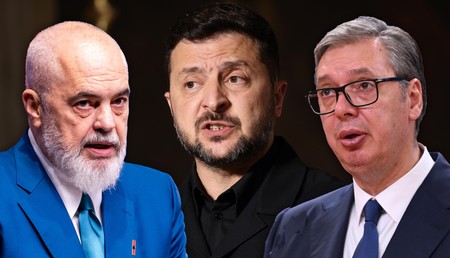
In late July, three developments drew particular public attention and raised important questions about Albania’s diplomacy toward Kosovo and Serbia: the statement by Serbian Minister Snezhana Paunović concerning the ethnic cleansing of Kosovo Albanians; the agreement in principle on opening the Albanian Consulate in Bujanoc, in the Presheva Valley, and the Serbian Consulate in Shkodra; and President Zelensky’s statement in Belgrade that Ukraine does not recognize Kosovo.
These three events, according to Dr. Jorgji Kote, also represented a test of the coherence and consistency of Albania’s diplomacy vis-à-vis Kosovo and Serbia.
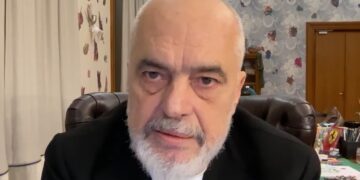
Commenting on the Prime Minister’s response to the statement by the Serbian minister, Kote argues that the position taken by Prime Minister Rama left an unpleasant impression. He notes that Rama referred to Foreign Minister Hoxha’s statement and characterized the Serbian minister’s remarks as “stupidity.” For Kote, however, the Prime Minister’s “stinginess” and negativity on such major issues, despite his willingness to speak on almost everything, have left a bad public taste.
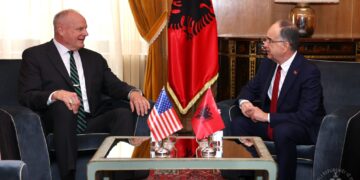
On the issue of the consulates, Kote considers the argument of reciprocity unpersuasive. In his view, reciprocity in international relations does not apply automatically, in every case or in the same field, but according to need and on a case-by-case basis.
He considers the opening of an Albanian Consulate in Bujanoc fully justifiable, given the presence of more than 100,000 Albanian citizens there and the many problems requiring solutions. At the same time, he argues that a Serbian Consulate in Shkodra is unnecessary, noting that there are only 54 Serbian citizens there and that the Serbian Embassy in Tirana is only a two-hour drive away.
“Rama’s position on this issue was therefore also pro-Serbian,” Kote argues.
The third issue concerns President Zelensky’s position on Kosovo during his visit to Belgrade. Kote notes that many Albanian citizens criticized Zelensky for stating that Ukraine does not recognize Kosovo’s independence and for claiming that Kosovo’s independence contravenes international law.
“On the contrary, the International Court of Justice confirmed in 2010 that the declaration of Kosovo’s independence was not in violation of international law,” Kote writes.
He adds that President Zelensky could have avoided answering the question directly by responding with greater diplomatic elegance rather than taking a position perceived as contrary to the European and US stance.
According to Kote, Prime Minister Rama made an even greater mistake when he rushed to label his compatriots who criticized Zelensky’s position as “turbo-folk” and nationalists.
“It would have been much better for him to remain silent rather than to demonstrate what was perceived as Serbian favouritism. He should have praised his fellow citizens instead of demonizing and victimizing them for upholding Albania’s position,” Kote concludes.
Full article
© 2026 Argumentum