











• SHQIPËRI
  • KOSOVË
  • MAQEDONIA E VERIUT
  • MALI I ZI
  • Revista në PDF
10 August, 2026
  • Home
  • OP/ED

    The West is buying time, but to whom is it giving it?

    27 July 1941 – A Site of Memory Between War, Revolution and Europe

    The cult of Saint Veneranda / Saint Pren(d)a / Saint Premte / Saint Paraskeva among Albanians

    The Self-Inflicted Decoupling: How U.S. Immigration Policy Is Ceding the Tech Edge to China

    The Blueprint Does Not Stop at the Drina

    The Underlying Logic behind China’s Economic Success

    Do Not Misuse the U.S. Declaration of Independence to Justify the Narrative of Insurrection in Albania

    The visit that changed Albania’s strategic future

    Pierre Nora and the institution of memory we lack in Eastern Europe

  • Interview

    Exclusive Interview with Oleksandr Tyshchenko: A 40-Year Legacy of Chernobyl, Nuclear Risks, and Global Responsibility

    INTERVIEW: ZLATKO KRAMARIĆ – THOUGHTS ON THE OLD CONTINENT

    EXCLUSIVE / Ukrainian Ambassador to Albania, Volodymyr Shkurov: “Ukraine wants peace, but not at the expense of its freedom and independence”

    EXCLUSIVE| Ambassador Tayyar Kagan Atay: Türkiye and Albania, a Strategic Partnership Rooted in Shared Heritage and a Common Vision for the Future

    “Diplomacy, Not War”: Palestinian Ambassador to Albania Calls for Justice, Peace, and Global Action for Gaza

    Exclusive: “Even After Tito – Tito”/ Ambassador Zlatko Kramarić on Authoritarian Legacies and Democracy’s Future in the Balkans

    The Conclusion of the Diplomatic Mission / Ambassador Dancho Markovski: Strengthening Albania-North Macedonia Relations for a Shared European Future

    A Century of Diplomatic Relations Between Albania and Russia: Exclusive Interview with the Russian Ambassador to Albania, H.E. Alexey Zaytsev

    Exclusive/ The chairman of the Freedom Party, Ilir Meta: “The will of the citizens will triumph in Albania, as it did in North Macedonia”

  • Realpolitik

    The Summit of Unity! Think of peace and prepare for war! It’s only the start to the end! Just a pause between two wars!

    Peace with war diplomacy! The protest,  image and tourism! Why this silence from the EU Commission and Council? A deal or a pause?

    Just kind words  in Tivat! Where is the peace!? A deal yes, peace No!What is happening with USA and  EU?  5 elections but no solution!

    IBAR? ”Sufficiently! Much ado about nothing! Shart contrasts in Beijing! Where is the exit?!

    Neither peace nor war! Peace with bombs?! IBAR in autumn?! Not another Hormuz in Taivan! 

    IBAR – a springing board or an obstacle? Can we catch the EU Negotiation train 2027? When the dress makes the news!  EU electoral April  ends in a draw 1:1!  

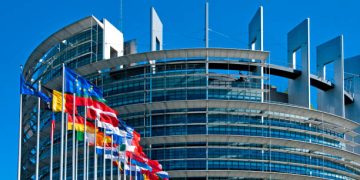
    The European Parliament building in Strasbourg, France with flags waving calmly celebrating peace of the Europe. July 12, 2020.

    EU 2027 or 2037! Even half membership failed! No exit strategy!     

    What next?

    “With diplomatic velvet“! Major question marks! In Washington yes, but  in the White House NO! A strange dinner in Brussels!

  • Current Events

    Council of Albanian Ambassadors Raises Concern Over Serbian Plan to Alter the Ibër River

    Digitalisation in the modern era as a “Trojan horse” for hybrid warfare

    The four days that changed history

    Bury Those You Killed

    The Serbian Consulate in Shkodra: A Diplomatic Step or a Project with Political Implications?

    Chinese Embassy in Albania Marks PLA’s 99th Anniversary, Reaffirms Commitment to Peace and Bilateral Cooperation

    Croatian Foreign Minister’s Visit to Tirana/Albania and Croatia Strengthen Their Strategic Partnership as Zagreb Reaffirms Support for Albania’s European Union Membership

    Albanian Parliament Approves $302 Million U.S. Military Financing Loan, Opposition Boycotts Session

    The cult of Saint Veneranda / Saint Pren(d)a / Saint Premte / Saint Paraskeva among Albanians

  • Top News

    Council of Albanian Ambassadors Raises Concern Over Serbian Plan to Alter the Ibër River

    Rama: Foreign Information Manipulation Has Become One of the Greatest Threats to Democracy and European Security

    The Council of Albanian Ambassadors condemns chauvinistic rhetoric by Serbian officials and calls for diplomatic action

    NATO at Ankara 2026: Strategic Rebalancing Between Russia Deterrence, Turkey’s Rise, and National Interests

    Daniel Serwer: A Bad War Ending Badly May Still Be Good News

    Friedrich Merz, Keir Starmer, António Costa, Donald Trump, Emmanuel Macron, Mark Carney, Ursula von der Leyen, Giorgia Meloni and Sanae Takaichi

    G7 Leaders Gather in Évian Amid Global Uncertainty, Focus on Security, Economy and International Cooperation

    Russian Ambassador in Tirana: “Without a Strong and Sovereign Russia, the Creation of a Just World Order Is Impossible”

    “The Flamingo Revolution”: Day 10 of Protests in Albania Draws International Attention

    Rama alleges ‘hybrid war’ behind protests against Kushner-linked coastal development

  • YOUR VOICE
  • Shqip
No Result
View All Result
Argumentum
  • Home
  • OP/ED

    The West is buying time, but to whom is it giving it?

    27 July 1941 – A Site of Memory Between War, Revolution and Europe

    The cult of Saint Veneranda / Saint Pren(d)a / Saint Premte / Saint Paraskeva among Albanians

    The Self-Inflicted Decoupling: How U.S. Immigration Policy Is Ceding the Tech Edge to China

    The Blueprint Does Not Stop at the Drina

    The Underlying Logic behind China’s Economic Success

    Do Not Misuse the U.S. Declaration of Independence to Justify the Narrative of Insurrection in Albania

    The visit that changed Albania’s strategic future

    Pierre Nora and the institution of memory we lack in Eastern Europe

  • Interview

    Exclusive Interview with Oleksandr Tyshchenko: A 40-Year Legacy of Chernobyl, Nuclear Risks, and Global Responsibility

    INTERVIEW: ZLATKO KRAMARIĆ – THOUGHTS ON THE OLD CONTINENT

    EXCLUSIVE / Ukrainian Ambassador to Albania, Volodymyr Shkurov: “Ukraine wants peace, but not at the expense of its freedom and independence”

    EXCLUSIVE| Ambassador Tayyar Kagan Atay: Türkiye and Albania, a Strategic Partnership Rooted in Shared Heritage and a Common Vision for the Future

    “Diplomacy, Not War”: Palestinian Ambassador to Albania Calls for Justice, Peace, and Global Action for Gaza

    Exclusive: “Even After Tito – Tito”/ Ambassador Zlatko Kramarić on Authoritarian Legacies and Democracy’s Future in the Balkans

    The Conclusion of the Diplomatic Mission / Ambassador Dancho Markovski: Strengthening Albania-North Macedonia Relations for a Shared European Future

    A Century of Diplomatic Relations Between Albania and Russia: Exclusive Interview with the Russian Ambassador to Albania, H.E. Alexey Zaytsev

    Exclusive/ The chairman of the Freedom Party, Ilir Meta: “The will of the citizens will triumph in Albania, as it did in North Macedonia”

  • Realpolitik

    The Summit of Unity! Think of peace and prepare for war! It’s only the start to the end! Just a pause between two wars!

    Peace with war diplomacy! The protest,  image and tourism! Why this silence from the EU Commission and Council? A deal or a pause?

    Just kind words  in Tivat! Where is the peace!? A deal yes, peace No!What is happening with USA and  EU?  5 elections but no solution!

    IBAR? ”Sufficiently! Much ado about nothing! Shart contrasts in Beijing! Where is the exit?!

    Neither peace nor war! Peace with bombs?! IBAR in autumn?! Not another Hormuz in Taivan! 

    IBAR – a springing board or an obstacle? Can we catch the EU Negotiation train 2027? When the dress makes the news!  EU electoral April  ends in a draw 1:1!  

    The European Parliament building in Strasbourg, France with flags waving calmly celebrating peace of the Europe. July 12, 2020.

    EU 2027 or 2037! Even half membership failed! No exit strategy!     

    What next?

    “With diplomatic velvet“! Major question marks! In Washington yes, but  in the White House NO! A strange dinner in Brussels!

  • Current Events

    Council of Albanian Ambassadors Raises Concern Over Serbian Plan to Alter the Ibër River

    Digitalisation in the modern era as a “Trojan horse” for hybrid warfare

    The four days that changed history

    Bury Those You Killed

    The Serbian Consulate in Shkodra: A Diplomatic Step or a Project with Political Implications?

    Chinese Embassy in Albania Marks PLA’s 99th Anniversary, Reaffirms Commitment to Peace and Bilateral Cooperation

    Croatian Foreign Minister’s Visit to Tirana/Albania and Croatia Strengthen Their Strategic Partnership as Zagreb Reaffirms Support for Albania’s European Union Membership

    Albanian Parliament Approves $302 Million U.S. Military Financing Loan, Opposition Boycotts Session

    The cult of Saint Veneranda / Saint Pren(d)a / Saint Premte / Saint Paraskeva among Albanians

  • Top News

    Council of Albanian Ambassadors Raises Concern Over Serbian Plan to Alter the Ibër River

    Rama: Foreign Information Manipulation Has Become One of the Greatest Threats to Democracy and European Security

    The Council of Albanian Ambassadors condemns chauvinistic rhetoric by Serbian officials and calls for diplomatic action

    NATO at Ankara 2026: Strategic Rebalancing Between Russia Deterrence, Turkey’s Rise, and National Interests

    Daniel Serwer: A Bad War Ending Badly May Still Be Good News

    Friedrich Merz, Keir Starmer, António Costa, Donald Trump, Emmanuel Macron, Mark Carney, Ursula von der Leyen, Giorgia Meloni and Sanae Takaichi

    G7 Leaders Gather in Évian Amid Global Uncertainty, Focus on Security, Economy and International Cooperation

    Russian Ambassador in Tirana: “Without a Strong and Sovereign Russia, the Creation of a Just World Order Is Impossible”

    “The Flamingo Revolution”: Day 10 of Protests in Albania Draws International Attention

    Rama alleges ‘hybrid war’ behind protests against Kushner-linked coastal development

  • YOUR VOICE
  • Shqip
No Result
View All Result
Argumentum
No Result
View All Result
Home ENGLISH

The West is buying time, but to whom is it giving it?

10 August, 2026
in ENGLISH, English OP/ED
A A
Share on FacebookShare on Twitter

By Dr. Gurakuc Kuci*

Professor at Universum College in Kosovo and External Associate at the Institute for Hybrid Warfare Studies “OCTOPUS”, specializing in hybrid warfare, geopolitics, and international relations.

Military mobilization has always been a difficult issue for the European Union, just as difficult as the creation of a common European army. However, what was avoided until only a few years ago has now become unavoidable. Germany wants the Bundeswehr to be capable of fighting a war by 2029; the EU has set the “Readiness 2030” objective, while NATO requires allies to increase overall defense spending to 5% of GDP by 2035. These dates do not predict the beginning of a war, but they indicate that Europe still lacks the capabilities required for a prolonged and high-intensity conflict.

This mobilization gap has prompted the United States, namely President Donald Trump, to pressure European countries, demanding that they assume a greater share of the security burden. The intensification of US competition with China requires increasing amounts of American attention and resources. In all of this, the West is buying time to increase weapons production, ammunition reserves, air defense capabilities, troop numbers, and military mobility, including the “Military Schengen” project. At the same time, Europe is attempting to reduce its dependence on the United States in technology, finance, payment systems, and digital infrastructure. This reflects a broader European debate over strategic autonomy (Vulin openly expresses) and resilience, extending beyond defense into technology, infrastructure, and economic security.”

However, while mobilization is a sign of future strength, it may also be a sign of present weakness. When a system declares that it needs several years to prepare for war, its adversaries understand that the West has identified the threat but is still not fully prepared to confront it.

The Window Before Western Mobilization

This period of mobilization creates a strategic window in which the West is becoming stronger, while during this transition it remains cautious and focused on crisis management without being prepared for a direct confrontation.

However, for Russian leader Vladimir Putin, this approach is presented through a different formula: “If a fight is inevitable, you have to strike first.” Putin stated this as a personal lesson and a logic of self-defense, rather than as an official declaration of a preventive war, but his formula creates the premise that if a conflict has become inevitable, it could justify acting before the opponent.

Putin’s most prominent public ally in the Western Balkans, namely in Serbia, Aleksandar Vulin, in a recent interview through the expansion of BRICSview, raised the question of why Moscow should wait until 2030, when, according to him, Europe will be ready for a direct confrontation with Russia. According to him, this extreme military action is a forced response to a future threat from the West.

These statements do not prove any joint plan to initiate a war before 2029, but they confirm a shared way of thinking: if the adversary is expected to be stronger in several years, waiting does not mean peace but a loss of initiative. Vulin openly expresses what others conceal behind terms such as “deterrence,” “self-defense,” “indivisible security,” or a “multipolar order.”

For the time being, the West is pursuing a policy of controlled pressure towards Russia by supporting Ukraine and imposing sanctions while restricting Moscow’s access to technology. However, it has continuously avoided a direct confrontation between NATO and Russia. The logic may lie in avoiding a nuclear risk, but at the same time Russia is being given time to adapt, mobilize its economy, and increase military production.

Therefore, the problem that arises is that the time the West is buying does not belong solely to the West.

This time is also being used by the West’s adversaries to weaken it from within. Disinformation and political polarization, radicalization, and the loss of trust in institutions distract societies from strategic threats and reduce their ability to act collectively. Thus, the West may become militarily stronger but, at the same time, more politically and socially fragmented during the process of mobilization.

Multipolarism is gaining ground during the waiting period.

This period of Western mobilization is providing space for the consolidation of the “multipolarist” scenario. This scenario is based not solely on the economic rise of countries such as China or the expansion of BRICS, but also on a political narrative that challenges Western primacy and seeks a redistribution of global power.

Vladimir Putin has described this vision by stating that Russia should develop as “one of the centers of a more just multipolar world that is now taking shape.” Therefore, multipolarism in Russian strategy is not only about the distribution of power among several states but also about changing the international order itself. In this vision, Russia does not see itself merely as a traditional power but as a distinct civilization with its own interests, path, and strategic space.

This idea has also been adopted by Serbia and translated into a Balkan context, where, for Serbia, the weakening of the Western order and the rise of new centers of power create opportunities for Serbia to escape the constraints of the Euro-Atlantic order and achieve its national objectives.

In this scenario, Russia and China do not need to immediately defeat the West through a direct confrontation. It is sufficient for them to reduce its ability to respond effectively in areas where it has strategic interests, exhaust it through prolonged engagements and unresolved conflicts, and create the perception that the Western order is no longer the sole guarantor of stability and power.

Through the expansion of BRICS, alternative financial mechanisms, greater use of national currencies, and the strengthening of energy, technological, and military ties, Russia and China are building alternatives that gradually weaken Western exclusivity. The current order is not being replaced immediately, but it is becoming fragmented: the more alternatives states outside traditional Western structures have, the more the West’s ability to use its instruments of influence is reduced.

This is where the strategic paradox lies. Mobilization is necessary for maintaining defense capabilities, but prolonged engagement in crises consumes political, economic, and military resources, creating room for rivals to expand. Russia and China do not need to overthrow the West through a single confrontation; they only need a system in which it remains an important actor but no longer the sole center that determines rules, institutions, and the boundaries of international action.

This is precisely the space from which countries such as Serbia also benefit, because in a system where competition between centers of power increases, smaller states gain greater room for maneuver.

After the West, peace does not necessarily follow.

The decline or weakening of the West does not guarantee a more peaceful or fairer world. This is because the actors that unite against the West do not have a shared vision for governing the world.

China, Russia, India, Iran, Brazil, the Gulf powers, and other states all have different interests, political models, and rivalries. They do not have a commonly accepted approach or a shared security architecture, let alone binding mechanisms for resolving conflicts among themselves.

As long as the West remains their primary adversary, multipolarists can set these differences aside, but if the Western center were to become significantly weakened, a leadership vacuum would emerge, and the question would become who would fill it. At that point, rivalries such as those between China and India; the asymmetry in China–Russia relations; competition between Iran and Arab powers; as well as the race for leadership of the Global South, could come to the forefront.

Therefore, BRICS may be a coalition capable of opposing, but not necessarily a coalition capable of governing.

The interwar period offers a cautionary, though imperfect, historical analogy. The First World War destroyed much of the old European order, but the system that emerged lacked sufficient legitimacy, enforcement capacity, and balance to prevent renewed great-power competition. The powers of that time exploited this vacuum and created conditions that did not end competition but instead created the conditions for another war.

Therefore, the weakening of the Western order may not result in multipolar peace but rather in conflicts that would not resolve who would replace it and under what rules.

The end of this decade may find the West militarily stronger, but it could potentially also find it in a less Western and more unstable world.

Therefore, the issue is not whether the West will be ready by 2029 but how much ground it will have lost by then or what kind of order will have emerged in the meantime.

Buying hope in exchange for time, believing that it will become stronger while allowing its adversaries to use this period, brings us back once again to the question: to whom is it giving that time?

*Originally published in Modern Diplomacy

© 2026 Argumentum
Related Posts

Current Events

Council of Albanian Ambassadors Raises Concern Over Serbian Plan to Alter the Ibër River

10 August, 2026
Balkan Overview

The Loyalty Test

9 August, 2026
ENGLISH

Global Geopolitics in Transition: Climate, Conflict and the Search for Peace

8 August, 2026

Follow US

Subscribe

Receive Argumentum Magazine by Email

Last Posts

The West is buying time, but to whom is it giving it?

10 August, 2026

Council of Albanian Ambassadors Raises Concern Over Serbian Plan to Alter the Ibër River

10 August, 2026

The Loyalty Test

9 August, 2026

Global Geopolitics in Transition: Climate, Conflict and the Search for Peace

8 August, 2026

The Subsidy Fallacy: How Rent-Seeking and Regulatory Capture Drain Western Industrial Power

8 August, 2026
Argumentum

“Argumentum”, një proces intelektual …

Contact Us

[email protected]
[email protected]
[email protected]

Follow Us

Media Partner

Register

Receive Argumentum Magazine by Email
  • Home
  • Privacy Policy
  • About Us
  • Contact

© 2022 Argumentum. All Rights Reserved. | NUIS: L91415033Q

Welcome Back!

Login to your account below

Forgotten Password? Sign Up

Create New Account!

Fill the forms bellow to register

*By registering into our website, you agree to the Terms & Conditions and Privacy Policy.
All fields are required. Log In

Retrieve your password

Please enter your username or email address to reset your password.

Log In

Add New Playlist

No Result
View All Result
  • Home
  • OP/ED
  • Interview
  • Realpolitik
  • Current Events
  • Top News
  • YOUR VOICE
  • Shqip

© 2022 Argumentum. All Rights Reserved. | NUIS: L91415033Q

This website uses cookies. By continuing to use this website you are giving consent to cookies being used. Visit our Privacy and Cookie Policy.