



































'/%3E%3C/svg%3E)
Dr. Ermir I. Hajdini
Legal Analyst & University Lecturer
Great powers rarely lose their technological dominance because their rivals suddenly become smarter. They lose it when they start treating their greatest strategic advantage as a vulnerability.
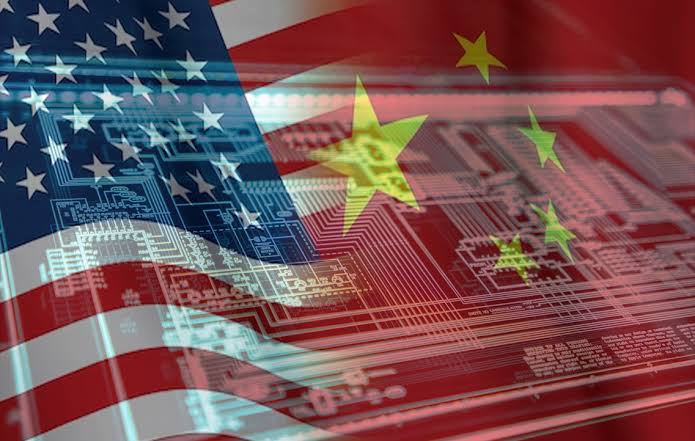
For nearly a century, the primary engine of American primacy has not merely been domestic ingenuity, but an unparalleled capacity to import the intellectual capital of the rest of the world. From the Manhattan Project to the semiconductor revolution, the United States built its technological order by opening its universities, laboratories, and capital markets to global talent. Today, as the U.S. Department of Homeland Security (DHS) dismantles longstanding “duration of status” (D/S) protections in favor of rigid visa caps, Washington is making a profound strategic error. While China actively lowers barriers to recruit top-tier STEM specialists through targeted initiatives like its new K visa, the U.S. is erecting administrative friction. The resulting shift will not be felt in the next budget cycle; it will manifest over the next generation—in the patents filed, industries founded, and breakthroughs realized on foreign soil.
The Misunderstood Asset
At the heart of Washington’s shift lies a fundamental mischaracterization of the global student body. International students are often discussed in policy circles as consumers of a service—export revenue for higher education institutions. This view is dangerously narrow. In the hard sciences, artificial intelligence, and advanced engineering, international graduate students and post-doctoral researchers are the core operational workforce of American innovation.
They populate the classrooms, run the quantum computing labs, and co-author the papers that define the frontier of science. The core of the regulatory shift lies in replacing the “Duration of Status” framework—which allowed students to remain legally as long as they maintained academic standing—with fixed admission periods restricted to a maximum of four years. Furthermore, new restrictions sharply limit a graduate student’s ability to switch institutions or academic programs.
This policy assumes that human capital and research breakthroughs operate on predictable, linear timelines. They do not.
By replacing flexible, progress-based stay parameters with rigid bureaucratic extension hurdles through U.S. Citizenship and Immigration Services (USCIS), the U.S. transforms an incubation pipeline into a hazard course of administrative uncertainty.
The Economic Cost of Bureaucratic Uncertainty
The economic argument against these restrictions is written across the balance sheets of the world’s most valuable enterprises. America’s modern industrial landscape was largely constructed by foreign-born innovators:
- Foundational Tech Leadership: Jensen Huang built NVIDIA; Sergey Brin co-founded Google; Elon Musk built SpaceX and Tesla after studying in the U.S.; Satya Nadella reshaped Microsoft; Andrew Grove transformed Intel into the world’s semiconductor leader.
- Capital and Job Creation: Immigrants have founded or co-founded nearly 60% of America’s billion-dollar privately held startups (unicorns), accounting for trillions of dollars in market valuation and creating hundreds of thousands of domestic jobs.
- Scientific Excellence: Since 2000, roughly 40% of U.S. Nobel laureates in physics, chemistry, and medicine—and nearly a third of those in economics—were born abroad.
Innovation requires long time horizons and structural stability. When legal status becomes unpredictable, top researchers do not simply endure the friction; they optimize for certainty. That certainty is increasingly found elsewhere.
Asymmetric Strategy: Beijing Opens the Door
While Washington treats international student inflows primarily through a lens of domestic risk mitigation, Beijing views talent acquisition as a core element of statecraft.
China’s introduction of the K visa represents a structural departure from traditional state-sponsored recruitment. Designed specifically for foreign STEM graduates and researchers, the K visa permits multi-entry work, research, and entrepreneurial activity without requiring an employer sponsor prior to arrival. By providing a streamlined, four-year pathway to Chinese permanent residency, Beijing is actively adopting the open-sourcing model that previously made Silicon Valley and American research universities dominant.
TALENT ACQUISITION STRATEGIES
UNITED STATES CHINA
+——————————+ +——————————+
| • Fixed 2-4 year visa caps | | • Streamlined K Visa |
| • Increased USCIS friction | VS. | • Self-sponsored residency |
| • Program transfer limits | | • Targeted STEM incentives |
+——————————+ +——————————+
China is not the only beneficiary of this strategic realignment. Middle powers such as Canada, the United Kingdom, Germany, and Australia have systematically expanded post-study work regulations to capture high-skilled STEM labor repelled by U.S. administrative friction. In a global economy, human capital is hyper-mobile.
The Generational Verdict
Proponents of stricter visa controls contend that fixed durations enhance national security by curbing visa overstays and safeguarding intellectual property. National security is a mandatory state imperative, but heavy-handed, generalized restriction misinterprets the fundamental nature of the competition. The primary technological threat facing the U.S. in the twenty-first century is not overstaying students; it is the rapid depletion of its technical talent pool in foundational fields like artificial intelligence, biotechnology, and quantum science.
History offers a simple lesson: countries rarely retain leadership in science by relying solely on native talent. They lead by remaining the default destination for human ambition.
If the United States closes its doors while its principal strategic competitor opens theirs wider, the shift will not trigger an immediate shock. It will be a compound loss—measured over the next generation in patents not filed in Delaware, research labs established in East Asia, and entire industries built somewhere else. Great power status is rarely lost in a single moment; it is traded away, piece by piece, when a nation mistakes its greatest strategic advantage for a liability.
Notes & References
- U.S. Department of Homeland Security (DHS): Final Rule on Establishing a Fixed Period of Admission and Extension of Stay Procedure for Nonimmigrant Academic Students (F), Exchange Visitors (J), and Media Representatives (I), Federal Register. Replaces open-ended “Duration of Status” (D/S) with a fixed 2- or 4-year maximum stay, requiring formal Form I-539 extension petitions and biometric vetting through USCIS for program completions extending beyond four years.
- National Foundation for American Policy (NFAP): Immigrants and Nobel Prizes: 1901 to Present. NFAP research reveals that foreign-born scientists received 40% of all U.S. Nobel Prizes in chemistry, medicine, and physics awarded since 2000, and 36% of all U.S. science Nobels since 1901.
- NFAP Policy Study: Immigrants and Billion-Dollar Startup Companies. Demonstrates that 59% of America’s privately held billion-dollar startups (unicorns) have at least one immigrant founder, with a collective valuation exceeding $5 trillion.
- Ministry of Foreign Affairs of the People’s Republic of China: Framework and Regulations Governing the K Visa Stream for International STEM Professionals. Authorizes sponsorship-free entry, multi-employer flexibility, and accelerated permanent residency eligibility for international researchers and STEM degree holders.
- National Bureau of Economic Research (NBER): Working Papers on global scientific talent mobility and regional innovation clusters, detailing the spillover effects of high-skilled immigration on domestic patent volume and venture capital allocation.
© 2026 Argumentum