








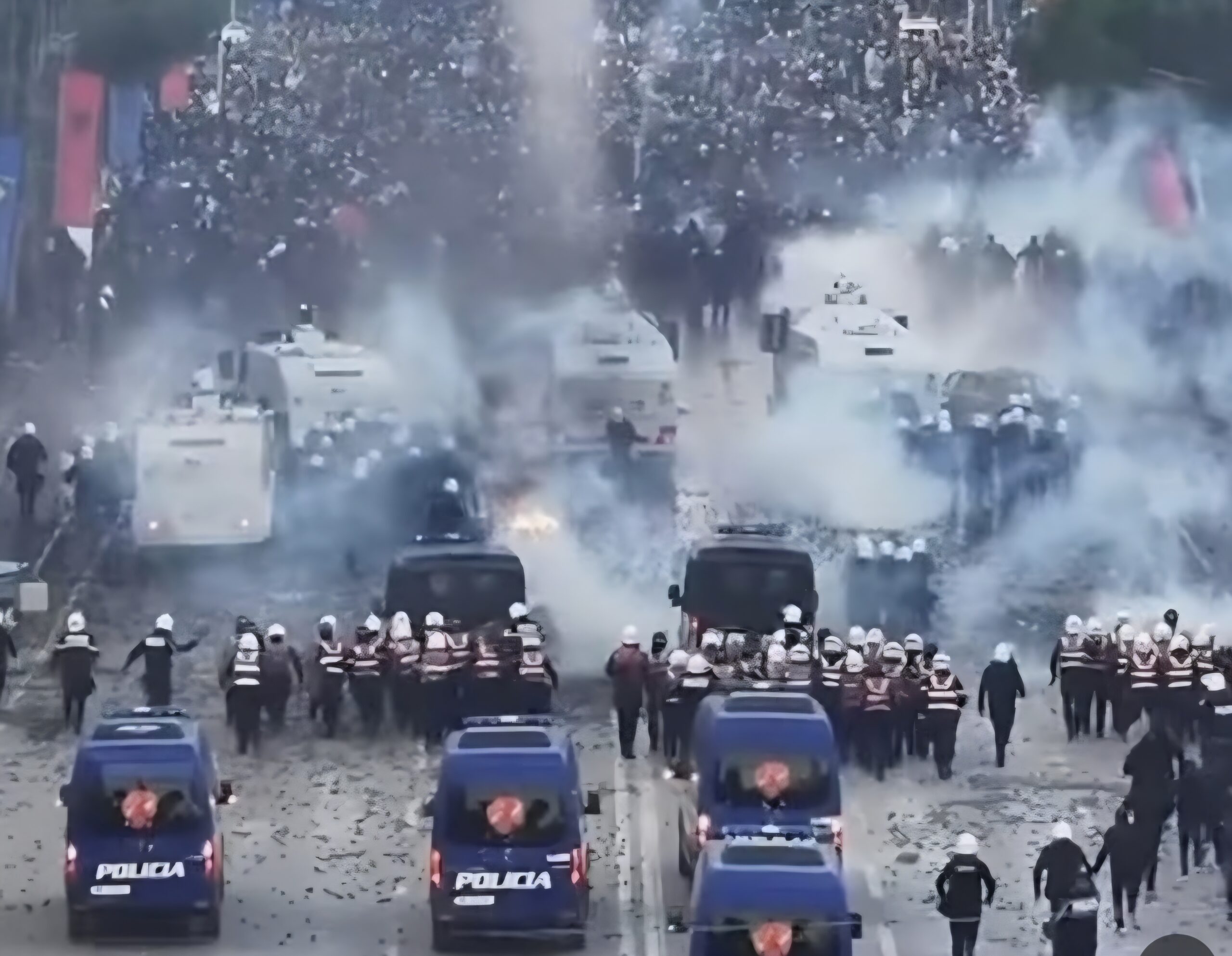
Demonstrations continue amid violent confrontations in Tirana. The prime minister rejects calls to step down and links the unrest to Albania’s European future, while the European Commission, the U.S. Embassy and religious leaders call for restraint, dialogue and respect for the rule of law.
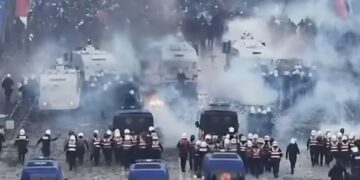
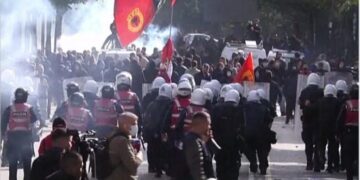
TIRANA, October 18, 2026 — Student-led and citizen protests against the Albanian government entered their sixth day on Sunday, amid repeated clashes between demonstrators and State Police in Tirana. Prime Minister Edi Rama has ruled out resigning, while the European Commission, the United States Embassy and representatives of Albania’s religious communities have called for peace, restraint and respect for democratic rights.
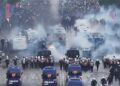
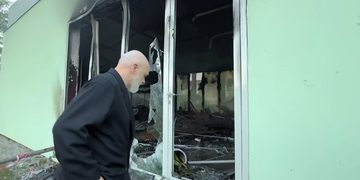
Protesters have demanded Rama’s resignation, raising concerns over corruption, education, employment and opportunities for young people. In recent days, demonstrations have been marked by stone-throwing, fireworks and incendiary devices directed at police, as well as fires and damage to public and private property. Police have responded with tear gas, water cannons and rubber bullets.
Rama Rules Out Resignation, Links Protests to EU Integration
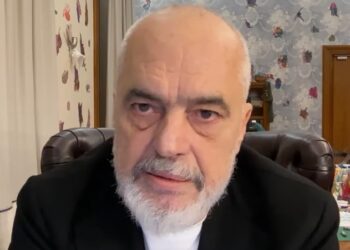
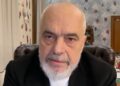
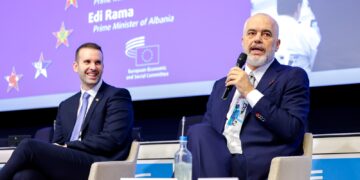
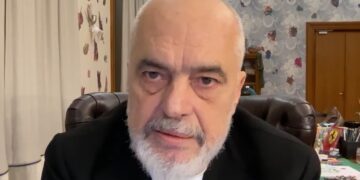
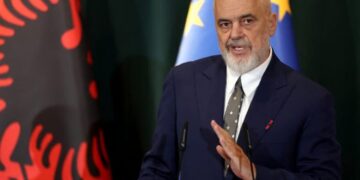
In a live social media broadcast from his office, Prime Minister Edi Rama said his government would not back down in the face of violence and reiterated that he would not resign because of the protests.
Rama linked the unrest to Albania’s European aspirations, saying the country’s goal of joining the European Union by 2030 was being challenged by the recent developments.
He accused political opponents of inciting violence and raised the possibility of foreign actors being involved. These allegations were part of the prime minister’s statements.
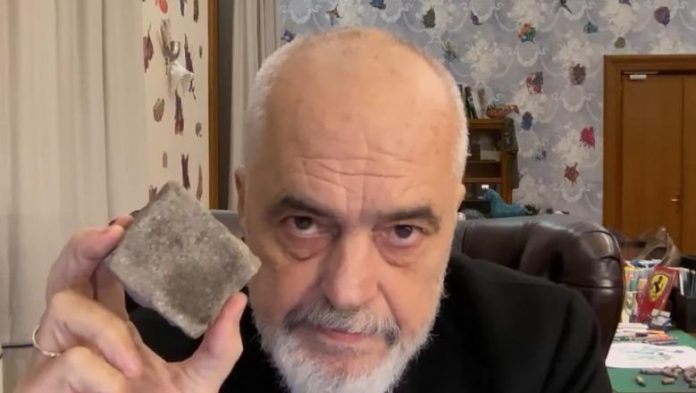
Rama also said he understood the reasons behind public dissatisfaction but rejected violence against businesses, institutions and public and private property. Referring to the 1998 attack on the Prime Minister’s Office and the collapse of Albania’s pyramid schemes in the 1990s, he compared the current unrest with earlier periods of political and economic instability.
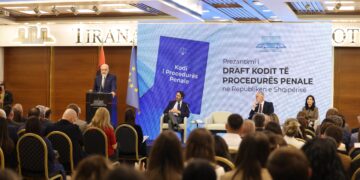
The prime minister said he was willing to meet students who wanted dialogue, either at the Prime Minister’s Office, at their university or in another setting. He also expressed readiness to discuss their demands, including issues related to the cost of education.
Clashes with Police and Arrests
The protests have resulted in injuries on both sides and damage to public and private property. According to figures from Albania’s Ministry of Health cited by Al Jazeera on October 18, 65 people had been injured during the reported events that morning, including 37 police officers, while 12 people had been hospitalized. The same report put the total number of injured since Tuesday at 272, including 169 police officers.
Police had filed criminal charges against 388 people in connection with the protests. Figures for arrests, criminal charges and injuries vary depending on the reporting period and source.
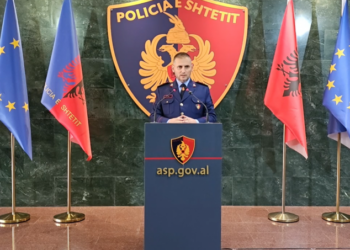
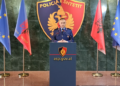
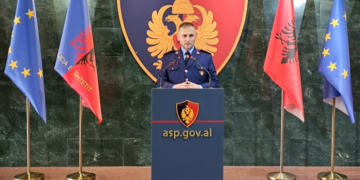
Albanian media have also reported that State Police Director General Skënder Hita announced the suspension of seven officers and the opening of disciplinary investigations into their conduct during the demonstrations.
European Commission Condemns Violence, Calls for Proportionality
The European Commission condemned acts of violence in Tirana and other Albanian cities, citing arson, attacks on state institutions and the destruction of public and private property.
“Violence has no place in a democratic society, and the response to it must remain within the limits of the law and be proportionate,” the Commission said.
It stressed that those responsible for violent acts must be held accountable through due legal process. At the same time, it underlined that freedom of assembly and freedom of expression are fundamental rights and core European values that must be exercised peacefully.
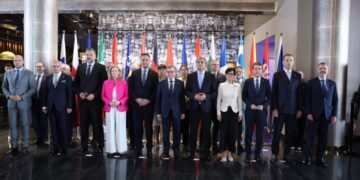
The Commission welcomed the Albanian authorities’ commitment to protecting the right to protest and urged all sides to address grievances through constructive dialogue, emphasizing Albania’s commitment to the EU accession process.
U.S. Embassy Urges Peaceful Demonstrations
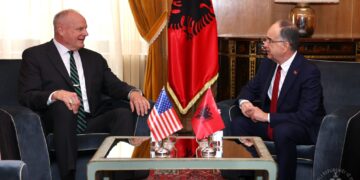
The U.S. Embassy in Tirana called on citizens to exercise their right to protest peacefully, condemning violence, unrest and property destruction.
“Violence, physical harm to others and the destruction of property are not civic engagement,” the embassy said in a statement published on social media.
The embassy also urged all parties to exercise restraint and remain calm.
Religious Leaders Call for Peace, Dialogue and Accountability

Albania’s main religious communities have issued statements calling for social peace, restraint and dialogue amid the protests. Their messages have emphasized both the need to reject violence and the responsibility of institutions to address citizens’ concerns.
Muslim Community: Institutions Must Listen to Citizens
The Muslim Community of Albania called for the preservation of social peace, restraint and dialogue between the parties.
It stressed that freedom of expression, the right to protest and the demand for accountability are important parts of social life. The community urged institutions to take citizens’ concerns seriously and called on all sides to avoid inflammatory rhetoric, hatred and actions that could deepen divisions.
“Preserving peace, respecting others and avoiding every form of violence are a shared responsibility,” the statement said.
The community also emphasized that disagreements should be resolved through dialogue, mutual listening and respect for the law and institutions.
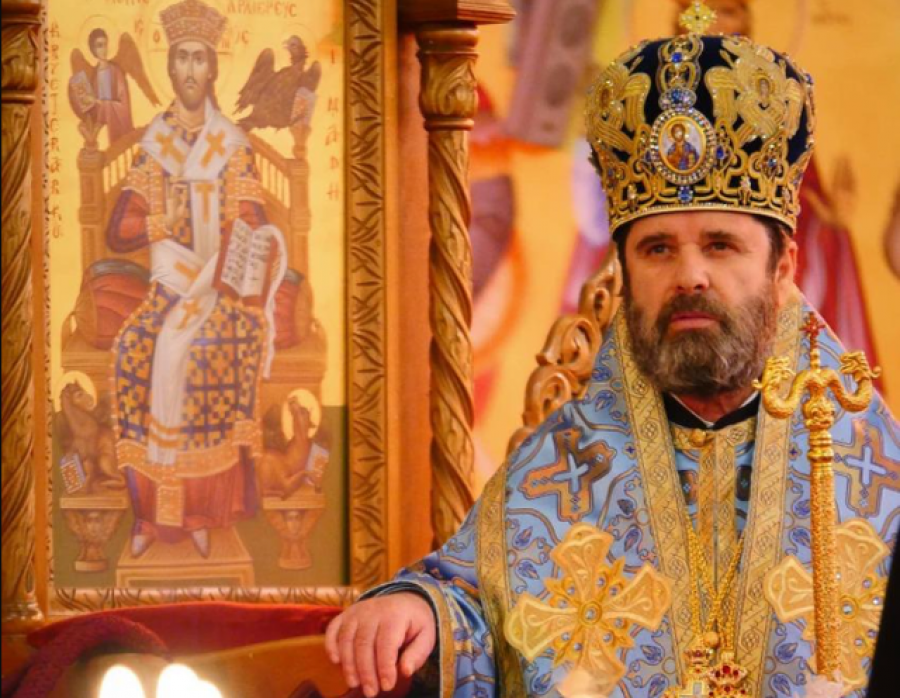
Archbishop Joan: Albania Belongs to Everyone
Archbishop Joan of Tirana, Durrës and All Albania called on those responsible for decision-making to act with wisdom and maturity in the service of the country and its citizens.
“Albania belongs to everyone. All those who live here are part of it, and everyone has the right to participate in building it,” he said after the Divine Liturgy.
The archbishop expressed hope that decision-makers would find the wisdom needed to make appropriate choices for the country’s future.
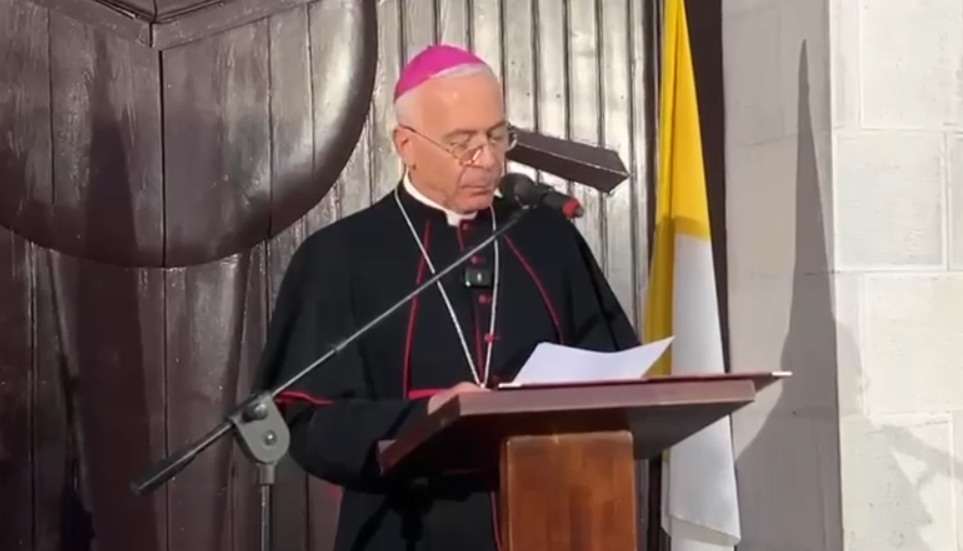
Archbishop Giovanni Peragine: Responsibility Requires Concrete Decisions
Archbishop Giovanni Peragine of Shkodër condemned violence while emphasizing that public dissatisfaction could not be ignored.
“The responsibility of the authorities is not measured by statements, but by concrete decisions,” Peragine said.
He called on the authorities to listen to citizens, address the causes of public discontent and take difficult decisions when necessary in the interests of the country.
Peragine also stressed that condemning violence did not remove the government’s responsibility to respond to citizens’ concerns. In a separate message about Shkodër, he described the city as a common good belonging to all its citizens, rather than to any individual, institution or privileged group.
The protests have intensified pressure on Prime Minister Edi Rama, who has ruled out resigning. As calls for dialogue grow, the government faces demands to address public grievances while maintaining order and protecting the right to peaceful protest. The unrest also puts Albania’s EU integration ambitions in focus.
© 2026 Argumentum