








EXCLUSIVE FOR ARGUMENTUM.AL
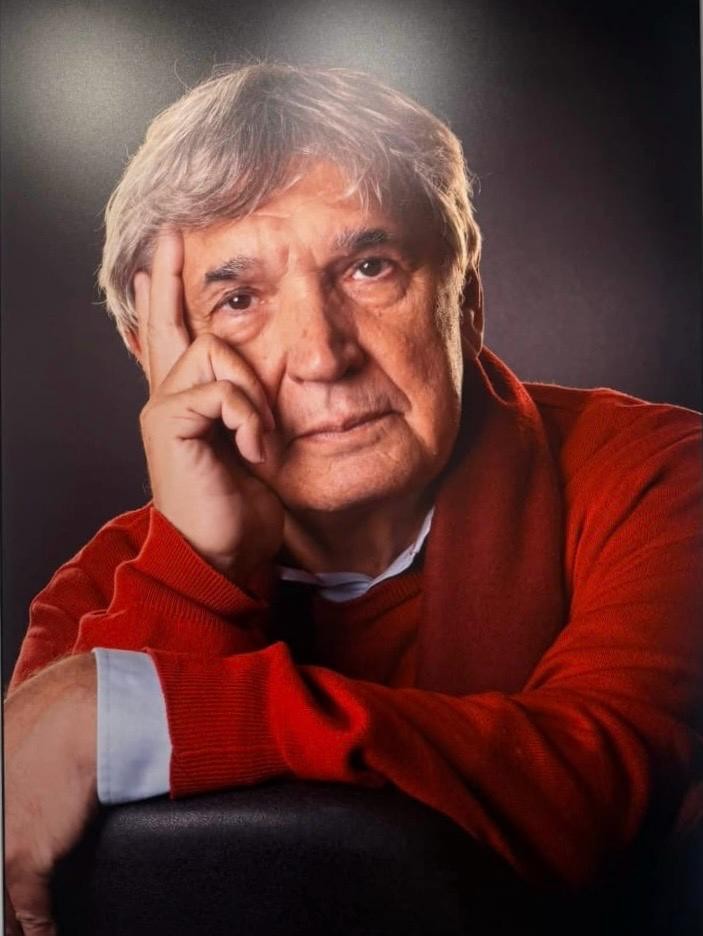
H.E. Zlatko Kramarić
Ambassador of the Republic of Croatia to Albania
The students’ victory has toppled the political monopoly of the longest-lived political coalition in Serbia, the black-red coalition, which largely defined Serbia’s political transition, but which has still not taken a position on the question of Serbia’s future political direction. There is no doubt that the fall of this black-red coalition is a historic opportunity for radical political and other changes in Serbian society, but without a clear programme, without an honest confrontation with the past and without the renewal of institutions, this event could remain just one more change of political actors, one more failed attempt to truly change Serbian society.
1. The end of the black-red coalition and of a political era
The parliamentary elections in Serbia on 25 October 2026 produced a result that until yesterday seemed hard to achieve, because none of the serious political analysts expected such a convincing victory of the students’ list and defeat of the political bloc gathered around Aleksandar Vučić. Furthermore, the decision of Ivica Dačić’s Socialist Party of Serbia/SPS to run on its own proved to be a mistake. Yet the other (civic?) parties that decided to contest these elections fared no better. In the end, these elections turned into a classic referendum: for vs. against!
And when it comes to the political fate of the SPS, this is not just the electoral defeat of one of the longest-ruling parties in Serbia. It is about the possible end of a political era in which Serbian nationalism, the socialist legacy, an authoritarian political culture and personalised power were linked together, in various combinations.
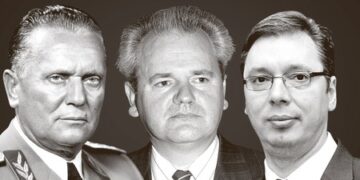
The black-red coalition was not merely a technical alliance of political parties. It symbolised the long-standing continuity of Serbian politics since the 1990s. It all began with S. Milošević and his nationalist project of “all Serbs in one state”, and ended (sic?!) with the political strategies of A. Vučić, which boiled down to a combination of radical nationalism and participation in European integration processes. It should be said here that those processes came down exclusively to EU financial injections, foreign investment and a declarative readiness for Serbia, too, to become a full member of the EU at some (distant) point in the future!
This is not to say that all these political formations were identical. Their methods, international position and economic policies differed. But there is an important line of continuity between them, in which the national question was always a means of political mobilisation, the past was often used to legitimise the present, and institutions had to adapt unconditionally to the needs of those in power. Therefore, one of the most important tasks of the new government will be the depoliticisation of all state institutions, because only in that way can they be freed from the iron embrace of the executive power.
That is why the absence of the SPS from the new parliament is an important symbolic event. A party that for decades was one of the pillars of Serbian politics, and in the Vučić era an important coalition partner, is now left without parliamentary representation. This closes a chapter of the transition which, despite changes of name, leaders and political vocabulary, was sustained for too long on the same ideological and personnel reserves.
Yet the end of one coalition does not yet mean the end of the political culture that sustained it. That culture can, without major obstacles, continue through (fragile) institutions, the media, (para)security structures, clientelist networks and social notions of the nation, the state and its enemies.
2. The students’ victory: a great coalition of discontent, but not yet a political project
The students’ list achieved what the established opposition parties had long failed to do, managing to bring together a large part of social discontent and turn it into an electoral victory. The movement that grew out of the protests after the collapse of the canopy at the railway station in Novi Sad, in which 16 people died in November 2024, became the centre of political change. The demand for accountability grew into a broader protest against corruption, impunity and the legal protection of irresponsible politicians, and against the authoritarian way in which the country has been governed for years. This victory contains something more than the sum of votes for a new political option. It is an expression of deep distrust of the existing political elite, including a large part of the traditional opposition, which in these elections fared just like the SPS – they failed to cross the electoral threshold!
However, this is also where the first serious problem of the victorious movement begins: its strength came from its ability to unite different, often opposing political options around what they no longer want, and not necessarily around a shared idea of what they actually want to build.
The students’ list gathered people of different political experiences, worldviews and expectations. In it one can recognise liberal, civic and pro-European orientations, but also traditional, conservative sovereigntist views on the position of the Serbian nation. For some of them the main goal is the European democratisation of Serbia; while others believe that the corrupt elites and regime media should be removed as soon as possible, but where those activities do not presuppose a radical change of existing notions about national identity and foreign policy priorities.
Such heterogeneity is not in itself a flaw. On the contrary, in a society deeply divided and burdened by long-lasting rule, the ability to connect different groups can be a great democratic advantage. But there is a difference between a coalition that can win elections and a political community that can govern responsibly after winning them.
The winning list will have to show whether it can preserve unity without suppressing internal differences. If it tries to avoid every controversial issue, as it skilfully did during the election campaign, it risks making uncertainty its permanent political method. If, on the other hand, it prematurely imposes a single worldview that the majority of its supporters do not share, it could lose precisely the breadth that made its victory possible. So the question is not only how long the student movement will remain united, but on what its unity will be based in future: whether it will be a common adversary or common rules of democratic life.
3. What are plenums today, and what should politics be tomorrow?
Plenums are one of the most interesting elements of the student movement, but also one of its greatest institutional challenges. They arose as a form of direct, collective decision-making, with an emphasis on participation, debate and resistance to existing hierarchy. In the circumstances of the student blockades such an organisation has its logic, because it allows a large number of participants to be included, reduces dependence on the ambitions of individual leaders and makes it harder for political opponents to discredit the whole movement by attacking one person.
But can the same model be transferred to the governing of a state?
A state is not a student plenum. It has to make decisions on the budget, taxes, energy, security, health, education, international agreements and relations with other states. Such decisions cannot be postponed indefinitely until the consent of all participants is reached. What is needed are clear decision-making procedures, a division of responsibility, expert preparation and the possibility for citizens to punish, at the next elections, those who have failed their – often unrealistic – expectations. Plenums can be a source of democratic legitimacy, but they cannot by themselves replace political institutions such as parliament, political parties…
That is why it would be wrong to declare them in advance either the ideal model of future democracy or merely a transient form of protest organisation. Their value will be shown in their ability to build a bridge to the institutions of representative democracy, rather than permanently bypassing, ignoring them…
This includes the question of attitude towards parties. Distrust of the established parties is understandable after years of political monopolisation, but it does not follow that democracy is possible without parties. Parties are needed so that interests can be organised, programmes compared, responsibility assigned and power changed. Democracy without the monopoly of a single party does not mean democracy without parties. It means a system in which no party, movement or leader can simply appropriate the state.
If the student movement wants to remain faithful to its original principles, it will have to show that it is capable not only of mobilising citizens but also of building transparent, accountable and democratic procedures. Admittedly, that will be a much more complex job than the electoral victory itself.
4. Elections as a referendum: a victory that swept away the opposition
These parliamentary elections turned into a kind of referendum on Vučić. A large part of the voters voted not primarily for a worked-out political programme of the students’ list, but against the political system that Vučić personified.
Therein lies also the explanation for the electoral defeat of the traditional opposition. The parties that for years presented themselves as an alternative to those in power have vanished from Serbia’s political life. According to published projections, no other list competing under the general electoral threshold secured representation, while parliamentary seats were won only by certain minority lists, but only because different rules of the electoral game apply to them.
How are we to understand this result?
First of all, as an expression of deep distrust of the political intermediaries who were supposed to articulate citizens’ discontent. The traditional opposition failed to convince voters that it could be a credible bearer of change. The student movement took over the role that the opposition parties had long been trying to fulfil, but without particular success. Although even among them there are certainly high-quality politicians, such as Tepić, Aleksić, Manojlović, Grbović, Ponoš, Stefanović…
Second, the electoral referendum simplified the political offer. Instead of a contest between several programmes, voters were confronted with an almost binary decision: the continuation of the existing order or its change.
Such mobilisation can be effective when the goal is to remove a long-standing government. But a referendum is not the same as a political mandate for every single policy of the future government. Citizens who voted for the students’ list did not thereby necessarily agree to the same model of relations towards the European Union, Russia, Kosovo, NATO, national identity or social policy.
Third, the election result raises a serious question about the future of the parties that remained outside parliament. Will they renew themselves, reshape themselves and try to find a new role, or will they disappear from the political scene? Will new parties appear that try to occupy the space between the student movement and the remnants of the old opposition?
It is possible that Serbia is entering a period in which parliamentary politics will be marked by two large formations: on one side the heirs of the current government, and on the other the heterogeneous student majority. But in the long run, such a concentration need not guarantee stability at all. Some analysts have already predicted possible fragmentation within both blocs! If it turns out that the students’ list has no common programme, or if it disappoints part of its voters, the space for a new political articulation will open quickly. That is why it is not enough to say that the opposition lost. It would be more precise to say that voters largely rejected the previous form of opposition politics.
This does not mean that the reasons for which those parties emerged have disappeared, nor that their voters have ceased to exist. On the contrary, political interests and worldviews do not disappear just because their representatives did not enter parliament, and they will have to find new forms of organisation.
The question of the future of Serbian democracy is therefore not only whether the students’ list can successfully take over power, but also whether a credible opposition can emerge outside it. Without one, a familiar paradox could repeat itself: the movement that toppled a political monopoly would gradually become a new monopoly itself.
5. Foreign policy: Europe, Russia, China and Kosovo
The greatest test of the student majority could come precisely in the area of foreign policy.
Internal reforms, the fight against corruption and the independence of institutions can be the common denominator of the movement. But relations with the European Union, Russia, China, NATO and Kosovo open questions on which its components can differ deeply.
The campaign so far has shown that the students’ list did not want to put foreign policy issues in the foreground. Such a strategy is understandable, because any clear commitment could have put off part of the voters and endangered the broad coalition of discontent. Still, the absence of clear answers cannot permanently replace a foreign policy strategy.
Furthermore, Serbia must answer whether it wants to understand EU membership as a real strategic goal, or will continue to use European integration as a source of financial aid and political legitimacy, without readiness for the changes that EU processes require. It is not enough to declaratively support the European path. It implies an independent judiciary, free media, an effective fight against corruption, protection of human and minority rights, regional stability and alignment with European foreign and security policy. In other words, the European perspective cannot be reduced to a question of investment and the opening of negotiating chapters.
And when it comes to Russia, it will be particularly hard to reconcile the different expectations within the student movement. For years Serbia maintained close ties with Moscow, relying on energy cooperation and Russian support on the question of Kosovo. At the same time, such a policy limits the possibility of consistent rapprochement with the European Union, especially with regard to Russian aggression against Ukraine. The students’ list has already signalled opposition to introducing sanctions on Russia. This shows that political change in Belgrade does not automatically mean a radical turn in relations with Moscow. Thus one of the most radical critics of A. Vučić, Professor J. Bakić, immediately after the election victory gave an interview precisely to Russia Today. That is a medium which is on the EU’s “blacklist”!?
Chinese investments, infrastructure projects and political cooperation have become an important part of Serbia’s development strategy. The new government will have to decide whether to continue existing arrangements, re-examine their financial and legal terms, or try to bring them in line with more transparent public procurement rules and European standards. This is not about Serbia having to choose between any economic cooperation with China and Europe, but about whether it can conduct that cooperation without creating non-transparent obligations and political dependence.
Kosovo is perhaps the most sensitive issue. The student movement cannot avoid continuing the dialogue with Priština, because that dialogue is necessary for regional stability and Serbia’s European perspective. But continuing the dialogue does not mean that the new government will easily reach an agreement, nor that it will be able to simply abandon the established national positions, which boil down to the slogan: Kosovo is the heart of Serbia!
It will be important to distinguish political declarations from concrete obligations, such as the implementation of previously agreed accords (the one in Brussels, the one in Ohrid…), the position of the Serb community in Kosovo, security guarantees and the normalisation of everyday relations. Any escalation can again become a means of internal mobilisation and replace the debate on the necessary reforms in society.
Finally, the student majority will have to show that it is capable of conducting a foreign policy that is not merely a reaction to the pressures of the great powers. This means that it will have to define its priorities clearly and explain to citizens how its positions fit together.
If Europe is a strategic goal, then that must also be visible in the attitude towards Russia, the rule of law and dialogue with Priština. Otherwise the European path will be reduced to a mere narrative for naive Euro-enthusiasts, rather than a consistent and uncompromising state policy.
6. Ratko Mladić, the Serbian Orthodox Church and the limits of confronting the past
Likewise, one of the indicators of how honest the narrative about readiness for radical political change is will be the attitude towards the past. Serbia cannot become a stable democracy if it remains trapped in a selective memory of the wars of the 1990s, in which its own victims are acknowledged, while crimes committed in the name of its own nation are relativised or passed over in silence, from the genocide in Srebrenica to the aggression against Croatia and Bosnia and Herzegovina… Moreover, it is not enough to condemn individual war criminals. It is necessary to understand how the political, media and social conditions arose in which nationalist mobilisation, the dehumanisation of others and violence could be presented as a legitimate defence of national interests.
Ratko Mladić is not merely the name of one convicted war commander. His symbolic position in part of the Serbian public space shows how difficult it is to separate national identity from the mythologisation of wars and the denial of responsibility. Mladić was convicted by a final judgment before the International Criminal Tribunal for the former Yugoslavia, among other things for genocide in Srebrenica.
That is why the incident at the students’ list pre-election rally in Niš, when those gathered drove away a group that had brought a flag with Mladić’s image, carries special weight. That event showed that in the student movement there are people ready to reject the glorification of a war criminal. But at the same time it warns that such attitudes have not entirely disappeared from society. As far as we know, representatives of the students’ list have not publicly stated what they think about R. Mladić’s state funeral itself, or about the speech of Patriarch Porfirije at that event, who not so long ago also spoke about the possibility of changing borders in “these parts”. The removal of a large poster of Vojislav Šešelj from the Serbian Radical Party building in Novi Sad after the announcement of the election victory carries similar symbolic weight. For years the poster was a visible sign of the normalisation of a political tradition linked to aggressive nationalism and the war past. Its removal can be read as an expression of an honest wish to break with such symbols. But such a thing is possible, for now, only in Vojvodina, which does not mean that people think the same way in other parts of Serbia.
But one must be careful here. One removed poster is not the same as a change in social consciousness. One clash with Mladić’s supporters does not mean that Serbian society has reached a consensus on Srebrenica, on responsibility for the wars, or on the negative role of its own policies in all those events. After all, in Niš the election victory was celebrated with songs that glorified war criminals.
Therefore, the real question is: will the new political majority be ready to enable a serious, public and institutional confrontation with the past, including education, the media, judicial accountability and the attitude towards victims of all nationalities?
Here, then, the question of the role of the Serbian Orthodox Church in Serbian society must also be opened. The Church is an important social and national actor, but its influence must not be equated with the voice of all believers, nor with the unified position of the whole of society. The attitude of the church leadership towards nationalism, the war legacy and political power will be an important indicator of how deep the readiness for change goes. After all, the project of the “Serbian world” (“srpski svet”) is more a project of the Serbian Orthodox Church than of Serbian politics to date, in which Vučić and Vulin were merely executors of that project.
A democratic state does not require conflict with religion. It requires a clear distinction between religious institutions and state power, respect for freedom of religion, and the principle that no church can have a veto over democratically elected institutions. If, however, religious authority is used for the political justification of national exclusivity or for relativising crimes, then a problem opens up that goes beyond the relationship between state and Church, namely the problem of the attitude towards the very idea of civic equality.
That is why readiness to confront the past is much more than one chapter of a future programme. It is a test of Serbia’s ability to become a political community in which belonging to the nation need not be proved by denying the victims of others.
The removal of Šešelj’s poster and the rejection of Mladić’s flag can be encouraging signs. But only future decisions on education, public commemorations, the media and institutional accountability will show whether these signs are the beginning of a more lasting change.
7. Vučić’s concession of defeat: political realism or a new tactical retreat?
Aleksandar Vučić conceded electoral defeat. But it would be naive to assume that he thereby automatically accepted the political consequences of his own long rule. His statement can be interpreted as an acknowledgement of the election result, but also as a move by a politician who knows that at a given moment it is more useful for him to accept defeat than to risk being accused of openly contesting the will of the voters. The concession itself is not proof that he has given up his ambitions, political methods or influence over state institutions. It is precisely here that one must distinguish political cunning from a real change of political strategy.
For years Vučić showed an exceptional ability to adapt to circumstances. He knew how to change rhetoric, change political alliances, address Brussels, Moscow and Beijing at the same time, and use different themes to mobilise his supporters. His political strength was based not only on popularity but also on control of a large part of the media space, party infrastructure, patronage networks and a strong personalisation of power.
Therefore his electoral defeat should not be seen as a moment in which all the mechanisms of the previous government vanish. On the contrary, he could try to remain the centre of political conflict even after losing the parliamentary majority. In that case every mistake of the new government would become an argument that the students are incompetent, irresponsible or incapable of governing the state.
There is also the danger that political conflict is deliberately kept at a high level in order to further exhaust and polarise society, so that the new majority would gradually lose public support. This is a possibility that must be taken seriously.
The same goes for suspicions that Vučić is behind certain attacks on media newsrooms in order to incite further unrest in society. Admittedly, such accusations require concrete evidence. Political responsibility for an atmosphere in which journalists are systematically attacked is not the same as proof of direct responsibility for an individual incident. Still, context matters. Organisations that monitor media freedom have recorded numerous verbal attacks by representatives of the authorities on journalists, while after the elections incidents were recorded in the newsroom of the television station Informer and gatherings in front of other television stations. This shows how hard it will be to calm a society in which the media have for years been drawn into political conflict. Admittedly, many of those media (TV Pink, TV Happy, Informer…), for many other reasons, and not only ideological ones, took part actively and with great passion in those wars, in which they systematically stigmatised the opposition, individual journalists, the EU, Croatia…
A double responsibility should therefore be demanded of the new government. It must protect journalists, investigate violence and ensure that no one is above the law. But at the same time it must not respond with the methods used by the previous government. They must be aware that media freedom cannot be defended by attacking newsrooms, just as the rule of law cannot be built by selective persecution of political opponents. The most important proof of democratic change will not be how the new government treats its own supporters, but how it protects the rights of its opponents.
8. The technical government and the invisible continuity of power
One of the questions that comes to mind is why so little attention is paid in public debate to the technical government and the institutions that continue to operate while the political majority changes.
This is particularly important because an election victory does not mean that the winner immediately takes over all the levers of power. The administration, public enterprises, regulatory bodies, security services, the prosecution and the judiciary have their own procedures, personnel structures and power relations. Part of those structures can continue to function regardless of the change in parliamentary majority.
A technical government is not undemocratic in itself. Its purpose is to ensure the continuity of the state until a new government is formed. But if it has wide powers, and its ministers continue to run important departments, then questions arise about political accountability, the limits of its mandate and its ability to make decisions with long-term consequences. It is most interesting that after these incidents nobody asked the question: and what is the technical government doing? Why is I. Dačić, the minister of the interior, silent while citizens/a mob break into the premises of certain media houses?
In a democratic transition it is precisely at this point that one often sees how real the change is. The old political majority can lose parliament and yet keep part of its influence through appointed officials, management structures and institutions that are not immediately subjected to new democratic control.
So it is not enough to ask who will be the new prime minister and who will get particular ministries. One should ask who will control public spending, how public procurement will be carried out, who will answer for controversial projects, how the heads of regulatory bodies will be chosen and whether the independence of the judiciary will be ensured.
It is especially important to avoid two extremes.
The first is the belief that it is enough to replace the people at the top and that institutions will democratise by themselves. The second is the belief that the entire state apparatus is so compromised that it should simply be cleansed of all people linked to the previous government.
Both approaches carry serious risks. The first may preserve the old power networks, and the second produce political purges and replace one kind of loyalty with another.
Transparent appointment criteria, independent investigations, a professional civil service and individual accountability are needed. Being close to the new majority is not enough for someone to be absolved of responsibility; nor is belonging to the old administration enough for someone to be declared guilty.
Democratic change must mean a change of rules, not just a change of winners.
9. Can Vučić accept that he is no longer the centre of the political system?
Vučić’s political model was based on the idea that he is the only actor capable of keeping Serbia stable, defending its interests and managing the contradictions between the great powers. Such personalisation of power was at once the source of his strength and the weakness of the system. When political legitimacy is tied so closely to one person, every defeat becomes more than the defeat of a party: it becomes a blow to the entire structure of power. That is why the question now arises whether Vučić will try to act as a standard political opponent or will continue a politics in which every decision of the new majority turns into a conflict with him personally.
It is possible that he will try to retain influence through the party organisation, public appearances and friendly media. It is also possible that he will seek to portray the new government as a threat to stability, national interests or Serbia’s international position. These are only certain political possibilities, not predetermined outcomes. But if he wants to keep his credibility, Vučić will have to accept what is the democratic essence of these elections: no politician has a right to power because he believes he is irreplaceable.
At the same time, the student majority must avoid the temptation of turning Vučić into the only theme of its politics. If all its decisions are determined by a wish to undo everything he has done, then he will remain the centre of political life even after defeat.
Genuine change comes only when society no longer organises its own political relations around one person, whether it celebrates that person or, with equal passion, rejects him.
In other words, Vučić’s greatest political defeat would be the moment when Serbia no longer needed either Vučić or anti-Vučić as the basis of its political identity.
10. What kind of Serbia after the elections: a society without parties or a democracy without monopoly?
Perhaps the most important consequence of these elections is that Serbia has entered a period in which the traditional party system can no longer count on the previous patterns of political loyalty.
That is at once an opportunity and a danger.
The opportunity lies in the fact that citizens have shown that political power is not immutable and that even long-lasting rule can be defeated when discontent is linked to a credible demand for accountability. The danger lies in the fact that distrust of parties can turn into a belief that party politics itself is unnecessary or should be replaced by some form of direct (phantom/plenum) decision-making. But who, then, in such a system will represent the different interests of citizens? Who will articulate the interests of workers, entrepreneurs, farmers, pensioners, national minorities and different worldview groups? Who will answer for decisions that turn out to be wrong?
These questions cannot be answered by appealing to general unity, civic solidarity or common resistance to corruption. Those are important goals, but they do not remove the real and painful differences in society.
That is why the future of the parties that remained outside parliament will depend not only on their ability to renew themselves organisationally. It will also depend on whether they manage to explain convincingly what they truly offer the citizens of Serbia, who are tired of previous political strategies.
Some of the old parties may disappear. Others could reshape themselves, change leadership and find a new political role. It is also possible that a new political organisation will gradually develop out of the student movement, while some of its participants will try to preserve the movement outside the party system. It would not be desirable to say in advance which of these possibilities is optimal. It is important, however, to insist on the principle that political pluralism is not an obstacle to democracy but its necessary condition.
If after this electoral victory only one dominant political force were left, without a credible parliamentary opposition and without developed institutions that can control power, then the possibility would open up that Serbia replaces one form of political monopoly with another, not at all gentler one. Admittedly, that would not cancel out the historic significance of these elections, but it would considerably limit their democratic reach.
11. What will in the end decide the success of the students’ victory?
The success of this political change will not be measured only by how quickly a new government is formed or how many people are removed from their previous positions. It will be measured by the new majority’s ability to solve several fundamental problems.
First, will it ensure the independence of institutions, especially the judiciary, the prosecution and the media, and allow corruption to be investigated without political interventions?
Second, will it offer a sustainable economic and social policy programme, instead of letting citizens’ expectations remain at the level of general promises?
Third, will it clearly define foreign policy priorities and show what a European perspective concretely means for Serbia?
Fourth, will it be capable of conducting dialogue with Priština and contributing to regional stability, instead of letting national questions once again become a means of internal mobilisation?
Fifth, will it open space for a serious confrontation with the war past, without relativising crimes and without turning history into an instrument of day-to-day politics?
And, finally, perhaps most important: will the new majority accept that its democratic legitimacy does not derive from having defeated Vučić, but from exercising power in accordance with rules that apply to everyone?
That is the difference between a change of government and the democratisation of society.
Conclusion: the referendum is over, politics is only beginning
The parliamentary elections in Serbia on 25 October 2026 can be seen as a historic turning point. They combined discontent with long-lasting rule, the demand for accountability after the Novi Sad tragedy, and the wish of a large part of society to break with a political system that identified the state too much with one person.
The victory of the students’ list opened up space for a change that the traditional opposition had not managed to achieve. At the same time, its breadth, internal heterogeneity and insufficiently worked-out answers to some key political questions show that a victory is not the same as a finished project for the future.
It is not yet clear whether the unity born in the protests can be turned into a responsible political organisation. It is not clear whether the new majority will succeed in establishing democratic control over all state institutions that were for years exposed to the pressures of those in power. Nor is it clear whether Serbia will make a more decisive turn towards the European Union, change its attitude towards Russia and open space for a more serious confrontation with the past.
That is precisely why there is no reason either for excessive pessimism or for uncritical euphoria.
These elections are not proof that Serbia has already become the democratic state its protesters wanted. They are proof that a political system that seemed almost unchangeable can nevertheless be defeated at the polls.
And that is no small thing.
But now the harder part begins. The student majority will have to show whether it can limit power by rules, whether it can recognise the legitimacy of its opponents, and whether it can face all those questions (Kosovo, Russia, the EU, relations with neighbours, confronting the past…) which the united protest consciously set aside.
Serbia no longer has to live politically only in relation to Vučić. But it must build institutions that will prevent a new Vučić from appearing.
That is why the most important message of these elections may be precisely the one that goes beyond their immediate meanings: democracy does not begin only when the authoritarian leader departs. It begins when society builds rules because of which no future leader will be able to become irreplaceable.
The referendum against the previous order has given its answer. Now begins the political process in which we shall only then see what kind of Serbia is ready to become.
© 2026 Argumentum