





• SHQIPËRI
  • KOSOVË
  • MAQEDONIA E VERIUT
  • MALI I ZI
  • Revista në PDF
4 June, 2026
  • Home
  • OP/ED

    Cyber Attribution, Corruption, and the False-Flag Question in Albania’s 2022 Alleged Iranian Cyberattack

    Between Russia, Iran and Europe: Azerbaijan as a balancing power in the South Caucasus

    The Zero-Tariff Gate: Sovereignty as a Service in the Sino-African Corridor

    Albania vs. the Sea/ Marginal Notes on A. Leka’s Novel The Hidden Side of the Albanian Socialist Garden

    May 9 and the long shadow of a Letter: Is Europe still Schuman’s Project?

    The Arbnesh of Zadar: A living memory of Albanian identity on the Adriatic coast

    Science Diplomacy and Academic Freedom: A strategic nexus for contemporary diplomacy

    Serbia and Kosovo between new regional alliances and old geopolitical patterns

    Hungarian Writers and the European Spirit: Between Central Europe, Auschwitz, and Inner Exile

  • Interview

    Exclusive Interview with Oleksandr Tyshchenko: A 40-Year Legacy of Chernobyl, Nuclear Risks, and Global Responsibility

    INTERVIEW: ZLATKO KRAMARIĆ – THOUGHTS ON THE OLD CONTINENT

    EXCLUSIVE / Ukrainian Ambassador to Albania, Volodymyr Shkurov: “Ukraine wants peace, but not at the expense of its freedom and independence”

    EXCLUSIVE| Ambassador Tayyar Kagan Atay: Türkiye and Albania, a Strategic Partnership Rooted in Shared Heritage and a Common Vision for the Future

    “Diplomacy, Not War”: Palestinian Ambassador to Albania Calls for Justice, Peace, and Global Action for Gaza

    Exclusive: “Even After Tito – Tito”/ Ambassador Zlatko Kramarić on Authoritarian Legacies and Democracy’s Future in the Balkans

    The Conclusion of the Diplomatic Mission / Ambassador Dancho Markovski: Strengthening Albania-North Macedonia Relations for a Shared European Future

    A Century of Diplomatic Relations Between Albania and Russia: Exclusive Interview with the Russian Ambassador to Albania, H.E. Alexey Zaytsev

    Exclusive/ The chairman of the Freedom Party, Ilir Meta: “The will of the citizens will triumph in Albania, as it did in North Macedonia”

  • Realpolitik

    IBAR? ”Sufficiently! Much ado about nothing! Shart contrasts in Beijing! Where is the exit?!

    Neither peace nor war! Peace with bombs?! IBAR in autumn?! Not another Hormuz in Taivan! 

    IBAR – a springing board or an obstacle? Can we catch the EU Negotiation train 2027? When the dress makes the news!  EU electoral April  ends in a draw 1:1!  

    The European Parliament building in Strasbourg, France with flags waving calmly celebrating peace of the Europe. July 12, 2020.

    EU 2027 or 2037! Even half membership failed! No exit strategy!     

    What next?

    “With diplomatic velvet“! Major question marks! In Washington yes, but  in the White House NO! A strange dinner in Brussels!

    From a great ‘apple of disaccord’ to a  point of  cooperation! A bad start! The strange absence in Davos!

    5 lessons from the American 3 January! Don’t count the chicken before they are hatched! Will NATO freeze in Greenland? Wrong diplomatic messages!

    German Chancellor Friedrich Merz, European Commission President Ursula von der Leyen, Ukraine's President Volodymyr Zelenskiy, U.S. Special Envoy Steve Witkoff and Jared Kushner, son-in-law of U.S. President Donald Trump line up for a family photo opportunity at the Chancellery in Berlin, Germany, December 15, 2025.    REUTERS/Lisi Niesner/Pool

    A Strategy that could change the world! Europe in Berlin! Why an historic compromise? Only charm diplomacy in Athens!

  • Current Events

    Serbia – China 2026: Technological partnership, geopolitical positioning and a new phase of the Chinese presence in the Western Balkans

    The Digital Protectorate: How the EU AI Act Codified Silicon Valley’s Monopoly

    The 28th MFC Annual Conference in Durrës / Sulaj: Microfinance remains a key instrument for financial inclusion

    Serbia at the Crossroads of EU Integration and Geopolitical Balancing: IFIMES Analysis

    Tirana – €20 Million EU–Banking Agreement Boosts Albanian SMEs

    The Myth of Independence: How Chinese Efficiency is Rewriting the Constitution of Modern Geopolitics!

    Europe Yesterday and Today: Why 9 May Still Matters

    “EU4Municipalities II” Project, a Strategic Investment for Strengthening Municipalities and Accelerating Albania’s Path towards the EU

    Eight Years in the Service of Identity: The Journey of the Montenegrin Community in Albania

  • Top News

    No End in Sight: Trump, Netanyahu and the Expanding Middle East War

    Tirana – €20 Million EU–Banking Agreement Boosts Albanian SMEs

    “EU4Municipalities II” Project, a Strategic Investment for Strengthening Municipalities and Accelerating Albania’s Path towards the EU

    Albania, Italy deepen defence ties with naval shipbuilding deal

    U.S. Embassy: Iran-Linked Groups May Target Americans and Iranian Opposition in Albania

    The Council of Albanian Ambassadors disappointed with the voting of the draft law on the foreign service in the parliamentary committees.

    Prime Minister Edi Rama Addresses Israel’s Knesset in Historic Special Session

    Kazakhstan’s Strategic Reform Agenda: Stability, Modern Governance, and Responsible Diplomacy

    Trump Invites Rama to Peace Board, Prime Minister: Proud of Albania

  • YOUR VOICE
  • Shqip
No Result
View All Result
Argumentum
  • Home
  • OP/ED

    Cyber Attribution, Corruption, and the False-Flag Question in Albania’s 2022 Alleged Iranian Cyberattack

    Between Russia, Iran and Europe: Azerbaijan as a balancing power in the South Caucasus

    The Zero-Tariff Gate: Sovereignty as a Service in the Sino-African Corridor

    Albania vs. the Sea/ Marginal Notes on A. Leka’s Novel The Hidden Side of the Albanian Socialist Garden

    May 9 and the long shadow of a Letter: Is Europe still Schuman’s Project?

    The Arbnesh of Zadar: A living memory of Albanian identity on the Adriatic coast

    Science Diplomacy and Academic Freedom: A strategic nexus for contemporary diplomacy

    Serbia and Kosovo between new regional alliances and old geopolitical patterns

    Hungarian Writers and the European Spirit: Between Central Europe, Auschwitz, and Inner Exile

  • Interview

    Exclusive Interview with Oleksandr Tyshchenko: A 40-Year Legacy of Chernobyl, Nuclear Risks, and Global Responsibility

    INTERVIEW: ZLATKO KRAMARIĆ – THOUGHTS ON THE OLD CONTINENT

    EXCLUSIVE / Ukrainian Ambassador to Albania, Volodymyr Shkurov: “Ukraine wants peace, but not at the expense of its freedom and independence”

    EXCLUSIVE| Ambassador Tayyar Kagan Atay: Türkiye and Albania, a Strategic Partnership Rooted in Shared Heritage and a Common Vision for the Future

    “Diplomacy, Not War”: Palestinian Ambassador to Albania Calls for Justice, Peace, and Global Action for Gaza

    Exclusive: “Even After Tito – Tito”/ Ambassador Zlatko Kramarić on Authoritarian Legacies and Democracy’s Future in the Balkans

    The Conclusion of the Diplomatic Mission / Ambassador Dancho Markovski: Strengthening Albania-North Macedonia Relations for a Shared European Future

    A Century of Diplomatic Relations Between Albania and Russia: Exclusive Interview with the Russian Ambassador to Albania, H.E. Alexey Zaytsev

    Exclusive/ The chairman of the Freedom Party, Ilir Meta: “The will of the citizens will triumph in Albania, as it did in North Macedonia”

  • Realpolitik

    IBAR? ”Sufficiently! Much ado about nothing! Shart contrasts in Beijing! Where is the exit?!

    Neither peace nor war! Peace with bombs?! IBAR in autumn?! Not another Hormuz in Taivan! 

    IBAR – a springing board or an obstacle? Can we catch the EU Negotiation train 2027? When the dress makes the news!  EU electoral April  ends in a draw 1:1!  

    The European Parliament building in Strasbourg, France with flags waving calmly celebrating peace of the Europe. July 12, 2020.

    EU 2027 or 2037! Even half membership failed! No exit strategy!     

    What next?

    “With diplomatic velvet“! Major question marks! In Washington yes, but  in the White House NO! A strange dinner in Brussels!

    From a great ‘apple of disaccord’ to a  point of  cooperation! A bad start! The strange absence in Davos!

    5 lessons from the American 3 January! Don’t count the chicken before they are hatched! Will NATO freeze in Greenland? Wrong diplomatic messages!

    German Chancellor Friedrich Merz, European Commission President Ursula von der Leyen, Ukraine's President Volodymyr Zelenskiy, U.S. Special Envoy Steve Witkoff and Jared Kushner, son-in-law of U.S. President Donald Trump line up for a family photo opportunity at the Chancellery in Berlin, Germany, December 15, 2025.    REUTERS/Lisi Niesner/Pool

    A Strategy that could change the world! Europe in Berlin! Why an historic compromise? Only charm diplomacy in Athens!

  • Current Events

    Serbia – China 2026: Technological partnership, geopolitical positioning and a new phase of the Chinese presence in the Western Balkans

    The Digital Protectorate: How the EU AI Act Codified Silicon Valley’s Monopoly

    The 28th MFC Annual Conference in Durrës / Sulaj: Microfinance remains a key instrument for financial inclusion

    Serbia at the Crossroads of EU Integration and Geopolitical Balancing: IFIMES Analysis

    Tirana – €20 Million EU–Banking Agreement Boosts Albanian SMEs

    The Myth of Independence: How Chinese Efficiency is Rewriting the Constitution of Modern Geopolitics!

    Europe Yesterday and Today: Why 9 May Still Matters

    “EU4Municipalities II” Project, a Strategic Investment for Strengthening Municipalities and Accelerating Albania’s Path towards the EU

    Eight Years in the Service of Identity: The Journey of the Montenegrin Community in Albania

  • Top News

    No End in Sight: Trump, Netanyahu and the Expanding Middle East War

    Tirana – €20 Million EU–Banking Agreement Boosts Albanian SMEs

    “EU4Municipalities II” Project, a Strategic Investment for Strengthening Municipalities and Accelerating Albania’s Path towards the EU

    Albania, Italy deepen defence ties with naval shipbuilding deal

    U.S. Embassy: Iran-Linked Groups May Target Americans and Iranian Opposition in Albania

    The Council of Albanian Ambassadors disappointed with the voting of the draft law on the foreign service in the parliamentary committees.

    Prime Minister Edi Rama Addresses Israel’s Knesset in Historic Special Session

    Kazakhstan’s Strategic Reform Agenda: Stability, Modern Governance, and Responsible Diplomacy

    Trump Invites Rama to Peace Board, Prime Minister: Proud of Albania

  • YOUR VOICE
  • Shqip
No Result
View All Result
Argumentum
No Result
View All Result
Home ENGLISH

Leadership for Thought: Non-Permanent members lead the Security Council through COVID-19

27 April, 2020
in ENGLISH, English OP/ED
A A
Share on FacebookShare on Twitter

By  Elizabeth Deheza

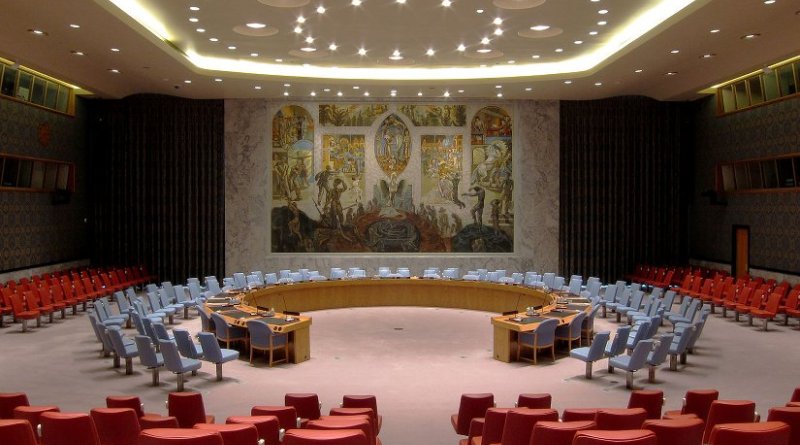
China held the Presidency of the United Nations Security Council in March this year: COVID-19 was deemed not to be a security issue. By the end of March, confirmed deaths with the virus had grown past 40,000 globally and the U.N.’s Secretary General, António Guterres, stated that the socioeconomic impacts of COVID-19 were a multiplier of instability, unrest and conflict[2]  in an attempt to engage the Security Council. The Presidency of the Security Council passed to the Dominican Republic this month and the Caribbean country has the opportunity to spur the Security Council into action.

The United Nations champions multilateralism but is often criticised for “doing everything and doing nothing” and has been denounced for the lack of a rapid and appropriate response to global challenges. “We have discussed COVID-19 every day since 13th March,” reassures one U.N. diplomat, but so far, the response has been ideological communiqués rather than pragmatic propositions or resolutions to collectively combat the effects of the pandemic.

On 23rd March, despite his “limited freedom” the United Nations Secretary General António Guterres, strategically called for a global cease-fire and an aid package for the most vulnerable, which was praised as the most serious proposal that has emerged since the pandemic. Additionally, the 193-member General Assembly this month passed a non-binding resolution that called for “intensified international cooperation to contain, mitigate and defeat” the Coronavirus.

The Security Council has been suffering from a lack of action. In March, under China’s Presidency, the outbreak was not deemed to be a security issue and no action was taken. In recent weeks there has been mounting media pressure and calls from member states to force the Security Council to address the effects of the pandemic within its mandate. “We had to give in, but under any other circumstances it would be unimaginable for [a health issue] to be discussed under the Security Council’s mandate”, stated a current member of the Security Council. Tan Sri Hasmy Agam, formerly Malaysia’s representative on the Security Council and Prof. Anis H. Bajrektarevic disagree and describe clearly the ‘International security dimension of COVID-19[3] , arguing that the potential impacts on international peace and security mean that the issue, “indisputably falls under [the Security Council]’s mandate”. It should also be noted that the Security Council did debate the impact of AIDS on peace and security in Africa in 2000.

Despite the “archaic views of a few members on how the Security Council should work”, this month, the Council, under the Presidency of the Dominican Republic, implemented the working methods prepared by the previous presidency to start Video Teleconferences (VTCs). “The pandemic forced us to develop working methods that have allowed us to carry the agenda despite the difficulties of not being able to physically meet,” said a non-permanent member of the Security Council triumphantly. While it is helpful that the members can now talk to each other after several weeks, many businesses and institutions implemented similarly ground-breaking technological innovations overnight!

After much resistance, particularly from China and South Africa, the Security Council had its first closed-door virtual meeting on 9th April to discuss the COVID-19 crisis. While this is good progress, there are significant barriers to any action, “It would be very detrimental for the UN SC to make its discussions on the pandemic public as that would demonstrate that its structure does not allow it to go beyond the vetoes of the permanent members (P5),” said a Latin American diplomat. In particular, the increasing tensions between the US and China have truncated any meaningful outcome, “They are in the middle of an ideological and strategic war,” continued the diplomat.

And yet, as the crisis deepens, negotiations on a possible resolution appear to be moving forward. Just as one draft resolution negotiated between the P5 stalled, another resolution between the non-permanent members was put forward, and currently all members are negotiating both resolutions as a single document. The finger-pointing and wording disputes between the US and China persist and, while France is working to smooth this relationship, new disagreements have emerged around the possibility to include in the resolution, the relaxation of unilateral sanctions against countries that have been heavily hit by the pandemic and need aid, such as Iran. Considering the scale and gravity of the pandemic, the fact that the P5 and the Security Council in general are getting bogged down on lexical semantics, is unacceptable.

All eyes are on the Security Council this month and they cannot remain silent on what is happening. Coordinating a response to this situation will require great leadership and Latin America, through the Dominican Republic’s Presidency of the Security Council has an opportunity to be front and centre. “The President has to ease tensions and blunt the edges of conflict among some of the members, especially the permanent members, and to generate close cooperation and unity in dealing with this global health trauma,” said a distinguished diplomat that has served twice on the Security Council. And yet, “the possibility of non-permanent members influencing these bureaucratic practices, stagnant, anchored in a history that we already know, are minimal,” emphasised a non-permanent member state of the Security Council.

The Presidency’s role is primarily to guide and align the Council, and within its limitations, the Dominican Republic can play an effective leadership role in handling an international crisis of monumental proportions. “What would be required for such a leadership role are qualities of clear-sightedness, level-headedness and outstanding diplomatic skills, among others,” said a senior Asian diplomat.

As part of this month’s agenda, the Dominican Republic launched an open, high-level VTC entitled, ‘Protection of civilians from conflict-induced hunger’. While the event had been planned for months and the agenda already set, the Presidency successfully shaped the conversation to not only cover food insecurity and conflict-related starvation but also to include discussion on the related security impacts of COVID-19, for example, through disruption of food supply chains.

The response from the virtual attendees was remarkable, with all the briefers and interventions from different countries including consideration of the threats multiplied by the pandemic. For example, the Director-General of the Food and Agriculture Organization (FAO), Qu Dongyu highlighted COVID-19 as one of the ‘shocks’ together with conflicts, extreme weather, desert locusts and economic shocks that are likely to “push more people into acute food insecurity”. The Presidential Statement of this event will hopefully produce a unanimous message on hunger and conflict, a much-needed sign of unity to identify common problems and seek common solutions.

This outcome could be an encouraging step for the Dominican Republic to assume greater leadership around the impacts of COVID-19 and its effects on international peace and security for the remainder of the month. The Latin American nation should seek to conclude its Presidency by helping the Security Council to focus on the gravity and wide-reaching nature of the situation and work together on a resolution that directly addresses the threats of the pandemic and offers pragmatism in the management and the recovery, even if differences between the P5 persist. “The global pandemic presents both a challenge and an opportunity for a small Caribbean member state of the world body to demonstrate a much-needed leadership role to mobilize the international community to effectively combat COVID-19 and spare the world from further untold tragedy,” said an optimistic veteran of diplomacy.

The Caribbean nation will finish its Presidency at the end of April and while there are only a few days left, its diplomatic skills will be put to the test in the coming days at other important events including one on 27-29 April for the “Intergovernmental Negotiations on the Security Council Reform” (IGN) where five points of convergence and disagreement will be debated: 1) categories of membership to the Council (i.e. permanent, non-permanent, or a third option), 2) the question of the veto, 3) regional representation, 4) size of an enlarged Council and working methods, and 5) the relationship between the Council and the General Assembly. Each bloc of states (the S5 Group, the G4, the African Group, the L.69 Group, the Arab Group, Uniting for Consensus, the Caribbean Community, etc) have different positions, agendas and vision; “it’s a Tower of Babel’, assured a UN diplomat, “without forward-looking conditions, we will not advance the debate”. During this debate, the Dominican Republic could proactively try to reorganise the fronts between all the different positions of the UN regional groups and mark certain lines in the negotiation process.

The Dominican Republic could provide the same guidance to its own regional group within the United Nations, the Latin American and Caribbean States Group (GRULAC), which is considered “non-functional” due to its internal ideological struggles. “We must rebuild, remove the regional groups from their ideological struggle and make it a place where a conversation and eventually a consensus can be generated”, reflected a diplomat of a GRULAC member state. The Caribbean nation, through its prominent role in the Presidency, “has the platform to propose an initiative that would put a specific work agenda in place as a mechanism for consultation and agreement rather than as a mechanism of ideological confrontation,” explained the same diplomat. Another Latin American diplomat agrees that there is an opportunity for the Dominican Republic to show leadership, “the Dominican Republic ambassador could be a valuable interlocutor if considered as a sensible person and not seen as a threat to other activities within the Security Council”.

The pandemic and its effects have laid bare the importance of decisive, visionary leadership and concerted action in such a critical point of human history and also provides an opportunity to the international community and its leaders to galvanise the process of change where multilateralism, compassion and social consensus are no longer a policy of choice./IFIMES
Related Posts

Current Events

Serbia – China 2026: Technological partnership, geopolitical positioning and a new phase of the Chinese presence in the Western Balkans

1 June, 2026
ENGLISH

IBAR? ”Sufficiently! Much ado about nothing! Shart contrasts in Beijing! Where is the exit?!

1 June, 2026
ENGLISH

How Alkida Lushaj is redefining democratic inclusion globally

31 May, 2026

Follow US

Subscribe

Receive Argumentum Magazine by Email

Last Posts

Serbia – China 2026: Technological partnership, geopolitical positioning and a new phase of the Chinese presence in the Western Balkans

1 June, 2026

IBAR? ”Sufficiently! Much ado about nothing! Shart contrasts in Beijing! Where is the exit?!

1 June, 2026

How Alkida Lushaj is redefining democratic inclusion globally

31 May, 2026

Cyber Attribution, Corruption, and the False-Flag Question in Albania’s 2022 Alleged Iranian Cyberattack

30 May, 2026

The Digital Protectorate: How the EU AI Act Codified Silicon Valley’s Monopoly

30 May, 2026
Argumentum

“Argumentum”, një proces intelektual …

Contact Us

[email protected]
[email protected]
[email protected]

Follow Us

Media Partner

Register

Receive Argumentum Magazine by Email
  • Home
  • Privacy Policy
  • About Us
  • Contact

© 2022 Argumentum. All Rights Reserved. | NUIS: L91415033Q

Welcome Back!

Login to your account below

Forgotten Password? Sign Up

Create New Account!

Fill the forms bellow to register

*By registering into our website, you agree to the Terms & Conditions and Privacy Policy.
All fields are required. Log In

Retrieve your password

Please enter your username or email address to reset your password.

Log In

Add New Playlist

No Result
View All Result
  • Home
  • OP/ED
  • Interview
  • Realpolitik
  • Current Events
  • Top News
  • YOUR VOICE
  • Shqip

© 2022 Argumentum. All Rights Reserved. | NUIS: L91415033Q

This website uses cookies. By continuing to use this website you are giving consent to cookies being used. Visit our Privacy and Cookie Policy.