
















Etleva Xhajanka | ARGUMENTUM
Economic Journalist
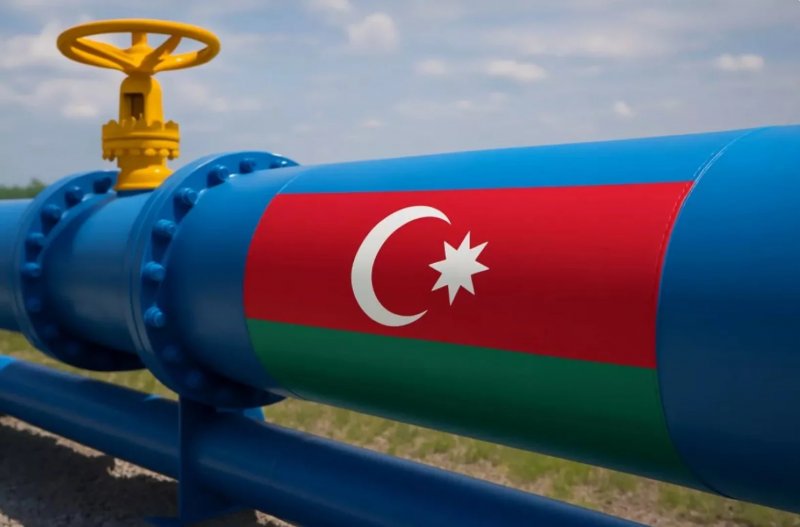
Azerbaijan emerges as a meeting point between continents, where Europe and Asia intersect not only geographically, but also economically, turning the country into a living bridge of international trade and movement. In this space where important energy routes cross, projects such as the Southern Gas Corridor give the country a crucial role in supplying Europe with natural gas from the Caspian region, making it an important link in the continent’s energy security. At the heart of this development stands Baku, a city that combines tradition with modernity and is increasingly transforming into a dynamic financial and logistical center. Meanwhile, involvement in global initiatives such as the Belt and Road Initiative has strengthened Azerbaijan’s position as a strategic corridor between East and West, placing it at the center of economic and geopolitical developments in the South Caucasus.
Azerbaijan’s economic connections, built over centuries, continue to shape its role in the global economy. From historic trade routes to modern energy and transport corridors, the country has maintained a strategic position that enables it to be a significant player in Eurasia.
1. Historical roots of Azerbaijan’s economic connections
Azerbaijan’s geographical position has historically been a determining factor in its economic role. Situated at the crossroads of Asia and Europe, on the shores of the Caspian Sea and in close proximity to the South Caucasus, the country has functioned for centuries as a natural trade bridge. Since ancient times, the territory of Azerbaijan has been part of important intercontinental trade routes, including various branches of the Silk Road. This route not only facilitated the exchange of goods such as silk, spices, and metals, but also created complex cultural and financial networks.
In the medieval period, cities such as Baku and Ganja became important trade centers. Baku in particular, thanks to its large oil reserves known since ancient times, became a strategic point for economic development. In the 19th century, during the period of the Russian Empire, the oil industry in Baku experienced extraordinary development, turning the region into one of the largest oil producers in the world at that time. This period marked the beginning of an energy-based economic model, which continues to be dominant today.
The Soviet legacy also played an important role in structuring the Azerbaijani economy. During the Soviet period, the economy was integrated into a centrally planned system, with Azerbaijan serving as the main supplier of energy and industrial products as well as agricultural products to the Soviet Union. This created a developed industrial and transport infrastructure, but at the same time made the economy highly dependent on these sectors, predominantly energy sector.
After independence in 1991, Azerbaijan faced major transition challenges. However, historical experience in natural resource management and established international networks helped the country quickly return to global markets. Major agreements for the development of oil and gas fields in the Caspian Sea, as well as the construction of strategic pipelines, put Azerbaijan back on the global energy map.
2. Economic relations with China and role in Eurasian initiatives
In recent decades, China has emerged as a key economic partner for Azerbaijan. This relationship has deepened particularly in the context of the Belt and Road Initiative, which aims to rebuild and modernize trade routes between Asia and Europe.
Azerbaijan has a strategic role in this initiative, as it is located on the Middle Corridor, which connects China with Europe through Central Asia, the Caspian Sea, the Caucasus and further to Turkey. Investments in infrastructure, such as the new international port in Alat and modern railways, have significantly increased the country’s logistics capacities. This has turned Azerbaijan into an important transit hub for Chinese goods destined for European markets.
For China, Azerbaijan offers a shorter and potentially safer alternative to traditional sea routes. For Azerbaijan, this relationship brings numerous economic benefits: increased investment, infrastructure development, and diversification of the economy beyond the energy sector.
Moreover, cooperation with China is not limited to transport and logistics. It also includes sectors such as technology, renewable energy, and industrial production. This helps Azerbaijan modernize its economy and reduce its dependence on oil and gas exports.
However, this relationship requires a careful balance. While Chinese investment is important, Azerbaijan ensures that it maintains economic sovereignty and avoids excessive dependence on a single partner. So far, Azerbaijan’s foreign economic policy has shown a good ability to balance interests between major powers.
3. Economic cooperation with Russia and regional dynamics
Russia remains a traditional and important partner for Azerbaijan, due to historical, geographical, and economic ties. Even after the collapse of the Soviet Union, economic relations between the two countries have continued to be strong, especially in the energy, agriculture, industry, trade, and transport sectors.
One of the most important aspects of this cooperation is coordination in energy markets. Although Azerbaijan and Russia are competitors in the export of gas and oil to Europe, they also cooperate on several projects and mechanisms for market stabilization. This complex relationship involves a combination of competition and cooperation.
Russia is also an important market for Azerbaijan’s agricultural and industrial exports. Products such as fruits, vegetables, and processed products find a stable market in Russia, contributing to the diversification of Azerbaijan’s economy.
In terms of transport, the North-South Corridor is another strategic project that connects Russia with Iran and further to India, passing through Azerbaijan. This corridor increases the country’s geoeconomic importance and creates new opportunities for transit revenues.
Russia’s growing interest in transit corridors in the North-West direction, through Azerbaijan, Georgia and Turkey, as well as in options involving Azerbaijan, Armenia and Turkey, reflects a broader strategic shift in the Eurasian trade map. This orientation is not only related to the pressure of sanctions, but also to the need to build more stable, diversified and less vulnerable networks to political developments.
In this context, Azerbaijan is consolidating its role as a transit node of increasing importance, investing in expanding infrastructure capacities and creating new logistical alternatives. Baku aims to take advantage of its geographical position to become a reliable corridor connecting Asian and European markets.
Despite the challenges arising from regional conflicts, historical dynamics show that disruptions are often temporary. In the long term, economic interests tend to restore cooperation and restore the flow of trade. Such a reality is also being reflected in Europe, where, despite ongoing tensions, economic cooperation remains an important pillar of international relations.
However, relations with Russia require careful political and economic management. Russia’s influence in the region and geopolitical tensions can create challenges for Azerbaijan. For this reason, the country pursues a balanced foreign policy, maintaining good relations with Russia, but avoiding to become dependent on it.
4. European links and the Albanian dimension: energy, corridors and economic cooperation
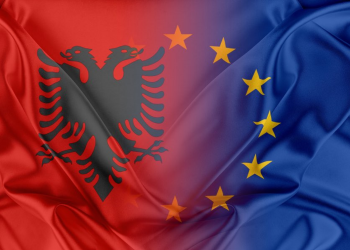
Europe represents one of the most important economic partners for Azerbaijan, especially in the energy sector. The Southern Gas Corridor project is one of the largest strategic initiatives connecting Azerbaijan to European markets. This corridor includes several important segments, including pipelines passing through Turkey, Greece and Albania, reaching Italy.
In this context, Albania has an important role as a transit country. The construction of energy infrastructure has brought significant investments and increased the country’s geostrategic importance in the region. For Azerbaijan, this means direct access to European markets and a diversification of export routes, reducing dependence on traditional routes.
In addition to energy, economic relations with Europe also include other sectors such as trade, investment and technological cooperation. The European Union is one of Azerbaijan’s main trading partners and an important source of foreign direct investment.
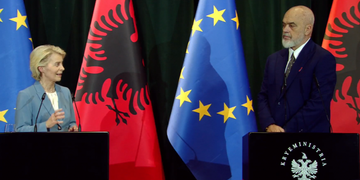
The Albanian dimension of these relations is particularly interesting. Albania not only benefits from investments and energy infrastructure, but also has thereal opportunityto get natural gas from Azerbaijan.
The pilot project for gasification in Korça represents an important step toward modernizing Albania’s energy infrastructure and diversifying its supply sources. The project aims to introduce natural gas to one of the main cities in the southeastern region of the country, creating more favorable conditions for economic development, improving the quality of life, and reducing environmental pollution.
Within the framework of this initiative, the construction of a gas distribution network for households and businesses is planned, offering a more efficient and sustainable alternative to traditional energy sources. A significant role in this project is played by the support of Azerbaijan, as a strategic energy partner, contributing through technical expertise, institutional cooperation, and the promotion of infrastructure development projects in the gas sector across the region. This support is also closely linked to Azerbaijan’s position as a key natural gas supplier and an active promoter of energy corridors connecting the region with European markets.
The gasification of Korça is expected to serve as a model for the further expansion of the gas network in other cities of the country, contributing to enhanced energy security and deeper integration of Albania into regional energy markets. More broadly, this initiative reflects ongoing efforts to build a more sustainable, efficient, and European-standard-compliant energy system anddevelop new cooperation in areas such as tourism, agriculture and technology. This creates a mutually beneficial relationship, where both countries can exploit their economic potential.
In a broader perspective, Azerbaijan is trying to position itself as a reliable partner for Europe at a time when energy security has become a key issue. Stable gas and oil supplies from Azerbaijan help diversify Europe’s energy sources, reducing dependence on other suppliers.
Prologue
Relations with China, Russia and Europe demonstrate a balanced and pragmatic approach, where Azerbaijan benefits from cooperation with each partner while maintaining a high level of autonomy. In this context, Albania also gains importance as part of energy corridors and as a potential partner in regional economic development.
Azerbaijan’s future will depend on its ability to diversify its economy, manage its relations with major powers, and exploit its unique geographical position. If these elements are managed successfully, the country has the potential to remain a key node in the global economic network for decades to come.
On the new economic map of Eurasia, Azerbaijan is increasingly emerging as a major player, combining natural resources with an irreplaceable geographical position. Situated at the crossroads between East and West, the country is no longer simply an energy exporter, but a strategic platform where global trade, energy, and investment corridors intersect.
Today, Azerbaijan’s economic powermainly rests on two main pillars: its energy wealth and its role as a transit hub. Substantial oil and gas reserves have placed the country among the most important suppliers to international markets, especially at a time when energy security has become a global priority. In parallel, investments in infrastructure – ports, railways and international corridors – are transforming Azerbaijan into a modern bridge connecting the economies of Asia and Europe.
But its impact is not limited to the present. The future prospects are closely linked to the ability to diversify the economy and move from a model based mainly on hydrocarbons to a more balanced economy, which includesmodern technologies, including IT, Industry, agriculture, renewable energy and logistics services. This is where Azerbaijan’s true transformative potential lies: in transforming from energy exportin into technologically developed country as well asintoan integrated hub of global economic networks.
In an increasingly interdependent world shaped by geopolitical rivalries, Azerbaijan is pursuing a pragmatic and balanced approach, building relationships with major powers such as China, Russia, and the European Union without becoming dependent on any one. This strategic flexibility gives the country a significant advantage in maintaining economic stability and expanding the scope for cooperation.
In this context, Azerbaijan is not just a part of new economic routes – it is increasingly one of the nodes shaping them. And this is precisely what makes its economic history, both present and future, a significant case study in how geography, resources, and strategy can combine to create lasting influence on the global stage.
Over the past decade, the countries of Central Asia have assumed an increasingly important role in the Eurasian geoeconomic architecture, transforming from largely closed spaces into active nodes of international trade and energy connections. In this context, Azerbaijan has played a key role as a bridge between Central Asia and Europe, serving as a strategic corridor for the transport of energy and goods through the Caspian and the South Caucasus. Intensive interactions between Azerbaijan and countries such as Kazakhstan, Uzbekistan and Turkmenistan have deepened in both the energy sector and in transport and infrastructure, especially in the context of the development of international corridors such as the “Middle Corridor”. These dynamics reflect a gradual shift towards pragmatic economic cooperation, where the interest in new logistical and trade connections is increasingly prevailing over traditional geopolitical constraints.
© 2026 Argumentum