















By Zlatko Kramarić*|ARGUMENTUM
The essays gathered in this volume were written out of a need to rethink — for ourselves as authors, but also for our societies — an idea that has shaped us for centuries, yet continues to both inspire and disappoint, attract and unsettle, elevate and frighten us. The idea of Europe has never been a simple one. It was never merely a geographical fact, nor a stable “cultural constant.” It has always been, above all, an uncertain project — a continuous struggle over meaning, boundaries, and the very notion of what it means to live together as free human beings.
It is therefore no coincidence that Europe’s greatest writers and thinkers — Zweig, Benjamin, Musil, Broch, Gombrowicz, Kundera, Havel, and many others — approached Europe at moments of crisis, precisely when it seemed to be falling apart. Europe reveals itself in crisis; only in crisis does it become clear what is worth defending. Their concerns were not accidental. They emerged from personal encounters with shattered continents, collapsing empires, forced migrations, wars, and ideological fires that defined the twentieth century.
From this tradition stems my own motivation. My political and cultural heritage has always gravitated toward that strand of Croatian thought which saw, in Bishop Strossmayer’s project, a vision of bridges rather than walls, of a Central European identity that Croatia too often ignored, suppressed, or ridiculed. The 1990s and the disintegration of Yugoslavia confirmed, with almost brutal clarity, that Croatia can remain stable only if it stays loyal to authentic European values.
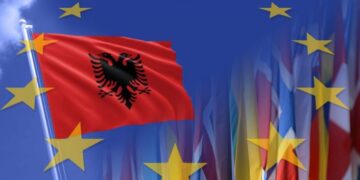
In this respect, I also see a strong parallel with Albania today. I am grateful to the editorial board of Argumentum, and especially to my dear colleague and friend Mariana Doda, for recognizing the intention behind these texts at a moment when Albania stands at the threshold of the European Union. Accession will undoubtedly be a historic achievement, but — as Croatia’s experience demonstrates — it will not resolve all “themes and dilemmas” of political or cultural history. Quite the opposite: accession often marks the beginning of a deeper confrontation with the past, with transitional traumas and the modern legacies of authoritarianism. Only then do long-suppressed questions begin to speak again.
Albanian society, just like Croatian society, will have to ask itself: how was it possible for an Enver Hoxha to emerge at all? How did such a radical model of total isolation become a national programme? And how much of that legacy continues to shape political reflexes, the culture of memory, and the deeper structures of social life? These are not historical curiosities; they are contemporary political questions.
After the fall of the Berlin Wall, it seemed that all post-communist countries — Poland, the Czech Republic, Hungary, Croatia, Bulgaria, and others — would easily adopt Western institutions and behavioural norms. As Ivan Krastev and Stephen Holmes have persuasively argued, this process soon transformed into a politics of imitation: inauthentic, often pressured emulation of Western models, without a genuine social consensus. The result was predictable: disappointment. In some countries it opened the door to authoritarian or semi-authoritarian leaders; in others it generated cynicism, or even a fascination with “alternative modernities.”
In the Balkans, this dynamic is further complicated by the influence of the so-called “Russian world” and its regional derivation, the “Serbian world” — a blend of anti-Western resentment, manipulated nostalgia, and geopolitical ambition. It has created the illusion that a political path separate from European values is not only possible but desirable.
This trend is reinforced by the spread of modern populism, which, as Jan-Werner Müller argues, is not merely a rhetorical style but a logic that undermines the very idea of pluralism. Florian Bieber has described the “autocratic repertoire” of leaders in our region, while Ece Temelkuran has shown how authoritarian regimes are born from the gradual normalization of myths, illusions, and nationalist emotions. All these phenomena point to a deeper crisis of the European spirit — a crisis emerging precisely when Europe needs clarity and unity.
It is in this context that the work of Albrecht Koschorke becomes essential. By analysing Mein Kampf not as a political document but as a narrative structure, he revealed how totalitarianism is born from a story that seduces — a story that promises simplicity, replaces reality with myth, and transforms fiction into programme. Today, similar narratives return in new, digitalised forms.
For all these reasons, this volume is not merely an academic exercise. It is an attempt to read Europe from within, to understand its internal contradictions, its fragility, but also its enduring strength. And it is an invitation to read ourselves — Croatia, Albania, and the entire post-communist East — in the light of what we are rather than what we imagine ourselves to be.
If this foreword is to end on a literary note, then let it be this:
Europe resembles Sleeping Beauty — a princess lulled into slumber by myths, fears, and misguided politics. And we, her citizens, intellectuals, and witnesses, must ask ourselves whether we still possess the courage for that necessary awakening kiss.
For only an awakened Europe can awaken us, too.
________________________________________________
The series of analyses by Ambassador Zlatko Kramaric is available at the following link : https://www.argumentum.al/en/category/english-op-ed/
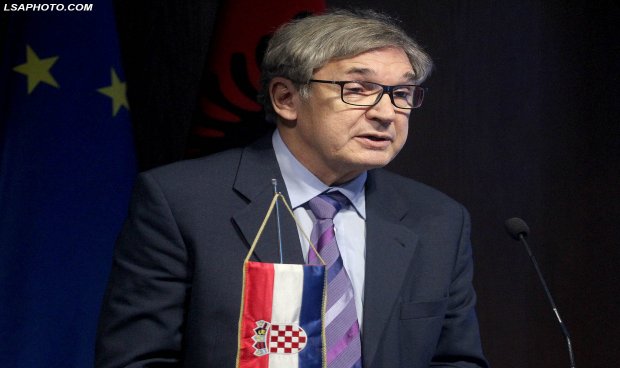
*Zlatko Kramarić is a Croatian publicist, author, and diplomat, currently serving as Ambassador to Albania. Formerly a university professor and politician, he is known for his work in literature, cultural studies, and regional history.
© 2025 Argumentum