










• SHQIPËRI
  • KOSOVË
  • MAQEDONIA E VERIUT
  • MALI I ZI
  • Revista në PDF
8 June, 2026
  • Home
  • OP/ED

    Pierre Nora and the institution of memory we lack in Eastern Europe

    The Blueprint of a Diplomatic Debacle: Analyzing Germany’s Historic UNSC Loss

    Cyber Attribution, Corruption, and the False-Flag Question in Albania’s 2022 Alleged Iranian Cyberattack

    Between Russia, Iran and Europe: Azerbaijan as a balancing power in the South Caucasus

    The Zero-Tariff Gate: Sovereignty as a Service in the Sino-African Corridor

    Albania vs. the Sea/ Marginal Notes on A. Leka’s Novel The Hidden Side of the Albanian Socialist Garden

    May 9 and the long shadow of a Letter: Is Europe still Schuman’s Project?

    The Arbnesh of Zadar: A living memory of Albanian identity on the Adriatic coast

    Science Diplomacy and Academic Freedom: A strategic nexus for contemporary diplomacy

  • Interview

    Exclusive Interview with Oleksandr Tyshchenko: A 40-Year Legacy of Chernobyl, Nuclear Risks, and Global Responsibility

    INTERVIEW: ZLATKO KRAMARIĆ – THOUGHTS ON THE OLD CONTINENT

    EXCLUSIVE / Ukrainian Ambassador to Albania, Volodymyr Shkurov: “Ukraine wants peace, but not at the expense of its freedom and independence”

    EXCLUSIVE| Ambassador Tayyar Kagan Atay: Türkiye and Albania, a Strategic Partnership Rooted in Shared Heritage and a Common Vision for the Future

    “Diplomacy, Not War”: Palestinian Ambassador to Albania Calls for Justice, Peace, and Global Action for Gaza

    Exclusive: “Even After Tito – Tito”/ Ambassador Zlatko Kramarić on Authoritarian Legacies and Democracy’s Future in the Balkans

    The Conclusion of the Diplomatic Mission / Ambassador Dancho Markovski: Strengthening Albania-North Macedonia Relations for a Shared European Future

    A Century of Diplomatic Relations Between Albania and Russia: Exclusive Interview with the Russian Ambassador to Albania, H.E. Alexey Zaytsev

    Exclusive/ The chairman of the Freedom Party, Ilir Meta: “The will of the citizens will triumph in Albania, as it did in North Macedonia”

  • Realpolitik

    IBAR? ”Sufficiently! Much ado about nothing! Shart contrasts in Beijing! Where is the exit?!

    Neither peace nor war! Peace with bombs?! IBAR in autumn?! Not another Hormuz in Taivan! 

    IBAR – a springing board or an obstacle? Can we catch the EU Negotiation train 2027? When the dress makes the news!  EU electoral April  ends in a draw 1:1!  

    The European Parliament building in Strasbourg, France with flags waving calmly celebrating peace of the Europe. July 12, 2020.

    EU 2027 or 2037! Even half membership failed! No exit strategy!     

    What next?

    “With diplomatic velvet“! Major question marks! In Washington yes, but  in the White House NO! A strange dinner in Brussels!

    From a great ‘apple of disaccord’ to a  point of  cooperation! A bad start! The strange absence in Davos!

    5 lessons from the American 3 January! Don’t count the chicken before they are hatched! Will NATO freeze in Greenland? Wrong diplomatic messages!

    German Chancellor Friedrich Merz, European Commission President Ursula von der Leyen, Ukraine's President Volodymyr Zelenskiy, U.S. Special Envoy Steve Witkoff and Jared Kushner, son-in-law of U.S. President Donald Trump line up for a family photo opportunity at the Chancellery in Berlin, Germany, December 15, 2025.    REUTERS/Lisi Niesner/Pool

    A Strategy that could change the world! Europe in Berlin! Why an historic compromise? Only charm diplomacy in Athens!

  • Current Events

    Rama alleges ‘hybrid war’ behind protests against Kushner-linked coastal development

    BELGRADE, SERBIA - JUNE 18. 2020: Russian and Serbian flags on display during Russian Foreign Minister Sergei Lavrov's visit to the Liberators of Belgrade Memorial. Valery Sharifulin/TASS,Image: 533095429, License: Rights-managed, Restrictions: UWAGA! Zdjęcia zawierają oryginalny opis dostawcy (ITAR-TASS). Szczególnie w związku z agresją Rosji na Ukrainę mogą zawierać przekaz niezgodny z faktami. Zweryfikuj go przed publikacją, Model Release: no, Credit line: Valery Sharifulin / TASS / Forum

    Balkan Maskirovka: Why Moscow’s “Distancing” Is Only an Operation for the Survival of Vučić’s Regime

    Serbia – China 2026: Technological partnership, geopolitical positioning and a new phase of the Chinese presence in the Western Balkans

    The Digital Protectorate: How the EU AI Act Codified Silicon Valley’s Monopoly

    The 28th MFC Annual Conference in Durrës / Sulaj: Microfinance remains a key instrument for financial inclusion

    Serbia at the Crossroads of EU Integration and Geopolitical Balancing: IFIMES Analysis

    Tirana – €20 Million EU–Banking Agreement Boosts Albanian SMEs

    The Myth of Independence: How Chinese Efficiency is Rewriting the Constitution of Modern Geopolitics!

    Europe Yesterday and Today: Why 9 May Still Matters

  • Top News

    Rama alleges ‘hybrid war’ behind protests against Kushner-linked coastal development

    No End in Sight: Trump, Netanyahu and the Expanding Middle East War

    Tirana – €20 Million EU–Banking Agreement Boosts Albanian SMEs

    “EU4Municipalities II” Project, a Strategic Investment for Strengthening Municipalities and Accelerating Albania’s Path towards the EU

    Albania, Italy deepen defence ties with naval shipbuilding deal

    U.S. Embassy: Iran-Linked Groups May Target Americans and Iranian Opposition in Albania

    The Council of Albanian Ambassadors disappointed with the voting of the draft law on the foreign service in the parliamentary committees.

    Prime Minister Edi Rama Addresses Israel’s Knesset in Historic Special Session

    Kazakhstan’s Strategic Reform Agenda: Stability, Modern Governance, and Responsible Diplomacy

  • YOUR VOICE
  • Shqip
No Result
View All Result
Argumentum
  • Home
  • OP/ED

    Pierre Nora and the institution of memory we lack in Eastern Europe

    The Blueprint of a Diplomatic Debacle: Analyzing Germany’s Historic UNSC Loss

    Cyber Attribution, Corruption, and the False-Flag Question in Albania’s 2022 Alleged Iranian Cyberattack

    Between Russia, Iran and Europe: Azerbaijan as a balancing power in the South Caucasus

    The Zero-Tariff Gate: Sovereignty as a Service in the Sino-African Corridor

    Albania vs. the Sea/ Marginal Notes on A. Leka’s Novel The Hidden Side of the Albanian Socialist Garden

    May 9 and the long shadow of a Letter: Is Europe still Schuman’s Project?

    The Arbnesh of Zadar: A living memory of Albanian identity on the Adriatic coast

    Science Diplomacy and Academic Freedom: A strategic nexus for contemporary diplomacy

  • Interview

    Exclusive Interview with Oleksandr Tyshchenko: A 40-Year Legacy of Chernobyl, Nuclear Risks, and Global Responsibility

    INTERVIEW: ZLATKO KRAMARIĆ – THOUGHTS ON THE OLD CONTINENT

    EXCLUSIVE / Ukrainian Ambassador to Albania, Volodymyr Shkurov: “Ukraine wants peace, but not at the expense of its freedom and independence”

    EXCLUSIVE| Ambassador Tayyar Kagan Atay: Türkiye and Albania, a Strategic Partnership Rooted in Shared Heritage and a Common Vision for the Future

    “Diplomacy, Not War”: Palestinian Ambassador to Albania Calls for Justice, Peace, and Global Action for Gaza

    Exclusive: “Even After Tito – Tito”/ Ambassador Zlatko Kramarić on Authoritarian Legacies and Democracy’s Future in the Balkans

    The Conclusion of the Diplomatic Mission / Ambassador Dancho Markovski: Strengthening Albania-North Macedonia Relations for a Shared European Future

    A Century of Diplomatic Relations Between Albania and Russia: Exclusive Interview with the Russian Ambassador to Albania, H.E. Alexey Zaytsev

    Exclusive/ The chairman of the Freedom Party, Ilir Meta: “The will of the citizens will triumph in Albania, as it did in North Macedonia”

  • Realpolitik

    IBAR? ”Sufficiently! Much ado about nothing! Shart contrasts in Beijing! Where is the exit?!

    Neither peace nor war! Peace with bombs?! IBAR in autumn?! Not another Hormuz in Taivan! 

    IBAR – a springing board or an obstacle? Can we catch the EU Negotiation train 2027? When the dress makes the news!  EU electoral April  ends in a draw 1:1!  

    The European Parliament building in Strasbourg, France with flags waving calmly celebrating peace of the Europe. July 12, 2020.

    EU 2027 or 2037! Even half membership failed! No exit strategy!     

    What next?

    “With diplomatic velvet“! Major question marks! In Washington yes, but  in the White House NO! A strange dinner in Brussels!

    From a great ‘apple of disaccord’ to a  point of  cooperation! A bad start! The strange absence in Davos!

    5 lessons from the American 3 January! Don’t count the chicken before they are hatched! Will NATO freeze in Greenland? Wrong diplomatic messages!

    German Chancellor Friedrich Merz, European Commission President Ursula von der Leyen, Ukraine's President Volodymyr Zelenskiy, U.S. Special Envoy Steve Witkoff and Jared Kushner, son-in-law of U.S. President Donald Trump line up for a family photo opportunity at the Chancellery in Berlin, Germany, December 15, 2025.    REUTERS/Lisi Niesner/Pool

    A Strategy that could change the world! Europe in Berlin! Why an historic compromise? Only charm diplomacy in Athens!

  • Current Events

    Rama alleges ‘hybrid war’ behind protests against Kushner-linked coastal development

    BELGRADE, SERBIA - JUNE 18. 2020: Russian and Serbian flags on display during Russian Foreign Minister Sergei Lavrov's visit to the Liberators of Belgrade Memorial. Valery Sharifulin/TASS,Image: 533095429, License: Rights-managed, Restrictions: UWAGA! Zdjęcia zawierają oryginalny opis dostawcy (ITAR-TASS). Szczególnie w związku z agresją Rosji na Ukrainę mogą zawierać przekaz niezgodny z faktami. Zweryfikuj go przed publikacją, Model Release: no, Credit line: Valery Sharifulin / TASS / Forum

    Balkan Maskirovka: Why Moscow’s “Distancing” Is Only an Operation for the Survival of Vučić’s Regime

    Serbia – China 2026: Technological partnership, geopolitical positioning and a new phase of the Chinese presence in the Western Balkans

    The Digital Protectorate: How the EU AI Act Codified Silicon Valley’s Monopoly

    The 28th MFC Annual Conference in Durrës / Sulaj: Microfinance remains a key instrument for financial inclusion

    Serbia at the Crossroads of EU Integration and Geopolitical Balancing: IFIMES Analysis

    Tirana – €20 Million EU–Banking Agreement Boosts Albanian SMEs

    The Myth of Independence: How Chinese Efficiency is Rewriting the Constitution of Modern Geopolitics!

    Europe Yesterday and Today: Why 9 May Still Matters

  • Top News

    Rama alleges ‘hybrid war’ behind protests against Kushner-linked coastal development

    No End in Sight: Trump, Netanyahu and the Expanding Middle East War

    Tirana – €20 Million EU–Banking Agreement Boosts Albanian SMEs

    “EU4Municipalities II” Project, a Strategic Investment for Strengthening Municipalities and Accelerating Albania’s Path towards the EU

    Albania, Italy deepen defence ties with naval shipbuilding deal

    U.S. Embassy: Iran-Linked Groups May Target Americans and Iranian Opposition in Albania

    The Council of Albanian Ambassadors disappointed with the voting of the draft law on the foreign service in the parliamentary committees.

    Prime Minister Edi Rama Addresses Israel’s Knesset in Historic Special Session

    Kazakhstan’s Strategic Reform Agenda: Stability, Modern Governance, and Responsible Diplomacy

  • YOUR VOICE
  • Shqip
No Result
View All Result
Argumentum
No Result
View All Result
Home ENGLISH

Tackling Frozen Conflicts in the EU’s Own Neighbourhood

19 January, 2021
in ENGLISH, English OP/ED
A A
Share on FacebookShare on Twitter
By Bogdan Aurescu
Romanian Foreign Minister
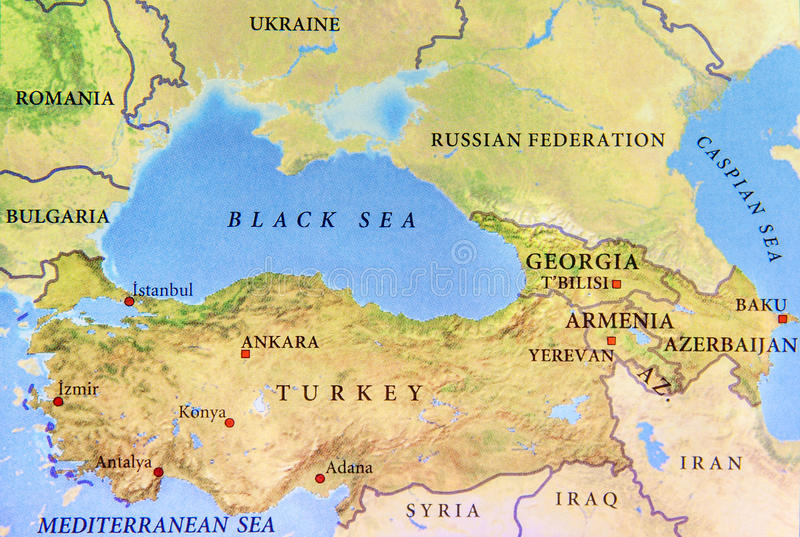
Last year’s events in South Caucasus have brutally brought to light the issue of protracted conflicts in the Black Sea region, frequently referred to as ‘frozen conflicts’.
At the eastern border of both the EU and Nato, worrying regional developments are constantly on Romania’s radar, as there are actors ready to exploit vulnerabilities, create or maintain tensions and push for outcomes which threaten a stable, peaceful and democratic European neighbourhood.
Against this backdrop, Romania has drawn the signal that the time has come to resume the EU-level dialogue on protracted conflicts and their crippling effects on the region’s security and development perspectives.
During last October’s Foreign Affairs Council (FAC) meeting in Luxembourg, I advanced the proposal to include this topic on the agenda of a future reunion.
Subsequently, at the 19 November FAC meeting, together with counterparts from ten member states (Bulgaria, the Czech Republic, Estonia, Latvia, Lithuania, Poland, Portugal, Slovakia, Slovenia and Sweden), I signed a letter addressed to EU foreign affairs high representative, Josep Borrell, in view of advancing a substantial dialogue among EU foreign ministers on enhancing the EU’s active approach towards protracted conflicts.
What we can do together is to develop concrete instruments through which the EU can have leverage on facilitating solutions with regard to protracted conflicts, based on international law.
We need renewed attention on this topic and we must re-acknowledge the importance of maintaining an active role of the EU in addressing these issues, in light of the strategic objective of consolidating the global vocation and resilience of the Union.
As the EU and Nato represent the most solid geopolitical area of security and stability, they must consider the long-term effects that protracted conflicts in the Black Sea region have for the wider European security and strategic resilience.
As a systemic issue, it must benefit from increased attention and an adequate approach at multilateral level, within the EU and Nato, as well as within the Organization for Security and Cooperation in Europe (OSCE) – a viewpoint that I shared with fellow Nato foreign ministers during our latest virtual meeting in December.
Protracted conflicts – a constant source of instability
Fuelled by continuous foreign interference and complex local and geopolitical interests, protracted conflicts have been part of the EU’s neighbourhood political realities.
The Republic of Moldova, Georgia, Armenia, Azerbaijan and Ukraine are all faced with frozen conflicts that provide external actors the tools to destabilise the whole region.
This is a constant source of instability and a threat not only to our near neighbourhood, but also to the wider Euro-Atlantic security architecture.
Protracted conflicts reflect a logic of spheres of influence in international relations, as opposed to the sovereign right of states to freely choose their future and their path of development.
The genesis and persistence of these conflicts are associated with successive and blatant violations of international law. Their persistence poses unique challenges to any attempt at building a rules-based international order.
Without real perspectives for the resolution of these conflicts, EU’s neighbourhood still struggles to achieve a development framework centred on sound economic and security policies.
In today’s Europe, we should not tolerate the use of instruments of force to exert influence, as remnants of the 19th century practice of a droit de regard at the periphery of Great Powers’ interests.
The trap of flawed perceptions
Claiming that these conflicts are an unavoidable pitfall of today’s geopolitics and that their consequences aren’t serious enough to justify immediate action on behalf of the Union is a flawed perception and a dangerous trap.
With protracted conflicts on their territories, a number of states in the EU eastern neighbourhood are impeded from exercising their sovereign rights over parts of their territories, and entire societies see their future prospects undermined by artificial divisions.
Protracted conflicts see cycles of violence that generate recurring crises, as recently in Nagorno-Karabakh.
Violent confrontations can occur at any moment, as long as the logic of spheres of influence and ongoing international law violations is tolerated, in the absence of a resolute reaction of the international community. We have witnessed that in Ukraine since 2014.
Protracted conflicts delay democratic transition at the EU’s border and challenge European and Euro-Atlantic security.
Such is the case of the Republic of Moldova. Presidential elections were decisively won by the pro-democratic candidate last November, demonstrating the firm option of the citizens to modernise their society in the spirit of European values.
We must address the conflict in the Transnistria region, which impacts the stability and security of the Republic of Moldova and the entire region.
The solution to this conflict should be found in previously agreed multilateral formats, with full respect for the sovereignty and territorial integrity of the Republic of Moldova within its internationally recognised borders, and without jeopardising the European path of the country, in accordance with the will of the majority of its citizens.
The value of the European model lies in its active involvement.
As a normative power, the EU put forward a development model which helped “transform most of Europe from a continent of war to a continent of peace,” as the Nobel committee stated when it awarded the Nobel Peace Prize to the EU in 2012.
This model enables the EU to strengthen both its global profile and its support for the countries that rely on its action.
Our core mission must be to extend this model of success to our neighbourhood, to project peace, stability and prosperity.
Many of the partner states faced with protracted conflicts have already expressed their interest in ever closer ties with the EU.
They are putting effort into implementing reforms to answer the legitimate expectations of their citizens: improved living standards guaranteed by consolidated democratic systems, the perspective of joining an extended European area of peace and prosperity.
But their ability to continue on this path is hindered by the disruptive effect of protracted conflicts.
The Black Sea region holds strategic significance for the European and Euro-Atlantic long-term peace and security.
This prospect depends on our ability to promote commonly-accepted norms and values through bilateral and multilateral dialogue as means for peaceful conflict resolution.
This is why our institution-building expertise and our power of negotiation must authoritatively support the advancement of political processes tied to the resolution of protracted conflicts in our Eastern neighbourhood.
The objective of the joint letter initiated by Romania, co-signed by ten other member states, to the high representative of the Union for foreign affairs and security policy was precisely this: a concrete first step on a path to greater involvement of the European Union in solving the problems which fuel a vicious circle of instability at our borders.
Romania calls for a serious conversation at EU level on our joint action towards solving protracted conflicts, in a formal framework and in the spirit of European unity.
Such a debate has the potential to generate concrete results for EU’s neighbourhood policy, enhance the influence of the Union in its neighbourhood and generate medium and long term gains for the European and Euro-Atlantic security.
The trust invested in the European project by our partner states makes it imperative for the EU to assert a greater leadership role in the Black Sea region in 2021 and beyond.

The fact is that only a Union capable to sustainably project stability, peace, democracy and prosperity in its neighbourhood can credibly strengthen its global leadership. /EUobserver, January 19, 2021
Tags: black seecaucasus regionobserver

Related Posts

ENGLISH

The View from Tirana: Navigating the Intra-European Split for Digital Sovereignty

8 June, 2026
Current Events

Rama alleges ‘hybrid war’ behind protests against Kushner-linked coastal development

5 June, 2026
ENGLISH

Pierre Nora and the institution of memory we lack in Eastern Europe

5 June, 2026

Follow US

Subscribe

Receive Argumentum Magazine by Email

Last Posts

The View from Tirana: Navigating the Intra-European Split for Digital Sovereignty

8 June, 2026

Rama alleges ‘hybrid war’ behind protests against Kushner-linked coastal development

5 June, 2026

Pierre Nora and the institution of memory we lack in Eastern Europe

5 June, 2026
BELGRADE, SERBIA - JUNE 18. 2020: Russian and Serbian flags on display during Russian Foreign Minister Sergei Lavrov's visit to the Liberators of Belgrade Memorial. Valery Sharifulin/TASS,Image: 533095429, License: Rights-managed, Restrictions: UWAGA! Zdjęcia zawierają oryginalny opis dostawcy (ITAR-TASS). Szczególnie w związku z agresją Rosji na Ukrainę mogą zawierać przekaz niezgodny z faktami. Zweryfikuj go przed publikacją, Model Release: no, Credit line: Valery Sharifulin / TASS / Forum

Balkan Maskirovka: Why Moscow’s “Distancing” Is Only an Operation for the Survival of Vučić’s Regime

5 June, 2026

The Blueprint of a Diplomatic Debacle: Analyzing Germany’s Historic UNSC Loss

4 June, 2026
Argumentum

“Argumentum”, një proces intelektual …

Contact Us

[email protected]
[email protected]
[email protected]

Follow Us

Media Partner

Register

Receive Argumentum Magazine by Email
  • Home
  • Privacy Policy
  • About Us
  • Contact

© 2022 Argumentum. All Rights Reserved. | NUIS: L91415033Q

Welcome Back!

Login to your account below

Forgotten Password? Sign Up

Create New Account!

Fill the forms bellow to register

*By registering into our website, you agree to the Terms & Conditions and Privacy Policy.
All fields are required. Log In

Retrieve your password

Please enter your username or email address to reset your password.

Log In

Add New Playlist

No Result
View All Result
  • Home
  • OP/ED
  • Interview
  • Realpolitik
  • Current Events
  • Top News
  • YOUR VOICE
  • Shqip

© 2022 Argumentum. All Rights Reserved. | NUIS: L91415033Q

This website uses cookies. By continuing to use this website you are giving consent to cookies being used. Visit our Privacy and Cookie Policy.