































By Dr. Zlatko Kramarić| ARGUMENTUM
Ambassador of Croatia to Albania
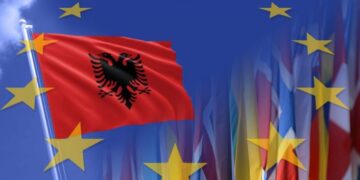
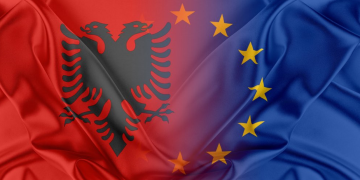
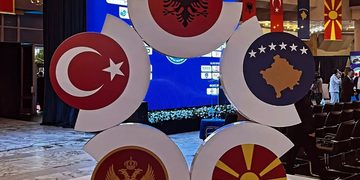
The European perspective of the Western Balkans remains one of the European Union’s most consequential and, at the same time, most demanding political projects. Since the Thessaloniki Summit of 2003, the EU has formally reaffirmed that the future of the Western Balkans lies within the Union. More than two decades later, however, the credibility of this commitment is increasingly tested—both in Brussels and in the region itself.
EU enlargement towards the Western Balkans should not be understood merely as a technical process of accession negotiations or legal harmonisation. Rather, it represents a strategic investment in the stability, security and political coherence of Europe as a whole. The Western Balkans are geographically embedded within the European continent, historically intertwined with its political and cultural trajectories, and directly affected by European security dynamics. Leaving the region in a prolonged state of “waiting room integration” carries tangible geopolitical risks, including external influence, democratic backsliding and renewed political fragmentation.
At the same time, enlargement is not, and cannot be, an automatic process. The European Union is founded on shared values: democracy, the rule of law, respect for human rights and the protection of minorities. Progress towards membership must therefore be based on credible reforms, particularly in the areas of judicial independence, the fight against corruption, media freedom and the functioning of democratic institutions. In this sense, enlargement remains a merit-based process, and responsibility lies both with the EU and with the candidate countries themselves.
One of the key challenges in the current enlargement framework is the erosion of trust. In several Western Balkan societies, reform fatigue is growing as accession timelines appear increasingly distant and conditionality less predictable. Conversely, within the EU, enlargement scepticism persists, fuelled by internal crises, institutional concerns and fears of importing unresolved bilateral disputes. Rebuilding mutual credibility requires a more transparent, gradual and politically visible integration process, offering tangible benefits to citizens even before full membership.
The renewed geopolitical context—marked by Russia’s aggression against Ukraine, heightened global instability and strategic competition—has given enlargement new urgency. In this environment, the integration of the Western Balkans is no longer only a question of completing Europe’s post-Cold War unification, but also of safeguarding the EU’s role as a normative and political actor. A credible enlargement policy strengthens the EU’s strategic autonomy and reinforces its capacity to shape its immediate neighbourhood.
Ultimately, the future of the Western Balkans within the European Union depends on a dual commitment. The EU must demonstrate consistency, political will and strategic clarity, while the countries of the region must deliver genuine and irreversible reforms. Enlargement, if pursued seriously and responsibly, remains one of the EU’s most powerful tools for transformation—capable not only of stabilising the Western Balkans, but of reaffirming the European project itself.
© 2026 Argumentum