





• SHQIPËRI
  • KOSOVË
  • MAQEDONIA E VERIUT
  • MALI I ZI
  • Revista në PDF
4 October, 2026
 
  • Home
  • OP/ED

    THE GREEN BERETS LAND IN TIRANA

    Some Myths Simply Refuse to Die

    UN Monologue: Why Kosovo Cannot Respond to Serbia’s Accusations

    The War That Was Waged Before the War

    The Structural Impasse: Can Merz Offer a Leadership Anchor to Europe?

    Will Europe Finally Ditch the Poisonous Myth of Perpetual Peace?

    Resolution 522 – When the U.S. Congress Honored Skanderbeg

    The Reconfiguration of Maritime Governance: Structural Hegemonic Decline and the Arctic Pivot

    Between Political Calculation and Retreat: Croatian Communists at the End of an Era

  • Interview

    Exclusive Interview with Oleksandr Tyshchenko: A 40-Year Legacy of Chernobyl, Nuclear Risks, and Global Responsibility

    INTERVIEW: ZLATKO KRAMARIĆ – THOUGHTS ON THE OLD CONTINENT

    EXCLUSIVE / Ukrainian Ambassador to Albania, Volodymyr Shkurov: “Ukraine wants peace, but not at the expense of its freedom and independence”

    EXCLUSIVE| Ambassador Tayyar Kagan Atay: Türkiye and Albania, a Strategic Partnership Rooted in Shared Heritage and a Common Vision for the Future

    “Diplomacy, Not War”: Palestinian Ambassador to Albania Calls for Justice, Peace, and Global Action for Gaza

    Exclusive: “Even After Tito – Tito”/ Ambassador Zlatko Kramarić on Authoritarian Legacies and Democracy’s Future in the Balkans

    The Conclusion of the Diplomatic Mission / Ambassador Dancho Markovski: Strengthening Albania-North Macedonia Relations for a Shared European Future

    A Century of Diplomatic Relations Between Albania and Russia: Exclusive Interview with the Russian Ambassador to Albania, H.E. Alexey Zaytsev

    Exclusive/ The chairman of the Freedom Party, Ilir Meta: “The will of the citizens will triumph in Albania, as it did in North Macedonia”

  • Realpolitik

    Long live the UN! A prewarned decision! A  G – 2? Putin in Miami!

    Montenegrin diplomatic blunder! Small Cyprus without great hopes! 4 blocks of Enlargement challenges! Political earthquake in Germany!

    Belgrade, Zelensky and the Consulates! The European Pact takes water! Drone in Leipzig and hybrid war! Why a  ceasefire is needed in September

    The Summit of Unity! Think of peace and prepare for war! It’s only the start to the end! Just a pause between two wars!

    Peace with war diplomacy! The protest,  image and tourism! Why this silence from the EU Commission and Council? A deal or a pause?

    Just kind words  in Tivat! Where is the peace!? A deal yes, peace No!What is happening with USA and  EU?  5 elections but no solution!

    IBAR? ”Sufficiently! Much ado about nothing! Shart contrasts in Beijing! Where is the exit?!

    Neither peace nor war! Peace with bombs?! IBAR in autumn?! Not another Hormuz in Taivan! 

    IBAR – a springing board or an obstacle? Can we catch the EU Negotiation train 2027? When the dress makes the news!  EU electoral April  ends in a draw 1:1!  

  • Current Events

    Von der Leyen in Skopje: North Macedonia Belongs in Europe, Mickoski Seeks Fair EU Accession Process

    Von der Leyen in Pristina: “The Hague Verdict Must Be Respected, Nothing Can Rewrite Kosovo’s History”

    Albania’s Top Diplomat Ferit Hoxha at Berlin Process: “EU Enlargement Is a Strategic Investment in Europe’s Security”

    Von der Leyen in Tirana: EU Support, Reform Push and Protests

    New U.S. Ambassador Eric Wendt Begins Official Meetings in Tirana

    Some Myths Simply Refuse to Die

    Albanian PM Rama returns from US with message to Albanians: “No One Will Stop Us, No One Will Stop Me”

    Albanian President Begaj Welcomes New U.S. Ambassador Eric Wendt

    Albanian PM Edi Rama at UN: “The greatest danger of AI is that it perfectly obeys the wrong people”

  • Top News

    Albanian PM Rama to U.S. Democrats: “Don’t Come to Albania to Take Revenge on Trump”

    Albania’s Top Diplomat Ferit Hoxha at Berlin Process: “EU Enlargement Is a Strategic Investment in Europe’s Security”

    From Pre-Trial Measures to the Presumption of Innocence: What Changes in Albania’s Criminal Procedure Code

    Eric Wendt in Tirana: A New U.S. Mandate at a Turning Point for Albania and the Balkans

    Albanian PM Edi Rama at UN: “The greatest danger of AI is that it perfectly obeys the wrong people”

    FBI in Albania: U.S. and Albanian Law Enforcement Strengthen Cooperation

    The Council of Albanian Ambassadors expresses deep concern over the judgment of the Kosova special chambers in the Hague.

    The European Spirit: A Message to Albania’s Young Generation

    Albania’s President Begaj calls for political cooperation as new parliamentary session opens

  • YOUR VOICE
  • ARGUMENTUM MAGAZINE
  • Shqip
No Result
View All Result
Argumentum
  • Home
  • OP/ED

    THE GREEN BERETS LAND IN TIRANA

    Some Myths Simply Refuse to Die

    UN Monologue: Why Kosovo Cannot Respond to Serbia’s Accusations

    The War That Was Waged Before the War

    The Structural Impasse: Can Merz Offer a Leadership Anchor to Europe?

    Will Europe Finally Ditch the Poisonous Myth of Perpetual Peace?

    Resolution 522 – When the U.S. Congress Honored Skanderbeg

    The Reconfiguration of Maritime Governance: Structural Hegemonic Decline and the Arctic Pivot

    Between Political Calculation and Retreat: Croatian Communists at the End of an Era

  • Interview

    Exclusive Interview with Oleksandr Tyshchenko: A 40-Year Legacy of Chernobyl, Nuclear Risks, and Global Responsibility

    INTERVIEW: ZLATKO KRAMARIĆ – THOUGHTS ON THE OLD CONTINENT

    EXCLUSIVE / Ukrainian Ambassador to Albania, Volodymyr Shkurov: “Ukraine wants peace, but not at the expense of its freedom and independence”

    EXCLUSIVE| Ambassador Tayyar Kagan Atay: Türkiye and Albania, a Strategic Partnership Rooted in Shared Heritage and a Common Vision for the Future

    “Diplomacy, Not War”: Palestinian Ambassador to Albania Calls for Justice, Peace, and Global Action for Gaza

    Exclusive: “Even After Tito – Tito”/ Ambassador Zlatko Kramarić on Authoritarian Legacies and Democracy’s Future in the Balkans

    The Conclusion of the Diplomatic Mission / Ambassador Dancho Markovski: Strengthening Albania-North Macedonia Relations for a Shared European Future

    A Century of Diplomatic Relations Between Albania and Russia: Exclusive Interview with the Russian Ambassador to Albania, H.E. Alexey Zaytsev

    Exclusive/ The chairman of the Freedom Party, Ilir Meta: “The will of the citizens will triumph in Albania, as it did in North Macedonia”

  • Realpolitik

    Long live the UN! A prewarned decision! A  G – 2? Putin in Miami!

    Montenegrin diplomatic blunder! Small Cyprus without great hopes! 4 blocks of Enlargement challenges! Political earthquake in Germany!

    Belgrade, Zelensky and the Consulates! The European Pact takes water! Drone in Leipzig and hybrid war! Why a  ceasefire is needed in September

    The Summit of Unity! Think of peace and prepare for war! It’s only the start to the end! Just a pause between two wars!

    Peace with war diplomacy! The protest,  image and tourism! Why this silence from the EU Commission and Council? A deal or a pause?

    Just kind words  in Tivat! Where is the peace!? A deal yes, peace No!What is happening with USA and  EU?  5 elections but no solution!

    IBAR? ”Sufficiently! Much ado about nothing! Shart contrasts in Beijing! Where is the exit?!

    Neither peace nor war! Peace with bombs?! IBAR in autumn?! Not another Hormuz in Taivan! 

    IBAR – a springing board or an obstacle? Can we catch the EU Negotiation train 2027? When the dress makes the news!  EU electoral April  ends in a draw 1:1!  

  • Current Events

    Von der Leyen in Skopje: North Macedonia Belongs in Europe, Mickoski Seeks Fair EU Accession Process

    Von der Leyen in Pristina: “The Hague Verdict Must Be Respected, Nothing Can Rewrite Kosovo’s History”

    Albania’s Top Diplomat Ferit Hoxha at Berlin Process: “EU Enlargement Is a Strategic Investment in Europe’s Security”

    Von der Leyen in Tirana: EU Support, Reform Push and Protests

    New U.S. Ambassador Eric Wendt Begins Official Meetings in Tirana

    Some Myths Simply Refuse to Die

    Albanian PM Rama returns from US with message to Albanians: “No One Will Stop Us, No One Will Stop Me”

    Albanian President Begaj Welcomes New U.S. Ambassador Eric Wendt

    Albanian PM Edi Rama at UN: “The greatest danger of AI is that it perfectly obeys the wrong people”

  • Top News

    Albanian PM Rama to U.S. Democrats: “Don’t Come to Albania to Take Revenge on Trump”

    Albania’s Top Diplomat Ferit Hoxha at Berlin Process: “EU Enlargement Is a Strategic Investment in Europe’s Security”

    From Pre-Trial Measures to the Presumption of Innocence: What Changes in Albania’s Criminal Procedure Code

    Eric Wendt in Tirana: A New U.S. Mandate at a Turning Point for Albania and the Balkans

    Albanian PM Edi Rama at UN: “The greatest danger of AI is that it perfectly obeys the wrong people”

    FBI in Albania: U.S. and Albanian Law Enforcement Strengthen Cooperation

    The Council of Albanian Ambassadors expresses deep concern over the judgment of the Kosova special chambers in the Hague.

    The European Spirit: A Message to Albania’s Young Generation

    Albania’s President Begaj calls for political cooperation as new parliamentary session opens

  • YOUR VOICE
  • ARGUMENTUM MAGAZINE
  • Shqip
No Result
View All Result
Argumentum
No Result
View All Result
Home Balkan Overview

The four days that changed history

4 August, 2026
in Balkan Overview, Current Events, ENGLISH
A A
Share on FacebookShare on Twitter

Everyone Has Heard of the Falklands — Almost No One Has Heard of Knin

By Matej Markič*

Ask an educated European to name a military operation that reshaped a country’s borders after the Second World War, and the answers arrive quickly and predictably. The United Kingdom’s decades-long deployment across Northern Ireland. Turkey’s 1974 invasion and continuing occupation of northern Cyprus. Britain’s 1982 expedition to the South Atlantic to retake the Falkland Islands. Russia’s seizure of Crimea in 2014, and now its full-scale war against Ukraine, complete with Kyiv’s own bold counterthrust into Kursk. These are the events that populate textbooks, documentaries, and the general knowledge of anyone who has ever taken a passing interest in European affairs.

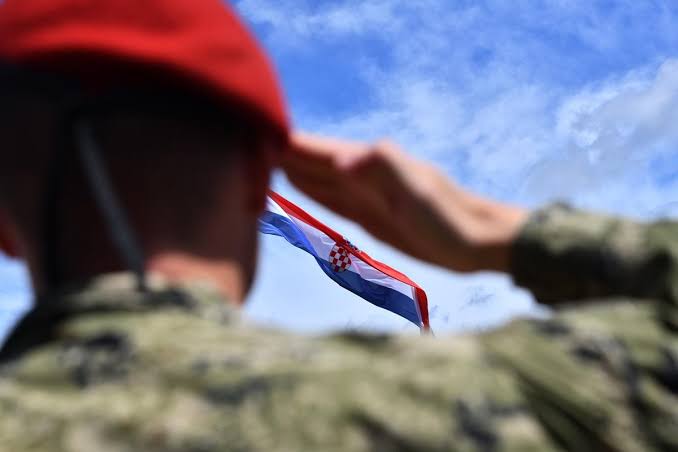
And yet almost nobody outside the Balkans has heard of Operation Storm, the four-day Croatian offensive that began at dawn on August 4, 1995, and that stands, by every serious military metric, as the largest and most logistically demanding operation conducted on European soil since 1945. Not the British campaign in Ulster. Not the Turkish landing on Cyprus. Not even, once the numbers are actually compared rather than assumed, the two operations most people would instinctively reach for as the obvious modern benchmarks, the Falklands War and Russia’s 2022 invasion of Ukraine. Operation Storm outscales all of them in the sheer number of men mobilized and the complexity of the coordination required to move them.

However, the most striking was the fact that this perfectly executed operation was carried out not by a great power with decades of institutional military infrastructure behind it, but by Croatia, a country of barely four million people that had been a sovereign state for less than four years.

A country that should not have been able to do this

This is the part of the story that gets lost, and it is the part that actually matters. Croatia did not enter August 1995 from a position of strength. It entered from a position that, on paper, looked close to hopeless.

Most notably, a UN arms embargo imposed on the whole of former Yugoslavia in 1991 had frozen Croatia’s ability to legally acquire the weapons, armor, and aircraft that a modern army needs, while the Yugoslav People’s Army, the fourth-largest military force in Europe at the time of its breakup, had handed the bulk of its arsenal to Serb forces in Croatia and Bosnia.

Roughly a fifth of Croatian territory, more than 10,000 square kilometers, was effectively occupied and militarily controlled by the self-proclaimed Republic of Serbian Krajina, a Serb paramilitary statelet backed by Belgrade and shielded, whether by design or by paralysis, behind a UN protection mandate that had frozen the conflict rather than resolved it.

Moreover, international sympathy was thin, diplomatic pressure to simply accept the territorial loss was constant, and the country doing the resisting was, in terms of manpower, armor, and airpower, decisively outmatched by what it faced. This was not a fair fight on paper. It was the underdog scenario in its purest form.

The four days that changed history

What Croatia produced in response was not a raid or a limited counterattack but a fully synchronized offensive across a 630-kilometer front, organized into four coordinated phases, Storm-1 through Storm-4, executed by five army corps together with special police units advancing from the Velebit mountains, and supported by Bosnian government forces striking from the Bihać pocket into the Serb rear. Somewhere between 130,000 and 200,000 troops moved simultaneously along thirty separate directions of attack, a scale of mobilization that a country of four million people has no obvious right to be able to generate, let alone command with any coherence.

The operation opened with Croatian air strikes against Serb command, communications, and logistics nodes, followed by an artillery and ground assault that broke the Krajina’s defenses within hours rather than days. Knin, the self-declared capital of the Serb statelet, fell on the second day. By the evening of August 7, the operation was declared complete, though mopping-up actions against isolated pockets continued for roughly another week. In under four days, Croatia had liberated more than 10,000 square kilometers, roughly 18.4 percent of its internationally recognized territory, and effectively erased the Republic of Serbian Krajina from the map.

The consequences reached well beyond Croatia’s borders. Storm broke the momentum of Serb forces across the wider region, shifted the balance of the Bosnian war decisively, and pushed Slobodan Milošević, whose leverage depended on the perception that Serb territorial gains were permanent, toward the negotiating table that produced the Dayton Accords three months later. A war that had ground on for four years, with horrors of Vukovar and Srebrenica already seared into memory, was brought to the edge of its end by an operation that most people in Western Europe and North America have simply never heard of.

Comparisons? What Comparisons?

Take the Falklands War, which remains the reference point most people in the UK reach for when they think of a decisive modern military operation. Impressive as it was as a logistical feat across eight thousand miles of open ocean, the estimated size of the entire British task force was between 26,000 and 28,000 servicemen, sailors, and support personnel combined, of whom perhaps 10,000 actually fought on the ground. That is not a fifth but rather closer to a fifteenth of the force Croatia put into the field in a single coordinated offensive across a single continuous front.

Now, let’s consider the case people reach for instinctively nowadays, Russia’s full-scale invasion of Ukraine in February 2022, which is routinely, and lazily, described as the largest European war since 1945. Set aside for a moment that Russia straddles two continents and that only a sliver of its territory and a minority of the political and military tradition it represents actually sits within Europe in any meaningful institutional or geographic sense; treating a Eurasian land empire as simply another European state flattens a distinction that matters.

But even accepting the loosest possible definition, the comparison does not hold up on its own terms. Western intelligence estimates put the Russian invasion force at somewhere between 150,000 and 190,000 troops at the outset, a number squarely inside, not above, the range Croatia mobilized for Storm. And Russia’s territorial results have been strikingly unimpressive relative to that force: having controlled roughly 27 to 28 percent of Ukraine at its peak in March 2022, Russia today, after more than four years of grinding war and staggering losses, controls somewhere around 18 to 20 percent of the country, having been pushed out of the Kyiv approaches, Chernihiv, Sumy, almost the whole of Kharkiv oblast, and half of Kherson. A large share of what Russia now holds was already occupied before the 2022 invasion even began.

Croatia, fighting under an arms embargo with a fraction of the population and none of Russia’s industrial base, retook nearly a fifth of its own country and finished the job in four days. Russia, with every advantage of scale, has spent four years failing even to hold onto the initial results of its own opening offensive.

Numbers do not lie, even when memory does

It bears repeating plainly, because the scale is genuinely difficult to grasp against the comparisons people actually know: Storm was a full-scale combined-arms offensive, air, artillery, armor, infantry, and special police, planned and executed by a state that had existed for less than four years, fighting under an arms embargo, against an adversary that had inherited the weapons of a much larger army.

Operation Storm remains, on any honest reading of the numbers, the largest coordinated land operation carried out on the European continent since the fall of Berlin, larger in mobilized manpower than the Falklands campaign by an order of magnitude, and comparable in scale, while dramatically more effective in its results, to the opening weeks of the largest war fought on the edge of Europe in the twenty-first century.

Taking everything into account, Operation Storm remains what it is: an unmatched military acchievement, with a smaller, weaker, embargoed, internationally isolated country generating and executing the largest coordinated land operation Europe had seen since the fall of Berlin, outmobilizing the Falklands task force fifteen times over and matching the force Russia threw at Ukraine, all while achieving in four days what Moscow has still not managed to consolidate after four years.

Thirty-one years later, that fact deserves to be known far beyond the borders of Croatia, the country that pulled it off.

_______________

*Originally published by Matej Markič on Substack.

/Argumentum.al

© 2026 Argumentum

Related Posts

Balkan Overview

Serbia Heads to Early Elections as Vučić Seeks a New Political Role

3 October, 2026
ENGLISH

We Don’t Need To Reinvent The Wheel: Five Countries That Offer A Blueprint for European Conscription

2 October, 2026
Balkan Overview

Von der Leyen in Skopje: North Macedonia Belongs in Europe, Mickoski Seeks Fair EU Accession Process

2 October, 2026

Follow US

Subscribe

Receive Argumentum Magazine by Email

Last Posts

Serbia Heads to Early Elections as Vučić Seeks a New Political Role

3 October, 2026

We Don’t Need To Reinvent The Wheel: Five Countries That Offer A Blueprint for European Conscription

2 October, 2026

Von der Leyen in Skopje: North Macedonia Belongs in Europe, Mickoski Seeks Fair EU Accession Process

2 October, 2026

Albanian PM Rama to U.S. Democrats: “Don’t Come to Albania to Take Revenge on Trump”

2 October, 2026

Von der Leyen in Pristina: “The Hague Verdict Must Be Respected, Nothing Can Rewrite Kosovo’s History”

1 October, 2026
Argumentum

“Argumentum”, një proces intelektual …

Contact Us

[email protected]
[email protected]
[email protected]

Follow Us

Media Partner

Register

Receive Argumentum Magazine by Email
  • Home
  • Privacy Policy
  • About Us
  • Contact

© 2022 Argumentum. All Rights Reserved. | NUIS: L91415033Q

Welcome Back!

Login to your account below

Forgotten Password?

Retrieve your password

Please enter your username or email address to reset your password.

Log In

Add New Playlist

No Result
View All Result
  • Home
  • OP/ED
  • Interview
  • Realpolitik
  • Current Events
  • Top News
  • YOUR VOICE
  • ARGUMENTUM MAGAZINE
  • Shqip

© 2022 Argumentum. All Rights Reserved. | NUIS: L91415033Q

This website uses cookies. By continuing to use this website you are giving consent to cookies being used. Visit our Privacy and Cookie Policy.