
































• SHQIPËRI
  • KOSOVË
  • MAQEDONIA E VERIUT
  • MALI I ZI
  • Revista në PDF
20 October, 2026
 
  • Home
  • OP/ED

    THE GREEN BERETS LAND IN TIRANA

    Some Myths Simply Refuse to Die

    UN Monologue: Why Kosovo Cannot Respond to Serbia’s Accusations

    The War That Was Waged Before the War

    The Structural Impasse: Can Merz Offer a Leadership Anchor to Europe?

    Will Europe Finally Ditch the Poisonous Myth of Perpetual Peace?

    Resolution 522 – When the U.S. Congress Honored Skanderbeg

    The Reconfiguration of Maritime Governance: Structural Hegemonic Decline and the Arctic Pivot

    Between Political Calculation and Retreat: Croatian Communists at the End of an Era

  • Interview

    Exclusive Interview with Oleksandr Tyshchenko: A 40-Year Legacy of Chernobyl, Nuclear Risks, and Global Responsibility

    INTERVIEW: ZLATKO KRAMARIĆ – THOUGHTS ON THE OLD CONTINENT

    EXCLUSIVE / Ukrainian Ambassador to Albania, Volodymyr Shkurov: “Ukraine wants peace, but not at the expense of its freedom and independence”

    EXCLUSIVE| Ambassador Tayyar Kagan Atay: Türkiye and Albania, a Strategic Partnership Rooted in Shared Heritage and a Common Vision for the Future

    “Diplomacy, Not War”: Palestinian Ambassador to Albania Calls for Justice, Peace, and Global Action for Gaza

    Exclusive: “Even After Tito – Tito”/ Ambassador Zlatko Kramarić on Authoritarian Legacies and Democracy’s Future in the Balkans

    The Conclusion of the Diplomatic Mission / Ambassador Dancho Markovski: Strengthening Albania-North Macedonia Relations for a Shared European Future

    A Century of Diplomatic Relations Between Albania and Russia: Exclusive Interview with the Russian Ambassador to Albania, H.E. Alexey Zaytsev

    Exclusive/ The chairman of the Freedom Party, Ilir Meta: “The will of the citizens will triumph in Albania, as it did in North Macedonia”

  • Realpolitik

    Long live the UN! A prewarned decision! A  G – 2? Putin in Miami!

    Montenegrin diplomatic blunder! Small Cyprus without great hopes! 4 blocks of Enlargement challenges! Political earthquake in Germany!

    Belgrade, Zelensky and the Consulates! The European Pact takes water! Drone in Leipzig and hybrid war! Why a  ceasefire is needed in September

    The Summit of Unity! Think of peace and prepare for war! It’s only the start to the end! Just a pause between two wars!

    Peace with war diplomacy! The protest,  image and tourism! Why this silence from the EU Commission and Council? A deal or a pause?

    Just kind words  in Tivat! Where is the peace!? A deal yes, peace No!What is happening with USA and  EU?  5 elections but no solution!

    IBAR? ”Sufficiently! Much ado about nothing! Shart contrasts in Beijing! Where is the exit?!

    Neither peace nor war! Peace with bombs?! IBAR in autumn?! Not another Hormuz in Taivan! 

    IBAR – a springing board or an obstacle? Can we catch the EU Negotiation train 2027? When the dress makes the news!  EU electoral April  ends in a draw 1:1!  

  • Current Events

    Albania Protests Enter Eighth Day as Demonstrators Demand Prime Minister Rama’s Resignation

    Albanian PM Rama Holds Up Protest Stone: “There Can Be No Negotiation with Violence”

    Albania’s Interior Minister Says Protests Have “Crossed the Red Line” as 295 People Injured in Six Days

    Ten Police Officers Injured in Attack on Police Station in Albania’s Capital

    Albanian PM Rama: Violent Protests Challenge EU Accession Goal for 2030

    Albania Police Chief Alleges Protest Violence Orchestrated by Organisers at Home and Abroad

    Albanian PM Rama Rules Out Resignation Amid Escalating Protests

    EU Gives Green Light to the Provisional Closure of Albania’s Chapter 20 Negotiations

    Balkan Business Forum in Tirana: Albania and Türkiye Seek to Expand Investment and Regional Economic Cooperation

  • Top News

    Albanian PM Rama Holds Up Protest Stone: “There Can Be No Negotiation with Violence”

    Albania’s Student Protests Enter Sixth Day as Clashes with Police Intensify; Rama Rules Out Resignation

    Albania Student Protests Spread to Multiple Cities as Clashes Escalate

    NATO to Hold Annual Nuclear Deterrence Exercise Steadfast Noon in Italy

    Albania’s Parliament Approves Territorial Reform, Reducing Municipalities from 61 to 46

    US Secretary of State Marco Rubio speaks at the Pnyx hill, where ancient Athenians held democratic assemblies, with the ancient Parthenon temple atop the Acropolis in the background, in Athens, Greece October 7, 2026.   Mark Schiefelbein/Pool via REUTERS

    Rubio in Athens: When History Becomes Political Doctrine

    Albanian PM Rama to U.S. Democrats: “Don’t Come to Albania to Take Revenge on Trump”

    Albania’s Top Diplomat Ferit Hoxha at Berlin Process: “EU Enlargement Is a Strategic Investment in Europe’s Security”

    From Pre-Trial Measures to the Presumption of Innocence: What Changes in Albania’s Criminal Procedure Code

  • YOUR VOICE
  • ARGUMENTUM MAGAZINE
  • Shqip
No Result
View All Result
Argumentum
No Result
View All Result
Home ENGLISH

The Iranian-Israeli confrontation – the start of a regional war or a ‘deterrence strategy’?

8 October, 2024
in ENGLISH, English OP/ED
A A
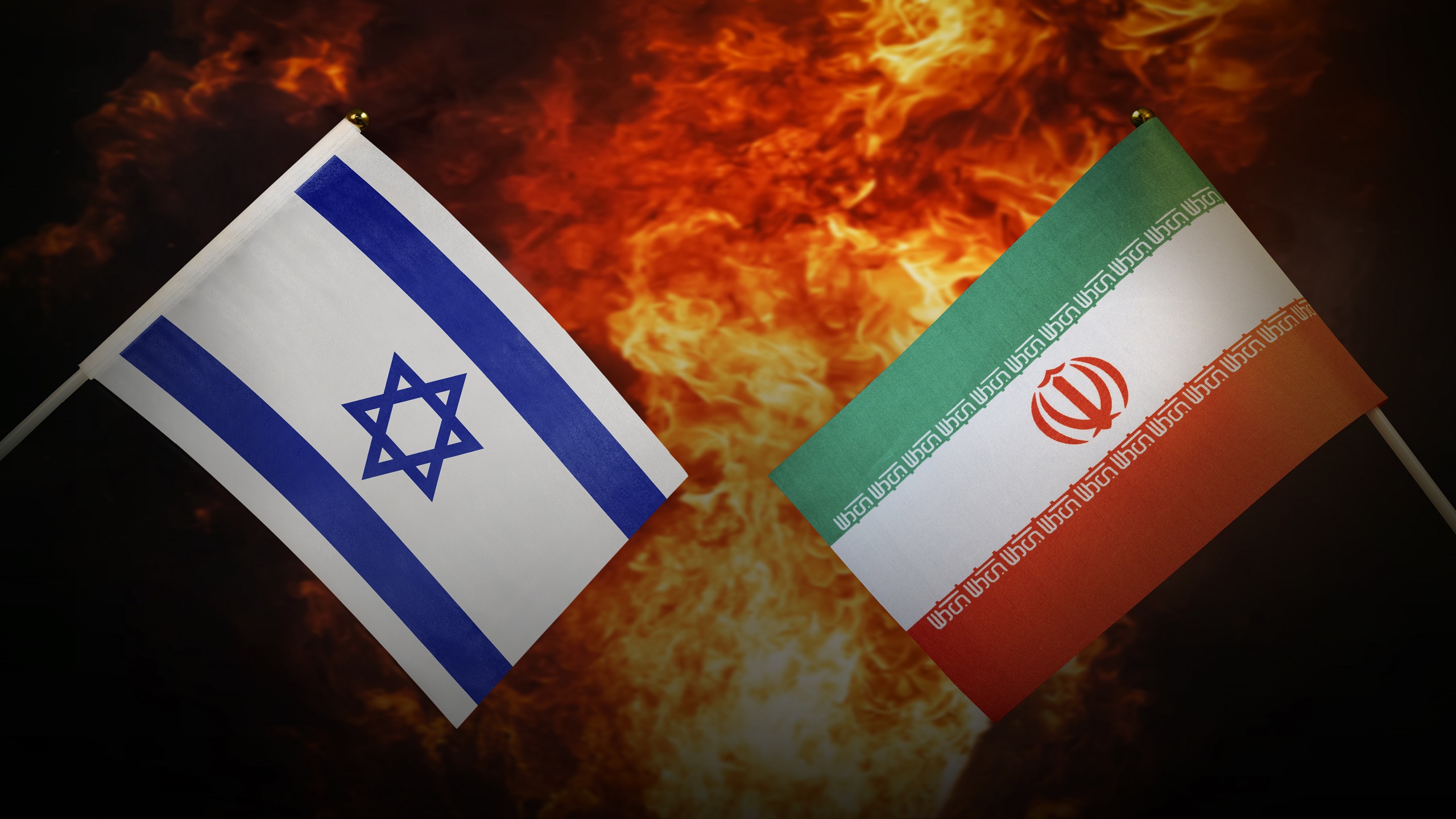
Flags of iran and Israel of america against the background of a fiery explosion. The concept of enmity and war between countries. Tense political relations.

Flags of iran and Israel of america against the background of a fiery explosion. The concept of enmity and war between countries. Tense political relations.

Share on FacebookShare on Twitter

By IFIMES

International Institute for Middle East and Balkan Studies 

Iran’s bombardment of Israel on 1 October 2024, with approximately 180 projectiles, including many ballistic missiles, marked a clear shift toward direct confrontation between the two regional powers, Iran and Israel. This contrasts with the indirect ‘proxy wars‘ waged since 7 October 2023, through pro-Iranian militias, particularly the Palestinian Hamas movement, Lebanese Hezbollah, and the Houthi movement in Yemen. According to the Iranian Revolutionary Guard, the attack came in response to Israel’s assassination of Hamas leader Ismail Haniyeh in central Tehran on 31 July 2024, and Lebanese Hezbollah leader Hassan Nasrallah on 27 September 2024.

This attack differs from Iran’s earlier strike on 13-14 April this year, as it was twice as intense. In this operation, Iran used ballistic missiles, unlike the April attack, where mostly drones and cruise missiles were employed. Most of the missiles in the April strike were conventional rockets, which took at least two hours to reach their targets in Israel, except for a few ballistic missiles. In contrast, in the latest attack, the rockets took only 15 minutes to hit their targets in Israel. For the first time, Iran deployed its hypersonic missile “Fattah,” capable of speeds 15 times faster than the speed of sound and with a range of up to 1,400 kilometres. This is only the second time such missiles have been used, with Russia deploying them first in the Ukraine war.

The activation of the Lebanese front

There is a well-known saying attributed to Lenin that “there are decades where nothing happens, and weeks where decades happen.” This saying has never felt more true than during this fateful September, which began with the explosion of thousands of pagers used by Hezbollah, followed by the assassination of Iran’s key ally in the region, Hassan Nasrallah, in Beirut. These dramatic developments triggered a series of questions: What is Iran’s true role in the conflict? Will Iran avoid a direct confrontation with Israel? Is Iran’s support for its Middle Eastern allies enough to counter Israel’s superior military machine? Could Iran be willing to sacrifice its allies in exchange for a stronger position in its nuclear negotiations with the West? Many questions are being raised about the nature of the relationship between Tehran and pro-Iranian militias in Lebanon, Syria, Iraq, and Yemen.

Since the outbreak of the Hamas-Israel conflict on 7 October 2023, Hezbollah’s stance has been clear – to support the Hamas movement in the war by opening the northern front, thereby exerting military, economic, and psychological pressure on the Israeli army. However, the warfare on the northern front over the course of the year was governed by the “rules of engagement (ROE)”[2]. Both sides largely stuck to these rules, with Israeli planes bombing Hezbollah bases in southern Lebanon and Hezbollah responding with rocket attacks on Israeli military bases in northern Israel—blow for blow, according to the rules.

The assassination of Nasrallah disrupted the long-standing “deterrence” policy that has consistently shaped the complex dynamics between Israel, Hezbollah, and Iran. Iran spent decades building Hezbollah, not just as one of its key proxies, but also as a critical element of the Islamic Republic’s defence doctrine. It is estimated that Hezbollah holds around 150,000 missiles and several thousand drones, all acquired with Iran’s help over more than a decade. Hezbollah has served as Iran’s “insurance policy” against any Israeli attack on its nuclear facilities.

In response to this series of strikes, Iranian Foreign Minister Abbas Araghchi stated at the United Nations on 25 September 2024, that Hezbollah is “fully capable of defending itself and of defending Lebanon and the Lebanese people.”[3] Meanwhile, Iranian President Masoud Pezeshkian, speaking at the UN General Assembly, condemned Israel’s war in Gaza and warned that its attacks on Lebanon could not simply go unanswered. He adopted a more conciliatory tone compared to his hardline predecessors, avoiding rhetoric about eliminating Israel as the Islamic Republic’s greatest enemy. The Iranian president added that Israel seeks to drag Iran into a war, adding that “Iran is ready to de-escalate tensions with Israel and lay down arms if Israel does the same.” This statement drew criticism from some rigid conservatives close to Iran’s Supreme Leader Ali Khamenei concerning his remarks about easing tensions with Israel.[4]

Iran has found itself trapped in the web of regional alliances it has spun itself to secure external protection. Both Iran and Israel are ensnared in a downward spiral of violence, and it is currently impossible to predict to what extent and how far this conflict might spread. In any case, Iran is now in a defensive position, as its alliance system has been shaken by the defeats of Hamas and Hezbollah, thus diminishing its credibility as a regional power. As a result, Tehran felt compelled to retaliate with these missile strikes on Israel.

Escalation within the rules of  engagement and mutual deterrence

According to analysts, the current escalation is unfolding within the bounds of the rules of engagement and mutual deterrence and is unlikely to escalate into a wider regional conflict. In all these strikes, Iran has refrained from targeting key strategic sites in Israel, such as airports, ports, power plants, or the Dimona nuclear reactor. There is no doubt that, prior to both attacks, there were indirect communications with Washington concerning their nature, scale, and timing. Tehran informed Moscow of the scope of its strikes, allowing the U.S. and Israeli sides to be notified through international intermediaries.

Israel’s potential response to the Iranian strike

In the aftermath of the attack, Israel promptly issued threats to respond by targeting Iran’s nuclear or oil facilities. Its air force had been preparing for this scenario as early as 2022. Israel views Iran as an existential threat because of its nuclear program and has repeatedly warned it would destroy the Bushehr nuclear plant. In late May 2022, Israel conducted exercises for this situation, deploying 100 fighter jets and submarines. However, Israel faces significant challenges in carrying out such a mission against Iran, as this would not resemble the operation to destroy Iraq’s Tammuz nuclear reactor in June 1981, where 16 F-16s were used. This time, such an operation is nearly impossible.

Among the preparations Israel began in 2019 was the acquisition of F-35 aircraft with larger fuel tanks, allowing them to carry out strikes on Iran without relying on refuelling tankers, thus completing the mission without requiring mid-air refuelling.

However, an F-35 fighter with larger fuel tanks will not be able to carry enough bombs to strike heavily fortified targets, and, in addition, it will lose some of its stealth technology to avoid detection by Iranian radars. Other aircraft, such as the F-16s and F-15s, will need to refuel, putting them in a very vulnerable position against Iranian radar systems.

The United States is not backing an Israeli strike on Iran, as the Pentagon does not have precise intelligence on the air defence systems Iran possesses—whether they are Russian-made S-400s or other systems manufactured domestically. It stands to reason that any nation capable of producing ballistic and hypersonic missiles, like Iran, can also develop advanced air defence technologies.

The Pentagon is keen to prevent its advanced F-35 jets from being shot down over Iranian soil, fearing a repeat of the 1999 incident when an F-117 Stealth fighter was brought down over Serbia, with its secrets falling into the hands of China and Russia. The Pentagon was forced to halt production of those aircraft and replace them with the more modern F-35 program. The Pentagon also has a bitter history with Iran, dating back to November 2019, when Iranian air forces shot down an RQ-4 Global Hawk drone using their domestically produced “Sevom Khordad” system, despite the drone’s cutting-edge technology.

Tehran, on the other hand, has conveyed a clear message to Israel through intermediaries,[5] warning that any military attack will be met with a harsh and unconventional response, involving the destruction of Israel’s critical civilian and military infrastructure. Given the speed and effectiveness of Iran’s ballistic and hypersonic missiles, one question remains – if Israel attacks Iran with F-35 fighter jets and succeeds, Iran will respond with an unconventional strike on military and civilian airports. Will Israeli fighter jets then find suitable runways in Israel to land on upon their return? Meanwhile, Israel’s threat to launch powerful military strikes against Iran remains merely a media ploy. It is possible that Israel will respond in a more limited way, using long-range missiles that could target non-strategic areas without causing fatalities. This was the case with Israel’s 19 April 2024 strike on the area around the Iranian military airbase near Isfahan.[6]

Resolving the Palestinian issue – the key to regional security and stability

Since the Islamic Revolution of 1979, Iran has aspired to become the dominant power in the region. To achieve these historical ambitions, it has embraced the Palestinian cause and the rhetoric of Israel’s destruction as a means to this national goal. Tehran has provided financial and military support to various resistance groups against Israel, particularly Hamas and Hezbollah, the Houthi movement, and other Shia militias in Iraq and Syria, forming the “axis of resistance.” Israel must understand that it cannot destroy Iran, but bringing an end to the Israeli-Palestinian conflict would remove Tehran’s main leverage and eliminate its ability to use the Palestinian issue as a political tool for regional dominance.

Since the founding of Israel, every U.S. administration has supported an Israeli-Palestinian peace based on a two-state solution. Over the past three decades, the United States has attempted to mediate an agreement between the two sides but has largely failed, mainly because neither side is willing to make the concessions demanded by the other. Although the U.S. has never given up and has consistently urged both sides to compromise, it has never wavered from the principle that a two-state solution remains the only practical option. Israel, in particular, must understand that no future U.S. administration is likely to change this stance.

Despite a growing belief among Israelis that the two-state solution is no longer viable, there is no other sustainable option to end the Israeli-Palestinian conflict. Many Israelis have been misled by the false narrative that a Palestinian state would pose an existential threat to Israel, whereas, in reality, Israel’s national security lies precisely in the creation of a Palestinian state, with full cooperation between the two sides on issues ranging from the economy to national security.

Israelis and Palestinians have become increasingly intertwined, making territorial separation virtually impossible. There are about three million Palestinians in the West Bank, more than two million in Gaza, and two million in Israel. Meanwhile, there are more than 700,000 Israelis in the West Bank, including 230,000 in East Jerusalem. The total number of Israeli Jews is approximately equal to the total number of Palestinians across all three areas, each around seven million. Under no circumstances will either side be able to eradicate the other or attempt ethnic cleansing in any form, including through violence.

Whatever the outcome of the escalation or a future war between Iran and Israel, the root cause of the conflict will remain—the Palestinian issue. There is no doubt that peace and stability in the Middle East, which would ensure safety and security for the region’s countries and peoples, as well as for Israel and the Jewish people, begins with the establishment of a Palestinian state.

Ljubljana/Washington/Brussels, 8 October 2024

IFIMES–https://www.ifimes.org/en/researches/absurd-wars-of-the-middle-east-the-iranian-israeli-confrontation-the-start-of-a-regional-war-or-a-deterrence-strategy/5405

Related Posts

Current Events

Albania Protests Enter Eighth Day as Demonstrators Demand Prime Minister Rama’s Resignation

20 October, 2026
ENGLISH

Albania above all

19 October, 2026
Current Events

Albanian PM Rama Holds Up Protest Stone: “There Can Be No Negotiation with Violence”

19 October, 2026

Follow US

Subscribe

Receive Argumentum Magazine by Email

Last Posts

Albania Protests Enter Eighth Day as Demonstrators Demand Prime Minister Rama’s Resignation

20 October, 2026

Albania above all

19 October, 2026

Albanian PM Rama Holds Up Protest Stone: “There Can Be No Negotiation with Violence”

19 October, 2026

Albania’s Interior Minister Says Protests Have “Crossed the Red Line” as 295 People Injured in Six Days

19 October, 2026

Ten Police Officers Injured in Attack on Police Station in Albania’s Capital

18 October, 2026
Argumentum

“Argumentum”, një proces intelektual …

Contact Us

[email protected]
[email protected]
[email protected]

Follow Us

Media Partner

Register

Receive Argumentum Magazine by Email
  • Home
  • Privacy Policy
  • About Us
  • Contact

© 2022 Argumentum. All Rights Reserved. | NUIS: L91415033Q

Welcome Back!

Login to your account below

Forgotten Password?

Retrieve your password

Please enter your username or email address to reset your password.

Log In

Add New Playlist

No Result
View All Result
  • Home
  • OP/ED
  • Interview
  • Realpolitik
  • Current Events
  • Top News
  • YOUR VOICE
  • ARGUMENTUM MAGAZINE
  • Shqip

© 2022 Argumentum. All Rights Reserved. | NUIS: L91415033Q

This website uses cookies. By continuing to use this website you are giving consent to cookies being used. Visit our Privacy and Cookie Policy.