








By Zlatko Kramarić*|ARGUMENTUM
Abstract
Russian culture has always existed in a state of tension between its own spiritual tradition and the influence of Europe. From Dostoevsky and Tolstoy, through Akhmatova, Mandelstam, and Brodsky, to Solzhenitsyn and contemporary political figures, Russia constantly asks: is it part of Europe, or its opposite? This article analyses that historical and spiritual tension, highlighting the conflict between “true Russians” and pro-European modernisers, and showing how Russia simultaneously rejects and mirrors the European spirit.
Keywords: Russia, Europe, Russian idea, Dostoevsky, Tolstoy, Slavophiles, European spirit
Europe Seen from the Outside
In previous reflections on the “spirit of Europe” — from Husserl and Zweig to Sloterdijk, Derrida, and Habermas — we spoke from within the European tradition. But Europe cannot be understood without those who stand at its threshold. Russian culture, positioned between East and West, constantly tests the borders of Europe’s self-awareness. For Russians, Europe is both temptation and challenge, ideal and threat.
The Russian Idea and the European Dream
In his Philosophical Letters, Pyotr Chaadaev described Russia as “outside of history,” untouched by European revolutions. From this arises a permanent mix of inferiority and messianism: Russia as Europe’s guardian, or Europe’s reformer. This ambivalence becomes the structural matrix of the so-called “Russian idea.”
Dostoevsky and the Temptation of the West
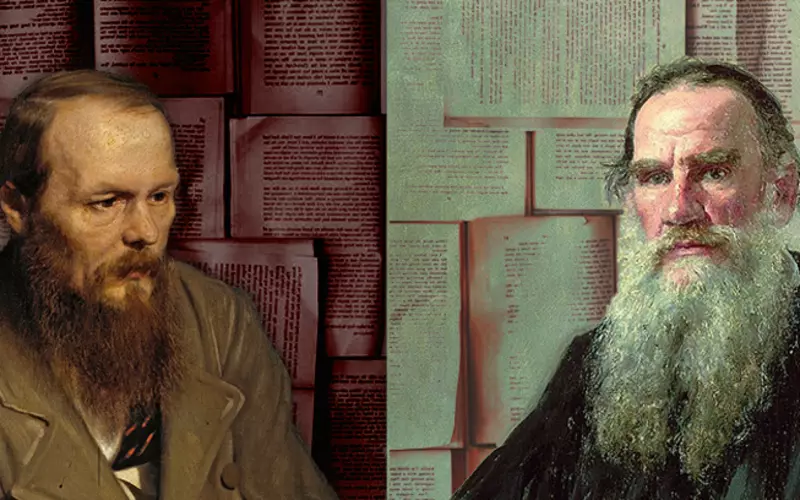
Dostoevsky — in Notes from Underground and The Brothers Karamazov — sees Europe as a realm of rationalism without God. Europe loses its soul when it replaces suffering with comfort and security. Russia, in his view, must preserve a spiritual depth Europe has forgotten — anticipating Husserl’s later diagnosis of Europe’s “spiritual crisis.”
Tolstoy and Moral Simplicity
Tolstoy, especially in The Kingdom of God Is Within You, criticises the West for its materialism and institutional Christianity. His ideal is moral simplicity, non-violence, and faith without power. Russia becomes, for him, the place where Europe might rediscover its moral measure.
Akhmatova, Mandelstam, Brodsky — Europe in Exile
Anna Akhmatova’s Requiem transforms private suffering into a universal tragedy, linked to the European lyric tradition.
Osip Mandelstam, in Conversation about Dante, evokes Dante and Ovid — seeking continuity with the humanist canon.
Joseph Brodsky, in Less Than One, famously observes that “Russia was European until it decided not to be,” insisting that style, moral reflection, and irony are the essence of Europe.
These authors represent a Russia profoundly European in its sensibility, even when persecuted by its own state.
Solzhenitsyn and the Political Metaphysics of Russia
Solzhenitsyn — in The Gulag Archipelago and Live Not by Lies — combines moral and political critique. He places truth above ideology, confronting totalitarianism but also warning against Western relativism. His call for spiritual renewal makes him both European (in method) and anti-European (in his vision of a uniquely Russian path).
His thought, often against his own intention, became the source for later ideological readings of a “Russian way,” echoed today in political rhetoric.
Lenin, Stalin, Trotsky — European Revolutionaries, Russian Destiny
Lenin and Trotsky were intellectually shaped by Hegel, Marx, and the French Revolution.
Stalin turned European rationalism into a political cult, replacing freedom and conscience with discipline and sacrifice.
Soviet civilisation thus becomes European in method, anti-European in spirit. It sought to fuse Russian mysticism with European science — producing a system that ultimately destroyed both.
Europe’s Borders and Russia as Mirror
Today, the concept of the russkij mir continues the old Slavophile dream of a distinct civilisation. Yet Russia never ceases to be European, even in opposition: its self-definition constantly requires Europe as a mirror.
Philosophers like Berdyaev and Shestov show that Russia cannot escape Europe; its historical mission rests in an internal dialogue — or struggle — with European values. Russia rejects Europe only to rediscover itself in that rejection.
Epilogue: The Eternal Conflict Between “True Russians” and Europeanisers
At the heart of Russian thought lies a deep and persistent conflict: the tension between the “true Russians” (Slavophiles) and the Europeanisers (Zapadniki). The Slavophiles — Aleksey Khomyakov, Ivan Kireyevsky — saw Europe as a betrayal of spiritual warmth. The Westernisers — Belinsky, Herzen, Chernyshevsky — argued that Russia could not emerge from darkness without European thought.
Nikolai Berdyaev called this the “tragedy of the Russian spirit”: a perpetual oscillation between holiness and revolution, humility and power. In the 20th century the same drama resurfaces among the Symbolists, the Communists, and the dissidents — each searching for balance between spirituality and reason, between the icon and the laboratory.
This unresolved archetype continues to shape Russia’s identity. And in that unresolved tension Russia holds up a mirror to Europe, revealing the fragile foundations of its own self-understanding.
*Zlatko Kramarić is a Croatian publicist, author, and diplomat, currently serving as Ambassador to Albania. Formerly a university professor and politician, he is known for his work in literature, cultural studies, and regional history.
© 2025 Argumentum