







• SHQIPËRI
  • KOSOVË
  • MAQEDONIA E VERIUT
  • MALI I ZI
  • Revista në PDF
5 June, 2026
  • Home
  • OP/ED

    The Blueprint of a Diplomatic Debacle: Analyzing Germany’s Historic UNSC Loss

    Cyber Attribution, Corruption, and the False-Flag Question in Albania’s 2022 Alleged Iranian Cyberattack

    Between Russia, Iran and Europe: Azerbaijan as a balancing power in the South Caucasus

    The Zero-Tariff Gate: Sovereignty as a Service in the Sino-African Corridor

    Albania vs. the Sea/ Marginal Notes on A. Leka’s Novel The Hidden Side of the Albanian Socialist Garden

    May 9 and the long shadow of a Letter: Is Europe still Schuman’s Project?

    The Arbnesh of Zadar: A living memory of Albanian identity on the Adriatic coast

    Science Diplomacy and Academic Freedom: A strategic nexus for contemporary diplomacy

    Serbia and Kosovo between new regional alliances and old geopolitical patterns

  • Interview

    Exclusive Interview with Oleksandr Tyshchenko: A 40-Year Legacy of Chernobyl, Nuclear Risks, and Global Responsibility

    INTERVIEW: ZLATKO KRAMARIĆ – THOUGHTS ON THE OLD CONTINENT

    EXCLUSIVE / Ukrainian Ambassador to Albania, Volodymyr Shkurov: “Ukraine wants peace, but not at the expense of its freedom and independence”

    EXCLUSIVE| Ambassador Tayyar Kagan Atay: Türkiye and Albania, a Strategic Partnership Rooted in Shared Heritage and a Common Vision for the Future

    “Diplomacy, Not War”: Palestinian Ambassador to Albania Calls for Justice, Peace, and Global Action for Gaza

    Exclusive: “Even After Tito – Tito”/ Ambassador Zlatko Kramarić on Authoritarian Legacies and Democracy’s Future in the Balkans

    The Conclusion of the Diplomatic Mission / Ambassador Dancho Markovski: Strengthening Albania-North Macedonia Relations for a Shared European Future

    A Century of Diplomatic Relations Between Albania and Russia: Exclusive Interview with the Russian Ambassador to Albania, H.E. Alexey Zaytsev

    Exclusive/ The chairman of the Freedom Party, Ilir Meta: “The will of the citizens will triumph in Albania, as it did in North Macedonia”

  • Realpolitik

    IBAR? ”Sufficiently! Much ado about nothing! Shart contrasts in Beijing! Where is the exit?!

    Neither peace nor war! Peace with bombs?! IBAR in autumn?! Not another Hormuz in Taivan! 

    IBAR – a springing board or an obstacle? Can we catch the EU Negotiation train 2027? When the dress makes the news!  EU electoral April  ends in a draw 1:1!  

    The European Parliament building in Strasbourg, France with flags waving calmly celebrating peace of the Europe. July 12, 2020.

    EU 2027 or 2037! Even half membership failed! No exit strategy!     

    What next?

    “With diplomatic velvet“! Major question marks! In Washington yes, but  in the White House NO! A strange dinner in Brussels!

    From a great ‘apple of disaccord’ to a  point of  cooperation! A bad start! The strange absence in Davos!

    5 lessons from the American 3 January! Don’t count the chicken before they are hatched! Will NATO freeze in Greenland? Wrong diplomatic messages!

    German Chancellor Friedrich Merz, European Commission President Ursula von der Leyen, Ukraine's President Volodymyr Zelenskiy, U.S. Special Envoy Steve Witkoff and Jared Kushner, son-in-law of U.S. President Donald Trump line up for a family photo opportunity at the Chancellery in Berlin, Germany, December 15, 2025.    REUTERS/Lisi Niesner/Pool

    A Strategy that could change the world! Europe in Berlin! Why an historic compromise? Only charm diplomacy in Athens!

  • Current Events

    Serbia – China 2026: Technological partnership, geopolitical positioning and a new phase of the Chinese presence in the Western Balkans

    The Digital Protectorate: How the EU AI Act Codified Silicon Valley’s Monopoly

    The 28th MFC Annual Conference in Durrës / Sulaj: Microfinance remains a key instrument for financial inclusion

    Serbia at the Crossroads of EU Integration and Geopolitical Balancing: IFIMES Analysis

    Tirana – €20 Million EU–Banking Agreement Boosts Albanian SMEs

    The Myth of Independence: How Chinese Efficiency is Rewriting the Constitution of Modern Geopolitics!

    Europe Yesterday and Today: Why 9 May Still Matters

    “EU4Municipalities II” Project, a Strategic Investment for Strengthening Municipalities and Accelerating Albania’s Path towards the EU

    Eight Years in the Service of Identity: The Journey of the Montenegrin Community in Albania

  • Top News

    No End in Sight: Trump, Netanyahu and the Expanding Middle East War

    Tirana – €20 Million EU–Banking Agreement Boosts Albanian SMEs

    “EU4Municipalities II” Project, a Strategic Investment for Strengthening Municipalities and Accelerating Albania’s Path towards the EU

    Albania, Italy deepen defence ties with naval shipbuilding deal

    U.S. Embassy: Iran-Linked Groups May Target Americans and Iranian Opposition in Albania

    The Council of Albanian Ambassadors disappointed with the voting of the draft law on the foreign service in the parliamentary committees.

    Prime Minister Edi Rama Addresses Israel’s Knesset in Historic Special Session

    Kazakhstan’s Strategic Reform Agenda: Stability, Modern Governance, and Responsible Diplomacy

    Trump Invites Rama to Peace Board, Prime Minister: Proud of Albania

  • YOUR VOICE
  • Shqip
No Result
View All Result
Argumentum
  • Home
  • OP/ED

    The Blueprint of a Diplomatic Debacle: Analyzing Germany’s Historic UNSC Loss

    Cyber Attribution, Corruption, and the False-Flag Question in Albania’s 2022 Alleged Iranian Cyberattack

    Between Russia, Iran and Europe: Azerbaijan as a balancing power in the South Caucasus

    The Zero-Tariff Gate: Sovereignty as a Service in the Sino-African Corridor

    Albania vs. the Sea/ Marginal Notes on A. Leka’s Novel The Hidden Side of the Albanian Socialist Garden

    May 9 and the long shadow of a Letter: Is Europe still Schuman’s Project?

    The Arbnesh of Zadar: A living memory of Albanian identity on the Adriatic coast

    Science Diplomacy and Academic Freedom: A strategic nexus for contemporary diplomacy

    Serbia and Kosovo between new regional alliances and old geopolitical patterns

  • Interview

    Exclusive Interview with Oleksandr Tyshchenko: A 40-Year Legacy of Chernobyl, Nuclear Risks, and Global Responsibility

    INTERVIEW: ZLATKO KRAMARIĆ – THOUGHTS ON THE OLD CONTINENT

    EXCLUSIVE / Ukrainian Ambassador to Albania, Volodymyr Shkurov: “Ukraine wants peace, but not at the expense of its freedom and independence”

    EXCLUSIVE| Ambassador Tayyar Kagan Atay: Türkiye and Albania, a Strategic Partnership Rooted in Shared Heritage and a Common Vision for the Future

    “Diplomacy, Not War”: Palestinian Ambassador to Albania Calls for Justice, Peace, and Global Action for Gaza

    Exclusive: “Even After Tito – Tito”/ Ambassador Zlatko Kramarić on Authoritarian Legacies and Democracy’s Future in the Balkans

    The Conclusion of the Diplomatic Mission / Ambassador Dancho Markovski: Strengthening Albania-North Macedonia Relations for a Shared European Future

    A Century of Diplomatic Relations Between Albania and Russia: Exclusive Interview with the Russian Ambassador to Albania, H.E. Alexey Zaytsev

    Exclusive/ The chairman of the Freedom Party, Ilir Meta: “The will of the citizens will triumph in Albania, as it did in North Macedonia”

  • Realpolitik

    IBAR? ”Sufficiently! Much ado about nothing! Shart contrasts in Beijing! Where is the exit?!

    Neither peace nor war! Peace with bombs?! IBAR in autumn?! Not another Hormuz in Taivan! 

    IBAR – a springing board or an obstacle? Can we catch the EU Negotiation train 2027? When the dress makes the news!  EU electoral April  ends in a draw 1:1!  

    The European Parliament building in Strasbourg, France with flags waving calmly celebrating peace of the Europe. July 12, 2020.

    EU 2027 or 2037! Even half membership failed! No exit strategy!     

    What next?

    “With diplomatic velvet“! Major question marks! In Washington yes, but  in the White House NO! A strange dinner in Brussels!

    From a great ‘apple of disaccord’ to a  point of  cooperation! A bad start! The strange absence in Davos!

    5 lessons from the American 3 January! Don’t count the chicken before they are hatched! Will NATO freeze in Greenland? Wrong diplomatic messages!

    German Chancellor Friedrich Merz, European Commission President Ursula von der Leyen, Ukraine's President Volodymyr Zelenskiy, U.S. Special Envoy Steve Witkoff and Jared Kushner, son-in-law of U.S. President Donald Trump line up for a family photo opportunity at the Chancellery in Berlin, Germany, December 15, 2025.    REUTERS/Lisi Niesner/Pool

    A Strategy that could change the world! Europe in Berlin! Why an historic compromise? Only charm diplomacy in Athens!

  • Current Events

    Serbia – China 2026: Technological partnership, geopolitical positioning and a new phase of the Chinese presence in the Western Balkans

    The Digital Protectorate: How the EU AI Act Codified Silicon Valley’s Monopoly

    The 28th MFC Annual Conference in Durrës / Sulaj: Microfinance remains a key instrument for financial inclusion

    Serbia at the Crossroads of EU Integration and Geopolitical Balancing: IFIMES Analysis

    Tirana – €20 Million EU–Banking Agreement Boosts Albanian SMEs

    The Myth of Independence: How Chinese Efficiency is Rewriting the Constitution of Modern Geopolitics!

    Europe Yesterday and Today: Why 9 May Still Matters

    “EU4Municipalities II” Project, a Strategic Investment for Strengthening Municipalities and Accelerating Albania’s Path towards the EU

    Eight Years in the Service of Identity: The Journey of the Montenegrin Community in Albania

  • Top News

    No End in Sight: Trump, Netanyahu and the Expanding Middle East War

    Tirana – €20 Million EU–Banking Agreement Boosts Albanian SMEs

    “EU4Municipalities II” Project, a Strategic Investment for Strengthening Municipalities and Accelerating Albania’s Path towards the EU

    Albania, Italy deepen defence ties with naval shipbuilding deal

    U.S. Embassy: Iran-Linked Groups May Target Americans and Iranian Opposition in Albania

    The Council of Albanian Ambassadors disappointed with the voting of the draft law on the foreign service in the parliamentary committees.

    Prime Minister Edi Rama Addresses Israel’s Knesset in Historic Special Session

    Kazakhstan’s Strategic Reform Agenda: Stability, Modern Governance, and Responsible Diplomacy

    Trump Invites Rama to Peace Board, Prime Minister: Proud of Albania

  • YOUR VOICE
  • Shqip
No Result
View All Result
Argumentum
No Result
View All Result
Home ENGLISH

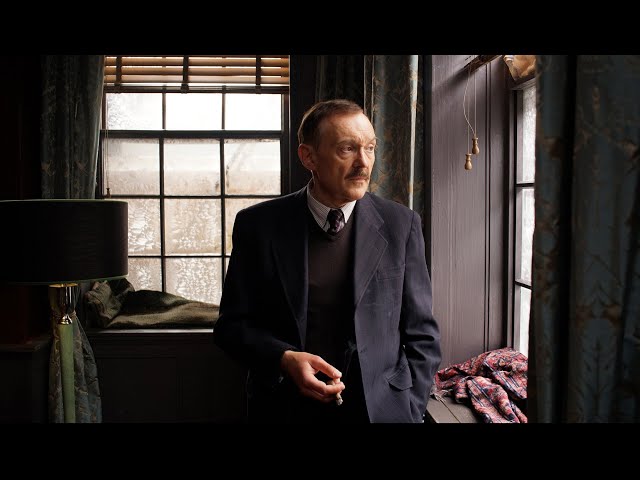
Stefan Zweig – “At every moment in history, Europe has stood between the abyss and ascension”

4 November, 2025
in ENGLISH, English OP/ED
A A
Share on FacebookShare on Twitter

Zlatko Kramarić*|ARGUMENTUM

Ambassador of Croatia to Albania

In our previous text, “Today’s Europe is an Odysseus who no longer knows where he is returning,” we attempted to show how a long history of European self-awareness stretches between Homer’s Odyssey and Sloterdijk’s notion of “anger” – from the mythical search for home to the philosophical attempt to understand one’s own rage. We could say that Europe has been searching for itself for millennia, constantly journeying between reason and wrath, hope and disappointment. This endless return, this journey without arrival, took on a moral-political dimension in the modern age: the continent that gave birth to the greatest ideals also became the site of their most radical defeats. That is why today, after Homer and Sloterdijk, we must read Stefan Zweig again – a writer who perhaps was the last to believe that the European spirit could be renewed by culture, dialogue, and humanism. If Homer’s Europe was in search of home, and Sloterdijk’s in search of meaning, Zweig’s – caught between despair and hope – sought moral equilibrium between past and future.

The Greek word krísis originally means decision, judgment, differentiation. In ancient medicine and philosophy, it refers to the moment when it is decided whether an illness will end in healing or death. In that original sense, crisis does not mean (certain) disaster, but a moment of truth – a boundary between possible salvation and final collapse.

Europe seems to have been in a permanent state of crisis for centuries. It is a continent that constantly questions itself, that constantly “re-decides what it wants to be.” In the 1930s this crisis took the form of political radicalization, economic collapse and spiritual disorientation; today it appears in more sophisticated forms: technocratic cynicism, populist anger, and moral exhaustion. Yet the common denominator remains the same – the loss of the meaning of togetherness.

In both cases, it is a crisis of the spirit. If Europe was once a place of humanism and reason, today it is increasingly a place of fear, division, and distrust. This is precisely the diagnosis that Stefan Zweig, a writer who embodied in his own life (he committed suicide in 1942 in Brazil) the tragic fate of European humanism, formulated with almost prophetic clarity.

Zweig was a “cosmopolitan of the spirit,” perhaps the last authentic European from the time before Europe. His idea of the continent was neither political nor economic but cultural-moral. For him, Europe was above all a community of conscience – a space where different nations recognize each other through a common faith in reason, dialogue, and beauty.

In his essays on Montaigne, Erasmus, Rolland or Tolstoy, Zweig creates a gallery of figures representing the best in European tradition: doubt instead of dogma, reason instead of fanaticism, peace instead of victory. These humanists are his spiritual allies, “resistant to national borders and hatreds,” because for him Europe is not a political entity but a community of conscience, a place of dialogue and tolerance. Ultimately, “Europe was born from the book, not from the sword”: it is a federation of peoples united by shared values, not by frontiers. Europe, in Zweig’s view, is an act of conscience rather than a geographical fact. And we should never allow that spirit of community to weaken; for when culture becomes mere decoration rather than a space of freedom, Europe begins to collapse from within.

This is where the connection between his vision of Europe and the ancient Greek word krisis – the moment of judgment and differentiation – becomes clear. For Zweig, the crisis of Europe is not merely a political or economic event, but a moral test for the continent: the moment when it must choose between reason and fanaticism, between humanism and extreme nationalism. In this context, crisis is not necessarily a misfortune, but a verdict: the moment when it becomes clear what Europe is – and what it definitely does not want to be.

In his autobiography The World of Yesterday, written in exile shortly before his suicide, Zweig reconstructs a world of security – that Mitteleuropa of the Viennese spirit, where culture and civility were the foundation of identity. That world collapsed into the barbarism of the 20th century, but in his memory it remained as a moral compass: proof that Europe once existed as a community of spirit, not of raw interests.

When Oswald Spengler published The Decline of the West in 1918, the book became an intellectual bestseller precisely because it expressed a widespread mood of disappointment. Spengler saw history as a cycle of rise and decay of civilizations: every culture has its “childhood, youth, and old age,” and Europe, he argued, is already in terminal decline. Culture has turned into civilization (form without soul, a technical world devoid of creative energy), art into technology, and spirit into mere calculation.

Zweig shared the feeling of crisis, but rejected Spengler’s deterministic pessimism. For him, history is not a natural process of decay but a moral drama. Europe is not an organism that is dying, but a being that can recover – if it regains its faith in reason, empathy, and culture. He does not deny the collapse of the epoch, but sees in it an opportunity for moral awakening.

In that sense, Zweig stands as the ethical antithesis to Spengler. While Spengler claims that the “soul of the West” is exhausted, Zweig believes that precisely in exhaustion we may rediscover humanity. His humanism resists fatalism – he defends the right to hope when everyone else believes in the end. For him, history is ethical, not biological: it unfolds through human responsibility. He refuses the idea of the “decline of the West,” because he believes Europe – however weak (and old) – still represents a spiritual possibility. Where Spengler sees the death of culture, Zweig sees a call to awakening. In this sense, he anticipates the later thought of J. Habermas, who spoke of the “unfinished project of modernity.”

If we compare Europe of the 1930s with today’s Europe, we will recognize a number of troubling parallels:

Economic inequality and insecurity: then the Great Depression, today the consequences of globalization and technological transformation. Both produce social anxiety and political anger.

Crisis of liberal democracy: then institutions collapsed under dictatorships, today they are hollowed out by populism and indifference.

Propaganda and manipulation: then the totalitarian voice of radio, today replaced by digital algorithms and “post-truths” – but the result is the same: disinformation and the weakening of critical thought.

Cultural exhaustion and nostalgia: then Europe turned to its (imperial, national) past, today to an idealized “golden age” of prosperity and identity; it embraces nostalgia and pessimism, fearing its own future.

In both cases, the crisis is not merely material but ontological – a loss of meaning and trust. Zweig would recognize today’s Europe as a space of moral disorientation: a continent that knows everything, but no longer knows why.

German philosopher Peter Sloterdijk, in Rage and Time, describes the contemporary West as a space of “accumulated anger” – energy with no direction. Today’s world, he argues, produces frustrations but not ideals. And here is the paradox: we live in an age of unprecedented material advancement, yet also in an age of profound spiritual depression. He depicts the contemporary West as a “civilization of the resigned” – driven not by great ideas but by technological optimism and emotional exhaustion. His description perfectly matches Zweig’s sense of the end of an epoch – only now the end is global and devoid of tragic dignity.

Sloterdijk’s analysis complements Zweig’s melancholy. Both see that Europe has strayed from its foundations: efficiency has replaced reason, and markets have replaced culture. But while Sloterdijk analyzes symptoms, Zweig offers therapy: a return to humanism. Not a sentimental humanism, but an active one – expressed through education, empathy, and cultural dialogue.

Zweig’s humanism is not an abstract idea, but a strategy of survival. In a world collapsing, he holds on to the one thing that cannot be destroyed: the dignity of the spirit. Seen through Sloterdijk’s lens, Zweig’s European humanism can be understood as an attempt to restore Europe’s emotional balance – to return dignity and meaning to a world that measures everything in economic terms. His message is not nostalgia, but a call to spiritual resistance.

Zweig’s vision may also be seen as a precursor to Jürgen Habermas, who in the late 20th century argued that Europe must not abandon the Enlightenment ideals of reason, communication, and universal rights – even though these ideas are under pressure from relativism and cynicism.

Thus, Habermas and Zweig form two points of a single arc: the first begins it on the eve of catastrophe, the second continues it in a post-national Europe. Both believe that the European spirit is not a geographical fact but a moral task that must be continually renewed.

In contemporary political debates, the term “European values” has become a bureaucratic cliché. But Zweig would remind us that values cannot be administered. They must be lived – through culture, dialogue, education, and mutual respect.

Europe does not collapse when it loses territory, but when it loses meaning. That is why crisis, understood in its original sense, is not a punishment but a call: to choose humanism again.

Zweig, who ended his life in exile, does not write from a position of defeat, but from a tragic faith in possibility. His melancholy is not resignation, but testimony. At a time when the “decline of the West” is once more being discussed, his testimony is a precious reminder that Europe is not a project of power, but a project of spirit.

“Europe does not disappear when it loses territory, but when it loses its spirit.”

— Stefan Zweig

*Zlatko Kramarić is a Croatian publicist, author, and diplomat, currently serving as Ambassador to Albania. Formerly a university professor and politician, he is known for his work in literature, cultural studies, and regional history.

/Argumentum.al

© 2025 Argumentum

Related Posts

ENGLISH

The Blueprint of a Diplomatic Debacle: Analyzing Germany’s Historic UNSC Loss

4 June, 2026
Current Events

Serbia – China 2026: Technological partnership, geopolitical positioning and a new phase of the Chinese presence in the Western Balkans

1 June, 2026
ENGLISH

IBAR? ”Sufficiently! Much ado about nothing! Shart contrasts in Beijing! Where is the exit?!

1 June, 2026

Follow US

Subscribe

Receive Argumentum Magazine by Email

Last Posts

The Blueprint of a Diplomatic Debacle: Analyzing Germany’s Historic UNSC Loss

4 June, 2026

Serbia – China 2026: Technological partnership, geopolitical positioning and a new phase of the Chinese presence in the Western Balkans

1 June, 2026

IBAR? ”Sufficiently! Much ado about nothing! Shart contrasts in Beijing! Where is the exit?!

1 June, 2026

How Alkida Lushaj is redefining democratic inclusion globally

31 May, 2026

Cyber Attribution, Corruption, and the False-Flag Question in Albania’s 2022 Alleged Iranian Cyberattack

30 May, 2026
Argumentum

“Argumentum”, një proces intelektual …

Contact Us

[email protected]
[email protected]
[email protected]

Follow Us

Media Partner

Register

Receive Argumentum Magazine by Email
  • Home
  • Privacy Policy
  • About Us
  • Contact

© 2022 Argumentum. All Rights Reserved. | NUIS: L91415033Q

Welcome Back!

Login to your account below

Forgotten Password? Sign Up

Create New Account!

Fill the forms bellow to register

*By registering into our website, you agree to the Terms & Conditions and Privacy Policy.
All fields are required. Log In

Retrieve your password

Please enter your username or email address to reset your password.

Log In

Add New Playlist

No Result
View All Result
  • Home
  • OP/ED
  • Interview
  • Realpolitik
  • Current Events
  • Top News
  • YOUR VOICE
  • Shqip

© 2022 Argumentum. All Rights Reserved. | NUIS: L91415033Q

This website uses cookies. By continuing to use this website you are giving consent to cookies being used. Visit our Privacy and Cookie Policy.