











• SHQIPËRI
  • KOSOVË
  • MAQEDONIA E VERIUT
  • MALI I ZI
  • Revista në PDF
6 June, 2026
  • Home
  • OP/ED

    Pierre Nora and the institution of memory we lack in Eastern Europe

    The Blueprint of a Diplomatic Debacle: Analyzing Germany’s Historic UNSC Loss

    Cyber Attribution, Corruption, and the False-Flag Question in Albania’s 2022 Alleged Iranian Cyberattack

    Between Russia, Iran and Europe: Azerbaijan as a balancing power in the South Caucasus

    The Zero-Tariff Gate: Sovereignty as a Service in the Sino-African Corridor

    Albania vs. the Sea/ Marginal Notes on A. Leka’s Novel The Hidden Side of the Albanian Socialist Garden

    May 9 and the long shadow of a Letter: Is Europe still Schuman’s Project?

    The Arbnesh of Zadar: A living memory of Albanian identity on the Adriatic coast

    Science Diplomacy and Academic Freedom: A strategic nexus for contemporary diplomacy

  • Interview

    Exclusive Interview with Oleksandr Tyshchenko: A 40-Year Legacy of Chernobyl, Nuclear Risks, and Global Responsibility

    INTERVIEW: ZLATKO KRAMARIĆ – THOUGHTS ON THE OLD CONTINENT

    EXCLUSIVE / Ukrainian Ambassador to Albania, Volodymyr Shkurov: “Ukraine wants peace, but not at the expense of its freedom and independence”

    EXCLUSIVE| Ambassador Tayyar Kagan Atay: Türkiye and Albania, a Strategic Partnership Rooted in Shared Heritage and a Common Vision for the Future

    “Diplomacy, Not War”: Palestinian Ambassador to Albania Calls for Justice, Peace, and Global Action for Gaza

    Exclusive: “Even After Tito – Tito”/ Ambassador Zlatko Kramarić on Authoritarian Legacies and Democracy’s Future in the Balkans

    The Conclusion of the Diplomatic Mission / Ambassador Dancho Markovski: Strengthening Albania-North Macedonia Relations for a Shared European Future

    A Century of Diplomatic Relations Between Albania and Russia: Exclusive Interview with the Russian Ambassador to Albania, H.E. Alexey Zaytsev

    Exclusive/ The chairman of the Freedom Party, Ilir Meta: “The will of the citizens will triumph in Albania, as it did in North Macedonia”

  • Realpolitik

    IBAR? ”Sufficiently! Much ado about nothing! Shart contrasts in Beijing! Where is the exit?!

    Neither peace nor war! Peace with bombs?! IBAR in autumn?! Not another Hormuz in Taivan! 

    IBAR – a springing board or an obstacle? Can we catch the EU Negotiation train 2027? When the dress makes the news!  EU electoral April  ends in a draw 1:1!  

    The European Parliament building in Strasbourg, France with flags waving calmly celebrating peace of the Europe. July 12, 2020.

    EU 2027 or 2037! Even half membership failed! No exit strategy!     

    What next?

    “With diplomatic velvet“! Major question marks! In Washington yes, but  in the White House NO! A strange dinner in Brussels!

    From a great ‘apple of disaccord’ to a  point of  cooperation! A bad start! The strange absence in Davos!

    5 lessons from the American 3 January! Don’t count the chicken before they are hatched! Will NATO freeze in Greenland? Wrong diplomatic messages!

    German Chancellor Friedrich Merz, European Commission President Ursula von der Leyen, Ukraine's President Volodymyr Zelenskiy, U.S. Special Envoy Steve Witkoff and Jared Kushner, son-in-law of U.S. President Donald Trump line up for a family photo opportunity at the Chancellery in Berlin, Germany, December 15, 2025.    REUTERS/Lisi Niesner/Pool

    A Strategy that could change the world! Europe in Berlin! Why an historic compromise? Only charm diplomacy in Athens!

  • Current Events

    Rama alleges ‘hybrid war’ behind protests against Kushner-linked coastal development

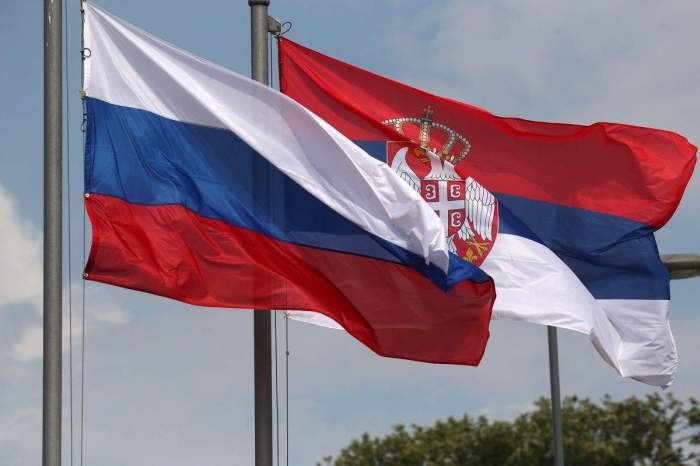
    BELGRADE, SERBIA - JUNE 18. 2020: Russian and Serbian flags on display during Russian Foreign Minister Sergei Lavrov's visit to the Liberators of Belgrade Memorial. Valery Sharifulin/TASS,Image: 533095429, License: Rights-managed, Restrictions: UWAGA! Zdjęcia zawierają oryginalny opis dostawcy (ITAR-TASS). Szczególnie w związku z agresją Rosji na Ukrainę mogą zawierać przekaz niezgodny z faktami. Zweryfikuj go przed publikacją, Model Release: no, Credit line: Valery Sharifulin / TASS / Forum

    Balkan Maskirovka: Why Moscow’s “Distancing” Is Only an Operation for the Survival of Vučić’s Regime

    Serbia – China 2026: Technological partnership, geopolitical positioning and a new phase of the Chinese presence in the Western Balkans

    The Digital Protectorate: How the EU AI Act Codified Silicon Valley’s Monopoly

    The 28th MFC Annual Conference in Durrës / Sulaj: Microfinance remains a key instrument for financial inclusion

    Serbia at the Crossroads of EU Integration and Geopolitical Balancing: IFIMES Analysis

    Tirana – €20 Million EU–Banking Agreement Boosts Albanian SMEs

    The Myth of Independence: How Chinese Efficiency is Rewriting the Constitution of Modern Geopolitics!

    Europe Yesterday and Today: Why 9 May Still Matters

  • Top News

    Rama alleges ‘hybrid war’ behind protests against Kushner-linked coastal development

    No End in Sight: Trump, Netanyahu and the Expanding Middle East War

    Tirana – €20 Million EU–Banking Agreement Boosts Albanian SMEs

    “EU4Municipalities II” Project, a Strategic Investment for Strengthening Municipalities and Accelerating Albania’s Path towards the EU

    Albania, Italy deepen defence ties with naval shipbuilding deal

    U.S. Embassy: Iran-Linked Groups May Target Americans and Iranian Opposition in Albania

    The Council of Albanian Ambassadors disappointed with the voting of the draft law on the foreign service in the parliamentary committees.

    Prime Minister Edi Rama Addresses Israel’s Knesset in Historic Special Session

    Kazakhstan’s Strategic Reform Agenda: Stability, Modern Governance, and Responsible Diplomacy

  • YOUR VOICE
  • Shqip
No Result
View All Result
Argumentum
  • Home
  • OP/ED

    Pierre Nora and the institution of memory we lack in Eastern Europe

    The Blueprint of a Diplomatic Debacle: Analyzing Germany’s Historic UNSC Loss

    Cyber Attribution, Corruption, and the False-Flag Question in Albania’s 2022 Alleged Iranian Cyberattack

    Between Russia, Iran and Europe: Azerbaijan as a balancing power in the South Caucasus

    The Zero-Tariff Gate: Sovereignty as a Service in the Sino-African Corridor

    Albania vs. the Sea/ Marginal Notes on A. Leka’s Novel The Hidden Side of the Albanian Socialist Garden

    May 9 and the long shadow of a Letter: Is Europe still Schuman’s Project?

    The Arbnesh of Zadar: A living memory of Albanian identity on the Adriatic coast

    Science Diplomacy and Academic Freedom: A strategic nexus for contemporary diplomacy

  • Interview

    Exclusive Interview with Oleksandr Tyshchenko: A 40-Year Legacy of Chernobyl, Nuclear Risks, and Global Responsibility

    INTERVIEW: ZLATKO KRAMARIĆ – THOUGHTS ON THE OLD CONTINENT

    EXCLUSIVE / Ukrainian Ambassador to Albania, Volodymyr Shkurov: “Ukraine wants peace, but not at the expense of its freedom and independence”

    EXCLUSIVE| Ambassador Tayyar Kagan Atay: Türkiye and Albania, a Strategic Partnership Rooted in Shared Heritage and a Common Vision for the Future

    “Diplomacy, Not War”: Palestinian Ambassador to Albania Calls for Justice, Peace, and Global Action for Gaza

    Exclusive: “Even After Tito – Tito”/ Ambassador Zlatko Kramarić on Authoritarian Legacies and Democracy’s Future in the Balkans

    The Conclusion of the Diplomatic Mission / Ambassador Dancho Markovski: Strengthening Albania-North Macedonia Relations for a Shared European Future

    A Century of Diplomatic Relations Between Albania and Russia: Exclusive Interview with the Russian Ambassador to Albania, H.E. Alexey Zaytsev

    Exclusive/ The chairman of the Freedom Party, Ilir Meta: “The will of the citizens will triumph in Albania, as it did in North Macedonia”

  • Realpolitik

    IBAR? ”Sufficiently! Much ado about nothing! Shart contrasts in Beijing! Where is the exit?!

    Neither peace nor war! Peace with bombs?! IBAR in autumn?! Not another Hormuz in Taivan! 

    IBAR – a springing board or an obstacle? Can we catch the EU Negotiation train 2027? When the dress makes the news!  EU electoral April  ends in a draw 1:1!  

    The European Parliament building in Strasbourg, France with flags waving calmly celebrating peace of the Europe. July 12, 2020.

    EU 2027 or 2037! Even half membership failed! No exit strategy!     

    What next?

    “With diplomatic velvet“! Major question marks! In Washington yes, but  in the White House NO! A strange dinner in Brussels!

    From a great ‘apple of disaccord’ to a  point of  cooperation! A bad start! The strange absence in Davos!

    5 lessons from the American 3 January! Don’t count the chicken before they are hatched! Will NATO freeze in Greenland? Wrong diplomatic messages!

    German Chancellor Friedrich Merz, European Commission President Ursula von der Leyen, Ukraine's President Volodymyr Zelenskiy, U.S. Special Envoy Steve Witkoff and Jared Kushner, son-in-law of U.S. President Donald Trump line up for a family photo opportunity at the Chancellery in Berlin, Germany, December 15, 2025.    REUTERS/Lisi Niesner/Pool

    A Strategy that could change the world! Europe in Berlin! Why an historic compromise? Only charm diplomacy in Athens!

  • Current Events

    Rama alleges ‘hybrid war’ behind protests against Kushner-linked coastal development

    BELGRADE, SERBIA - JUNE 18. 2020: Russian and Serbian flags on display during Russian Foreign Minister Sergei Lavrov's visit to the Liberators of Belgrade Memorial. Valery Sharifulin/TASS,Image: 533095429, License: Rights-managed, Restrictions: UWAGA! Zdjęcia zawierają oryginalny opis dostawcy (ITAR-TASS). Szczególnie w związku z agresją Rosji na Ukrainę mogą zawierać przekaz niezgodny z faktami. Zweryfikuj go przed publikacją, Model Release: no, Credit line: Valery Sharifulin / TASS / Forum

    Balkan Maskirovka: Why Moscow’s “Distancing” Is Only an Operation for the Survival of Vučić’s Regime

    Serbia – China 2026: Technological partnership, geopolitical positioning and a new phase of the Chinese presence in the Western Balkans

    The Digital Protectorate: How the EU AI Act Codified Silicon Valley’s Monopoly

    The 28th MFC Annual Conference in Durrës / Sulaj: Microfinance remains a key instrument for financial inclusion

    Serbia at the Crossroads of EU Integration and Geopolitical Balancing: IFIMES Analysis

    Tirana – €20 Million EU–Banking Agreement Boosts Albanian SMEs

    The Myth of Independence: How Chinese Efficiency is Rewriting the Constitution of Modern Geopolitics!

    Europe Yesterday and Today: Why 9 May Still Matters

  • Top News

    Rama alleges ‘hybrid war’ behind protests against Kushner-linked coastal development

    No End in Sight: Trump, Netanyahu and the Expanding Middle East War

    Tirana – €20 Million EU–Banking Agreement Boosts Albanian SMEs

    “EU4Municipalities II” Project, a Strategic Investment for Strengthening Municipalities and Accelerating Albania’s Path towards the EU

    Albania, Italy deepen defence ties with naval shipbuilding deal

    U.S. Embassy: Iran-Linked Groups May Target Americans and Iranian Opposition in Albania

    The Council of Albanian Ambassadors disappointed with the voting of the draft law on the foreign service in the parliamentary committees.

    Prime Minister Edi Rama Addresses Israel’s Knesset in Historic Special Session

    Kazakhstan’s Strategic Reform Agenda: Stability, Modern Governance, and Responsible Diplomacy

  • YOUR VOICE
  • Shqip
No Result
View All Result
Argumentum
No Result
View All Result
Home Balkan Overview

The Serbo-Russian Nexus in Hybrid Warfare. Why are Telegram channels dangerous for nation security?

11 April, 2025
in Balkan Overview, ENGLISH, I pakategorizuar, In Focus
A A
Share on FacebookShare on Twitter

Author: Dr. Iryna Synelnyk – Journalist and Researcher

The hybrid war that Russia has waged against European countries involves various methods, but the main strategy is to divide societies, undermine trust in state institutions and democracy. Russia is flexible in choosing new approaches and tactics, as new technologies become tools for manipulating and influencing public opinion in different countries. One of them is popular social media such as Telegram.

Serbia cooperates very closely with Russia on many issues, including imitating Russia’s hybrid warfare strategy especially against Kosovo. Therefore, it is important to analyse the leading pro-Russian and pro-Serbian Telegram channels in the Balkans to understand why and how they spread propaganda narratives and pose a threat to national security.

Why is it important? 

Since the full-scale Russian invasion of Ukraine, Telegram has been an important source of information when we talk about official channels, and at the same time it is a social media for sharing Kremlin propaganda through anonymous Telegram channels. It is known that this social media is of Russian origin and there is a high probability that it is connected to the Russian secret service and the Russian authorities. Moreover, the number of channels and the frequency of publication seem to have increased since the beginning of the Russian war in Ukraine. 

Telegram is not a secure messenger. The end-to-end encryption of messages in Telegram does not occur by default, like in Signal, Threema, or WhatsApp. It is a separate feature in the form of secret chats. Up to 99% of communication on this messenger takes place outside of ‘secret’ chats. Therefore, your data can be intercepted at various stages of its transfer, including on the server. Serious risks with the use of Telegram: surveillance and access to personal data; use of Telegram for cyber attacks; problems of anonymity. 

There is also the problem of content. Because Telegram has a reputation as a platform where dangerous or illegal material is distributed. The lack of control over content allows criminal gangs and extremist groups to use the channel for their own purposes. The advantage of Telegram for dubious actions is that there is no censorship. Completely incorrect and illegal information can be published without it being removed. This is one of the reasons why Telegram is used and not some other social networks.

The Telegram as a social media isn’t popular in Kosovo, but at the same time more than half a million people follow pro-Russian Telegram channels covering the Balkans in Serbian and Russian languages. Followers are being urged to donate military equipment to Russia and join military units composed of citizens especially of Serbia and Bosnia and Herzegovina on the Ukrainian frontline. On the other hand, the Telegram is a big source of spreading pro-Russian propaganda narratives, fake news and disinformation.

Some of those channels which are popular in the Balkans were founded in Russia, and they publish in Russian language or use Russian state media as their main sources of information, but are oriented towards a Western Balkan audience. There are dozens of Telegram channels. Last time, the Telegram, as a platform, became increasingly popular among right-wingers, extremists, disinformation agents and conspiracy theorists. We try to analyze five of the biggest Telegram channels. 

Dejan Beric Telegram channel 

Dejan Beric is one of the best-known Serb ‘volunteers’ in the Russian Army. His channel is the most visited pro-Russian Telegram channel in the territory of Bosnia and Herzegovina, Serbia and Montenegro.

It has more than 114,000 followers, publishing about 100 posts a day, and its content is viewed by 25,000 followers every 24 hours. The channel devotes most of its quotes to other pro-Russian channels, such as ‘Bunt Je Stanje Duha’ and ‘Ocilo’ , as well as other Russian media outlets, such as Sputnik.

The ‘Slovenski Medvedi’ Telegram channel

Has attracted nearly 60,000 followers. He has posted thousands of videos and tens of thousands of photos of events that Russia wants Serbian citizens to know about. 

This channel, created in January 2023, a year after the start of the Russian invasion of Ukraine, wants to be ‘the voice of Russia in Serbia and the voice of the Serbian people’. It is one of the fastest growing pro-Russian Telegram channels. And in 2024 it published posts that collected money for Russia’s war in Ukraine. 

The ‘Bunt’ (Bunt Je Stanje Duha) channel 

The Rebellion is a state of mind in English. Since 2020, a channel has served to spread pro-Serbian and pro-Russian propaganda. It was originally started under the name of ‘Bunt Montenegro’, but a year later it was given its current name. 

The number of new members rose sharply since the start of Russia’s invasion of Ukraine in February 2022, when it increased by nearly 30,000 in just a few weeks. It is now followed by more than 85,000 people. Members of the ‘Bunt’ channel share content associated with the Russian invasion of Ukraine on a daily basis. A large part of the published content refers to Republika Srpska and military officials during the Bosnian war, including Ratko Mladic, former commander of the Bosnian Serb Army’s Main Headquarters.

Балканист/Balkanist (near 20 000 followers) and Балканская Сплетница/Balkan Gossiper (near 32 000) are Telegram-channels in Russian. They spread pro-Russian and pro-Serbian narratives. Propagandists also try to instill fear among their readers, suggesting that Serbia is facing a war provoked by the West. Balkanist was created in 2019. Since February 2021 and the outset of the invasion against Ukraine, ‘Balkanist’ has expanded its activities also to Yandex, a Russian version of the Google search engine, and YouTube, and created an official internet portal and podcast.

One of the advertising partners of this channel, whose followers have tripled in one year, is Platon Besedin, a Ukrainian-Russian author publicly known as a pro-Russian propagandist. In most cases, the ‘Balkanist’ channel shares his content. The channel also often published pro-Russian content, emphasising the brotherhood that exists between Russians and Serbs.

The main topics that are sharing in pro-Russian and pro-Serbian Telegram channels in the Balkans: 

  1. Fuelling and intensifying contradictions in the region. Promoting the ideas of the Serbian world. Propagandists often reinterpret historical events to incite disputes and deepen divisions. In general, they use the historical, ethnic, and religious context of the region. For example, Albanians are blamed for all kinds of crimes and human vices, and are openly demonised and dehumanised. Propagandists skillfully touch on historical triggers, further inflaming the wounds of conflicts that ended relatively recently in historical terms. In these Telegram channels, Kosovo is one of the most frequently discussed topics. The channel authors often do not hide the fact that they spread Russian content and pro-Russian messages, which also fuel tensions around the issue of ‘Serbian Kosovo’ and artificially link it to Ukraine.
  2. Glorification of the Russian army and the war in Ukraine, justification of war crimes. Messages spreading Russian propaganda about Ukraine and Russian aggression are sometimes even more prevalent than those about the problems of the Western Balkans. They also spread the message that Ukraine is allegedly on the verge of collapse. There  is a significantly higher level of adaptation of Z-channel [Russian pro-war channels] content for the local audiences. Most of this content relates to events on the front line, where traditionally, such resources only highlight the ‘successes’ of the Russians and the ‘failures’ and setbacks of the Ukrainians. One of the areas of activity is the involvement of men in the war in Ukraine on the Russian side. Russia’s political opponents are being demonized in Serbia.
  3. Discrediting NATO and the EU, their role in the Russian-Ukrainian war, criticising the ideas of European integration of the Balkan countries and Ukraine. When it comes to discrediting the EU, Russian propaganda often uses anti-Western rhetoric highlighting the differences between Russia and the EU, including criticism of Western values, policies and actions, as well as the religious and cultural proximity of Russia and Serbia. Other narratives that appear on these channels include: ‘The US/West/NATO is to blame for the war, which is being waged to destroy Russia, ‘Russia is at war with NATO/America/the West’, ‘Our president (Putin) is the best, he knows what he is doing/ everything is going according to the plan’, ‘Ukraine is an artificial country, not real’, ‘Those who criticise Russian troops are traitors’. 

Telegram channels are not a reliable source of information in many cases. That is why in Ukraine, for example, it has been suggested that Telegram channels owners should not to be anonymous. In the information field of the Balkans, there are many similarities between current Russian propaganda and the propaganda of Slobodan Milošević’s in the 1990s, namely strong ethnic nationalism, the spread of false information and manipulation, and the cult of personality.

Therefore, media literacy and critical thinking will help you to assess the situation realistically and prevent yourself from being manipulated. /OCTOPUS
Related Posts

Current Events

Rama alleges ‘hybrid war’ behind protests against Kushner-linked coastal development

5 June, 2026
ENGLISH

Pierre Nora and the institution of memory we lack in Eastern Europe

5 June, 2026
BELGRADE, SERBIA - JUNE 18. 2020: Russian and Serbian flags on display during Russian Foreign Minister Sergei Lavrov's visit to the Liberators of Belgrade Memorial. Valery Sharifulin/TASS,Image: 533095429, License: Rights-managed, Restrictions: UWAGA! Zdjęcia zawierają oryginalny opis dostawcy (ITAR-TASS). Szczególnie w związku z agresją Rosji na Ukrainę mogą zawierać przekaz niezgodny z faktami. Zweryfikuj go przed publikacją, Model Release: no, Credit line: Valery Sharifulin / TASS / Forum
Current Events

Balkan Maskirovka: Why Moscow’s “Distancing” Is Only an Operation for the Survival of Vučić’s Regime

5 June, 2026

Follow US

Subscribe

Receive Argumentum Magazine by Email

Last Posts

Rama alleges ‘hybrid war’ behind protests against Kushner-linked coastal development

5 June, 2026

Pierre Nora and the institution of memory we lack in Eastern Europe

5 June, 2026
BELGRADE, SERBIA - JUNE 18. 2020: Russian and Serbian flags on display during Russian Foreign Minister Sergei Lavrov's visit to the Liberators of Belgrade Memorial. Valery Sharifulin/TASS,Image: 533095429, License: Rights-managed, Restrictions: UWAGA! Zdjęcia zawierają oryginalny opis dostawcy (ITAR-TASS). Szczególnie w związku z agresją Rosji na Ukrainę mogą zawierać przekaz niezgodny z faktami. Zweryfikuj go przed publikacją, Model Release: no, Credit line: Valery Sharifulin / TASS / Forum

Balkan Maskirovka: Why Moscow’s “Distancing” Is Only an Operation for the Survival of Vučić’s Regime

5 June, 2026

The Blueprint of a Diplomatic Debacle: Analyzing Germany’s Historic UNSC Loss

4 June, 2026

Serbia – China 2026: Technological partnership, geopolitical positioning and a new phase of the Chinese presence in the Western Balkans

1 June, 2026
Argumentum

“Argumentum”, një proces intelektual …

Contact Us

[email protected]
[email protected]
[email protected]

Follow Us

Media Partner

Register

Receive Argumentum Magazine by Email
  • Home
  • Privacy Policy
  • About Us
  • Contact

© 2022 Argumentum. All Rights Reserved. | NUIS: L91415033Q

Welcome Back!

Login to your account below

Forgotten Password? Sign Up

Create New Account!

Fill the forms bellow to register

*By registering into our website, you agree to the Terms & Conditions and Privacy Policy.
All fields are required. Log In

Retrieve your password

Please enter your username or email address to reset your password.

Log In

Add New Playlist

No Result
View All Result
  • Home
  • OP/ED
  • Interview
  • Realpolitik
  • Current Events
  • Top News
  • YOUR VOICE
  • Shqip

© 2022 Argumentum. All Rights Reserved. | NUIS: L91415033Q

This website uses cookies. By continuing to use this website you are giving consent to cookies being used. Visit our Privacy and Cookie Policy.